Venues & Destinations
Destination Wedding Legal Requirements: The Complete 2026 Guide
From apostille authentication to country-specific residency windows, here is what you actually need to get legally married abroad — and why many couples choose to marry at home first.
Getting legally married abroad requires apostille-authenticated documents (birth certificates, single-status affidavits, and any divorce decrees), country-specific residency and translation requirements, and a legally authorized local officiant. Many couples choose to marry legally at home first and hold a symbolic destination ceremony — a fully valid, widely accepted alternative that eliminates foreign paperwork entirely.
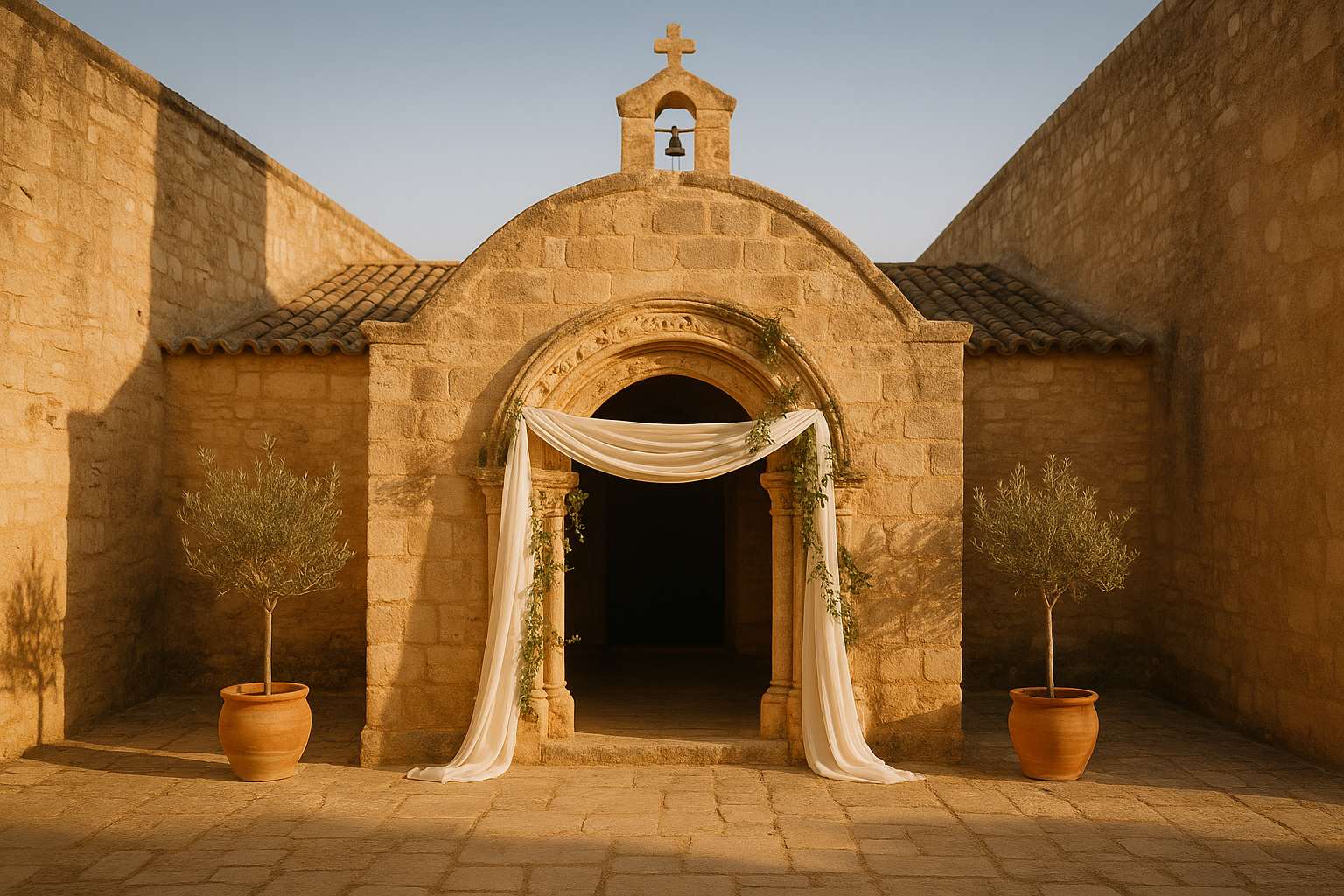
The image of a destination wedding is effortless: sun-warmed stone, a view of the sea, the exact ceremony you imagined. The legal reality underneath that image is considerably more detailed. International marriage law is governed entirely by the destination country — not by your home state, not by your local customs, and not by what a well-meaning wedding blog told you last year. Understanding the legal framework before you fall in love with a Tuscan villa or an Amalfi chapel is one of the most important planning conversations a couple can have.
This guide covers everything you need to know about getting legally married abroad in 2026: what documents you will need, how the apostille system works, what country-specific requirements look like in practice, and how to ensure your marriage is recognized when you return home. It also makes the case honestly for the legal-at-home-plus-symbolic-ceremony-abroad approach that many couples find more practical — and equally beautiful.
What is an apostille, and why does it matter for a destination wedding?
An apostille is a specific certification issued by a government authority — in the United States, typically the Secretary of State's office for the state where the document was issued — that authenticates the document for use in foreign countries. The concept was established by the 1961 Hague Convention, which created a streamlined international authentication system now accepted by more than 129 countries. When a foreign civil authority requires that your U.S. birth certificate be apostilled, they are asking for confirmation that the certificate is genuine — that it was issued by a real government office and has not been altered.
For destination wedding purposes, the documents most commonly required to be apostilled are:
- Birth certificates — certified copies issued by your state's vital records office
- Affidavit of eligibility to marry (single status affidavit) — a sworn statement confirming you are legally free to marry, typically notarized before a U.S. consular officer or state notary
- Divorce decree — if either party has been previously married, a certified court copy of the divorce decree, apostilled
- Death certificate — if widowed
Standard apostille processing through a state office takes four to seven weeks. Rush service, where available, may reduce this to two to three weeks at a premium. For any destination wedding where a legal ceremony is planned, begin the apostille process no later than 12 months before the date. According to the European Elopement Guide, couples who underestimate document processing time represent the single most common source of destination wedding legal complications.
Non-Hague countries require a different process — embassy legalization rather than apostille — which is more complex and can take eight to twelve weeks. Countries outside the Hague Convention include China, the UAE, and Canada. If your destination is not a Hague Convention member, consult the destination country's embassy in Washington, D.C. for exact legalization requirements before planning anything else.
What are the legal requirements for popular destination wedding countries?
| Country | Residency Required? | Key Documents | Complexity | Lead Time Recommended |
|---|---|---|---|---|
| Mexico (varies by state) | None in most states | Birth certs (Spanish translation), single status affidavit, blood test (some states) | Moderate | 6–9 months |
| Jamaica | 24 hours before ceremony | Certified birth certificate, photo ID, divorce decree if applicable | Low | 3–6 months |
| Dominican Republic | None | Apostilled + Spanish-translated birth certs and affidavit | Moderate | 4–6 months |
| Italy | None (documents expire at 6 months) | Apostilled + Italian-translated documents; Comune filing | High | 9–12 months |
| Greece | None | Apostilled + Greek-translated documents; civil ceremony at municipal office | Moderate–High | 6–9 months |
| France | ~40 days in-country | Apostilled documents; civil ceremony at mairie; residency verification | Very High | 12+ months |
| Puerto Rico | None (U.S. territory) | U.S. documents, no apostille needed; standard U.S. marriage license process | Very Low | 3–4 months |
Italy deserves special attention: apostilled documents are valid for only six months from their issue date, which means the apostille must be obtained no earlier than six months before the documents will be presented to Italian civil authorities. This creates a narrow planning window that requires careful coordination. Engage a local Italian wedding planner and, if necessary, an Italian lawyer who specializes in civil marriages for foreign couples.
France's approximate 40-day residency requirement effectively rules it out as a location for a fully legal foreign marriage for most U.S. couples who cannot remain in-country for that duration. The symbolic-ceremony-at-home approach is particularly practical for France-based celebrations.
Should we marry legally abroad or at home first?
This is the most important strategic question in destination wedding legal planning, and there is no single right answer. The decision hinges on personal priorities.
Marry legally abroad if: The legal ceremony itself has cultural, religious, or sentimental significance at your destination — for example, a Catholic church wedding in Italy where the canonical ceremony is the legal marriage, or a Jewish ceremony in Israel. If your destination country's legal process is manageable with the right professional support, and you have the lead time to complete it properly, a legally valid foreign ceremony is a beautiful and fully achievable outcome.
Marry legally at home first if: Your destination is France, Italy, or another country with complex residency or document requirements; your timeline is shorter than 12 months; or you simply want the destination celebration to be about the experience rather than the paperwork. A quiet courthouse ceremony weeks before the destination wedding — just the two of you and two witnesses — creates a completely valid legal marriage that requires no further steps. The destination celebration is then joyful, unencumbered, and free to be everything you imagined it without any document anxiety.
According to destination wedding specialists at Zola, the legal-at-home-plus-celebration-abroad model has grown significantly in popularity since 2023 as more couples recognize that the emotional and aesthetic experience of the destination ceremony is in no way diminished by legal simplicity. The photographs, the vows, the gathering — none of it requires a civil registration stamp to be profound.
How do you recognize a foreign marriage in the United States?
A marriage legally performed in a foreign country under that country's laws is generally recognized as valid in the United States under longstanding legal principles of interstate and international comity. After your destination ceremony, the practical steps to recognize your marriage at home are:
- Obtain your official foreign marriage certificate. Depending on the country, this may take weeks to several months to issue after the ceremony. Follow up proactively with the local civil authority or your local planner.
- Have the certificate translated and apostilled (if needed). For use in official U.S. proceedings — name changes, financial accounts — a certified English translation of a foreign-language certificate may be required.
- Complete name change steps as you would after any U.S. marriage. Social Security Administration, then U.S. passport, then state driver's license. The foreign marriage certificate, with translation if required, is your supporting document for all of these.
This process is standard and well-understood by U.S. government agencies. The most common complication is waiting longer than expected for the foreign marriage certificate to arrive — plan for 4–8 weeks from the ceremony for most countries, and alert your employer or financial institutions if you need documentation by a specific date.
Frequently asked
Do I need an apostille for a destination wedding?
Yes, if you are marrying legally in any of the 129+ countries that are party to the 1961 Hague Apostille Convention. An apostille is a certification issued by your state's Secretary of State office that authenticates a U.S. document for use in a foreign country — it tells that country's civil authorities that your birth certificate, affidavit of single status, or divorce decree is genuine. The most commonly apostille-required documents for destination weddings are your birth certificate, a notarized affidavit of eligibility to marry (confirming you are legally free to do so), and any divorce decree or death certificate from a prior marriage. Standard apostille processing takes four to seven weeks through state channels; rush service may be available in two to three weeks at a premium. If your destination country is not a Hague Convention member — including China, UAE, and Canada — you will need embassy legalization instead, which can take eight to twelve weeks. Begin this process no later than twelve months before an international legal ceremony.
Which countries are easiest for a legal destination wedding for U.S. couples?
Jamaica is consistently cited as one of the most streamlined legal destination wedding options for U.S. couples: no residency requirement, no blood test, and couples need only be in country 24 hours before the ceremony. The Dominican Republic requires apostilled and translated documents but has no residency requirement and a reasonable processing timeline of three to four months. Mexico's requirements vary by state but are generally manageable with a qualified local wedding planner and sufficient lead time. Puerto Rico eliminates all foreign legal complexity entirely, since it operates under U.S. jurisdiction — a Puerto Rico marriage is a legal U.S. marriage with no apostille requirement. Italy and France are among the most legally complex options for U.S. couples, with France requiring approximately 40 days of in-country residency and Italy requiring documents that expire within six months of their apostille date.
Can we just get legally married at home and have a symbolic ceremony abroad?
Absolutely — and many couples who love the idea of a destination wedding choose this route deliberately. A quiet civil ceremony at your local courthouse in the weeks before your destination wedding means you are legally married before you travel. The destination celebration then becomes a symbolic ceremony that is everything you want aesthetically and emotionally, without any of the foreign legal paperwork, residency requirements, or international document processing. This approach is fully legitimate — there is nothing second-best about it, and it is very common. Your officiant abroad can be a beloved friend, a local celebrant, or anyone else who can perform a meaningful ceremony without needing legal authority to do so. The result: a legal marriage registered in your home state and a beautiful celebration exactly where and how you wanted it.
Will our destination wedding be recognized as legally valid in the United States?
Yes, in almost all cases. Under longstanding legal principles, a marriage validly performed under the laws of a foreign country is generally recognized as legally valid throughout the United States. The key is ensuring every step of the destination country's legal process is correctly and completely followed — using the correct documents, meeting residency requirements if any, having the ceremony performed by a legally authorized officiant under local law, and obtaining the official foreign marriage certificate after the ceremony. After returning home, you will need to obtain your certified foreign marriage certificate (processing can take weeks to months depending on the country), have it translated and apostilled if needed for U.S. use, and then use it to complete the standard name-change process on Social Security, passport, and state identification documents.
What is the most important first step in planning the legal side of a destination wedding?
Contact the destination country's embassy or consulate in the United States — or the destination country's civil registration authority — before you book the venue or sign any vendor contracts. Requirements change, and what was accurate on a wedding blog two years ago may not reflect current rules. The U.S. State Department's travel website (travel.state.gov) maintains country-specific marriage information and is a reliable starting point. From there, engage a local wedding planner at your destination who has direct experience navigating the legal process for foreign couples — they will know which documents the local civil authority requires, which translation agencies are accepted, and what timeline is realistic for your chosen date. Starting this process at least twelve months before the wedding date is the near-universal recommendation from destination wedding specialists.