Ceremony & Vows
Family Heirlooms Wedding Ideas: 10 Meaningful Ways to Honor Your Heritage
Incorporating family heirlooms into your wedding is one of the most personal, timeless choices you can make. Here are ten real, detailed ideas — from repurposed gowns to heirloom cake toppers — with practical guidance on how to execute each one.
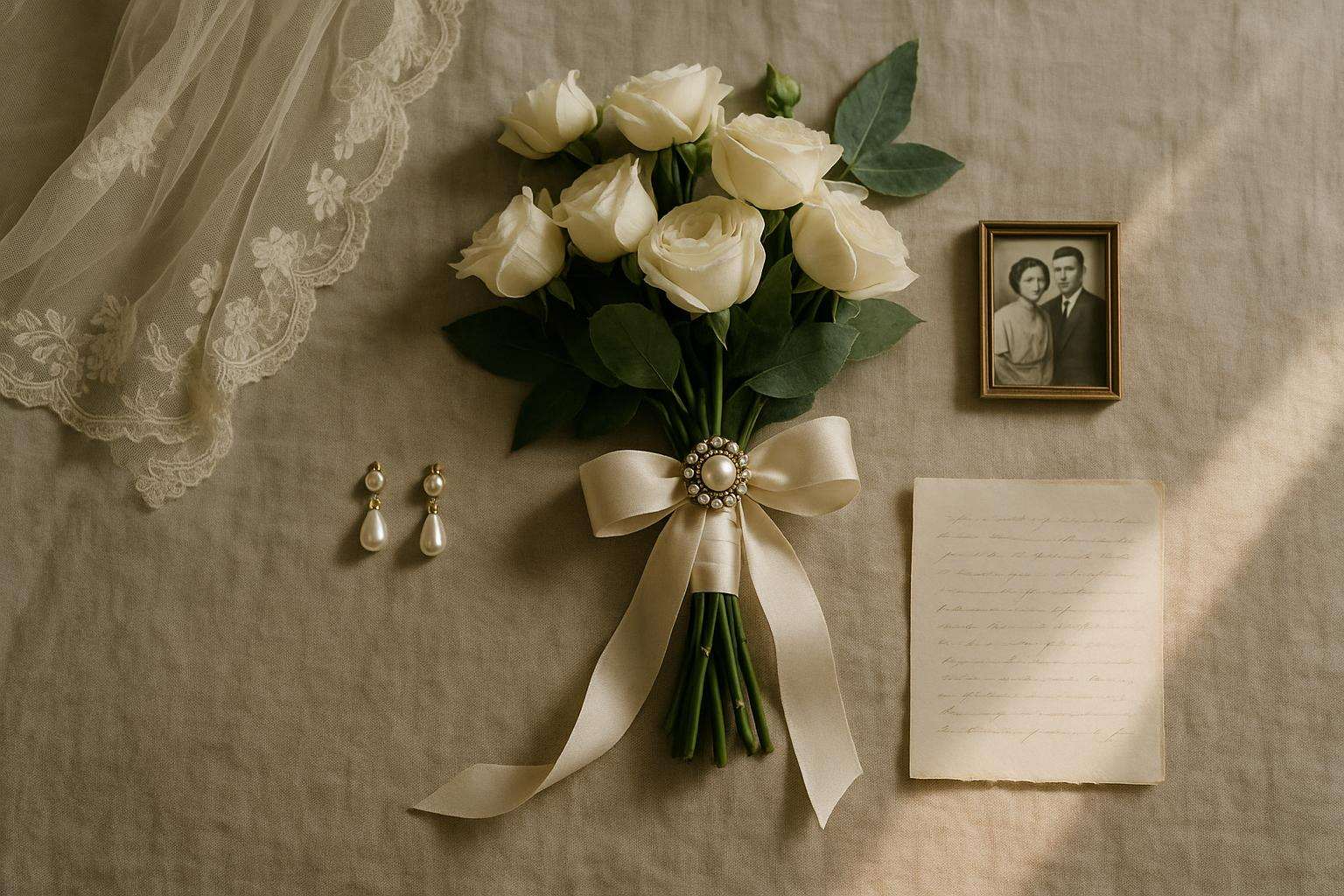
Family HeirloomsWedding HeritageCeremony TraditionsBridal DetailsCultural WeddingsMeaningful Decor
The quick verdict
The most personal wedding details are often the oldest ones. These ten ideas show you how to weave family history into every layer of your ceremony and reception — authentically, beautifully, and in a way that will matter to the generations who come after you.
- Best overall
- Wearing or Incorporating a Family Member's Wedding Gown — Wearing or incorporating a family gown is the highest-impact heirloom choice for brides whose family has a garment worth adapting.
- Best value
- Wrapping Your Bouquet with Heirloom Fabric or Lace — Wrapping your bouquet with heirloom fabric or pinning a family brooch to the stem costs almost nothing and appears in every portrait of the day.
- Best for Couples blending two families or cultures who want both lineages honored
- A Heritage Table or Memory Display at the Reception — A professionally curated heritage table with archival framing, shadow boxes, and heirloom objects from both families is the most comprehensive way to honor your heritage as a unified display.
How we evaluated
Items were selected based on versatility across different family backgrounds and heirloom types, practicality for modern weddings, emotional resonance reported by real couples, and visual impact in photography. Ideas are ranked from wearable and personal to decor-forward and storytelling-driven.
- Emotional resonance. How deeply the idea connects the wedding to family history and the people who came before.
- Versatility across backgrounds. Whether the idea adapts to a wide range of cultures, faiths, and family situations.
- Practicality and lead time. How realistic the idea is to execute, including the preparation, coordination, and conservation it requires.
- Photographic and visual impact. How prominently the heirloom appears in the day and in the photographs couples keep for generations.
Rating scale: Items are rated on a 1–5 scale across emotional resonance, versatility, practicality, and visual impact.
Last verified .
At a glance
| # | Name | Rating | Best for | Pricing |
|---|---|---|---|---|
| 1 | Wearing or Incorporating a Family Member's Wedding Gown | 5.0 | Bridal Attire | Alterations typically run $200–$800; full redesign with preservation of original fabric panels can reach $1,500–$3,000 depending on the dressmaker |
| 2 | Heirloom Jewelry as Your 'Something Old' or 'Something Borrowed' | 4.9 | Bridal Accessories | Re-setting stones into new settings: $300–$1,500+. Wearing as-is: no cost. Professional jewelry cleaning before the wedding: $50–$150 |
| 3 | Wrapping Your Bouquet with Heirloom Fabric or Lace | 4.8 | Floral Design | $0–$50 for the fabric sourcing; most florists include handle wrapping in their service fee or charge $20–$50 for custom wrap work |
| 4 | A Family Heirloom Unity Candle or Unity Ritual Object | 4.7 | Ceremony Rituals | Using an existing family candle or ritual object: $0. Refurbishing or repairing a candleholder or vessel: $20–$200 depending on the piece |
| 5 | Displaying Family Wedding Photographs at the Ceremony or Reception | 4.7 | Decor and Storytelling | Frame selection: $10–$80 per frame depending on style and material. A professional framing service for a collection of six to ten photos: $150–$400. Display stand or easel: $20–$80 |
| 6 | Heirloom China, Silverware, or Glassware in the Reception Table Setting | 4.6 | Reception Decor | Using existing family pieces: $0 beyond cleaning and transport. Mixing heirloom pieces with rental china: no additional cost beyond the rentals. Professional silver polishing: $25–$100 for a set |
| 7 | A Generational Wedding Cake Topper | 4.5 | Wedding Cake | Using an existing family topper: $0, plus $20–$80 for professional cleaning or restoration. Commissioning a custom topper inspired by a family piece: $100–$350 |
| 8 | A Family Recipe Incorporated into the Catering Menu | 4.5 | Food and Catering | No additional ingredient cost if the recipe uses standard commercial ingredients. Chef consultation fee for recipe adaptation: $100–$300 depending on the caterer. Recipe cards printed for tables: $0.50–$2.00 each |
| 9 | A Heritage Veil or Headpiece Worn or Displayed | 4.4 | Bridal Accessories | Professional veil preservation and cleaning: $75–$200. Veil restoration (for antique veils with damage): $150–$500. Wearing as-is: no additional cost |
| 10 | A Heritage Table or Memory Display at the Reception | 4.3 | Reception Decor | Display table decor: $50–$300 depending on scale and styling. Framing and printing: $10–$30 per image. Shadow boxes for displayed objects: $30–$80 each |
Wearing or Incorporating a Family Member's Wedding Gown
Wearing or adapting a family gown — the highest-impact heirloom choice of all
Nothing carries more sentimental weight than wearing a gown that has already been worn through vows you hope to honor. Whether you choose to wear your mother's or grandmother's dress exactly as it was, have it skillfully updated by a bridal alterations specialist, or incorporate its lace, fabric, or embellishment into an entirely new design, the result is a garment layered with meaning that no retail purchase can replicate. Repurposing options range from wearing the dress with minimal modification to having a dressmaker extract panels of vintage lace to apply to a new gown — preserving the heritage while achieving a modern silhouette. A dress that does not fit can often be converted into a veil, a sash, or an underskirt overlay. Before committing, consult a bridal preservation specialist who can assess the fabric's condition and structural integrity. Antique silk and satin can be fragile; a conservator's evaluation ($50–$150) prevents an irreversible mistake. This idea works across all family backgrounds and is particularly meaningful when the original wearer is present at the wedding.
Strengths
- The highest emotional impact of any heirloom incorporation — often the most photographed detail of the day
- Sustainable and eco-conscious choice that reduces demand for new garment production
- Creates a powerful multigenerational narrative that guests will carry with them long after the event
Weaknesses
- Requires significant lead time — fabric assessment, alteration consultations, and preservation work can take four to six months minimum; beginning less than a year out is risky
- Best for
- Bridal Attire
- Pricing
- Alterations typically run $200–$800; full redesign with preservation of original fabric panels can reach $1,500–$3,000 depending on the dressmaker
Source: WeddingWire · Visit Wearing or Incorporating a Family Member's Wedding Gown
Heirloom Jewelry as Your 'Something Old' or 'Something Borrowed'
Family jewelry as your 'something old' or 'something borrowed'
Family jewelry — a grandmother's pearl earrings, a great-aunt's diamond bracelet, a mother's engagement ring worn as a right-hand ring — fulfills the classic 'something old' or 'something borrowed' tradition while adding a layer of personal meaning that no new purchase can match. The Victorian tradition of 'something old, something new, something borrowed, something blue' translates across virtually every cultural background and provides a ready-made framework for incorporating heirloom pieces without overhauling your entire aesthetic. For brides who want to wear a family stone but prefer a modern setting, many jewelers offer re-setting services that preserve the gemstone while creating a new piece that feels contemporary. Heirloom brooches are particularly versatile: pinned to a bouquet stem, sewn onto a sash, fastened to a garter, or worn at a collar, they can travel anywhere on the bridal look. For grooms, family cufflinks, pocket squares, and tie bars are equally meaningful and understated ways to carry heritage into the day without visual competition with the bride.
Strengths
- Works within any budget — wearing a family piece at no additional cost is as valid as having stones re-set
- Extremely versatile placement options across both bridal and groom attire
- Photographs beautifully in detail shots and ring-and-jewelry flat lays
Weaknesses
- Borrowed pieces carry the pressure of safekeeping throughout a physically active event — designate a trusted person to receive the piece after the ceremony if it will not be worn at the reception
- Best for
- Bridal Accessories
- Pricing
- Re-setting stones into new settings: $300–$1,500+. Wearing as-is: no cost. Professional jewelry cleaning before the wedding: $50–$150
Source: Glamour and Grace · Visit Heirloom Jewelry as Your 'Something Old' or 'Something Borrowed'
Wrapping Your Bouquet with Heirloom Fabric or Lace
Wrap the bouquet in heirloom lace or pin a family brooch to the stem
The bouquet is one of the most photographed objects at any wedding — it appears in every formal portrait and in hundreds of candid images throughout the ceremony and reception. Wrapping the stem of your bouquet with a piece of heirloom lace from a grandmother's wedding dress, a swatch of your father's military uniform, a strip of your mother's first apron, or a length of ribbon from a family keepsake brings that object into every image of the day. The most common approach is to cut a six- to eight-inch strip of fabric and have your florist wrap and pin it around the bouquet handle, where it is visible in portraits but protected from casual wear. A small heirloom brooch — a family piece pinned directly into the floral arrangement — achieves a similar effect with more visual prominence. Brief your florist on the fabric type: delicate antique lace requires a protective backing to prevent damage during the hours the bouquet is held and set down. Coordinate the delivery of the fabric swatch to your florist at least two weeks before the wedding to allow time for thoughtful integration.
Strengths
- Extraordinarily low cost relative to the emotional impact and photographic presence
- Non-destructive — the heirloom fabric can be cleaned and preserved after the wedding
- Works across every floral style, from wild garden bouquets to architectural bridal arrangements
Weaknesses
- Small and easily overlooked in large group photographs — ensure your photographer knows to capture a close detail shot of the handle
- Best for
- Floral Design
- Pricing
- $0–$50 for the fabric sourcing; most florists include handle wrapping in their service fee or charge $20–$50 for custom wrap work
Source: Chancey Charm Weddings · Visit Wrapping Your Bouquet with Heirloom Fabric or Lace
A Family Heirloom Unity Candle or Unity Ritual Object
A unity candle or ritual object passed through generations of weddings
The unity candle — two individual candles used to light a single shared flame — is a ceremony tradition used widely in Christian weddings and increasingly across secular and interfaith ceremonies. When the candleholder, the candle itself, or the surrounding ritual objects have been passed through multiple family weddings, the gesture becomes one of the most quietly powerful moments in any ceremony. Some families have unity candle sets that have traveled through three or four generations of weddings; others have heirloom candlestick holders, silver trays, or religious altar objects that can be incorporated. If your family does not have a unity candle tradition, you can create one that begins with your wedding and becomes the heirloom your children and grandchildren carry. The same principle extends to other unity ritual objects: a family chalice used for a wine ceremony, a heritage prayer book used in a ring blessing, a handmade quilt passed down for the couple to kneel on during a prayer ceremony, or an ancestral vessel used for a libation ceremony in West African traditions. Brief your officiant on the significance of the object so they can narrate its meaning during the ceremony — a guest who understands what they are witnessing is far more moved than one who simply observes.
Strengths
- Creates a ceremony moment that is entirely unique and unrepeatable
- Generates a deeply personal officiant narrative that guests consistently cite as memorable
- Begins or continues a family tradition that compounds in meaning with each subsequent generation
Weaknesses
- Requires coordination with the officiant and ceremony coordinator well in advance; an unrehearsed ritual involving an object guests do not recognize can create confusion rather than reverence
- Best for
- Ceremony Rituals
- Pricing
- Using an existing family candle or ritual object: $0. Refurbishing or repairing a candleholder or vessel: $20–$200 depending on the piece
Source: Source · Visit A Family Heirloom Unity Candle or Unity Ritual Object
Displaying Family Wedding Photographs at the Ceremony or Reception
A curated gallery of past family wedding photographs on display
A curated display of family wedding photographs — grandparents on their wedding day in 1952, parents at their first dance in 1978, a great-aunt in her wartime ceremony dress — transforms a welcome table or ceremony entrance into a gallery of love that predates and contextualizes your own. This is one of the most universally beloved heirloom gestures among wedding guests: it invites everyone to be part of a larger story rather than passive observers of yours. The display works best when photographs are consistently framed (matching metals or matching woods, rather than a mismatched collection), arranged chronologically or by generation, and accompanied by small labels identifying who each couple is and when and where they married. A QR code linking to a short digital essay on each couple is a contemporary touch that allows guests to engage more deeply during cocktail hour. Coordinate with your photographer to ensure the display receives prominent attention in the reception detail shots — these images will appear in your album for generations. If scanning original photographs feels risky, most local print shops and pharmacy photo centers offer high-resolution scanning services for $0.30–$1.50 per image.
Strengths
- Highly accessible to all budget levels — framing family prints requires minimal investment
- Creates a natural gathering point for family members at the reception
- Works as both ceremony altar decor and reception welcome-table or escort-card display
Weaknesses
- Sourcing and digitizing original family photographs requires a research and coordination effort that should begin at least three months before the wedding, especially when images are held by relatives in different locations
- Best for
- Decor and Storytelling
- Pricing
- Frame selection: $10–$80 per frame depending on style and material. A professional framing service for a collection of six to ten photos: $150–$400. Display stand or easel: $20–$80
Source: Source · Visit Displaying Family Wedding Photographs at the Ceremony or Reception
Heirloom China, Silverware, or Glassware in the Reception Table Setting
Heirloom china, silver, or glassware woven into the reception table
Setting the sweetheart table — or even a single head table — with heirloom china, inherited silverware, or antique glassware that has been in the family creates a reception detail that is entirely unrepeatable and deeply intimate. The trend toward intentional mismatched china (one of the defining tablescape movements of 2025–2026) actually makes the incorporation of heirloom pieces easier and more visually natural: a grandmother's hand-painted china pattern alongside curated rentals reads as deliberately collected rather than merely inherited. Antique champagne coupes that have been used for family toasts for decades carry particular power: passing them to the couple for their first toast as married partners is a gesture that photographs beautifully and resonates even for guests who are not family. If the quantity of heirloom pieces is limited, prioritize the sweetheart table — the most photographed table in any reception. Clean and inspect all pieces well in advance; have a trusted family member transport and collect them to avoid the logistical confusion of returning rental items mixed with irreplaceable family property.
Strengths
- Transforms the sweetheart table into a deeply personal focal point without additional floral or decor investment
- Aligns with the 2025–2026 trend toward intentional mismatched and collected aesthetics
- Practical: heirloom pieces often have more visual character than standard rental china
Weaknesses
- Requires explicit coordination with your caterer and rental company to ensure heirloom pieces are kept separate from rental returns and handled with appropriate care
- Best for
- Reception Decor
- Pricing
- Using existing family pieces: $0 beyond cleaning and transport. Mixing heirloom pieces with rental china: no additional cost beyond the rentals. Professional silver polishing: $25–$100 for a set
Source: Source · Visit Heirloom China, Silverware, or Glassware in the Reception Table Setting
A Generational Wedding Cake Topper
A generational cake topper at the visual apex of the dessert
A wedding cake topper passed down through generations is one of the most visually recognizable heirloom gestures in any reception — it sits at the visual apex of the cake, at eye level in photographs, and is seen by every guest. Generational toppers come in an enormous range: porcelain bride-and-groom figurines from the 1940s, silver-plated horseshoe pieces from English traditions, crystal initials, ceramic novelties, and even whimsical collectibles that a family has placed on wedding cakes for fifty years. The piece does not need to be conventionally beautiful to be meaningful — a topper that guests know belonged to grandparents carries weight precisely because of that knowledge. Have the piece professionally cleaned or gently restored (a ceramic restoration specialist can address chips for $25–$100). Work with your baker to ensure the topper is structurally appropriate for the cake tier — a heavy metal piece on a single-tier cake needs a stabilizing insert. Brief your photographer on the topper's significance so it receives dedicated detail photography. If the family topper is fragile or irreplaceable, consider commissioning a faithful reproduction in a more durable material as the functional topper and keeping the original in a protected display.
Strengths
- High visual prominence — the cake topper is one of the most consistently photographed reception details
- Conversation piece that draws guests into the family story without requiring any narration from the couple
- Often at zero additional cost if the family piece exists and is in good condition
Weaknesses
- Vintage ceramic and porcelain toppers can be fragile in the hands of caterers and venue staff; designate a trusted family member to place and collect it personally
- Best for
- Wedding Cake
- Pricing
- Using an existing family topper: $0, plus $20–$80 for professional cleaning or restoration. Commissioning a custom topper inspired by a family piece: $100–$350
A Family Recipe Incorporated into the Catering Menu
A treasured family recipe woven into the catering menu
Family recipes are heirlooms in the truest sense — passed through generations not as objects but as knowledge, preserved in handwritten cards, in margins of worn cookbooks, and in the muscle memory of grandmothers who never measured a thing. Incorporating a family recipe into your wedding menu — whether as a passed appetizer, a soup course, a side dish, a dessert, or even a cocktail — places something irreplaceable at the center of the celebration. Work with your caterer four to six months before the wedding to determine whether the recipe is scalable to your guest count, whether it requires any adaptation for dietary restrictions among your guests, and how it can be plated or served attractively in a reception format. Print small menu cards for each table that identify the dish by name and include a sentence about its origin: "Nonna Lucia's lemon ricotta cookies — passed down from Abruzzo, 1947." Guests who did not know your grandmother will feel they briefly did. For dessert stations, framing the recipe card in a small display stand beside the platter creates an heirloom exhibit that photographs beautifully and draws guests into a conversation about your family's history.
Strengths
- Unique to virtually every couple — no two family recipes are identical, making this one of the most original reception details possible
- Edible heirlooms are tangible in a way that photographs and objects are not: guests experience the heritage directly through taste
- Recipe cards become a keepsake that guests often take home and re-create in their own kitchens
Weaknesses
- Requires early and honest coordination with your caterer — not all recipes scale successfully to large-volume commercial preparation, and a recipe that is meaningful to the family may not translate to a catering context without adjustment
- Best for
- Food and Catering
- Pricing
- No additional ingredient cost if the recipe uses standard commercial ingredients. Chef consultation fee for recipe adaptation: $100–$300 depending on the caterer. Recipe cards printed for tables: $0.50–$2.00 each
Source: Source · Visit A Family Recipe Incorporated into the Catering Menu
A Heritage Veil or Headpiece Worn or Displayed
A heritage veil or headpiece worn — or beautifully displayed
A veil that has traveled through multiple generations of your family carries both the weight of tradition and the romance of continuity in a way that is immediately understood by every guest who knows its history. Heirloom veils range from simple tulle lengths from the 1960s to intricate point d'esprit or Chantilly lace veils from the early twentieth century. The condition of the veil must be assessed before committing to wearing it: antique tulle can be structurally compromised and may not hold the weight of a comb; lace can be brittle with age. A professional bridal preservation specialist or textile conservator can assess whether the veil is wearable, whether it can be cleaned without damage, and whether any structural reinforcement is needed. Brides who determine a family veil is too fragile to wear sometimes choose to display it — draped over a frame at the ceremony altar, mounted in a shadow box at the sweetheart table, or folded beneath the bridal bouquet during portrait photography. In all cases, having your photographer capture a dedicated portrait of you with the veil, accompanied by a photograph of the original wearer in the same veil, creates one of the most powerful multigenerational images in any wedding album.
Strengths
- Visually arresting and immediately narrative — a vintage veil in a modern bridal look tells a story without requiring any words
- Display options exist for veils that are too fragile to wear, preserving the meaning while protecting the object
- Fulfills the 'something borrowed' tradition naturally when borrowed from a living family member
Weaknesses
- Antique veils require professional assessment and are not DIY-restorable; bypassing conservation advice risks irreversible damage to an irreplaceable object
- Best for
- Bridal Accessories
- Pricing
- Professional veil preservation and cleaning: $75–$200. Veil restoration (for antique veils with damage): $150–$500. Wearing as-is: no additional cost
Source: Source · Visit A Heritage Veil or Headpiece Worn or Displayed
A Heritage Table or Memory Display at the Reception
A curated heritage table bringing family history into one display
A heritage table — a dedicated display at the reception entrance or cocktail area that brings together family photographs, heirloom objects, meaningful mementos, and cultural artifacts — creates a gathering point that functions as both wedding decor and family archive. At its best, a heritage table is curated with the same intentionality as any other design element: consistent framing, thoughtful labeling, objects chosen for meaning rather than volume, and a visual logic that guides the eye from one piece to the next. The most effective heritage tables combine at least three types of elements: visual (family photographs across multiple generations), tactile (a physical object — a piece of jewelry, a folded uniform, a cultural garment, a hand-stitched item), and narrative (small printed cards that identify each piece and its significance). This combination ensures that guests who did not grow up in your family can be drawn into the story rather than left to guess. A heritage table is particularly meaningful at multicultural weddings, where both families' traditions and objects can be displayed in parallel — honoring the distinct histories that are now joined. According to Wezoree's 2025–2026 vendor network data, approximately 32% of couples now incorporate cultural or heritage elements into their celebrations, and the heritage table has emerged as one of the most versatile vehicles for doing so across all backgrounds.
Strengths
- Accommodates virtually any type of heirloom — photographs, objects, garments, documents, and cultural artifacts can all coexist in a single display
- Creates a natural gathering and conversation point during cocktail hour that extends the family storytelling beyond the couple
- Scalable to any budget from a modest collection of framed prints to an elaborate curated installation
Weaknesses
- Requires early coordination to source, transport, and arrange irreplaceable objects safely; a last-minute heritage table assembled the day before the wedding rarely achieves the intentional curation that makes this element powerful
- Best for
- Reception Decor
- Pricing
- Display table decor: $50–$300 depending on scale and styling. Framing and printing: $10–$30 per image. Shadow boxes for displayed objects: $30–$80 each
Source: Source · Visit A Heritage Table or Memory Display at the Reception
Frequently asked
What is the best family heirloom to incorporate into a wedding?
The best heirloom to incorporate is the one that carries the deepest meaning to you and your family — not the most visually impressive or most expensive piece. A framed photograph of your grandparents on their wedding day can matter more than a diamond brooch if the story behind it moves you. That said, for maximum impact across both personal meaning and visual presence in your wedding photographs, bridal attire heirlooms (wearing or incorporating a family gown) and jewelry worn at the ceremony tend to deliver the strongest combination of emotional and photographic resonance. If you are uncertain where to begin, start with the 'something old, something borrowed' framework: it provides a ready-made structure for incorporating one or two meaningful pieces without the pressure of overhauling your entire aesthetic.
How do I incorporate heirlooms into a wedding with a modern aesthetic?
The most effective approach is to pair vintage pieces with clean, contemporary presentation. A grandmother's brooch on a minimalist white bridal bouquet reads as intentional contrast, not aesthetic confusion. An antique lace veil worn with a sleek modern gown creates a multigenerational narrative that feels fashion-forward rather than dated. The key principles: choose one or two heirloom elements and give each one prominence rather than scattering many pieces across the event; ensure the pieces are clean, repaired if needed, and presented with intention; and brief your photographer on their significance so they receive dedicated documentation. Modern aesthetics are defined by curation and intention — and an heirloom incorporated with thought and restraint always reads as designed, never as accidental.
What should I do if a family heirloom is in poor condition?
The first step is a professional assessment, not a DIY repair attempt. Antique fabrics, metals, ceramics, and paper are all susceptible to well-intentioned but irreversible damage from improper cleaning or repair methods. A textile conservator (for fabric heirlooms), a professional jeweler (for metal and stone pieces), or a ceramic restoration specialist can assess the piece, advise on whether wearing or displaying it is safe, and recommend appropriate intervention. Many preservation and restoration services are more affordable than brides expect: a professional silver polish and inspection runs $50–$100; basic textile cleaning and stabilization for an antique veil is $75–$200. If the piece is too fragile to wear or use, consider commissioning a high-quality reproduction for functional use and displaying the original in a protected shadow box.
How do I handle heirlooms from both sides of the family equally?
The most graceful approach is to identify one meaningful element from each family side and incorporate each with equal visual prominence and narrative weight. For example: the bride wears her maternal grandmother's pearl earrings ('something borrowed') and the groom wears his grandfather's cufflinks. Or: the ceremony altar displays family wedding photographs from both sides in matching frames, arranged to acknowledge both lineages. At multicultural weddings, the heritage table approach — with parallel displays from each family's tradition — is particularly effective at honoring both histories without competition. The key is intentionality: whatever the specific items, both families should feel genuinely represented rather than one feeling like an afterthought to the other.
Should I tell guests about the heirlooms I am incorporating?
Yes — context transforms a beautiful object into a meaningful one. Without context, even the most exquisite heirloom brooch on a bouquet is simply a brooch. With context, it becomes your great-grandmother's engagement gift from 1938, now traveling through its fourth wedding. The best methods for providing context: a brief mention in the ceremony program (one or two sentences identifying key heirloom pieces and their origin), an officiant narration during a ritual moment that involves the piece, labeled cards at a heritage display table, and a 'Our Story' section on your wedding website that mentions the heirlooms you are honoring. Guests who understand what they are seeing are genuinely moved; those who do not are simply observers.