Ceremony & Vows
Hindu Wedding Seven Steps (Saptapadi): Meaning & Guide 2026
The Saptapadi — the seven sacred steps around the holy fire — is the spiritual and legal heart of a Hindu wedding. Here is what each step means, how the ritual unfolds, and what modern couples are doing to honor it.
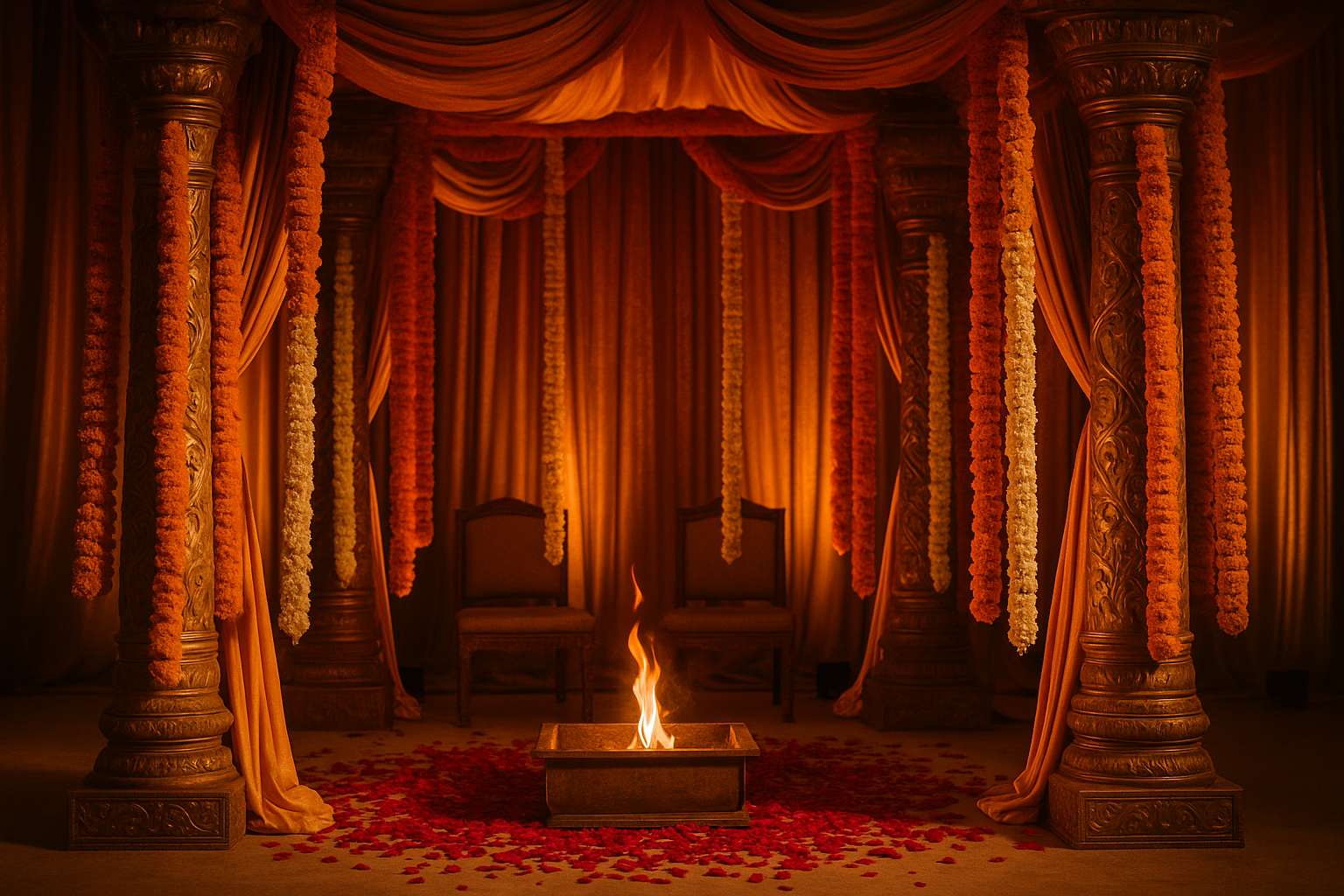
The Saptapadi — the seven sacred steps around the holy fire — is the legal and spiritual heart of a Hindu wedding. Once the seventh step is taken, the marriage is complete. Each of the seven steps carries a distinct vow for nourishment, strength, prosperity, happiness, family, health, and lifelong friendship. It is one of the most ancient, beautiful, and meaningful marriage rites in the world.
In a Hindu wedding, the most photographed moment is usually the flower garland exchange — the Jai Mala, when the bride and groom place jasmine and marigold garlands around each other's necks. But the most sacred moment is quieter, more intimate, and more ancient: the Saptapadi.
Seven steps. Seven vows. A sacred fire as witness. And at the end of the seventh step, according to Hindu tradition, a marriage that is considered complete — for this lifetime and the six to follow.
Whether you are planning your own Hindu wedding, attending one for the first time, or a couple from another tradition incorporating elements of Hindu ceremony into your celebration, this guide walks you through the Saptapadi with the reverence and detail it deserves.
What is the Saptapadi, and why does it matter?
Saptapadi comes from two Sanskrit words: sapta (seven) and padi (steps). It is the ritual moment in the Hindu marriage ceremony — the Vivah Puja — when the bride and groom take seven steps together around the sacred fire, Agni. In most North Indian traditions, these are seven full clockwise circumambulations of the havan kund (the sacred fire vessel). In many South Indian traditions, the couple takes seven distinct steps forward together. Either way, each step is accompanied by a spoken vow and chanting by the pandit.
The fire is not merely atmospheric. Agni is a divine being in Hindu tradition — the messenger who carries the couple's promises to the gods and to the cosmos. Walking around Agni is not a metaphor; it is a genuine act of worship, witnessed by the divine and by every person present.
According to the Art of Living Foundation, the Saptapadi dates to the Vedic period and is one of the oldest continuously practiced marriage rites in human history. Its spiritual significance has endured not despite modernization but through it — diaspora Hindu couples in Chicago, London, and Sydney perform the same ritual their grandparents performed in Jaipur, Chennai, or Dhaka.
Under ancient Hindu law codes (the Smriti texts), completion of the seventh step constitutes legal marriage. In modern India, this is recognized under the Hindu Marriage Act of 1955. In the United States, couples must also obtain a civil marriage license — but the spiritual completeness of the ceremony is no less real for the paperwork.
What does each of the seven steps mean?
Exact wording varies by regional tradition and pandit, but the seven pheras carry these broadly recognized meanings:
| Step (Phera) | Sanskrit theme | Vow meaning |
|---|---|---|
| First | Anna (Nourishment) | The couple invokes the gods for abundance, nourishment, and a life of noble purpose; vow to provide for one another and never let each other go hungry in body or spirit |
| Second | Bala (Strength) | Prayer for physical, mental, and spiritual strength — to face life's difficulties together with courage and equanimity |
| Third | Dharma (Righteous duty) | Vow to fulfil spiritual obligations, live with integrity, and uphold the righteous path together |
| Fourth | Sukha (Happiness) | Prayer for happiness, harmony, love, and trust — to nurture joy in the marriage through every season |
| Fifth | Prajaa (Progeny and community) | Vow for the wellbeing of all living beings, shared prosperity, and, traditionally, the blessing of children |
| Sixth | Ritu (Health and longevity) | Prayer for long, healthy lives together — that each may be a source of healing and sustenance for the other |
| Seventh | Maitri (Friendship) | The most sacred step: a vow of lifelong friendship, loyalty, and companionship — the promise that transcends all others and marks the completion of the marriage |
The seventh step is unique in its emotional weight. When the groom turns to the bride after the seventh phera and acknowledges, in the words of the tradition, that they have now become friends for this lifetime — that this friendship is the foundation of everything — it is often the moment when tears appear in the eyes of the family seated around them.
As Lin and Jirsa Photography, who have documented hundreds of Hindu weddings across the United States, observe: the Saptapadi is the ritual moment that even guests who do not speak Sanskrit feel. The deliberateness of each step, the fire, the chanting — it carries a weight that transcends language.
How is the Saptapadi different across Indian regional traditions?
India spans 28 states, dozens of languages, and more regional wedding traditions than any single dossier could capture. The Saptapadi is present across nearly all Hindu traditions, but its form varies meaningfully:
North India (Punjabi, UP, Rajasthani): Seven full clockwise circumambulations of the havan kund. The couple is connected by the bride's dupatta (scarf) tied to the groom's garment — the Granthi Bandhanam — as they walk together. The Baraat (groom's procession, often on a white horse or in a decorated vehicle) is a major pre-ceremony event. The Saptapadi concludes with the sindoor ceremony and mangalsutra.
Gujarati: Four pheras rather than seven, representing the four goals of human life — dharma, artha, kama, and moksha. The Hastamelap (joining of hands beneath a cloth) is central. The four-phera tradition is equally sacred; the number reflects a different philosophical emphasis rather than a diminished commitment.
South Indian (Tamil, Telugu, Kannada, Malayalam): Seven distinct forward steps rather than circumambulations; the couple may step onto betel leaves or stones with each vow. The Thaali (equivalent of the mangalsutra, specific to the regional tradition) is tied during the ceremony. Banana leaves and regional flowers replace the marigold garlands of the North.
Bengali: The Shubho Drishti (auspicious first look), Sampradaan (gifting of the bride), and the Saat Paak (seven rounds, performed with the bride held aloft on a wooden stool) distinguish the Bengali ceremony with a distinctive character of playfulness and poetry.
How do modern couples honor the Saptapadi in 2026?
Modern adaptations of the Saptapadi are increasingly common, particularly among diaspora couples who want to honor the tradition while making it accessible to guests who may be encountering it for the first time.
The most common adaptation is the printed ceremony program: a beautifully designed card or booklet that translates each phera into English, explains the significance of Agni, and guides guests through the ceremony sequence. Many couples partner with their pandit to create this together. The result is a ceremony where every person in the room — regardless of religious background — can follow each vow and feel the weight of each step.
Some couples also choose to incorporate personalized vow exchanges after the traditional chanting — a brief, personal statement in English from each partner that speaks to their own relationship while honoring the Sanskrit framework. This is discussed with the pandit during the planning process.
A growing number of couples are also making sustainability a part of their Saptapadi planning: sourcing marigolds from domestic flower farms (the Pacific Northwest and mid-Atlantic regions have several that specialize in bulk marigold supplies for South Asian weddings), choosing reusable mandap structures, and working with pandits who use natural, non-toxic materials in the havan.
What does the ceremony sequence look like around the Saptapadi?
The full Hindu wedding ceremony (Vivah Puja) lasts two to four hours and follows a sequence that gives the Saptapadi its proper context. Here is a condensed overview of the major elements leading to and following the seven steps:
- Ganesh Puja: Opening prayers to Ganesh, remover of obstacles — typically 15–20 minutes
- Kanyadan: The bride's father places her hand in the groom's — one of the most emotionally powerful moments for families
- Jai Mala (Varmala): The exchange of flower garlands — joyful, sometimes playful, always memorable
- Vivah Homa: The sacred fire is lit — the ceremony's spiritual center is now present
- Saptapadi: Seven steps, seven vows, the marriage made complete
- Sindoor: The groom applies vermillion to the bride's hair parting
- Mangalsutra: The groom ties the sacred necklace around the bride's neck
- Ashirvad: Elders bless the couple
The fire (havan kund) is a genuine open flame and requires a venue that permits it. Confirm fire policies in writing before signing any venue contract — this is one of the most common planning complications for Hindu weddings in hotel ballrooms and indoor spaces. Many couples resolve this by choosing venues with designated outdoor ceremony areas or by working with experienced South Asian wedding planners who know which local venues have pre-approved havan setups.
Frequently asked
What does 'Saptapadi' mean in Sanskrit?
Saptapadi comes from two Sanskrit words: sapta, meaning seven, and padi, meaning steps. It translates directly as "seven steps" and refers to the seven steps — or seven circumambulations — the bride and groom take together around the sacred fire (Agni) during a Hindu wedding ceremony. In North Indian and many diaspora traditions, the seven steps are completed as seven full clockwise rounds around the havan kund (sacred fire vessel), with each round accompanied by a spoken vow. In some South Indian traditions, the couple takes seven distinct steps forward together rather than circumambulating. The number seven holds deep significance in Hindu philosophy — seven chakras, seven sacred rivers, seven musical notes — and represents wholeness and completion. Once the seventh step is taken, the marriage is considered complete and irreversible under both religious and, historically, civil Hindu law.
What are the seven vows taken during the Saptapadi?
Each of the seven steps carries a distinct promise, though exact wording varies by regional tradition and the pandit officiating. The broadly recognized meanings are: the first step for nourishment and a life of abundance; the second for physical and mental strength; the third for the fulfilment of spiritual duties; the fourth for happiness, love, and harmony; the fifth for the wellbeing of all living beings and shared prosperity; the sixth for health and longevity; and the seventh — the most sacred — for lifelong friendship, loyalty, and companionship. The seventh vow is considered the most spiritually significant: when the groom turns to the bride and says, in essence, "we are now friends, and I will carry this friendship for a lifetime," the union is complete. Modern couples increasingly incorporate personalized interpretations of each step into their ceremony programs so non-Hindu guests can follow along meaningfully.
When does the Saptapadi happen within the Hindu ceremony?
The Saptapadi typically takes place toward the end of the ceremony, after the mangalsutra tying (when the groom places the sacred black-and-gold necklace around the bride's neck) and the sindoor ceremony (when the groom applies vermillion to the bride's hair parting). The sequence most commonly followed is: Ganesh Puja (opening prayer) → Kanyadan (gifting of the daughter) → Jai Mala / Varmala (exchange of garlands) → Vivah Homa (sacred fire lit) → Saptapadi (seven steps) → Sindoor ceremony → Mangalsutra → Ashirvad (blessings from elders). In total, a traditional Hindu ceremony with all these elements lasts two to four hours. The Saptapadi itself, with chanting by the pandit and the seven rounds, takes approximately twenty to thirty minutes — a pace that allows the weight of each vow to be genuinely felt.
How does the Saptapadi differ between North and South Indian traditions?
The distinction is meaningful and reflects deep regional variation within Hinduism. In North Indian traditions (Punjabi, UP, Rajasthani, Gujarati), the Saptapadi typically involves seven full clockwise circumambulations of the havan kund — the couple walks around the sacred fire seven complete times, each round representing one vow. In Gujarati ceremonies, only four pheras are taken (representing the four goals of dharma, artha, kama, and moksha). In South Indian traditions (Tamil, Telugu, Kannada, Malayalam), the Saptapadi more commonly involves the couple taking seven distinct forward steps together, sometimes on seven betel leaves or stone slabs, each step accompanied by the relevant vow and chanting by the pandit. South Indian ceremonies often use a mandap draped in banana leaves, and the overall structure, music, and attire differ significantly from North Indian ceremonies. If you are planning a ceremony or attending one, ask your pandit or the hosting family which regional tradition is being observed.
Can the Saptapadi be performed outside of India, and is it legally binding in the United States?
The Saptapadi can be performed anywhere the pandit deems appropriate, and it is performed daily at Hindu weddings across the United States, Canada, the United Kingdom, and the broader diaspora. In the United States, the religious ceremony alone does not constitute a civil marriage — couples must obtain a civil marriage license from their county clerk and have an authorized officiant sign it. Many pandits are ordained and licensed to sign civil marriage licenses in their state; others are not. Confirm this with your pandit well in advance, and if needed, complete a brief civil ceremony at the courthouse separately. The spiritual and religious significance of the Saptapadi is in no way diminished by this practical legal requirement — it is simply the American legal framework layered on top of a ceremony that predates modern civil law by several thousand years.
What should non-Hindu guests know before attending a Hindu wedding?
A printed ceremony program that explains each ritual step is the most valuable gift the couple can give non-Hindu guests — it transforms a two-to-four-hour ceremony from confusing to deeply moving. As a guest, plan to arrive early and stay for the full ceremony; leaving mid-ritual is considered disrespectful. Dress in vibrant colors — bright jewel tones, rich prints, and traditional Indian attire are all celebrated. Avoid white (associated with mourning) and black. Remove shoes when entering the mandap area if asked. The sacred fire is a genuine fire, not symbolic, and the mandap area will be warm; dress accordingly. The chanting by the pandit is in Sanskrit, and if no program is provided, simply follow the family's lead — sitting, standing, and participating in applause when the community around you does. The atmosphere is joyful, loud, and communal. Let yourself be swept into it.