Ceremony & Vows
How Long Should a Wedding Ceremony Be?
Twenty minutes feels rushed. Ninety minutes loses the room. Here is the honest timing guide — broken down by tradition, guest count, and the rituals you are planning — that every bride needs before she talks to her officiant.
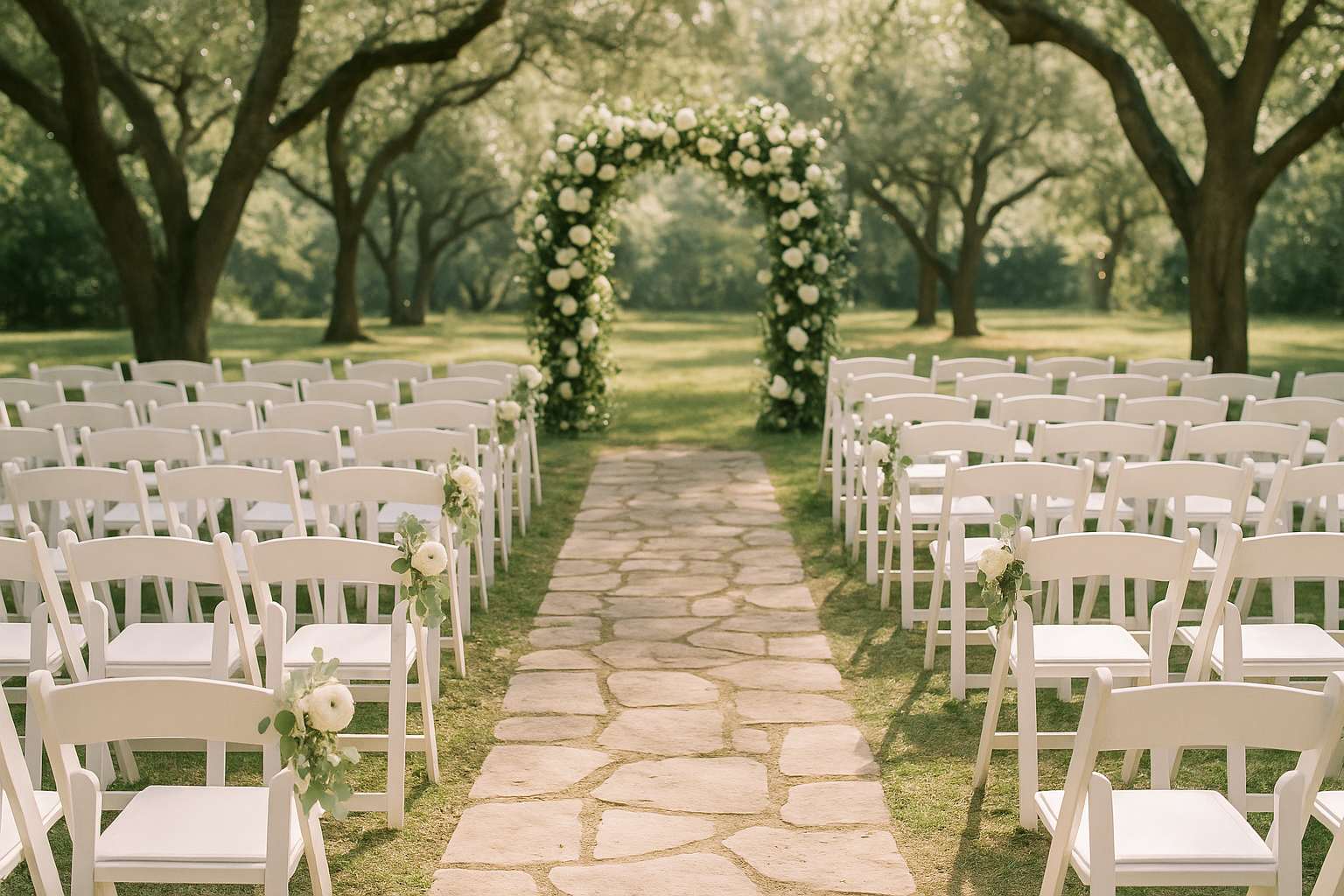
The average nondenominational wedding ceremony runs 20–30 minutes. Religious ceremonies range from 30–45 minutes for most Protestant and Jewish traditions to 60–90 minutes for a full Catholic Nuptial Mass. Beyond 35–40 minutes, guests in a seated nonreligious ceremony become visibly restless — so time every element individually and build a 10-minute buffer.
How long does each part of a wedding ceremony actually take?
Most couples estimate ceremony length by feeling, which is why the estimate is almost always wrong. The reliable approach is to time each element individually and add them up. A ceremony is made of discrete, predictable segments: the processional, the welcome, any readings, the homily or address, the vows, the ring exchange, any unity ritual, the pronouncement, and the recessional. Each of these has a known duration when you know your specific plan. According to Wedding Spot's planning guide, the most common surprise is the processional: a wedding party of eight attendants plus parents and grandparents, entering at a ceremonial pace to live music, typically takes 8–12 minutes from first person to bride at the altar — three to four times longer than most couples imagine during rehearsal.
| Ceremony Element | Typical Duration | Notes |
|---|---|---|
| Processional | 3–12 min | Scales with wedding party size; small party = 3–5 min; full party + parents = 8–12 min |
| Welcome and opening words | 2–4 min | Sets emotional tone; officiant's first words to the assembled guests |
| Love story / couple narrative | 3–5 min | Optional; increasingly common in secular ceremonies; universally well-received |
| Reading(s) | 2–4 min each | Limit to 1–2 for ceremonies under 35 min |
| Homily or sermon | 5–20 min | Varies enormously by officiant and tradition; confirm in advance |
| Declaration of intent | 1–2 min | The legal "I do" moment |
| Personal vows | 2–3 min per partner | Nerves slow delivery; time at rehearsal, not at a desk |
| Unity ritual | 3–6 min | Sand, candle, handfasting, ring warming — each adds approximately this range |
| Ring exchange | 2–4 min | Includes accompanying words from officiant |
| Pronouncement and first kiss | 1–2 min | |
| Recessional | 2–5 min | Couple plus full wedding party and parents |
How long should a ceremony be by tradition?
Ceremony length is not one universal answer — it is determined by tradition, officiant, and the specific ritual elements your ceremony includes. Here is what to plan for by tradition in 2026, based on venue coordinator data from Nanina's in the Park and multiple officiant scheduling resources:
Civil / courthouse ceremony: 10–20 minutes. A legal formality: the minimum required declarations, two witnesses, and the officiant's signature. Appropriate for elopements and legal ceremonies followed by a separate celebration.
Nondenominational / secular ceremony: 20–35 minutes. The flexible standard for most American weddings in 2026. Includes a processional, officiant's welcome, one to two readings, personal vows, ring exchange, and recessional. The 47% of couples who now choose secular ceremonies (per The Knot's 2025 Real Weddings Study) typically fall in this range.
Protestant ceremony: 30–45 minutes. Includes scripture readings, a homily, hymns or congregational music, and the traditional exchange of vows. Duration varies significantly by denomination: Episcopal and Lutheran ceremonies tend toward the longer end; Baptist and nondenominational evangelical ceremonies often run 25–35 minutes.
Catholic ceremony outside of Mass: 30–45 minutes. The Rite of Marriage without the Liturgy of the Eucharist. Appropriate for interfaith couples where both partners are not Catholic. Significantly more manageable in a reception context than the full Mass.
Full Catholic Nuptial Mass: 60–90 minutes. Includes the complete Liturgy of the Word, a homily, the Rite of Marriage, and the Liturgy of the Eucharist. For non-Catholic guests, a brief explanation in the wedding program — noting that Communion is received by Catholic guests only — prevents confusion and sets appropriate expectations.
Jewish ceremony: 30–50 minutes depending on denomination and the number of traditional elements included. Key moments — the Bedeken (veiling), the chuppah processional, the seven blessings (Sheva Brachot), the breaking of the glass — each add time but are deeply meaningful to families. Conservative and Orthodox ceremonies typically run toward the longer end of this range.
Hindu ceremony: 2–4 hours, governed by the muhurt (auspicious time window) set by the pandit. Individual sequences — the Baraat processional, the Milni meeting ceremony, the Mandap rituals, the Saptapadi (seven steps) — are each time-stamped in the wedding schedule. Guests at Hindu ceremonies expect a long, celebratory experience and are typically seated in a more relaxed, social atmosphere than Western ceremony seating conventions.
Interfaith and multicultural ceremony: 40–60 minutes. Weaving two traditions requires more time than either alone, but a skilled interfaith officiant can design a 45-minute ceremony that honors both traditions fully without feeling like two ceremonies stacked together.
What happens to the rest of the day when the ceremony runs long?
A ceremony that runs 20 minutes beyond its planned duration compresses every element that follows: cocktail hour shortens, guests sit down to dinner later, the first dance is pushed, and the band or DJ may begin the reception timeline with less runway before their contracted end time. More concretely, catering staff who were briefed on an entry time will begin serving the cocktail course before all guests have arrived, photographers lose portrait time they were counting on, and the couple — who can feel the delay but cannot easily speed a ceremony once it has begun — arrives at the reception already behind schedule and often visibly stressed.
The reliable solution is to time every element at your rehearsal, not in your imagination. According to Park Chateau Estate's planning guide, the most common discrepancy between estimated and actual ceremony length is personal vows — couples who practiced at their kitchen tables in 90 seconds discover that delivering vows with emotion in front of two hundred guests takes three minutes each. Build a 10-minute buffer into your ceremony window before the first reception element begins, share the final timed ceremony run-of-show with your officiant, DJ or musician, photographer, videographer, and venue coordinator no later than two weeks before the wedding, and designate your coordinator or a trusted bridesmaid to give the officiant a discreet signal if the ceremony is running significantly over time.
Frequently asked
How long is the average wedding ceremony in 2026?
The average nondenominational or civil wedding ceremony in the United States runs 20 to 30 minutes. That window comfortably accommodates the processional, a welcome from the officiant, one or two readings, the exchange of personal vows, the ring exchange, and the recessional — without rushing any moment or testing guest endurance. Religious ceremonies run longer by design: a Protestant ceremony typically takes 30–45 minutes, a Catholic ceremony outside of Mass runs 30–45 minutes, and a full Catholic Nuptial Mass can run 60–90 minutes. Hindu ceremonies, which are governed by an auspicious time window set by a pandit, often span 2–4 hours across multiple ritual sequences. For planning purposes, the most important thing is to have an honest conversation with your officiant about the complete run of service and time every element individually — not just estimate a round number.
How long should a ceremony be to keep guests comfortable?
Guest comfort research and venue coordinator experience consistently point to 35–40 minutes as the threshold beyond which seated audiences become visibly restless during a ceremony without liturgical rhythm (hymns, communal prayer, or ritual participation). Nondenominational ceremonies that exceed 40 minutes without built-in participatory moments — such as a community vow, a musical interlude where guests sing, or a ring-warming ritual — tend to feel long regardless of the couple's intentions. For outdoor ceremonies in warm weather, the comfortable threshold drops further: 25–30 minutes is a more realistic target when guests are in direct sun without shade. If your ceremony tradition genuinely requires more time — a full Catholic Mass, a multi-sequence Hindu ceremony — brief guests in advance through your wedding website and program, and ensure the venue provides adequate seating, shade, fans, or heat lamps as the season demands.
What adds the most time to a wedding ceremony?
Several elements add significant and often underestimated time to a ceremony. A homily or sermon from a religious officiant can range from 5 minutes to 20 minutes depending on the tradition and the specific officiant. Personal vows, when each partner writes and delivers their own, typically add 4–8 minutes for the pair; couples sometimes underestimate how much emotion slows the pace of delivery. Unity rituals — candle lighting, sand ceremony, handfasting, ring warming — each add 3–6 minutes. A full Catholic Nuptial Mass adds approximately 30–45 minutes for the Liturgy of the Word and Eucharist. Processionals with large wedding parties also take longer than most couples anticipate: a wedding party of twelve people plus parents and grandparents can take 8–12 minutes from the first person entering to the bride reaching the altar. Time all of these elements individually at your rehearsal.
Can a wedding ceremony be too short?
Yes — though the direction of error most often runs long, not short. A ceremony under 15 minutes can feel perfunctory to guests who have traveled, dressed formally, and set aside an entire day for the occasion. The guests who matter most — parents, grandparents, closest friends — have invested considerably in being present, and a ceremony that ends before the emotional arc fully forms can leave them feeling the occasion was not honored with appropriate weight. The civil courthouse ceremony, typically 10–15 minutes, is entirely appropriate for its purpose — a legal formality — but for a wedding reception with assembled guests, a minimum of 20 minutes is generally needed for the experience to feel like a ceremony. A short ceremony is not rude; a ceremony so compressed that no moment lands — no pause for tears, no breath between the vows and the kiss — can feel rushed in a way guests will notice.
How does ceremony length affect the rest of the wedding day timeline?
Ceremony length has a direct ripple effect on every subsequent element of the wedding day. A ceremony that runs 20 minutes over the planned schedule compresses the cocktail hour, delays the seating of guests for dinner, pushes the first-dance timeline, and may result in vendors (photographers, caterers, band members) running into overtime charges at the end of the night. The solution is not ruthless brevity but accurate planning: build the ceremony timeline based on individually timed elements rather than a single estimate, add a 10-minute buffer for late-arriving guests and the inevitable moment someone needs a moment to compose themselves, and share the finalized ceremony timeline with your officiant, photographer, videographer, and venue coordinator no later than two weeks before the wedding. A realistic ceremony timeline is one of the most valuable gifts you can give your entire vendor team.