Ceremony & Vows
How to Choose a Wedding Officiant: The 2026 Guide
Your officiant is the only vendor whose voice fills the room during the moment you actually become married. Here is how to find, vet, and hire the right one — clergy, professional, or beloved friend.
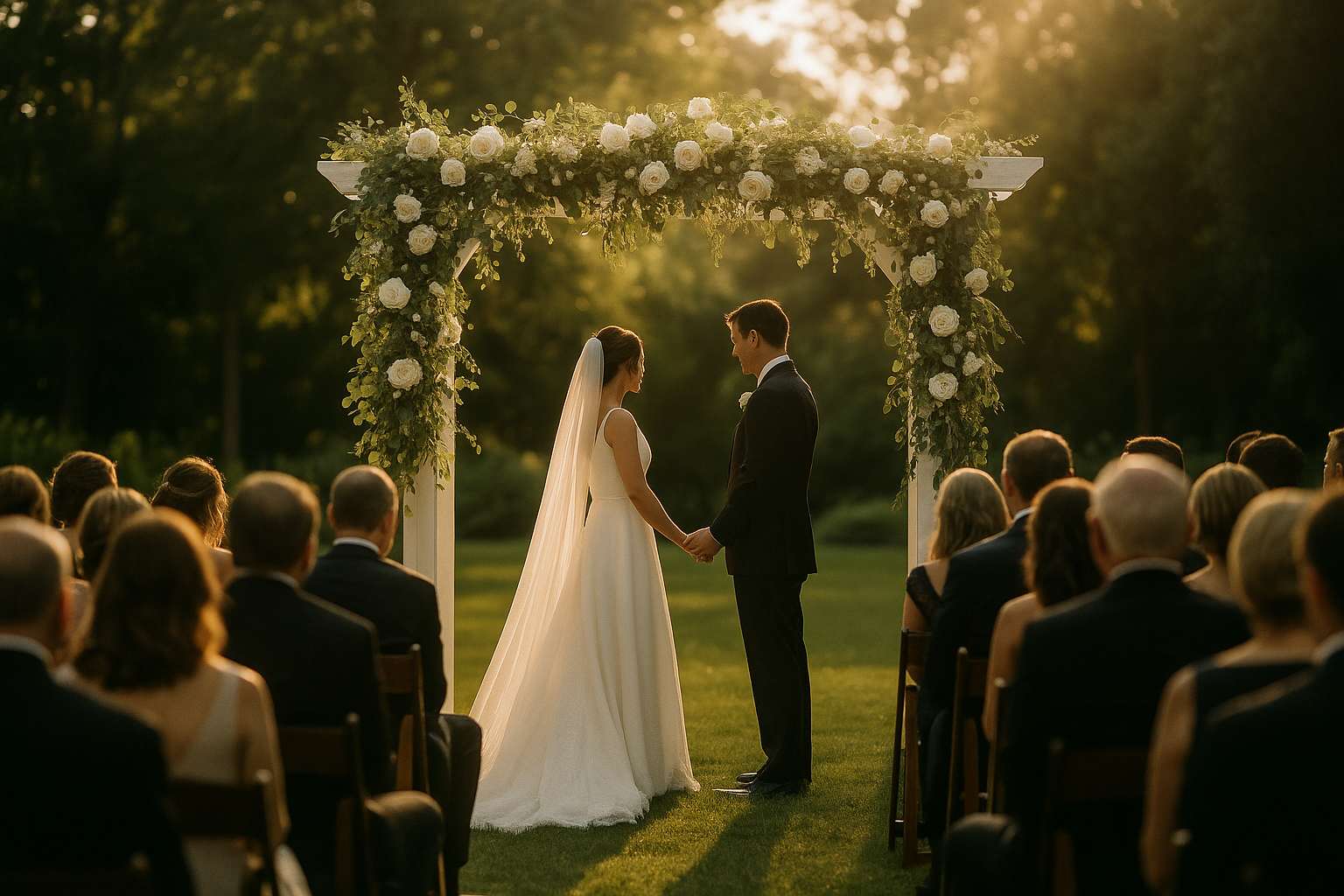
The right wedding officiant is determined by three factors: your faith background and ceremony style (religious clergy, professional celebrant, or ordained friend), verified legal authority in your ceremony state and county, and genuine chemistry — because their voice, warmth, and words will define the moment you become married. Book 6–12 months out; budget $350–$1,000 for a professional.
Of every vendor you hire for your wedding, the officiant is the only one whose voice will fill the room during the moment that actually makes you married. The photographer captures it; the florist frames it; the DJ scores the hours after. But the officiant performs it.
And yet, officiant selection is consistently among the most under-researched decisions couples make. Venues are booked a year out. Photographers are secured by month eight. And then, often, the search for someone qualified to speak the most important words of the day is deferred until two or three months remain — sometimes two or three weeks.
This guide gives you the full framework for making this decision well, early, and with confidence.
What are the three types of wedding officiants?
Every officiant falls into one of three archetypes, each with distinct strengths, requirements, and cost profiles.
Religious Clergy
Ordained clergy — priests, pastors, ministers, rabbis, imams, pandits — carry the deepest institutional authority and the richest liturgical tradition. In virtually every U.S. state, ordained clergy can perform marriages outside their own house of worship, giving couples considerable venue flexibility. For couples in an active faith community, clergy are often not just a vendor but a relationship — a person who knows the family, who has walked with one or both partners through significant life moments.
The trade-off is structure: most clergy require pre-marital preparation as a condition of officiating. Catholic Pre-Cana programs typically span several sessions over weeks. Protestant churches commonly require one to four counseling appointments. Jewish rabbis vary significantly by denomination — Reform rabbis are generally the most flexible for interfaith couples; Orthodox rabbis typically do not officiate interfaith ceremonies. Muslim imams vary widely based on individual practice and community affiliation. Begin the clergy conversation early — popular priests, rabbis, and pastors book 12-plus months ahead for peak wedding season.
Professional Wedding Celebrants
Professional wedding celebrants are independent practitioners who specialize in crafting and delivering personalized ceremonies — secular, non-denominational, or with whatever spiritual flavor the couple brings. According to American Marriage Ministries survey data from 2024, an estimated 44% of couples now choose a professional officiant over a clergy member or ordained friend. This category has grown substantially over the past decade, driven by rising rates of religiously unaffiliated Americans (now 29% of adults, up from 7% in the 1990s per Pew Research) and a growing preference for ceremonies that feel genuine rather than formulaic.
What a professional brings that neither clergy nor friends typically can: deep experience with ceremony structure, pacing, and crowd dynamics; an established process for gathering your story and writing it into a script; and a reliable professional infrastructure including contract, backup plan, and marriage license management. Budget $350–$600 for a mid-range professional in most U.S. markets. Bilingual and interfaith specialists command $700–$1,500.
Ordained Friends and Family Members
In 2024, approximately 26% of couples chose to have a friend or family member officiate, down from a pandemic-era peak but still meaningfully elevated from pre-2020 levels. The appeal is obvious: the person who knows you best, who can tell the story of your relationship with real authority, who will be moved by the ceremony alongside every other guest. Done well, a friend-officiated ceremony is extraordinarily intimate and memorable.
The mechanics are straightforward: organizations like the Universal Life Church and American Marriage Ministries offer online ordination in minutes at no cost. More than 20 million people have been ordained through the ULC alone. Some states require a physical certificate ($20–$40) and may require pre-registration with a county office.
What this route demands from you: your friend needs a ceremony script, a clear structure, coaching on pacing, and a full rehearsal. They are not a professional. Your job is to give them the tools and the rehearsal time to succeed.
How do you verify an officiant's legal authority?
This step is not optional and cannot be assumed. A ceremony officiated by someone without recognized legal authority in your specific state and county results in an invalid marriage — a paperwork crisis that can take months to resolve.
| Legal Category | Key States / Notes | Action Required |
|---|---|---|
| Officiant pre-registration required | Arkansas, Delaware, Maine, Minnesota, Nevada, New Jersey, New York, West Virginia, others | File with county clerk 1–4 weeks before wedding; verify deadline |
| Online ordination specifically challenged | Virginia (resolved), New York (resolved), some Pennsylvania counties | Verify with county clerk directly; do not rely on websites |
| Self-solemnization (no officiant needed) | Colorado, Pennsylvania | Couple signs their own license; verify current state law |
| Notary public may officiate | South Carolina and others | Confirm notary holds a valid commission and is authorized for marriages |
| Destination wedding abroad | All international destinations | Confirm foreign ceremony is legally recognized in your home state; civil ceremony at home may be needed |
The safest practice: call the county clerk's office where the marriage license will be issued — not a wedding website — at least 30 days before the wedding. Ask: Is ordination through [organization] recognized in this county? Does the officiant need to pre-register, and what are the deadlines? What must appear on the marriage license? What is the return window after the ceremony?
How do you collaborate with your officiant to create the best ceremony?
The ceremony script is a co-creation, not a form. The best officiants describe their process as listening first and writing second. Before your first consultation, prepare:
- The specific story of how you met — not the summary, the story.
- A moment that showed you this was the right person.
- What you admire most about your partner.
- Non-negotiable elements: specific readings, rituals, religious language — or the explicit absence of religious language.
- The tone you want: formal and reverent, warm and conversational, gently humorous, deeply spiritual.
For vow format, four options exist: traditional (repeat-after-officiant), self-written and read from cards, a hybrid of traditional structure with personalized language, and call-and-response. Lock in the vow format no later than three months before the wedding. Self-written vows require six to eight weeks of writing time and typically run one to two minutes per person when delivered at natural pace.
The key collaboration milestones:
- Story and vision intake meeting (in-person or video call)
- First draft delivered by officiant — couple provides written feedback within one week
- Final draft approved — no further substantive changes after this point
- Rehearsal read-through, confirming pronunciation and timing
At rehearsal, test the pronunciation of every name. This is not a step to defer to the wedding day.
What does tipping and payment look like?
Professional officiants are generally tipped $50–$150 cash in a sealed envelope, presented after the ceremony. This is not required but is customary and appreciated, particularly when the ceremony exceeded expectations. For clergy officiating as a pastoral service, the donation — not a fee — typically falls between $300 and $800 for non-congregation-members, presented in a sealed envelope often given by the father of the bride or the best man. Some clergy accept no payment; ask beforehand so you are not creating an awkward moment.
For online-ordained friends: do not offer cash, which often feels awkward to both parties. Instead, consider a meaningful gift — a piece of jewelry, a framed photograph from the day, an experience — that acknowledges the honor of what they did. If they incurred real costs (travel, time off work, ordination certificate), offer to reimburse expenses directly.
The 2026 market for professional officiants continues to be strong: experienced professionals in metropolitan markets are booked 9–12 months out for peak season dates. If you have your heart set on a specific person you met at a friend's wedding or discovered through a glowing review on The Knot's vendor marketplace, the time to reach out is the same week you book your venue.
Frequently asked
What are the three main types of wedding officiants?
The three main archetypes are religious clergy, professional wedding celebrants, and ordained friends or family members. Religious clergy — priests, pastors, rabbis, imams, pandits — bring deep institutional authority and liturgical structure; they are often the choice for couples in an active faith community and may require pre-marital counseling as a condition of officiating. Professional wedding celebrants are independent practitioners who specialize in crafting and delivering personalized, secular or non-denominational ceremonies; they typically include consultations, a custom-written script, rehearsal attendance, and marriage license filing in their base fee. Ordained friends or family members — ordained online through organizations like the Universal Life Church or American Marriage Ministries — offer extraordinary personal warmth and the intimacy of having a beloved person speak for you; they require more preparation support from you and the venue coordinator, and their legal authority must be verified with your county clerk before they commit. Each archetype suits a different couple, and the right choice depends on your faith background, ceremony tone, and how much professional ceremony support you want built in.
Is online ordination legal for wedding officiants?
In most U.S. states, yes — online ordination through organizations like the Universal Life Church (ULC) or American Marriage Ministries (AMM) is legally recognized and has been upheld in court challenges in states including Virginia and New York. However, legal recognition is governed by state law and can vary by county within a state; some counties have historically challenged online-ordained officiants, and a small number of states have stricter requirements. The only reliable way to confirm legality is to call the county clerk's office in the county where the ceremony will be performed — not a wedding website or an online forum — at least 30 days before the wedding. Ask specifically: Is ordination through [ULC/AMM] recognized in this county? Does the officiant need to pre-register, and what are the deadlines? The ordination itself typically takes minutes and is free; the verification step is what requires lead time. Colorado and Pennsylvania are the only states that allow couples to self-solemnize without any officiant.
How much does a wedding officiant cost in 2026?
Professional wedding officiants in 2026 typically cost $350–$600 for a mid-range professional in most U.S. markets, covering one to two consultations, a custom ceremony script, rehearsal attendance, and marriage license filing. Entry-level professionals range from $200–$350 for shorter ceremonies with fewer consultations; experienced or premium officiants charge $600–$1,000 and above for extensive customization, multiple planning meetings, and significant travel. Bilingual or interfaith specialist officiants command a premium of $700–$1,500 reflecting the specialized knowledge and additional preparation time required. Religious clergy typically do not charge a set fee but expect a donation — most non-congregation-member couples give $300–$800 in a sealed envelope. Online-ordained friends cost $0–$150 for the ordination certificate and any state-required registration. Costs in major metro markets (New York, Los Angeles, Chicago, Miami) run 20–40% above national averages. Factor in an 8–12% year-over-year increase from 2024 levels as experienced officiants respond to rising demand and inflation.
When should you book a wedding officiant?
Book popular religious clergy 12 or more months before your wedding date for peak season (May–October Saturdays). Experienced professional officiants should be booked 6–9 months out in most markets — earlier in competitive metro areas where sought-after professionals fill their calendars quickly. If you are asking a friend or family member to officiate, have that conversation 8–10 months before the wedding; the commitment involves script writing, rehearsal time, and public speaking preparation that requires more lead time than most people anticipate. The officiant is consistently one of the most under-prioritized vendors in the planning timeline — couples often lock in a venue a year out and then scramble to find someone qualified two weeks before the wedding. Treat the officiant search as a parallel track to venue research, not a downstream task. Popular bilingual officiants in metro markets now book 9–12 months out; if a bilingual ceremony is part of your vision, begin the search even earlier.
What should a wedding officiant contract include?
A professionally written officiant contract should include the exact wedding date, start time, and ceremony venue address; a full description of services (number of consultations, custom script writing, rehearsal attendance); the total fee, payment schedule, and deposit terms; a clear cancellation and rescheduling policy for both parties; a substitution clause stating whether the officiant may send a colleague in their place and your right to approve any substitute; responsibility for marriage license handling and return to the county clerk (confirm the timeline explicitly — most states require return within 3–10 days of the ceremony); and a dispute resolution clause. Contracts that use the word 'retainer' for the deposit almost universally mean non-refundable by design — the vendor is reserving your date and declining other clients. Request a backup plan clause if the officiant does not mention it: what happens if they have a medical emergency on your wedding day? A reputable professional has a colleague network for exactly this scenario.
What questions should you ask before hiring a wedding officiant?
Fifteen questions worth asking every candidate: How many weddings have you officiated? (Seek 50-plus for a professional; any number is acceptable for a friend, assessed honestly.) Can I read a sample script or watch a ceremony video? What is included in your fee — is rehearsal attendance included? How do you learn about the couple to personalize the ceremony? What is your process for writing and revising the script? What vow formats do you offer — traditional, self-written, hybrid? Do you attend the rehearsal and for how long? How do you handle the marriage license and its return? Are you familiar with legal requirements in our state and county? What is your backup plan if you have an emergency on the wedding day? Have you officiated interfaith or bilingual ceremonies? (If applicable.) Do you make the unplugged ceremony announcement? Do you work with a lapel microphone, and does your contract cover the sound check? What is your cancellation policy? How many weddings do you take on per weekend? The answers to these questions, combined with the impression made in a 20-minute video call, tell you far more than reviews alone.