Ceremony & Vows
How to Get Married Without a Church: Your Complete Guide
Nearly half of couples now choose a non-religious ceremony. Here is exactly how to do it — legally, meaningfully, and beautifully — from choosing a venue and officiant to writing vows that will move everyone in the room.
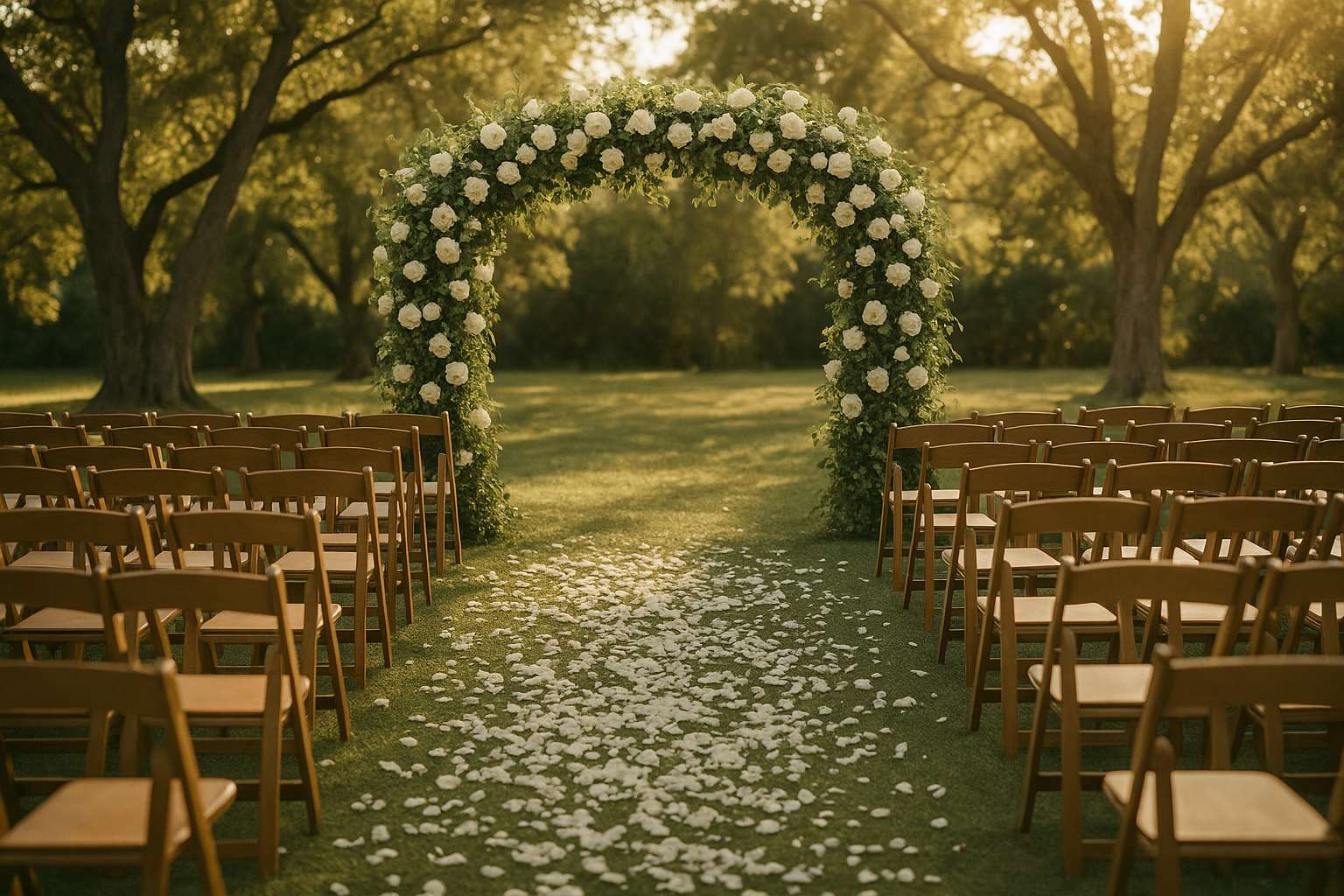
Getting married without a church is fully legal, increasingly common — 47% of couples chose secular ceremonies in 2025 — and involves four practical steps: get a marriage license, choose an authorized officiant, select a meaningful venue, and design a ceremony structure that centers your relationship rather than a religious framework.
One generation ago, the question "can we get married without a church?" carried a note of apology — as if choosing a secular ceremony required justification. Today it is simply a planning decision, made by nearly half of all American couples. According to The Knot's 2025 Real Weddings Study, 47% of couples chose a secular ceremony, making it the single most common ceremony type in the United States. Pew Research Center data confirms that only about 30% of Americans married within the past decade held their ceremony in a house of worship with a religious officiant.
This shift is not a loss of meaning. It is a gain of intentionality. Every word in a secular ceremony has been chosen by you. Every ritual has a story. Every promise is yours. The result, consistently, is a ceremony that guests remember as the most emotionally resonant they have ever attended — because nothing in it is perfunctory.
Here is exactly how to do it.
What are the legal requirements for getting married outside a church?
The legal framework for marriage in the United States is straightforward and has nothing to do with venue or religion. You need three things: a marriage license, a legally authorized officiant, and two adult witnesses. That is the complete list.
Obtain your marriage license from the county clerk's office in the county where the ceremony will take place — not where you live. Most states have a waiting period (0 to 5 days) and an expiration window (30 to 90 days). Apply early enough to accommodate both. Bring valid government-issued ID for both partners; some states require proof of divorce if either partner was previously married. There is typically a small fee ($20 to $80).
After the ceremony, the officiant signs the license and returns the completed document to the county clerk, typically within 3 to 10 days depending on state law. This filing step is what makes your marriage legally official. Assign someone — your officiant or a coordinator — to manage this. Many couples are startled to discover the filing responsibility falls on the officiant, not on them.
| Officiant Type | Typical Cost | Personalization Level | Best For |
|---|---|---|---|
| Judge / Justice of the Peace / Magistrate | $50–$150 | Low | Simple courthouse or civil ceremony |
| Notary Public | $25–$75 | Low | Valid in select states (SC, ME, and others) only |
| Friend / Family — ordained online | $0–$50 (ordination fee) | Very high | Couples with a meaningful person to lead the ceremony; verify legality with county clerk |
| Professional secular celebrant | $400–$1,200+ | Very high | Full ceremony collaboration and personalized script |
| Humanist celebrant | $350–$900 | Very high | Non-religious ceremony grounded in human values; training through American Humanist Association |
The most important guidance on online ordination: do not assume it is valid in your state. Organizations like the Universal Life Church and American Marriage Ministries are recognized in most states, but Pennsylvania, Virginia, Tennessee, and Kentucky have stricter requirements, and validity can vary even within states by county. Contact the county clerk's office directly — not a wedding website, and not the ordination organization's FAQs — and get confirmation in writing if possible.
Where can you get married if not in a church?
The venue landscape for secular ceremonies is effectively unlimited, which is one of the most liberating aspects of non-religious planning. The question to lead with is not "what is a popular venue?" but "what place carries meaning for us, or reflects the atmosphere we want to create?"
The most-requested secular ceremony venues in 2025–2026 are:
- Vineyards and wineries — particularly in California, Virginia, the Pacific Northwest, and the Hudson Valley. Most have dedicated ceremony spaces and in-house catering. The combination of natural beauty and sophisticated atmosphere suits a wide range of aesthetics.
- Hotel ballrooms and rooftop terraces — for urban couples and those who prioritize seamless logistics. Many hotels offer ceremony-to-reception packages eliminating the transportation variable entirely.
- Gardens, arboretums, and botanical parks — public gardens often require venue permits and have specific setup rules, but provide extraordinary natural beauty.
- Art galleries and museums — increasingly popular for couples who want architectural distinction and a cultured atmosphere without a religious setting.
- Barn and farm venues — the rustic-romantic aesthetic that has dominated American wedding culture since the 2010s remains strong, now updated with elevated florals and lighting design.
- Private homes and family properties — the most intimate option; requires coordination for permits, rentals, and logistics, but carries irreplaceable personal significance.
How do you build a ceremony that feels as meaningful as a religious one — without the liturgy?
This is the question at the heart of secular ceremony design, and it deserves a direct answer: meaning comes from intention, not from tradition. A secular ceremony is not a religious ceremony with the theology removed. It is a ceremony built deliberately around what you actually believe about love, partnership, and commitment.
The most effective secular ceremonies share a common architecture: a processional; a warm, story-centered welcome; one or two readings from poetry, prose, or original writing; an address by the officiant on what love means and what marriage asks of two people; the personal vows (the emotional centerpiece — your actual words, your actual promises); the ring exchange; the pronouncement; and the recessional. The entire experience runs 20 to 30 minutes — and every minute is filled with something you chose.
According to OurVows' 2025–2026 secular ceremony guide, the trend in personal vows is strongly toward specificity: not "I promise to love you forever" but the particular memory, the exact quality, the specific promise that only the two of you could speak to each other. These are the words guests remember for years afterward.
Consider one unity ritual — not because it is required, but because a single shared act gives the ceremony a visual, participatory dimension that photographs carry. Options include handfasting (the Celtic tradition of binding hands with cords — the literal origin of "tying the knot"), a sand ceremony, a wine box ceremony, or a community vow in which your officiant turns to the assembled guests and asks them to commit their support to you as a couple. That last moment — a room full of the people you love saying "we will" — is among the most powerful experiences in any ceremony, religious or secular.
The practical truth, confirmed by couples who have planned both types: a secular ceremony is not a compromise. It is a choice. And when made with care and intention, it produces some of the most moving ceremonies any guest will ever attend.
Frequently asked
Is a wedding without a church or religious officiant legally valid?
Yes, completely. Legal validity in the United States depends on two things — a valid marriage license and a legally authorized officiant — and neither requires a religious ceremony or venue. The ceremony's content, location, and the presence or absence of religious language have no bearing on its legal standing. Couples marry in vineyards, on beaches, in art galleries, in family backyards, and in courthouse gardens every day with full legal validity. The required elements are your marriage license (obtained from the county clerk), the Declaration of Intent (both partners affirming intention to marry), two adult witnesses, and an officiant authorized under your state's law to solemnize marriages. Nothing about that list requires a church, a pastor, or a Bible.
Who can legally officiate a wedding without a church?
Several types of people are authorized to officiate civil and secular weddings in the United States. Sitting or retired judges, magistrates, justices of the peace, and county clerks are authorized in every state. Professional wedding officiants — secular celebrants and humanist celebrants — hold professional credentials and specialize in personalized, non-religious ceremonies. Friends and family members can become authorized officiants through online ordination organizations such as the Universal Life Church or American Marriage Ministries — these are recognized in most, but not all, states. Always verify your intended officiant's authorization with the specific county clerk's office where your ceremony will take place. Pennsylvania, Virginia, Tennessee, and Kentucky have stricter requirements; some counties in those states require pre-registration. Never assume state-level rules apply uniformly across every county.
What types of venues work for a non-religious ceremony?
The freedom of venue choice is one of the most compelling advantages of a secular wedding. Any location that is meaningful to you — or simply beautiful — is available. Popular categories include: vineyards and wineries (the most requested secular ceremony backdrop in 2025–2026); hotel ballrooms and rooftop terraces; public and private gardens; beaches and lakefronts; art galleries, museums, and historic estates; barn and farm venues; state and national parks (which often require permits); family homes and private properties; and courthouse plazas or gardens for intimate civil ceremonies. Two practical requirements apply to any venue: confirm it legally permits ceremonies (some venues require a permit from the local municipality), and confirm your officiant is willing to travel to the location. Beyond that, the question is simply what kind of setting reflects who you are as a couple.
What is the difference between a civil ceremony, a secular ceremony, and a humanist ceremony?
These three terms are related but distinct. A civil ceremony is performed by a government official — a judge, magistrate, or justice of the peace — and is typically brief (5 to 15 minutes), legally focused, and contains minimal personalization beyond the required declarations. It is the courthouse experience, though it can take place in other locations if the official is willing to travel. A secular ceremony is any non-religious ceremony regardless of who officiates it; it is designed to be personally meaningful and emotionally resonant, with custom vows, readings, and rituals chosen by the couple. A humanist ceremony is a specific type of secular ceremony explicitly grounded in humanist philosophy — emphasizing human dignity, reason, and ethical living — and is led by a trained humanist celebrant. Humanist celebrants welcome couples of all backgrounds, including those who do not identify as humanists, who simply want a thoughtful non-religious ceremony. Most couples who say they want to "get married without a church" are seeking a secular or humanist ceremony, not just a legal civil ceremony.
How do we structure a meaningful ceremony without religious elements?
A secular ceremony follows a clear and emotionally effective structure that has evolved through practice. A well-paced ceremony runs 20 to 30 minutes. The typical order: processional music as the wedding party and couple enter; a welcome from the officiant setting the tone; an optional love story — the officiant shares how the couple met and what is distinctive about their relationship, which guests consistently cite as one of the most moving moments; one or two readings (poetry, prose, or an original piece); an address on love and partnership; the Declaration of Intent (the legally required affirmation); personal vows, which are the emotional heart of a secular ceremony; an optional unity ritual; the ring exchange; the pronouncement; the first kiss; and the recessional. The absence of religious liturgy creates space for personal content — your actual story, your actual promises — which is why couples who have attended both types consistently report secular ceremonies as more emotionally resonant.
How do we handle religious family members who may be uncomfortable with a secular ceremony?
This is one of the most common concerns among couples planning secular weddings, and the experience of thousands of couples suggests it resolves more gracefully than expected. A thoughtfully designed secular ceremony does not mock, minimize, or criticize any faith tradition — it simply centers the couple's relationship and values. Most religious guests, when given a ceremony that is warm, dignified, and genuinely moving, respond with nothing but joy. A few practical approaches help: have a brief, private conversation with key family members in advance ('We want everyone who loves us in that room; we've designed a ceremony that honors what marriage means to us'); ask your officiant to use language that is universally human rather than explicitly anti-religious; consider whether any cultural rituals from your family's tradition — a glass-breaking, a handfasting, a flower garland exchange — can be incorporated as cultural rather than theological elements. Most families who arrive with reservations leave with tears of joy.
Can we include readings, rituals, or cultural traditions from a religious background in a secular ceremony?
Yes, and this approach is both common and deeply meaningful. Many of the most beloved wedding rituals that originated in religious traditions function beautifully as cultural expressions in a secular framework. The Jewish glass-breaking, the Celtic handfasting, the South Asian flower garland exchange, the African-American broom-jumping, and the Japanese san-san-kudo sake ceremony can all coexist in a secular ceremony without theological conflict. The key distinction is treating these as cultural acts rather than religious sacraments — your officiant briefly explains the tradition's meaning and significance, and it becomes a bridge of honor to your heritage rather than a contradiction. For readings, a passage from Song of Solomon reads as profound human poetry even in a secular ceremony; Ruth's declaration of loyalty is one of the most quoted secular readings at civil ceremonies. Discuss any cultural or faith-tradition element with your officiant, who can craft appropriate framing language.