Ceremony & Vows
Jewish-Christian Interfaith Wedding: A Complete Planning Guide
Honoring two faiths in one ceremony is not a compromise — it is one of the most meaningful things a couple can create together. Here is how to plan a Jewish-Christian wedding that is true to both of you.
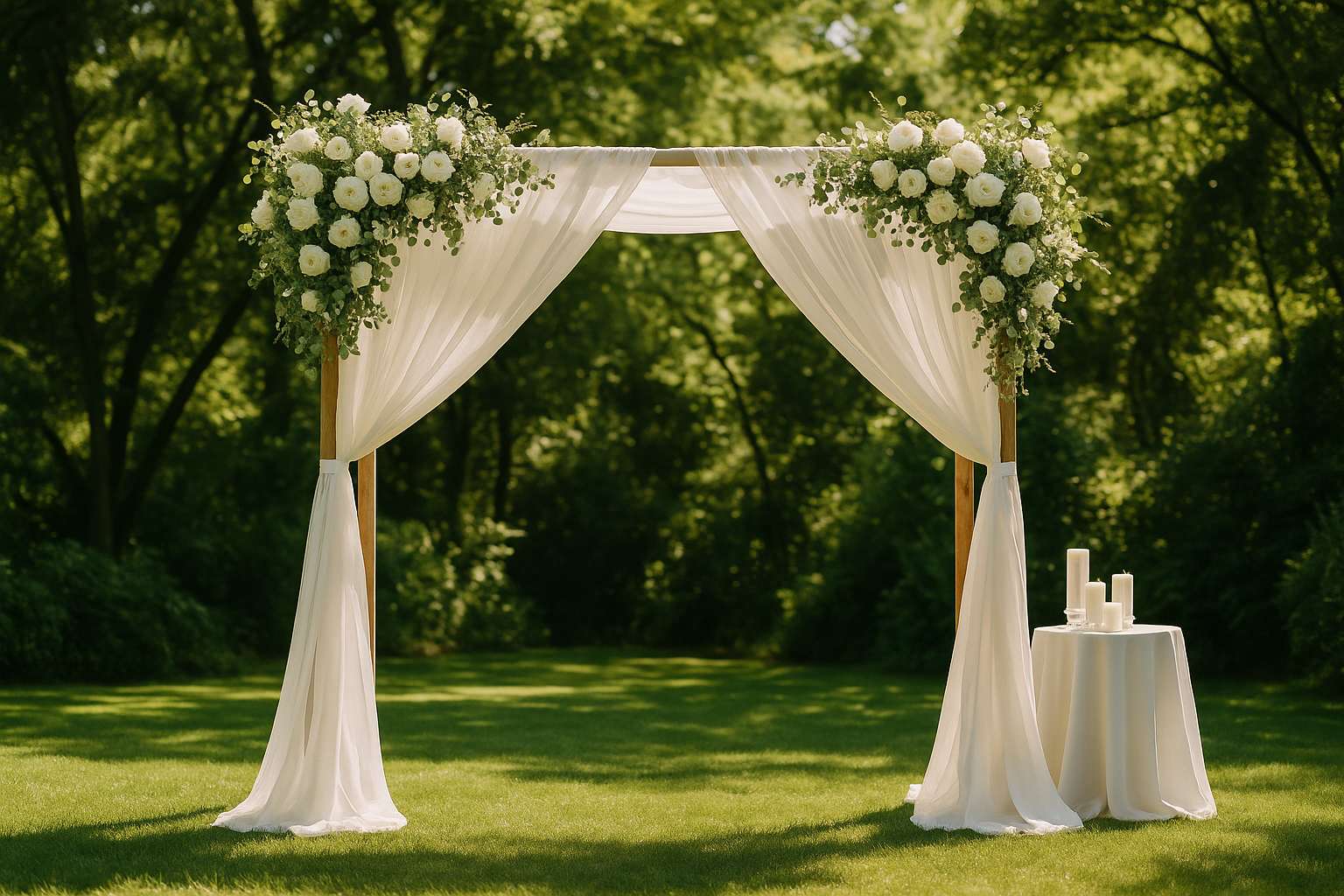
A Jewish-Christian interfaith wedding honors both faiths through co-officiation, shared ritual elements — chuppah, Ketubah, unity candle, breaking of the glass — and a ceremony structure that gives both traditions equal, genuine presence. Plan 12 months out and have family conversations early.
How common are Jewish-Christian weddings, and what makes them work?
Jewish-Christian marriages are the most common interfaith pairing in the United States, and they have become increasingly mainstream. According to Pew Research Center data published in February 2025, 26% of currently married Americans have a spouse of a different religious identity — and among couples who married in the last decade, only 52% wed someone of the same faith. The Jewish-Christian pairing specifically accounts for a significant portion of these unions, given the historical and cultural overlaps between the two traditions.
What makes a Jewish-Christian interfaith ceremony genuinely work — rather than feeling like an awkward compromise — is intentionality at every level: the right officiant, a ceremony structure built around meaning rather than checklist, family conversations held early, and ritual elements chosen for their depth rather than their familiarity.
The two traditions share more common ground than is sometimes assumed. Both are rooted in covenant theology — the idea of a sacred agreement between two people witnessed by a community and a higher power. Both hold the family as a foundational social unit. Both traditions have rich bodies of poetry and scripture on love and commitment that translate beautifully into ceremony language. These overlaps are your architecture.
What are the essential elements of a Jewish-Christian ceremony?
The most beloved Jewish-Christian ceremonies typically weave together a core set of elements from each tradition, chosen for their resonance and their ability to be understood and honored by guests of both faiths:
| Element | Tradition | Meaning & Notes |
|---|---|---|
| Chuppah (wedding canopy) | Jewish | Symbolizes the new home being built; open on all sides for hospitality; can hold a unity candle inside |
| Ketubah (marriage contract) | Jewish | Signed before ceremony; interfaith-text versions available; doubles as a work of art |
| Circling ritual | Jewish | One or both partners circles the other, symbolizing mutual shelter and protection |
| Sheva Brachot (Seven Blessings) | Jewish | Can be recited by family members from both sides in English and/or Hebrew |
| Breaking of the glass | Jewish | Powerful emotional close to the ceremony; universally beloved across faith backgrounds |
| Unity candle | Christian | Two candles become one; visually and theologically compatible with the chuppah |
| Scripture readings | Christian / Hebrew Bible | 1 Corinthians 13, Song of Solomon, Psalms — all bridge both traditions beautifully |
| Congregational affirmation | Christian | Guests are asked to witness and support the couple — a communal blessing gesture |
| Exchange of vows and rings | Shared | Personal vows can weave language from both traditions |
Organizations such as 18Doors — the leading national nonprofit supporting Jewish interfaith couples — offer a free wedding program language builder and a directory of rabbis willing to co-officiate at Jewish-Christian ceremonies. Their Guide to Wedding Ceremonies for Interfaith Couples is the most comprehensive free resource available and should be in every interfaith couple's planning file.
How do you choose the right officiant for a Jewish-Christian wedding?
The officiant decision is the single most consequential vendor choice in interfaith ceremony planning. You have three primary options:
Option 1: Two co-officiants (a rabbi and a minister). This is the most representationally balanced approach — each tradition has its own authentic voice. The challenge is finding willing clergy. Not all rabbis will co-officiate; Reform and Reconstructionist movements are most open; Conservative varies; Orthodox generally does not permit it. Contact 18Doors for referrals to rabbis who have specific experience co-officiating with Christian clergy. Total cost: typically $400–$1,600 (paying each officiant individually). Require a joint rehearsal.
Option 2: A single professionally trained interfaith officiant. A minister or celebrant who has deep liturgical knowledge of both traditions and has officiated many Jewish-Christian ceremonies. This person conducts the full ceremony as a unified experience. Ask candidates specifically: "How many Jewish-Christian ceremonies have you officiated? May I see a sample script?" Cost: $300–$1,000.
Option 3: One clergy + one lay officiant. A rabbi or minister leads the ceremony, while a trusted friend or family member — ordained online for the day — handles the other tradition's elements. Online ordinations are legally valid in most U.S. states (verify your specific county). Cost: $100–$800 for clergy; $0–$150 for ordination.
| Option | Estimated Cost | Best For | Key Challenge |
|---|---|---|---|
| Co-officiation (rabbi + minister) | $400–$1,600 | Couples wanting equal faith representation | Finding willing, compatible clergy |
| Single interfaith officiant | $300–$1,000 | Unified ceremony flow; one point of contact | Finding one with genuine knowledge of both traditions |
| Clergy + lay officiant | $100–$800 | Warmth of a trusted voice; lower cost | Lay officiant needs coaching and preparation time |
How do you structure the ceremony itself?
The most elegant Jewish-Christian ceremonies follow one of two structural approaches:
Alternating structure: Rituals from each tradition are placed in sequence, alternating throughout the ceremony. The opening prayer is Christian; the Ketubah reading is Jewish; a New Testament scripture reading follows; then Psalms or the Song of Songs; and so on. Each tradition appears roughly equally, and the flow creates a natural conversation between faiths.
Integrated structure: Rather than alternating, this approach finds the thematic overlap between traditions and creates moments that honor both simultaneously. A chuppah that also holds a unity candle is the clearest example. Vows that weave language from both traditions — the covenantal language of Judaism alongside the Christian framing of marriage as a reflection of divine love — create moments that belong to both faiths at once.
Target 45–60 minutes total. If your ceremony outline exceeds this, curate ruthlessly: one deeply felt ritual from each tradition, given room and context, carries more meaning than four rushed ones.
Print bilingual programs that explain each element to guests unfamiliar with one tradition. A brief written note — "We are about to observe the Jewish tradition of breaking the glass, which symbolizes..." — transforms unfamiliarity into inclusion and is one of the most gracious things an interfaith couple can offer their guests.
What are the most common mistakes in Jewish-Christian wedding planning?
Booking a venue before understanding ritual logistics. Many venues prohibit open flames (unity candles), outside structural additions (chuppahs), or require prior written approval for non-denominational officiants. Research every restriction before signing a venue contract.
Choosing an officiant fluent in one tradition and superficial in the other. A sample ceremony script from any candidate officiant will reveal this immediately. Request a script that incorporates both traditions specifically, not just a generic interfaith ceremony template.
Letting the ceremony run past 60 minutes. The most common structural mistake. Every element added from both traditions without removing something produces a ceremony that loses the room. Choose depth over quantity.
Making one family feel like a guest at the other's wedding. Audit your ceremony for parity: count the readings, speakers, and visual symbols from each tradition. If one side dominates, rebalance.
Skipping the joint officiant rehearsal. Co-officiants who are unfamiliar with each other's timing produce ceremonies that feel disjointed. A mandatory joint rehearsal is non-negotiable.
Frequently asked
Can we have both a rabbi and a minister co-officiate our Jewish-Christian wedding?
Yes — co-officiation is achievable with the right planning. The key step is finding officiants who are both willing and experienced with this specific pairing. Reform and Reconstructionist rabbis are most likely to co-officiate; Conservative rabbis vary; Orthodox rabbis generally do not. Organizations such as 18Doors — a national nonprofit dedicated to Jewish interfaith couples — maintain referral networks of rabbis and cantors willing to officiate at interfaith ceremonies. When you find willing candidates, confirm they have previously co-officiated with clergy of the other tradition, give them time to meet and rehearse together, and designate one person to manage ceremony timing. A well-rehearsed co-officiated ceremony flows seamlessly and creates a powerfully balanced representation of both families' faiths.
Which Jewish and Christian traditions blend most naturally in a single ceremony?
Several elements from both traditions carry universal human meaning and blend organically. The chuppah — the Jewish canopy symbolizing the home being created — is open on all sides to represent hospitality, a value shared in Christian tradition. Many couples place a unity candle inside the chuppah, weaving a Christian symbol into the defining Jewish structure. The Ketubah (Jewish marriage contract) translates beautifully in an interfaith text — a work of art declaring the couple's promises, signed before the ceremony. The breaking of the glass at the close is among the most universally beloved Jewish traditions: guests shout Mazel tov as the couple's first act as spouses, and its emotional power transcends any single faith. Scripture readings from both the Hebrew Bible and New Testament sit comfortably side by side when chosen for their shared themes of covenant, love, and commitment.
How do we handle family members who feel strongly that the ceremony should follow only one tradition?
Family resistance almost always roots in something deeper than the ceremony — a fear that heritage will be erased, or that faith is being treated as decorative. The most effective approach is having family conversations early, within the first two months of engagement, before any vendors are booked. Present a united front and frame the conversation around inclusion: 'We want our ceremony to genuinely honor both families.' Assign meaningful ceremonial roles to family members from both sides — a reading, a blessing, an escort role — so each family feels present in the ceremony, not merely in attendance. The Pew Research Center reports 26% of currently married Americans have a spouse of a different religious identity, meaning family members have often watched these ceremonies succeed beautifully. Pointing to specific examples shifts the conversation from abstract concern to concrete reality.
What does a Jewish-Christian interfaith ceremony typically cost?
The key cost factors for a Jewish-Christian ceremony center on officiant arrangements and ritual elements. A single interfaith officiant charges $300–$1,000; co-officiation with a rabbi and minister runs $400–$1,600 total. A custom Ketubah — illustrated, archival printed — runs $100–$1,200 depending on whether it is a mass-produced design or original artwork. Chuppah rental ranges from $400 (simple structure) to $2,000–$3,500 for a full floral canopy. Bilingual printed ceremony programs run $150–$500. Premarital counseling is provided at no cost by many clergy, or $600–$1,500 through a licensed therapist. All figures are 2025–2026 U.S. estimates; major metropolitan markets (New York, Los Angeles, Chicago) run 20–50% above these ranges. Request itemized quotes from every candidate early — costs for officiants and ritual elements vary significantly by region and religious denomination.
How long should a Jewish-Christian interfaith ceremony run?
A well-designed Jewish-Christian ceremony typically runs 45 to 60 minutes. The most common planning mistake is adding elements from both traditions without removing anything, producing ceremonies that run 75–90 minutes and lose the room before the pronouncement. Choose the rituals carrying the deepest personal meaning from each tradition and let them breathe. Three meaningful rituals from each tradition, given room and explanation, are far more moving than seven rushed ones. If your outline runs long, prioritize the Ketubah signing, the Seven Blessings, the ring exchange, and the breaking of the glass as the Jewish core; the unity candle, a scripture reading, and the congregational affirmation as the Christian core. Together these moments take approximately 35–45 minutes — leaving ample time for processional, music, and reflections from each officiant.
Do we need a neutral venue for a Jewish-Christian wedding, or can we marry in a church or synagogue?
Many Jewish-Christian couples choose a neutral venue — a garden, hotel ballroom, historic estate, or nondenominational chapel — because it carries no inherited associations with either faith and allows both traditions equal visual presence. Marrying in a house of worship is achievable if both families are comfortable and the venue permits elements from both faiths. Some venues restrict outside officiants, open flames (unity candles), or structural additions like a chuppah — research all restrictions before signing a venue contract. A strong option is venues specializing in interfaith weddings: The Lake House Inn in Pennsylvania, for example, has dedicated infrastructure including a chuppah structure and extensive experience with Jewish and interfaith ceremonies. Venues that have hosted many interfaith ceremonies move through the logistics more smoothly than those encountering them for the first time.