Ceremony & Vows
Jewish Wedding Ceremony Order of Events: The Complete Guide
From Kabbalat Panim and Badeken to the shattering of the glass and Yichud, every element of the Jewish wedding ceremony carries meaning centuries deep. Here is the complete order of events — with timing, denominational variations, and what to expect.
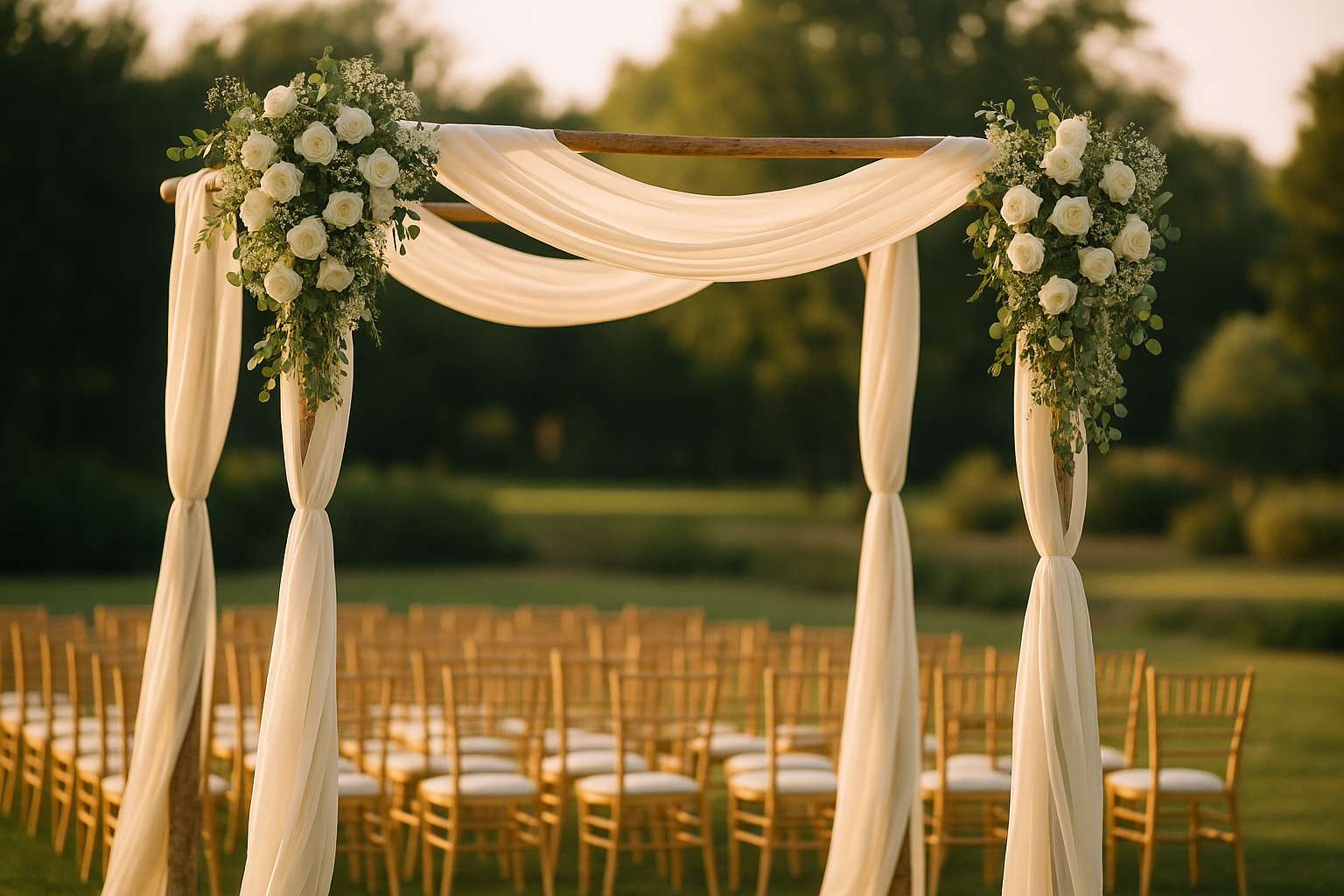
A Jewish wedding ceremony unfolds in a beautiful, layered sequence — from the Kabbalat Panim and ketubah signing before the ceremony, through the chuppah, hakafot, Sheva Brachot, and breaking of the glass, to the intimate Yichud that follows. The full pre-ceremony through ceremony sequence typically runs 90–120 minutes.
Why the Jewish Wedding Ceremony Is Extraordinarily Layered
A Jewish wedding is not simply a legal contract sealed with an exchange of rings — it is a living covenant that braids together more than two thousand years of legal tradition, biblical narrative, communal memory, and personal joy. When you understand why the bride circles the groom seven times, or why the ketubah must be signed before anyone walks down the aisle, you stop performing rituals and start inhabiting them. That transformation — from checklist to covenant — is what guests feel, what photographs capture, and what a marriage is built upon.
This guide walks through every element of the Jewish wedding ceremony in sequence, with timing, meaning, denominational variations, and practical planning notes for each stage.
What Happens Before the Ceremony Begins?
Kabbalat Panim: The Pre-Ceremony Reception (60–90 minutes before the chuppah)
The Jewish wedding day traditionally begins with Kabbalat Panim — a reception in which guests are welcomed separately at the bride's and groom's spaces. At the Tisch, the groom meets with guests (traditionally male) for singing, Torah discussion, and joyful noise; guests ceremonially try to distract him from delivering his remarks, a beloved tradition of playful chaos. Meanwhile, the bride receives her own guests — parents, grandparents, close friends — who come to offer blessings as she sits honored like a queen. These two receptions run concurrently and create the emotional and communal warmth that carries through the entire ceremony.
Ketubah Signing (20–30 minutes before the processional)
The ketubah (כְּתוּבָּה, literally "that which is written") is the foundational marriage document of the Jewish tradition, predating modern civil marriage contracts by roughly two millennia. Two witnesses — who must not be blood relatives of either party, and in Orthodox ceremonies must be halachically observant adult Jewish males — sign the document. The bride is traditionally not present at the signing in Orthodox practice; in Conservative and Reform ceremonies, she is often present and may sign as well.
The ketubah has undergone a remarkable artistic renaissance in 2025–2026. Custom illustrated ketubahs featuring botanical florals, papercut relief designs, geometric minimalism, and Tree of Life motifs are displayed as gallery-quality artwork in the couple's home. Prices range from $50–$150 for printed templates to $1,500–$3,500 for traditional scribal calligraphy (sofer). Order custom pieces at least 12 weeks before the wedding to avoid rush fees. See Aish.com's complete wedding guide for ketubah text traditions by denomination.
Badeken: The Veiling Ceremony
Immediately after the ketubah signing, the groom is escorted to the bride's room to veil her face — the first time the couple sees each other on the wedding day in traditions where they have been kept apart. Rooted in the biblical story of Jacob and Leah, the Badeken affirms that the groom is marrying the woman he loves, not a substitute. It is brief — 5–10 minutes — but almost universally described by brides and their mothers as the most emotionally powerful moment of the entire day. An egalitarian adaptation growing in 2026: the bride places a kippah on the groom's head in a moment of mutual consecration.
The Chuppah Ceremony: A Complete Order of Events
| Step | Element | Approximate Duration | Denominational Notes |
|---|---|---|---|
| 1 | Processional to the chuppah | 5–8 min | Groom escorted by both parents; bride by both parents (standard Ashkenazic) |
| 2 | Hakafot — bride circles groom | 3–5 min | Seven circles (Orthodox/Conservative); mutual circling (Reform/Reconstructionist) |
| 3 | Kiddushin — betrothal blessings and first cup of wine | 5–8 min | Rabbi chants two blessings; couple drinks |
| 4 | Ring exchange | 3–5 min | Groom places ring on bride's right index finger; mutual exchange in liberal denominations |
| 5 | Reading of the Ketubah aloud | 3–5 min | Read in Aramaic or translation; publicly declares its contents |
| 6 | Sheva Brachot — Seven Blessings | 8–12 min | Rabbi or seven honored guests recite one blessing each over second cup of wine |
| 7 | Breaking the glass | 1–2 min | Groom (or both partners in egalitarian ceremonies) shatters wrapped glass with foot |
| 8 | Pronouncement and recessional | 3–5 min | Rabbi declares couple married; joyful recessional follows |
The chuppah ceremony itself runs approximately 30–45 minutes. When personal vows are added (common in Reform and Reconstructionist ceremonies), plan for 50–60 minutes. The total day timeline from Kabbalat Panim through Yichud runs 90–120 minutes before the reception begins — build this into your venue contract and catering timeline from the start.
The Chuppah: Architecture of a New Home
The chuppah (חוּפָּה) — the four-poled canopy under which the ceremony takes place — is the physical and spiritual center of the Jewish wedding. Its four open sides symbolize the couple's future home: welcoming, accessible, and rooted in the tradition of Abraham and Sarah's radical hospitality. In Ashkenazic tradition, the chuppah is placed outdoors under the open sky; Sephardic communities traditionally hold it indoors.
The 2026 chuppah trend runs strongly toward clear acrylic frames softened with cascading organic florals, and toward botanical 'garden canopy' styles built from birch branches and lush greenery. The most deeply meaningful option — and one with zero material cost — is a family heirloom: a grandmother's lace tablecloth or a grandfather's tallit (prayer shawl) stretched across the poles. This choice connects the ceremony to the family's full history in a way no florist can replicate.
Yichud: The Couple's First Private Moments
Immediately after the ceremony, the couple retreats to a private room for their Yichud — 10–15 minutes of seclusion as husband and wife for the first time, witnessed only by two designated observers who confirm the couple is truly alone. This quiet interval between the ceremony's emotional peak and the reception's celebratory energy is a gift couples describe as one of the most memorable moments of the entire day. In traditional communities where fasting is observed, food is prepared for the couple to break their fast together in the Yichud room. Gifts are often exchanged privately here.
Planning note: Reserve a room with a locking door explicitly in your venue contract. Brief your photographer and coordinator not to interrupt. Guests transition to cocktail hour during this window.
The Hora and Reception
The hora — the Jewish circle dance — is the defining celebratory moment of the reception, typically opening the dance floor after first dances or post-dinner. Guests form concentric circles, join hands, and move counterclockwise to a driving beat. Then the bride and groom are lifted on chairs — carried aloft by pre-assigned strong friends and family, holding opposite ends of a cloth napkin between their elevated chairs — as the room erupts. Use sturdy wooden chairs with arms, never folding chairs; structural failure mid-lift is a real and photographed hazard.
For a detailed exploration of the glass-breaking tradition, see our guide to the full Jewish wedding ceremony order at Smashing the Glass, the leading Jewish wedding editorial resource.
Frequently asked
What is the full order of events at a Jewish wedding ceremony?
The Jewish wedding ceremony unfolds in a layered sequence beginning 60–90 minutes before the chuppah. The order is: (1) Kabbalat Panim — separate pre-ceremony receptions; (2) Ketubah signing by witnesses; (3) Badeken — groom veils the bride; (4) Processional to the chuppah; (5) Hakafot — bride circles groom seven times; (6) Kiddushin — betrothal blessings and ring exchange; (7) Ketubah read aloud; (8) Sheva Brachot — seven blessings over wine; (9) Breaking the glass; (10) Yichud — couple's first private moments; followed by (11) the reception, Hora, and the week of Sheva Brachot celebrations. The chuppah ceremony runs 30–45 minutes. Plan approximately 90–120 minutes total from Kabbalat Panim through the start of the cocktail hour.
What is the significance of breaking the glass at a Jewish wedding?
The breaking of the glass is one of the most visually and emotionally powerful moments in any wedding tradition. The groom — or in egalitarian ceremonies, both partners together — stamps on a glass wrapped in cloth, shattering it as the congregation erupts in cries of 'Mazal Tov!' The most widely cited meaning is the commemoration of the destruction of the First and Second Temples in Jerusalem (586 BCE and 70 CE) — even at the height of personal joy, the Jewish people hold collective memory and grief. The moment also symbolizes the permanence of marriage: as broken glass cannot be fully restored, the marriage bond is meant to be irreversible. A third interpretation speaks to the bittersweet wholeness of life — that joy and sorrow coexist, and the couple enters marriage with clear eyes. Practically, the glass is wrapped in cloth to contain shards; some couples save a shard, frame it alongside a ceremony photo, or tuck it into their ketubah shadow box as a keepsake.
How do Jewish wedding ceremonies differ between Orthodox, Conservative, and Reform denominations?
The ceremony shares a recognizable skeleton across all denominations, but details vary meaningfully. In Orthodox ceremonies: traditional Aramaic ketubah; only the groom places a ring on the bride's right index finger; witnesses must be halachically observant adult Jewish males; bride circles groom seven times; separate seating for men and women. In Conservative ceremonies: egalitarian ketubah options are common; mutual ring exchange is standard; mixed seating is typical. In Reform and Reconstructionist ceremonies: contemporary mutual-commitment ketubah language; couples often circle each other; either partner may break the glass; witnesses may be any adult; personal vows are commonly added. For interfaith couples: Reform and Reconstructionist rabbis may officiate depending on the individual rabbi's policy; Conservative rabbis traditionally do not, though this is evolving in 2025–2026.
What are the Sheva Brachot and why are they recited for seven days after the wedding?
The Sheva Brachot — the Seven Blessings — are the liturgical heart of the Jewish wedding. These ancient blessings are chanted over wine by the rabbi or distributed as honors among seven guests. They celebrate creation, humanity, the couple's joy, and Jerusalem's restoration — linking personal happiness to the collective hope of the Jewish people. In traditional communities, the Sheva Brachot are recited again at festive meals during the seven days following the wedding. Each meal requires a minyan (ten adult Jews) and at least one panim chadashot — a guest not at the wedding or a prior meal. This week-long extension of joy is deeply meaningful in observant communities, and increasingly observed in adapted form by Conservative and Reform couples who host one or two post-wedding dinners as a nod to the tradition.
What is Yichud, and do we need to plan for it at our venue?
Yichud — the Hebrew word for 'seclusion' — is the tradition of the couple retreating to a private room immediately after the ceremony for 10–15 minutes of quiet togetherness as husband and wife for the first time. Two witnesses confirm the couple is alone, the door is locked, and in traditional communities where the couple has maintained physical separation before the wedding, they break their daylong fast together in that room. In modern ceremonies across all denominations, Yichud is a beloved moment of stillness between the emotional intensity of the ceremony and the celebratory energy of the reception. To make it happen: reserve a private room with a locking door explicitly in your venue contract — many venues will default to using this space for other purposes. Brief your photographer and wedding coordinator not to interrupt. Guests transition to cocktail hour during this time. Use the window to exchange private gifts or simply breathe and hold each other before the celebration begins.
How should non-Jewish guests behave at a Jewish wedding ceremony?
Jewish wedding ceremonies welcome guests of all backgrounds warmly — the more unfamiliar the traditions feel, the more a bilingual ceremony program helps guests follow along and feel included. A few courtesies: men are typically offered a kippah (yarmulke) at the entrance and are expected to wear it during the ceremony — accept and wear it graciously. Stand when the bride enters her processional. Do not use your phone during the ceremony; the couple almost universally requests an unplugged experience, and the ketubah signing and processional are sacred moments. When the glass is broken, respond enthusiastically with 'Mazal Tov!' — this is the moment the congregation is invited to participate. At the Hora, join the circle: no Jewish dance experience or knowledge is required, and the circle absorbs everyone with joy. If attending an Orthodox ceremony, dress modestly with covered shoulders and knees; married women may be expected to cover their hair.