Ceremony & Vows
Multicultural Wedding Budget: A 2026 Planning Guide
A multicultural wedding honors two heritages with equal depth — but it costs more than a single-tradition celebration in ways most couples do not anticipate. Here is how to budget honestly and beautifully.
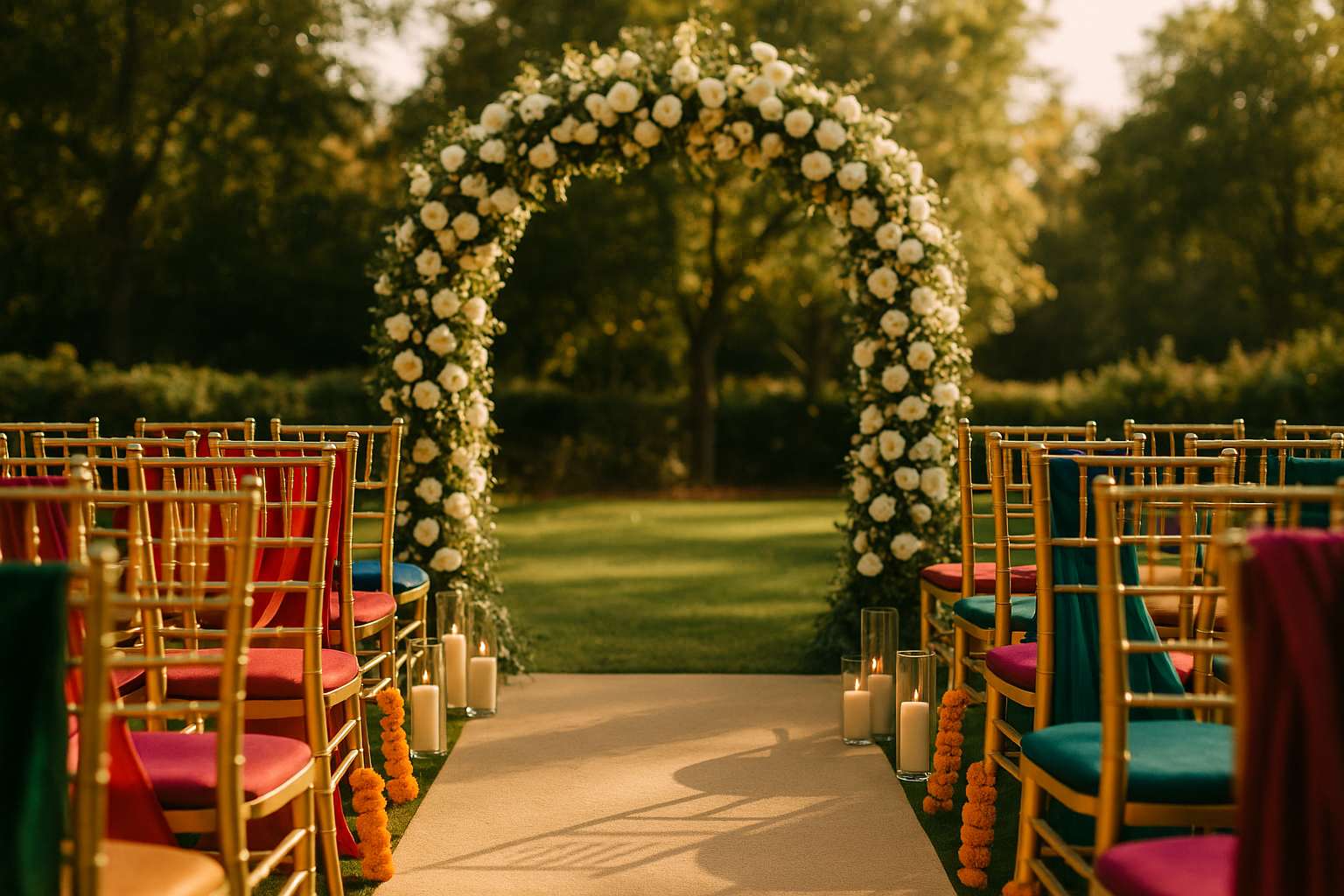
A multicultural wedding that genuinely honors two traditions costs 30–60% more than a single-tradition celebration of the same size. The most common budget failure is building a single-tradition framework and adding heritage elements without adjusting the total. Build the full budget for both traditions first — then make deliberate reductions rather than accumulating under-budgeted surprises.
According to The Knot Worldwide's 2026 Real Weddings Study, 32% of couples actively incorporate religious, ethnic, or cultural elements into their celebrations — and among couples who married in the last decade, only 52% wed someone of the same faith, compared to 81% of couples who married before 1972. A meaningful share of the 2 million Americans who marry each year are navigating two sets of family traditions, two sets of expectations, and two budget wish lists simultaneously.
For these couples, the budget conversation is not just about numbers. It is about equity: each family should feel that their heritage was honored with depth, not reduced to a decorative gesture. Getting that balance right — honoring two traditions genuinely without bankrupting the couple — requires a more deliberate budget strategy than a single-tradition wedding demands.
Why does a multicultural wedding cost more?
The cost premium for a multicultural wedding flows from specific, identifiable categories:
| Category | Single-Tradition Benchmark | Multicultural Premium | Key Driver |
|---|---|---|---|
| Officiant | $350–$600 | +$300–$900 (co-officiant) | Two clergy or a specialist interfaith celebrant |
| Ceremony structure / rental | $0–$500 (arch or basic décor) | +$600–$7,000 (chuppah, mandap, or hybrid) | Specialized ceremonial structures |
| Attire | $1,500–$3,500 (one gown) | +$1,000–$10,000 (second cultural outfit) | Traditional garments, often custom or imported |
| Catering | $6,000–$15,000 (standard catering) | +20–40% (heritage cuisine, dual-kitchen requirements) | Specialty menus, dietary laws, extra staffing |
| Vendor hours | 8–10 hours standard | +2–6 hours (multi-ceremony or multi-day format) | Photographer, videographer, coordinator overtime |
| Stationery and programs | $300–$800 | +$150–$400 (bilingual design, dual layout, explanatory inserts) | Translation, design complexity, premium stock |
| Multi-day events | $0 (single-day model) | +$8,000–$50,000+ (Mehendi, Sangeet, introduction ceremony) | Fully produced additional events |
The Zola 2026 First Look Report places the average U.S. wedding cost at $36,000 for the second consecutive year. A multicultural wedding that incorporates two ceremony structures, bilingual programming, and specialized attire will typically land $10,000–$20,000 above that baseline — or significantly more for multi-day formats.
How should you prioritize across two cultural wish lists?
Before you open a spreadsheet, you and your partner need a non-negotiables conversation — ideally before any family member weighs in. Each partner writes down three absolute must-haves from their tradition. These protected items become non-negotiable lines in your budget. Everything else is discussable.
Apply this five-tier prioritization framework:
- Required by religious or cultural authority. The Ketubah signing and chuppah for a Jewish ceremony; the Saat Phere around the sacred fire for a Hindu ceremony; the Nikah contract for a Muslim ceremony. These are not optional decorations — they carry religious validity. Fund them fully, regardless of cost.
- Deeply meaningful to the couple. Not because a parent requests it, but because you both feel it matters — because it connects you to something larger than the day itself.
- Meaningful to parents or grandparents. A gesture that honors the generation who built your family and who may have traveled great distances or made great sacrifices to be present.
- Culturally educational for guests. Elements that introduce your heritage to those unfamiliar — explained through a ceremony program, a narrated ritual, a heritage table at the reception.
- Aesthetic flourishes. Cultural food stations, signature décor elements, a specific color that carries symbolic weight. Beautiful and meaningful, but reducible if budget forces a choice.
Tier-one and tier-two items are funded first, in full. Tier-three through tier-five items are funded within what remains. Conflicts arise most often when family members advocate for tier-five items with tier-one urgency — a specific floral color, a particular vendor, an elaborate detail that carries personal preference rather than religious significance. Returning to the tier framework, established in writing as a couple, gives you a structure for those conversations.
What are the budget ranges by cultural tradition?
The following are U.S. market estimates for 2026. Costs vary significantly by metro region; expect 20–50% higher in New York, Los Angeles, Miami, and San Francisco.
South Asian (Hindu, Sikh) full multi-day wedding: $50,000–$150,000+ for the full ceremonial calendar (Mehendi, Sangeet, Haldi, Baraat, and mandap ceremony with reception). A scaled two-event format runs $25,000–$45,000. The single largest cost driver beyond catering and venue is attire — a full bridal lehenga from a respected Indian designer, sourced and custom-fitted, runs $3,000–$15,000, and requires 9–12 months minimum lead time for international orders.
Jewish ceremony elements: Chuppah rental $400–$1,500; Ketubah (artist-illustrated) $100–$1,200; rabbi fee (donation, non-congregation-member) $300–$800. Full Jewish wedding including Bedeken, Ketubah signing, chuppah, Sheva Brachot, and Hora adds $2,000–$8,000 in dedicated costs above a secular ceremony baseline.
West African and Nigerian traditional ceremony: A standalone traditional engagement/introduction ceremony runs $8,000–$25,000 in the U.S., including catering for two families, aso-ebi fabric (coordinated family fabric), and décor. When paired with a Western-style wedding reception, the combined budget runs $30,000–$60,000+.
Chinese-American tea ceremony: The tea ceremony itself, hosted as a separate family morning event before the main wedding, typically costs $1,500–$4,000 for catering, a tea set, and any professional coordination. Red envelope traditions and other reception-based elements integrate at relatively low additional cost.
What are the smartest ways to honor two traditions within a tighter budget?
The couples who execute multicultural weddings beautifully on constrained budgets consistently make the same choices: they go deep on one ceremony and express the second tradition richly through reception elements rather than building two full ceremonies.
Specific strategies that work:
- Choose one ceremony officiant with genuine bicultural expertise rather than two officiants. A skilled interfaith celebrant who truly knows both traditions — not someone who has read a Wikipedia summary — can conduct a unified ceremony that honors both with authenticity. Organizations like 18Doors (for Jewish interfaith couples) maintain referral networks of such specialists.
- Integrate the second tradition through reception elements. A tea ceremony as a pre-wedding family gathering, a hora set on the dance floor, a Bhangra performance, money spraying — these elements carry enormous emotional weight for families at a fraction of the cost of a second ceremony structure.
- Wear one culturally traditional outfit with heritage accessories rather than two full outfit changes. A dupatta in your grandmother's sari fabric worn over a Western gown; heirloom jewelry from both family lines; a Celtic knot hair accessory on an otherwise classic updo. Depth through detail, not through volume.
- Build a heritage table at the reception with family photographs, cultural objects, and a few items from each tradition. This costs almost nothing and becomes one of the most visited — and most photographed — elements of the entire day.
- Name your dishes and your cocktails. A heritage-labeled food station with a brief explanation of each dish, or a signature cocktail named for an ancestral place or family recipe, tells a cultural story at nearly zero incremental cost over standard catering.
The goal is that every guest — from both families, from both language communities — walks away feeling that the wedding they witnessed was fully, genuinely theirs to claim. That feeling is not a function of budget. It is a function of intention.
Frequently asked
How much more does a multicultural wedding cost compared to a single-tradition wedding?
A multicultural wedding that truly honors two traditions with equal depth typically costs 30–60% more than a comparable single-tradition celebration of the same guest count and date. The primary cost drivers are additional ceremonial structure (two officiants, longer ceremony requiring more vendor overtime coverage), attire (often two distinct outfits per partner for different ceremony segments), additional catering complexity (two cuisine traditions, sometimes with different dietary laws), specialized décor (chuppah rental, mandap construction, or multiple heritage-specific visual elements), and bilingual stationery and programs. Multi-day celebrations — which are standard in full South Asian, West African, and some Chinese traditions — can run 50–100% more than the budget for a single ceremony and reception. The most common budget mistake is planning around a single-ceremony framework and then adding cultural elements without adjusting the total. Build the full budget for both traditions first, then make deliberate reductions rather than accumulating add-ons to a budget built for one tradition.
What are the biggest hidden costs in multicultural wedding planning?
The top hidden costs that multicultural couples routinely report catching them off guard: traditional attire sourced internationally (a custom lehenga from a Mumbai designer, a hanbok from Seoul, kente cloth from Accra can take 9–12 months and $2,000–$10,000+ depending on the piece, plus import duties and alteration fees); bilingual ceremony programs printed on premium stock (far more expensive per unit than a simple English-only program); specialized food requirements when two traditions have incompatible dietary laws (kosher catering and halal catering cannot typically be handled by the same kitchen, which may require two catering teams or a venue change); co-officiant fees when both clergy are paid separately; the extension of vendor hours for multi-ceremony formats (photographer, videographer, DJ, and coordinator overtime at $200–$1,500/hour); and guest count inflation — families of couples from cultures with strong community wedding traditions consistently underestimate the number. Preliminary guest lists from both families should be obtained before booking any venue.
How do you set budget priorities when two families have different expectations?
Start with a non-negotiables conversation between the two partners — not the families. Before any family member weighs in, each partner writes down three absolute must-haves from their tradition. The items on those two lists are your protected budget lines; everything else is negotiable. Then apply the prioritization framework: first, any item required by religious authority (a Ketubah, a Nikah contract, the seven steps around the sacred fire); second, elements with deep personal or family meaning; third, gestures that honor grandparents or ancestors; fourth, elements that educate or introduce your heritage to guests; fifth, aesthetic flourishes. Budget downward from tier one through five. The most expensive conflicts arise when families advocate for tier-five items (elaborate décor, specific color schemes) with tier-one urgency. Establishing the tier framework in writing, as a couple, before family conversations begin gives you a foundation to return to when discussions become emotional.
Can a multicultural wedding be done well on a budget under $30,000?
Yes, with intentional trade-offs. The key is selective depth: one fully honored cultural ceremony rather than two elaborate ones, with heritage expressed through food, music, décor, and family roles rather than through separate ceremony structures. Couples who keep multicultural weddings under $30,000 typically choose a single ceremony officiated by one skilled interfaith or bicultural celebrant; express the second tradition through meaningful reception elements (a tea ceremony as a pre-wedding family gathering, a hora or Bollywood dance set, a cultural food station with explained dishes); substitute rental mandap or chuppah structures for custom builds; and dress in one culturally traditional outfit with a heritage accessory (a sari-inspired dupatta worn over a Western gown, heirloom jewelry from both families) rather than two full outfit changes. The Knot's 2026 Real Weddings Study reports the national average wedding cost at $34,200; couples with budgets in the $15,001–$40,000 range spend an average of $26,400. A thoughtfully edited multicultural celebration is achievable in that range.
How do you plan the budget for a multi-day multicultural wedding?
A multi-day multicultural wedding — standard for full South Asian celebrations and many West African, Chinese, and Nigerian weddings — requires a completely separate budget framework for each event, not a single budget stretched across days. Each day has its own venue cost or rental fees, its own catering, its own décor, its own vendor hours. The Mehendi, Sangeet, Haldi, and Baraat are not free additions to the main wedding; they are fully produced events. Budget each day as a standalone event and total them; most couples planning full multi-day South Asian celebrations in U.S. metro markets budget $50,000–$150,000 total. A scaled two-event format (the Sangeet evening and the main ceremony-reception) runs $25,000–$45,000 in most markets. For couples from West African traditions, the traditional engagement or introduction ceremony and the main wedding reception are similarly two full events with distinct guest lists and catering needs. Plan each event with its own line-item budget before seeing the total.
What does a chuppah or mandap cost to rent or build for a multicultural wedding?
A chuppah rental from a Jewish wedding specialist typically costs $400–$1,500 depending on structure complexity, fabric, and floral treatment — a simple wooden-post structure with draped fabric runs $400–$700; a fully floraled chuppah from a high-end wedding florist can run $2,000–$5,000 or more as a standalone installation. A mandap for a Hindu ceremony runs similarly: a basic rental structure is $600–$1,200; a custom floraled mandap with marigolds, jasmine, and draped fabric from a South Asian wedding specialist runs $3,000–$8,000+ in major metros. For multicultural couples who want a hybrid structure — a mandap-chuppah design that honors both traditions simultaneously — budget at the higher end of each range; custom hybrid builds typically run $3,500–$7,000. Many South Asian wedding vendors now offer package rentals that include the mandap structure, draping fabric, and basic floral decoration; request itemized pricing to understand what is and is not included before comparing quotes.