Ceremony & Vows
Unity Candle vs. Sand Ceremony: Which Is Right for Your Wedding?
Two of the most beloved unity rituals in American weddings, compared side by side — from symbolism and cost to outdoor practicality and blended-family use.
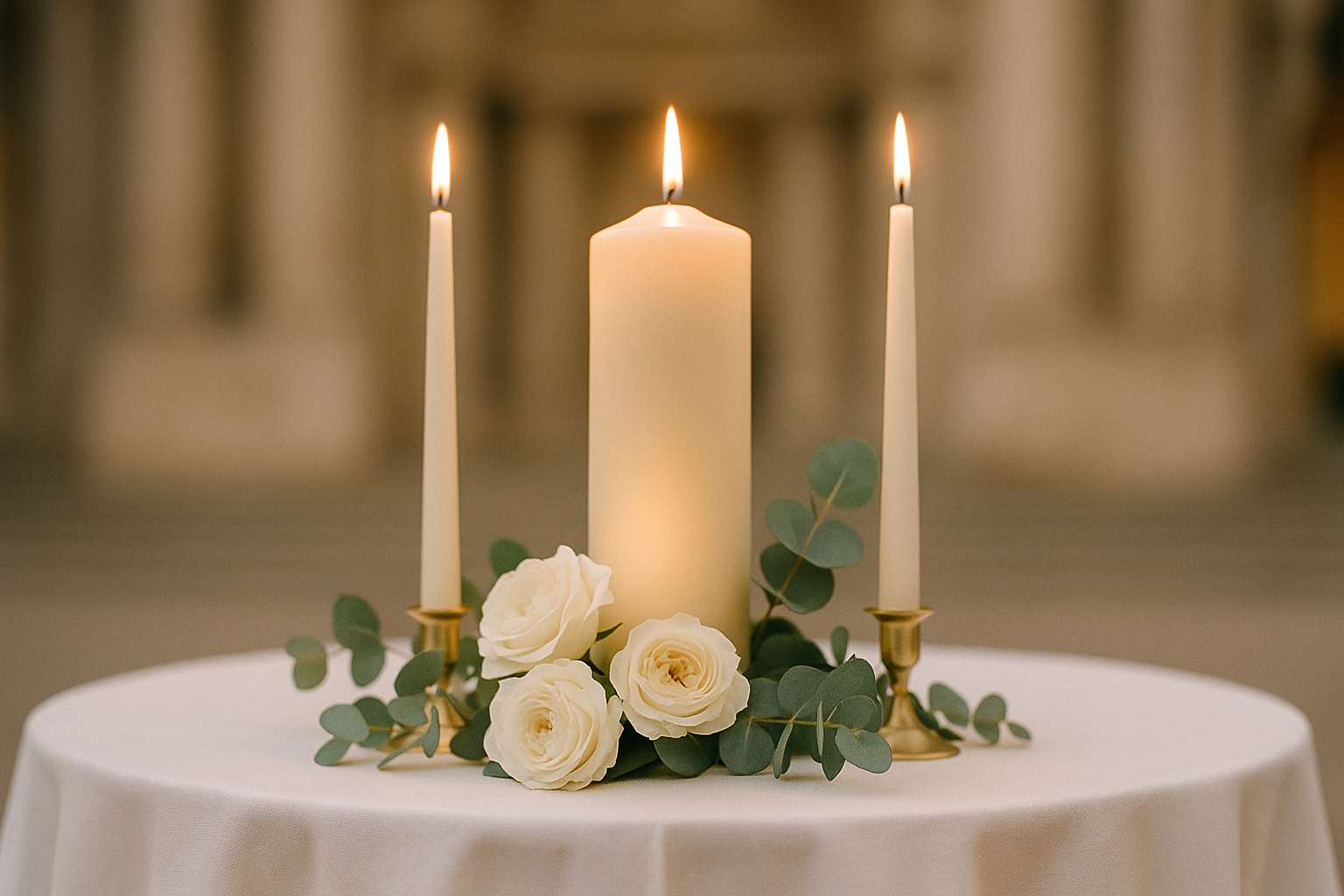
Choose the unity candle for indoor, traditional, or religious ceremonies where Christian family symbolism resonates. Choose the sand ceremony for outdoor weddings, blended families with children, or any couple who wants a permanent, displayable keepsake. Both rituals add three to six minutes to ceremony length and cost between $20 and $200.
The unity ritual is one of the most personal choices in wedding planning — a two-to-six minute act of symbolic theatre that nearly every guest will remember long after the vows fade. Two rituals dominate American weddings: the unity candle, rooted in Christian tradition; and the sand ceremony, which emerged in the mid-1990s and now rivals it in popularity. Understanding exactly how each works, where each succeeds, and where each falls short will help you choose with confidence.
How do the unity candle and sand ceremony actually work?
The mechanics of each ritual are straightforward, but the details matter enormously for logistics and aesthetics.
The unity candle involves three candles: two taper candles (one for each partner, often lit at the ceremony's opening by the couple's mothers) and a single larger pillar candle placed between them. At the designated moment in the ceremony, the couple uses their individual taper candles to light the shared pillar candle together. The flame of two lives becoming one is the visual and spiritual message. Many couples leave their individual taper candles burning throughout the ceremony to honor the individuals within the union. The complete set — two tapers, one pillar, and a decorative holder — typically costs $25 to $150 for standard versions; engraved or personalized sets from retailers like The Knot Shop or Amazon run $60 to $200.
The sand ceremony works differently: each partner holds a small vessel of differently colored sand, then pours both streams simultaneously into a shared central container. The colors layer and intermingle in a pattern that cannot be separated — a permanent, visual representation of two lives irreversibly joined. When children are included, each child is given their own color, poured after the couple's, so that every family member's presence is visibly woven into the whole. Custom engraved sand ceremony vessels on Etsy range from $20 for simple glass vessels to $80 to $180 for personalized engraved keepsakes. The resulting piece can be displayed at home indefinitely.
| Factor | Unity Candle | Sand Ceremony |
|---|---|---|
| Typical cost | $25–$200 | $20–$180 |
| Best venue setting | Indoor — chapel, ballroom, barn | Outdoor — beach, garden, vineyard; also excellent indoors |
| Wind risk | High — flames extinguish easily | Low to moderate — pouring slowly reduces scatter risk |
| Child-safe | No — open flame requires supervision | Yes — tactile, safe, child-friendly |
| Including blended family | Possible (taper for each member) but logistically complex | Ideal — each person adds their own color |
| Keepsake value | Candle (functional until burned, then wax remains) | Vessel displayed permanently in the home |
| Ceremony duration added | 1.5–3 minutes | 3–6 minutes |
| Faith tradition alignment | Strong — especially Catholic, Protestant | Secular; works in all contexts |
| Venue restrictions | Open flames prohibited in some venues | No restrictions |
When does each ritual work best?
The unity candle has an irreplaceable quality in certain settings. In a candlelit chapel or a ballroom ceremony, the visual warmth of a shared flame carries genuine emotional power. The Christian symbolism — light, warmth, the kindling of a new family from two — gives it liturgical weight that the sand ceremony simply does not carry in the same way. For Catholic, Protestant, or non-denominational Christian ceremonies where the couple wants a ritual with spiritual texture beyond the vows, the unity candle is the natural choice. Many Catholic churches specifically include it as an optional but beloved element of the nuptial Mass. The mothers' role in lighting the taper candles at the ceremony's opening — symbolizing the families from which the couple comes — adds a layer of family recognition that guests find deeply moving.
There is one critical practical limitation, however, and it cannot be glossed over: open flame outdoors is a near-certain failure point. Most officiants and experienced venue coordinators actively discourage unity candles at outdoor ceremonies unless a hurricane glass enclosure is used. A breeze that guests barely register will reliably extinguish an unprotected candle flame at the altar. If your ceremony is outdoor, beach, garden, or tented, the sand ceremony is the sensible choice — and it offers genuine aesthetic beauty in these settings, with natural light illuminating the flowing sand in a way no candlelight can match.
The sand ceremony excels everywhere the unity candle has limitations. It requires no fire safety consideration, no venue pre-approval, and no weather anxiety. It is child-safe, making it the obvious choice for blended families where children are present and active participants. According to WeddingWire's ceremony planning resources, the sand ceremony's rise in popularity since the early 2000s is directly attributable to the growing prevalence of blended families in American weddings — couples who needed a ritual that could meaningfully include children found it invaluable. And the resulting keepsake vessel, displayed permanently in the couple's home, gives the sand ceremony a living afterlife that the candle ceremony does not.
What variations and modern twists should couples know about?
Both rituals have evolved meaningfully since their most traditional forms, and several variations deserve consideration.
Unity candle variations: Some couples add a prayer or reading while the candle burns, using the visual pause to underscore a piece of scripture or a meaningful poem. Others choose to light only the unity candle (not individual tapers) if they want the ritual to focus entirely on the union being formed rather than the individuals. A growing number of couples are replacing the standard three-candle set with a single statement lantern — an elegant, wind-resistant option that brings the candlelight aesthetic to outdoor venues with far greater reliability.
Sand ceremony variations: The hourglass vessel has become one of the most popular formats — its design means the couple can turn it on every anniversary, the colors shifting further together with each passing year. Parents and grandparents can also add sand at the beginning of the ceremony as a foundation layer before the couple pours, creating a generational visual metaphor. Some couples use sand collected from meaningful locations — a beach where they met, their respective hometowns — adding a narrative layer to the symbolism.
Alternative rituals worth considering: Handfasting — the Celtic practice of binding the couple's joined hands with cords or ribbons, with each wrap accompanied by a spoken blessing — has crossed from Pagan and Celtic revival ceremonies into mainstream secular and interfaith weddings, and is now among the top-searched unity rituals on The Knot. The wine ceremony shares a cup between two partners, sometimes blending wines from two bottles as a visual metaphor. Unity in Glass offers a striking variation in which the couple blends colored molten glass into a single art piece — a genuinely unique keepsake. For nature-loving couples, the tree planting ceremony — adding soil from each partner's hometown to a shared pot containing a young sapling — offers a living symbol of what they'll grow together.
What are the most common mistakes couples make with unity rituals?
The most frequent error with unity candles is choosing them for outdoor ceremonies without testing wind conditions or providing adequate flame protection. A flame that refuses to stay lit creates an awkward, prolonged pause at the most sacred moment of the ceremony — and no photograph of the officiant repeatedly striking a lighter is what anyone wants to remember. If you commit to a unity candle outdoors, rehearse it in weather conditions, use hurricane glass enclosures, and have a backup ritual mentally prepared.
With sand ceremonies, the most common error is choosing a vessel that is too narrow at the mouth for easy pouring. Practice the pour before the ceremony — slowly, deliberately, slightly angled — and confirm that the vessel sits stably on the ceremony table. A toppled vessel mid-ritual produces the same awkward pause as a failing flame. Order your vessel at least six to eight weeks before the wedding to allow time for engraving and arrival.
For both rituals: confirm with your officiant and venue well in advance. Some venues prohibit open flames entirely (particularly historic buildings with fire codes or venues with specific insurance requirements). Some officiants prefer to guide the ritual personally and will want to know your chosen format months in advance. Include the ritual in your ceremony program so guests understand its meaning — a brief printed explanation transforms a beautiful visual moment into a genuinely felt one.
Frequently asked
Which is better for an outdoor wedding — a unity candle or sand ceremony?
For outdoor ceremonies, the sand ceremony is nearly always the safer choice. A unity candle flame is highly vulnerable to even a gentle breeze; most officiants and venue coordinators actively discourage candles outdoors unless you use a hurricane glass or lantern enclosure, which adds cost and complexity. Sand is naturally wind-resistant when poured slowly, though an open-topped vessel in a strong gust can scatter. If your heart is set on candles at an outdoor ceremony, a hurricane glass lantern surrounding the taper candles provides reasonable protection. Otherwise, the sand ceremony's keepsake vessel and kid-safe nature make it the practical winner for outdoor and beach settings. Several couples also choose the water ceremony or handfasting as alternatives that carry no fire or fragility risk at all.
Can we include children in a unity candle or sand ceremony?
The sand ceremony is almost universally the better choice when children are actively participating. Each child can be given their own colored sand — poured into the shared vessel after the couple's colors — creating a visual representation of the blended family being formed. The act is safe, tactile, and deeply meaningful for children of any age. The unity candle, by contrast, involves open flame and requires careful adult supervision, making it genuinely less suitable for younger children. If you prefer the candle ceremony aesthetically, consider having children participate symbolically in a different moment — carrying the unlit tapers to the altar, for instance — while the actual lighting remains with the adults. Several blended-family couples choose the sand ceremony specifically because it physically includes every child in the union.
How long does a unity ritual add to the wedding ceremony?
Most unity rituals add three to six minutes to ceremony length, including the transition, music, and the ritual itself. The unity candle tends to be faster — the lighting takes only 60 to 90 seconds once both taper candles are lit. The sand ceremony typically runs a little longer because the pouring is a slower, more visually deliberate act; with multiple family members each adding their color, the ritual can extend to five or six minutes. Handfasting with multiple cord wrappings and blessings can reach eight to ten minutes. As a general planning rule, schedule one unity ritual per ceremony, not two back-to-back. Practice the ritual with your officiant at the rehearsal to time it accurately and ensure the music selection fits the duration.
What does the unity candle symbolize in a wedding ceremony?
The unity candle ceremony traditionally features three candles: two taper candles representing each partner individually, and a larger central pillar candle representing their union. The couple uses their individual taper candles to light the shared pillar together, symbolizing two distinct lives becoming one flame. In many Christian ceremonies, the mothers of the bride and groom light the two taper candles at the start of the ceremony, adding a layer of family-joining symbolism: the two families kindling the light that will unite their children. The ritual is especially common in Catholic, Protestant, and non-denominational Christian weddings, where its imagery of light, warmth, and new creation carries spiritual resonance. Some couples choose to leave their individual tapers burning throughout the ceremony to symbolize that marriage honors each person's individuality within the union.
What does the sand ceremony symbolize, and can we display it afterward?
The sand ceremony symbolizes the irreversible blending of two lives. Each partner holds a vessel of differently colored sand and pours both colors simultaneously into a shared container, creating layers that cannot be separated — just as a marriage, once formed, cannot be undone without losing the beauty of what was built together. The resulting vessel is a permanent keepsake: it can be displayed on a mantle, bookshelf, or entryway table for the life of the marriage, serving as a daily visual reminder of the day. Many couples choose an hourglass vessel specifically so the sand can be turned on every anniversary, the colors gently shifting and blending further with each passing year. Etsy offers hundreds of custom-engraved sand ceremony vessels ranging from $20 to $150, many with personalized labels or the couple's names and wedding date etched into the glass.
Are there unity rituals other than the candle and sand ceremony to consider?
Several beautiful alternatives have grown in popularity for 2025 and 2026. Handfasting — binding the couple's joined hands with cords or ribbons, each wrap accompanied by a spoken blessing — is an ancient Celtic ritual that has crossed into mainstream secular and interfaith ceremonies with meaningful results. The wine ceremony involves the couple sharing from one cup, sometimes blending two wines together before drinking. The tree planting ceremony has the couple add soil from each of their hometowns to a shared pot containing a young sapling — a living symbol of what they will grow together. The ring warming ritual, especially beloved at intimate ceremonies under 80 guests, passes the rings through the assembled community before the exchange so each guest can hold the rings and silently add their wish or blessing. A glass unity ceremony — blending colorful molten glass into a single art piece — is one of the most striking keepsake rituals available.