Ceremony & Vows
Unplugged Wedding Ceremony: Everything You Need to Know
An unplugged ceremony — asking guests to put their phones away during your vows — is now embraced by more than nine in ten couples. Here is how to request it gracefully, communicate it clearly, and make it work for every guest in the room.
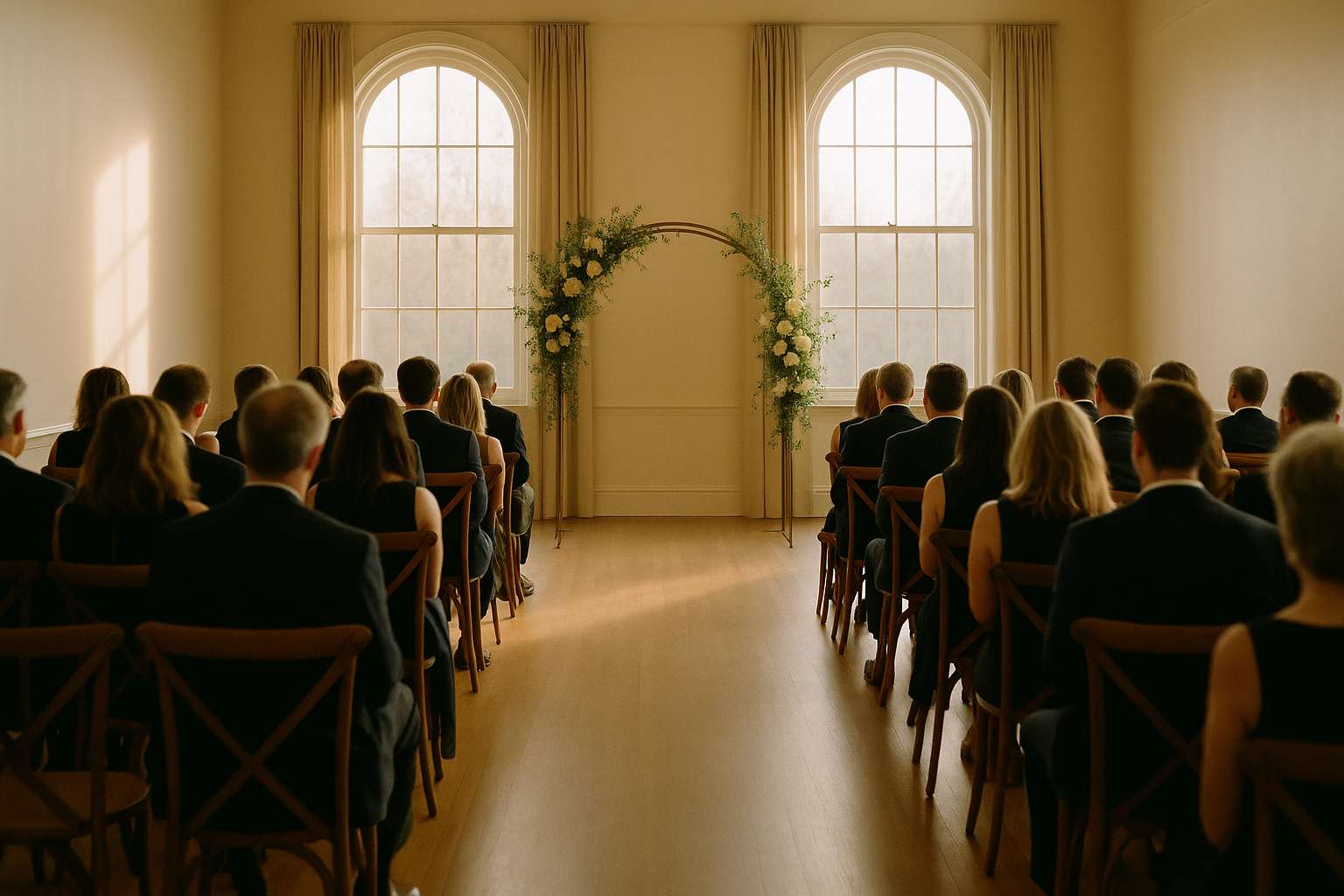
An unplugged ceremony asks guests to put away phones and cameras from the processional through the recessional. It improves professional photography, deepens shared emotional presence, and is now embraced by 91% of couples — communicate it warmly on your website, programs, ceremony signage, and through your officiant, and most guests will honor it graciously.
What is an unplugged wedding ceremony, and why are couples choosing it?
An unplugged wedding ceremony is a ceremony in which the couple requests that guests set aside their phones, tablets, and cameras for the duration of the vows — from the moment the processional music begins through the end of the recessional. The day's other events — cocktail hour, dinner, dancing — remain completely open to photography and social sharing. Only the ceremony itself is protected.
The movement toward unplugged ceremonies has grown steadily over the past decade, and by 2026 it has crossed into mainstream acceptance. According to Zola's 2026 wedding etiquette survey, 91% of couples consider an unplugged ceremony request to be socially appropriate — a figure that would have seemed remarkable ten years ago. The remaining 9% of couples either prefer guests to document freely or feel the request creates unnecessary friction with particular guests in their circle.
Why the shift? The reasons are both emotional and practical. On the emotional side: a ceremony in which guests are fully present — eyes forward, faces visible, attention undivided — is simply a different, richer experience than one where rows of people watch through phone screens. When your grandmother cries during your vows and you can see her face, that moment belongs to you. When her face is obscured by a phone, you lose it. On the practical side: guest smartphones create real problems for professional photographers. Arms extended into the aisle appear in processional shots. Phone screens emit harsh, competing light. Guests lean into the aisle for their own angle and appear in the backgrounds of images the photographer has carefully composed. An unplugged ceremony removes all of that, freeing the photographer to work precisely and capture the unobstructed emotional reality of the room.
How do you communicate an unplugged ceremony to guests without it feeling harsh?
The framing is everything. Couples who communicate this request warmly, as an invitation rather than a restriction, report that virtually all guests honor it graciously. Couples who post a blunt sign that says "NO PHONES" find that it creates mild social friction and occasional resistance. The difference is entirely in tone.
The most effective approach is layered communication across multiple touchpoints:
Your wedding website. Add a note to your FAQ or ceremony page well before the wedding. A sentence or two is enough: "We are planning an unplugged ceremony and ask that guests keep phones and cameras in their pockets during the vows. We can't wait for you to be fully present with us for those few sacred minutes." This gives guests advance notice and prevents day-of surprise.
Your ceremony program. A single line at the top or bottom of the program: "We invite you to be fully present during our ceremony. Please silence and store all phones and cameras until after the recessional." Brief, warm, visible.
A ceremony entrance sign. Positioned at the entrance to the ceremony space, where every arriving guest will see it. The most effective signs are written in the couple's voice and communicate the reason behind the request, not just the rule.
The officiant's announcement. The verbal reminder from the officiant just before the processional begins is the single most effective intervention. According to the American Marriage Ministries, a natural, conversational announcement from the officiant yields near-universal compliance. The key is tone: unhurried, warm, personal — not a recitation of rules.
| Channel | When | Recommended Phrasing Approach |
|---|---|---|
| Wedding website | 1–6 months before | Warm, invitational, personal voice |
| Invitation insert / details card | 8–12 weeks before | Brief line; no heavy emphasis needed |
| Ceremony program | Day of | One line at top or bottom; same warm tone |
| Entrance sign | Day of | Couple's voice; include the reason ("We want to see your faces") |
| Officiant announcement | Just before processional | Conversational, 2–3 sentences, rehearsed with officiant beforehand |
What are the best unplugged ceremony sign wording examples?
The most effective signs are personal, brief, and framed around love rather than rules. Here are approaches that work across different wedding personalities:
Warm and simple: "We invite you to be fully present with us. Please put away phones and cameras until after the recessional. We love you."
Poetic: "We hired a photographer to capture how this moment looks. We ask that you capture how it feels. Please keep phones away during our ceremony."
Light and charming: "Thank you for coming to celebrate our big day. Our one request: be here with us — eyes up, phones down — while we say our vows. The reception is yours. The ceremony is ours together."
For a faith-based ceremony: "This moment is sacred to us. Please honor it by being fully present. Phones and cameras are welcome at the reception."
Avoid wording that frames guests as a threat or implies distrust. Words like "strictly" or "no exceptions" create the wrong emotional register for a celebration of love. The sign should read the way a loving request from someone you care about reads — clear, warm, and brief.
How do you handle guests who are likely to take photos anyway?
Prevention, through layered communication, handles 90% of the challenge before it arises. For the remaining cases, there are a few approaches worth having in place:
If you know a specific family member is almost certain to photograph regardless of the request — a parent who documents every milestone, a relative with a powerful zoom lens — reach out to them personally before the wedding day. Have a candid, warm conversation: acknowledge that they love you and want to capture the day, then explain directly that this one request matters deeply to you. Offer them a meaningful role instead — ask them to be the designated photographer at the rehearsal dinner, or give them special access to the first-look reveal. Redirecting their impulse to something valued costs nothing and preserves the relationship.
Ask your coordinator or a trusted wedding party member to be prepared to offer a gentle, wordless signal — a soft eye contact and a gesture downward — if they spot a device raised during the ceremony. This should be handled quietly and without confrontation. The couple should not be notified mid-ceremony regardless of what is happening in the pews.
After the ceremony, if the violation was significant enough to affect professional photographs, your photographer will flag it in their delivery notes. At that point, a brief, private conversation is appropriate if you choose to have one. For most situations, letting it go gracefully is the right call — the marriage is the priority, not the confrontation.
What about guests who need a device for accessibility or medical reasons?
An unplugged ceremony is not intended to create barriers for guests who need devices for genuine medical or accessibility reasons — a hearing loop, a medical monitoring app, a communication device. These exceptions are not exceptions to fight; they are guests to accommodate. If you are aware of a guest with such a need, a private word with your coordinator or officiant in advance ensures they are known and made comfortable without needing to announce themselves during the ceremony. An unplugged ceremony should protect meaning and deepen presence; it should never make a guest feel unwelcome or unseen.
Frequently asked
What exactly is an unplugged wedding ceremony?
An unplugged wedding ceremony is one in which the couple asks guests to put away phones, cameras, and other recording devices during the ceremony — typically from the processional through the recessional. It does not mean guests cannot use their phones for the rest of the day; the restriction applies only to the formal ceremony itself. The goal is to preserve the couple's experience of being fully seen by their guests rather than photographed by them, to protect the quality of professional photography by removing competing light sources and arms reaching into the aisle, and to create a shared moment of genuine presence. According to Zola's 2026 wedding etiquette data, 91% of couples now consider an unplugged ceremony request socially acceptable and appropriate.
Does an unplugged ceremony hurt your wedding photography?
An unplugged ceremony dramatically improves professional wedding photography — it does not hinder it. Guest smartphones create three specific photographic problems: arms extended into the aisle appear in processional shots, phone screens emit competing blue-white light that fights with the photographer's carefully planned exposure, and guests leaning into the aisle to capture a moment appear in the background of otherwise clean images. When guests put devices away, the photographer can move freely, read the light accurately, and capture unobstructed emotional reactions from the faces in every row. The guests who are most animated, most tearful, and most present are always the ones not looking through a viewfinder. Those are the images that age well — and those are the images an unplugged ceremony makes possible.
How do you ask guests to unplug without sounding rude?
Frame the request as a gift of presence rather than a list of prohibitions. The phrasing that works best is invitational: "We invite you to be fully present with us" lands differently than "No phones allowed." Communicate the request in multiple places — your wedding website, a line in the ceremony program, a sign at the ceremony entrance, and a verbal reminder from your officiant just before the processional begins. This repetition ensures no guest can claim they were not informed, and it distributes the ask across multiple touchpoints so no single communication feels heavy-handed. Keep the tone warm, personal, and brief. The request should feel like an expression of love for your guests' company, not an act of control.
What should the officiant say to announce an unplugged ceremony?
A natural, unhurried officiant script works far better than a sign alone. A simple version: "Before we begin, [Name] and [Name] have asked that you set aside your phones and cameras for the ceremony. They have a wonderful photographer capturing every moment — your only job right now is to be here with them fully." A slightly warmer version: "We are about to share something sacred together. The best gift you can give this couple today is your complete presence. Please silence your phones and let yourself be moved by what you are about to witness." Either version should be delivered conversationally, not read verbatim from a script. Rehearse the script with your officiant at the rehearsal walk-through and confirm the phrasing together.
What happens if a guest takes photos anyway during an unplugged ceremony?
Most guests who ignore an unplugged request are not being defiant — they simply did not register the request in the moment, or habit overcame intention. The best prevention is repetition: website, program, sign, and officiant announcement. If a guest takes photos during the ceremony regardless, the photographer and coordinator should be prepared with a gentle protocol: a soft hand gesture from a coordinator to lower the device, or a quiet whispered word during a natural pause. The couple should not be informed mid-ceremony. After the ceremony, a brief, warm conversation is appropriate if the behavior was disruptive to photography. For repeat offenders at the reception, the couple can decide what level of response suits their relationship with that guest.
Should you go completely unplugged for the reception too, or just the ceremony?
Most couples choose to unplug the ceremony only, leaving the reception completely open to phones and social media. This is the most widely embraced approach and the one Zola and The Knot both recommend for most weddings. The ceremony is the sacred, unrepeatable center of the day — the moment where presence matters most and where photography is most technically demanding. The reception is a celebration where guests capturing and sharing moments is part of the joy. If you want to encourage sharing, create a wedding hashtag and display it prominently at the reception. For couples who want a fully device-free evening, that is entirely their prerogative, but it requires more assertive communication and a correspondingly generous photography and video package so guests do not feel they have been denied their own memories of the day.