Ceremony & Vows
What Is a Humanist Wedding? A Complete 2026 Guide
A humanist wedding is a deeply personal, non-religious ceremony that centers the couple's love story, values, and community — led by a trained celebrant who crafts every word specifically for them. Here is everything you need to know.
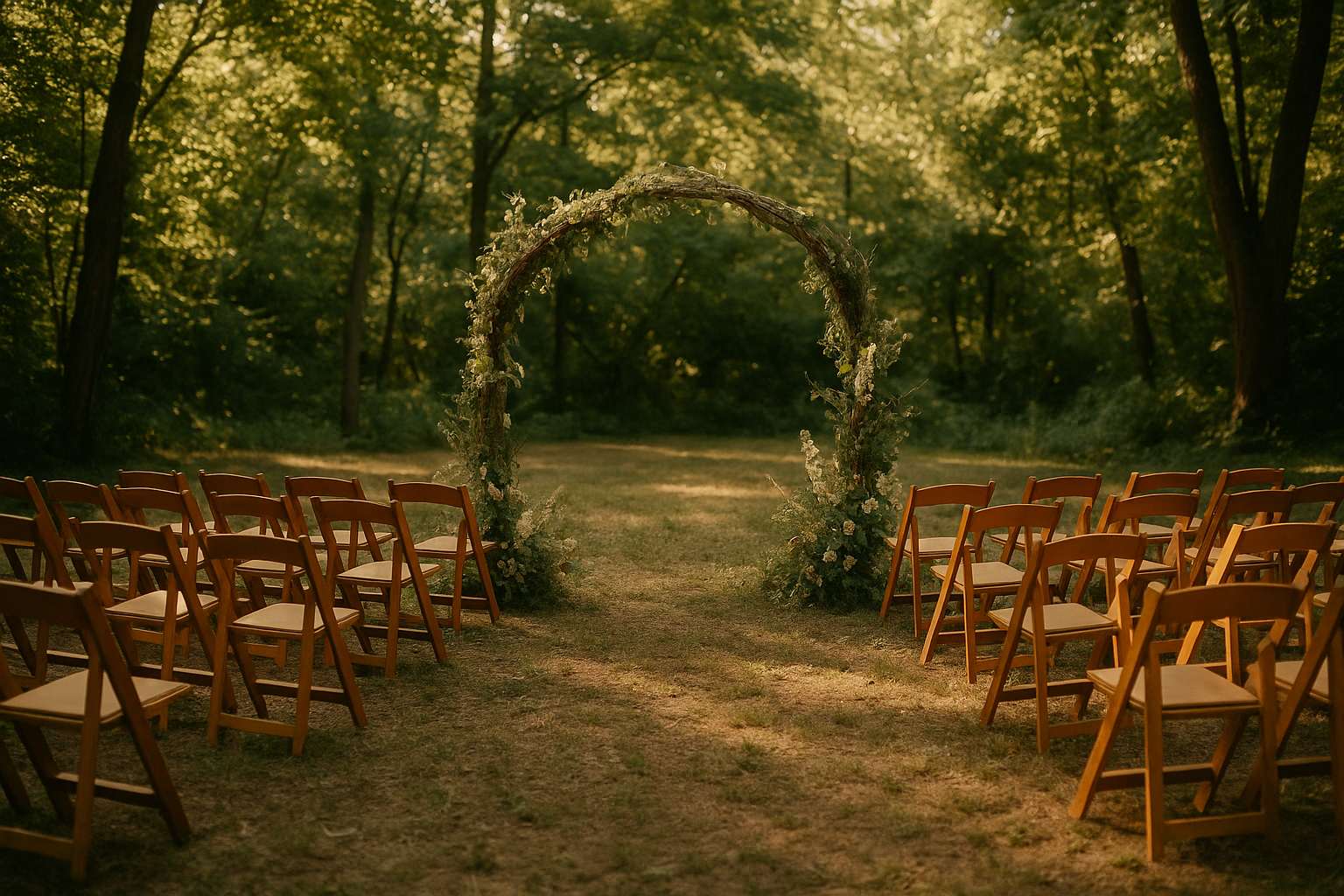
A humanist wedding is a bespoke, non-religious ceremony led by a trained celebrant who crafts every word specifically for the couple. According to the Knot's 2025 Real Weddings Study, 47% of U.S. couples now choose secular ceremonies — and humanist weddings represent the most thoughtfully designed tier of that movement.
Something has shifted in how couples approach their ceremony. According to Humanists UK, humanist weddings have moved from the fringes to the mainstream of British wedding culture — in Scotland, humanist ceremonies now outnumber religious ones, accounting for approximately 23% of all Scottish weddings as of 2024. In the United States, Pew Research Center data shows roughly 36% of all marriages are entirely secular, and The Knot's 2025 Real Weddings Study found 47% of couples opted for a secular ceremony.
This is not a rejection of depth or meaning. It is a recalibration. Couples who choose humanist ceremonies are choosing to anchor their vows in personal values, shared story, and human community — not because they have no convictions, but because those are their convictions. The result, when done well, is one of the most genuinely moving ceremonies a guest can attend.
What makes a humanist wedding different from other ceremony types?
Understanding the humanist ceremony means understanding the landscape of non-religious ceremony options — because the differences are meaningful and consequential for planning.
| Ceremony Type | Led By | Personalization Level | Typical Length | Legal Standing (US) |
|---|---|---|---|---|
| Civil ceremony | Judge, magistrate, registrar | Low — legally prescribed language | 5–15 minutes | Always legally valid |
| Humanist ceremony | Trained humanist celebrant | Very high — fully bespoke script | 25–35 minutes | Depends on celebrant's credentials and state |
| Secular celebrant ceremony | Professional secular celebrant | Very high — bespoke, no philosophy required | 20–35 minutes | Depends on celebrant's credentials and state |
| Friend officiant (ordained online) | Friend or family member | Very high — but quality varies enormously | Varies | Recognized in most but not all states — verify by county |
| Religious ceremony | Clergy (priest, rabbi, imam, minister) | Low to medium — theological framework governs structure | 30–90 minutes | Always legally valid |
The humanist ceremony occupies a specific, intentional place in this landscape. It is not simply a civil ceremony with nicer words. It is a ceremony built from scratch around the couple — their love story, their values, the people who matter most to them — through a genuine collaborative process with a trained celebrant who has invested time in understanding them.
What does a humanist ceremony actually feel like?
The structural elements of a humanist ceremony are similar to any well-designed secular ceremony: processional, welcome, couple's narrative, readings, declaration of intent, personal vows, ring exchange, pronouncement, recessional. What makes it feel different is the quality of every word within that structure.
The couple's narrative — typically three to five minutes delivered by the celebrant — is where humanist ceremonies become distinctive. A trained celebrant spends hours with the couple learning how they met, what they love most about each other, the moment they knew, the qualities they are each bringing to the marriage. That material becomes a bespoke love story told to the assembled guests — guests who have heard hundreds of generic ceremony words in their lives and who are visibly moved by specificity. "He drove four hours in a rainstorm" or "she laughed when everyone else went quiet" — those details, spoken aloud in a ceremony, do something that no liturgical text can do.
Personal vows follow naturally from that foundation. In a humanist ceremony, the vow is not supplementary — it is central. With no prescribed commitment language to fall back on, each partner's own words become the defining promise of the occasion. Humanist celebrants typically provide guidance for writing personal vows without overscripting them: each partner articulates who this person is to them, what specific promises they are making, and what they are committing to in the years ahead.
What is the legal status of humanist weddings in 2026?
The legal picture varies significantly by country — and even by region within countries.
United States: A humanist wedding is legally valid when the celebrant is authorized to perform marriages in the couple's state and county. Most states recognize ministers of the American Humanist Association and similar organizations. Verification with the county clerk's office is essential — requirements vary by county, not just by state, and some counties require pre-registration by officiants. A valid marriage license is always required, and the officiant must sign and return it promptly after the ceremony.
Scotland: Humanist Society Scotland holds full legal authority to perform marriages — granted since 2005 — and humanist ceremonies have outnumbered Christian ceremonies every year since 2022. No separate civil registration is needed.
Northern Ireland and Ireland: Humanist marriages are legally recognized and account for approximately one in seven marriages in Northern Ireland. In Ireland, the Humanist Association of Ireland has been an approved body since 2012.
England and Wales: As of 2026, humanist ceremonies do not have standalone legal recognition. Couples who wish to have a humanist ceremony must also complete a separate civil registration — typically at a register office before or after the humanist ceremony. The UK Government announced in October 2025 that it would pursue legal reform as part of wider marriage law changes, with consultation expected in early 2026 — but Humanists UK notes that any new legislation will take years to come into effect.
How do you find and book a humanist celebrant?
The right humanist celebrant is not simply the closest one geographically — it is the one whose collaborative process, communication style, and genuine curiosity about your relationship make you feel that the ceremony will be authentically yours. Schedule brief consultations with two or three celebrants before committing. Pay attention to how many questions they ask about you versus how much they describe their standard process. A celebrant who is genuinely curious about your specific relationship will produce a ceremony script that sounds like it was written for you — because it was.
Plan to begin your celebrant search nine to twelve months before the wedding. Most thorough humanist celebrant processes involve three to five meetings with the couple, a full script draft delivered six to eight weeks before the ceremony, and one or two revision rounds. The early start gives the process time to breathe and ensures the final script reflects your most considered thoughts rather than hurried first-draft impressions.
Frequently asked
What is the difference between a humanist wedding and a civil ceremony?
The distinction matters more than most couples realize when they first encounter these terms. A civil ceremony is primarily a legal formality — it is performed by a government official (a registrar, judge, or justice of the peace), it is typically brief, and its purpose is to satisfy the legal requirements of marriage rather than to create a personally meaningful celebration. A humanist wedding, by contrast, is an intentional, bespoke ceremony led by a trained humanist celebrant who has spent weeks getting to know the couple — their love story, their values, the people who matter most to them — and crafting a ceremony script that reflects all of it. The ceremony is fully personalized, includes personal vows, readings chosen by the couple, and often a unity ritual; it may run twenty-five to forty minutes and feel as emotionally resonant as any ceremony guests have attended. In the United States, a humanist ceremony can be legally valid if the celebrant is authorized under state law. In England and Wales, couples must currently also complete a legal civil registration, though UK government reform is anticipated.
Is a humanist wedding legally valid in the United States?
In the United States, the legal validity of a humanist wedding depends on the credentials of the celebrant rather than the content of the ceremony. Humanist celebrants who are ordained or authorized ministers through recognized organizations — including the American Humanist Association or similar bodies — are legally authorized to perform marriages in most states. The key step is to verify with the specific county clerk's office where your ceremony will take place that your chosen celebrant's credentials are recognized. Online ordination through organizations like the Universal Life Church is accepted in many but not all states. A few states — including Pennsylvania, Virginia, and Tennessee — have stricter requirements and may require pre-registration. Regardless of the ceremony's content, a valid marriage license and a signed and returned license from your officiant are always required. Contact your county clerk no later than sixty days before the ceremony to confirm all requirements.
Do you have to be a humanist to have a humanist wedding?
No — and humanist celebrants are explicit about this. Humanist celebrants serve couples of all philosophical backgrounds who simply want a thoughtful, non-religious ceremony that centers their own story and values rather than a prescribed religious framework. Many couples who choose humanist celebrants do not identify as humanists in any formal sense; they are simply looking for a ceremony that feels authentically like them, includes real personal vows, and does not require a religious affiliation they do not hold. Humanist celebrants are also well practiced at designing ceremonies that honor cultural traditions from the couple's family backgrounds — a Celtic handfasting, a glass-breaking moment borrowed from Jewish tradition, or a flower garland exchange — without those elements requiring a religious framing. The word that truly captures what humanist ceremonies offer is not a philosophy but a quality: intentionality.
What does a humanist wedding ceremony typically include?
A well-designed humanist wedding ceremony runs approximately twenty-five to thirty-five minutes and includes a processional, an opening welcome from the celebrant, a couple's love story (a short, warm narrative of how the couple met and what makes their relationship distinctive — consistently one of the most beloved elements for guests), one or two readings chosen by the couple from poetry, prose, philosophy, or original writing, a declaration of intent (the legal "do you take" moment), personal vows written by each partner, an optional unity ritual (handfasting, sand ceremony, candle lighting, or similar), the ring exchange, the pronouncement, and the recessional. The ceremony is built from a script written specifically for this couple by the celebrant after multiple conversations. Nothing is templated; nothing is prescribed. Every word has been chosen deliberately. Couples who have attended both religious and humanist ceremonies consistently describe humanist ceremonies as among the most emotionally resonant they have witnessed, precisely because the specificity of the content makes the couple feel genuinely seen.
How do I find a humanist celebrant in the United States or UK?
In the United Kingdom, Humanists UK operates a network of over 600 trained, accredited humanist celebrants across England, Wales, Northern Ireland, and the Crown Dependencies, searchable by location at humanists.uk. In Scotland, the Humanist Society Scotland holds legal authority to perform marriages and maintains its own celebrant directory. In the United States, the American Humanist Association (americanhumanist.org) and the Celebrant Foundation and Institute maintain directories of trained secular and humanist celebrants. For couples who want the personal ceremony experience without a philosophical label, searching for "professional secular celebrant" or "independent wedding celebrant" in your area will surface qualified practitioners. Ask any prospective celebrant: how many meetings do you typically hold with couples before the ceremony? How is the script written, and how many revisions are included? A celebrant who conducts three or more meetings and delivers a full script draft for review is offering genuine ceremony design, not a template with your names inserted.