Ceremony & Vows
What Is Pre-Cana? A Complete Guide to Catholic Marriage Preparation
Pre-Cana is the Catholic Church's required marriage preparation program — and for most couples who complete it, it becomes one of the most meaningful parts of the entire engagement period.
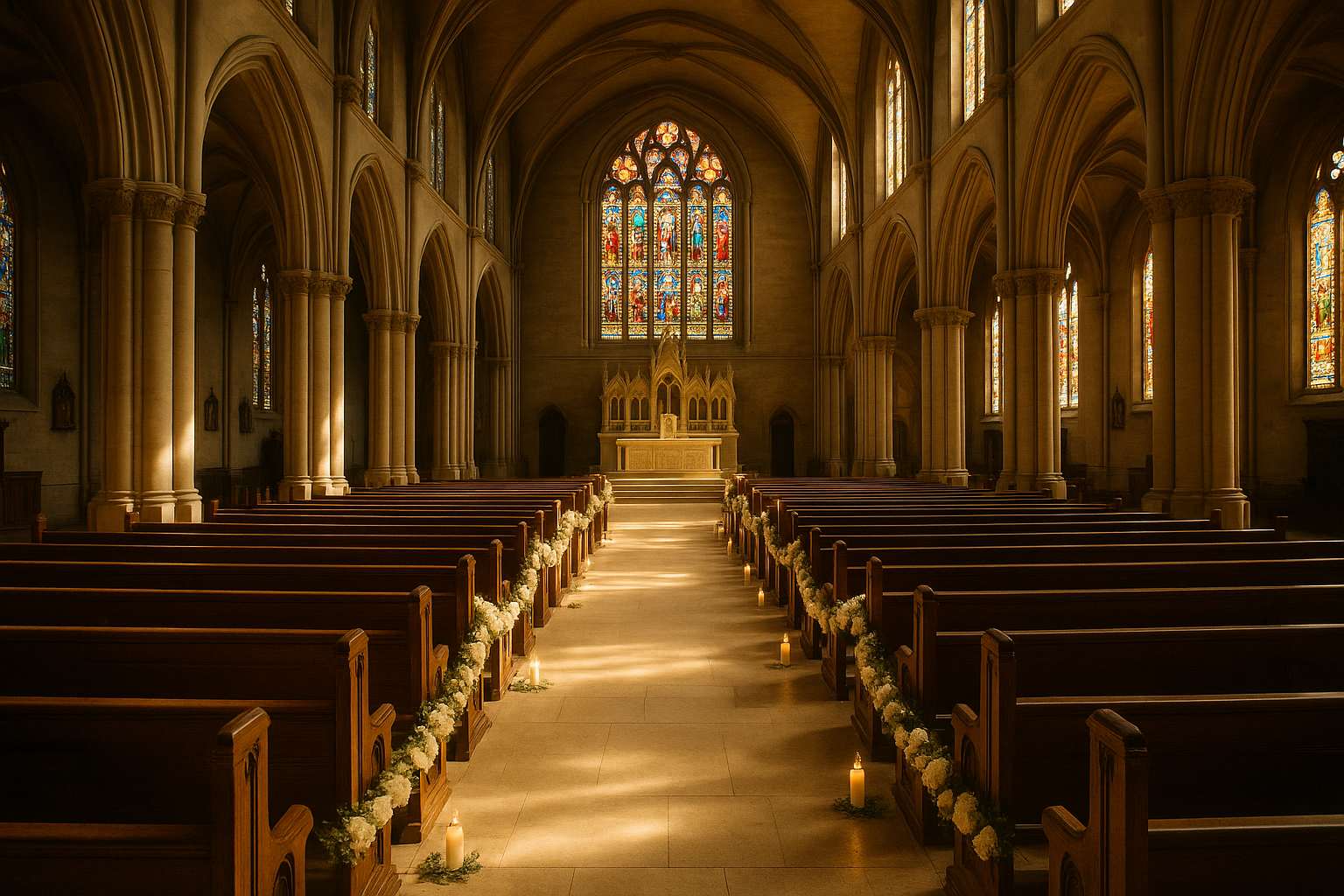
Pre-Cana is the Catholic Church's required marriage preparation program, named for the wedding feast at Cana. Every couple seeking a Catholic wedding in the United States must complete it — typically six to twelve months before the ceremony. The program covers communication, finances, natural family planning, theology of marriage, and more. Most couples who complete it describe it as genuinely valuable, not merely obligatory.
The name comes from John 2:1–12 — the wedding feast at Cana in Galilee, where Jesus performed his first miracle and where, in Catholic tradition, the meaning of marriage was first revealed to be something larger than a human contract. Pre-Cana is the Church's way of ensuring that every couple approaching the sacrament of marriage has had the full conversation — about faith, finances, family, intimacy, and the specific kind of permanent covenant they are about to enter — before they stand at the altar.
For couples who have not been through the process, Pre-Cana carries a reputation as a bureaucratic hurdle: a required box to check before the wedding date is confirmed. The consistent experience of couples who complete it is considerably richer than that. According to the Diocese of Cleveland's Pre-Cana FAQs, the Church designs the program not to evaluate couples but to equip them — and the vast majority of participants describe it as a genuinely formative experience. This guide covers everything an engaged couple needs to know about what Pre-Cana involves, what formats are available, what it costs, and how to navigate it with confidence.
What Does Pre-Cana Require, and Where Do You Start?
The first step is not registering for a program — it is contacting your intended wedding parish. Before anything else, couples must meet with the priest or deacon at the parish where they plan to marry. This initial meeting confirms your freedom to marry in the Church (no prior valid marriages without a declaration of nullity), introduces the requirements specific to your diocese, and establishes the timeline. In most dioceses, this first meeting should happen at least nine to twelve months before the wedding. In major metropolitan parishes where Saturday dates book years in advance, contacting the parish immediately after becoming engaged is not too early.
Required documents. You will need a recently issued baptismal certificate — issued within the past six months — for each Catholic partner. The six-month recency requirement ensures that any subsequent sacramental annotations (confirmation, prior marriages, any dispensations) are current on the record. A confirmation certificate is required if confirmation is not noted on the baptismal certificate. If either partner was previously married, a declaration of nullity from the Church or a death certificate for the prior spouse must be in hand before a date can be set — this process takes time and must begin well in advance. Your state or county civil marriage license is obtained separately, typically in the weeks before the ceremony, and signed by the officiant at the ceremony.
The freedom to marry inquiry. Your priest or deacon will ask each partner privately — or in a formal questionnaire — whether you are marrying freely, without coercion, whether you intend the marriage to be permanent, whether you are open to children, and whether you have any prior marriages. These questions are not procedural formalities; they are the Church's canonical verification that the foundational conditions for a valid sacramental marriage are present.
| Format | Duration | Typical Cost | Best For |
|---|---|---|---|
| Weekend retreat (in-person) | Friday PM – Sunday PM | $150–$275/couple (incl. meals, lodging) | Couples wanting immersive, community experience |
| Evening session series | 6–8 weekly sessions | $50–$150/couple | Couples with demanding work schedules |
| Online/virtual program | Self-paced; 8–12 hours of content | $175–$225/couple | Long-distance couples; couples in remote areas |
| Mentor couple series | 6–8 sessions (in mentor's home) | Often free or nominal donation | Couples who prefer one-on-one, intimate format |
What Happens During Pre-Cana? The Program's Core Content
Pre-Cana is not a theology lecture or a set of rules to memorize. It is a structured, facilitated conversation between you and your partner about the foundations of your shared life. The curriculum, while it varies in emphasis and delivery by diocese and program, consistently addresses these areas:
Communication and conflict. How do you fight? How do you repair after disagreement? What patterns from your families of origin are you likely to carry into your own household, and which ones are worth consciously changing? These conversations are often the most immediately useful part of Pre-Cana for couples who are emotionally close but have never systematically examined their communication patterns.
Finances. The program covers how you will manage money as a household — not to prescribe a specific system, but to ensure you have had the conversation. Financial transparency, shared goals, debt disclosure, and differing spending styles are addressed. For many couples, the Pre-Cana finance discussion is the first time they have laid out their full financial pictures to each other explicitly.
Natural Family Planning. The Church's teaching on marriage being open to life is presented in full, including instruction in Natural Family Planning methods. This is the section that generates the most questions from engaged couples, particularly those who are not familiar with NFP. Instructors are trained to present the material pastorally and informatively. Couples are not required to adopt NFP; they are required to engage with the Church's teaching seriously and make an informed, conscientious decision.
The FOCCUS inventory. Most Pre-Cana programs include a premarital assessment — most commonly FOCCUS (Facilitating Open Couple Communication, Understanding and Study) or the Prepare-Enrich assessment. Each partner answers a series of questions independently, and a facilitator reviews the aggregated profile with the couple to identify areas of alignment and areas for further discussion. It is not a test of compatibility; it is a structured tool for surfacing the differences that every couple has but not every couple has named.
How Does Pre-Cana Work for Interfaith Couples?
Pre-Cana is required for all Catholic weddings, including those where one partner is not Catholic. The program is designed to accommodate interfaith couples thoughtfully, and the vast majority of priests and deacons who lead marriage preparation work in contexts where interfaith marriages are common and valued.
The specific requirements for an interfaith couple — where the Catholic partner is marrying a baptized Christian of another tradition — include a dispensation for a mixed-religion marriage, requested through the parish priest to the local bishop. This is a routine step, not an evaluation, and it is almost universally granted. The Catholic partner makes a formal commitment to do their best to raise children in the Catholic faith; the non-Catholic partner is made aware of this commitment. Both partners participate in Pre-Cana together.
For couples where the Catholic partner is marrying an unbaptized person, a different dispensation — for disparity of cult — is required, but the pastoral process is similar. Both programs lead to a licit Catholic ceremony.
Interfaith couples can choose to celebrate the marriage with or without a Nuptial Mass. A ceremony without Mass is typically 30 to 45 minutes, does not include Communion distribution (which avoids the pastoral complexity of a sacrament accessible only to Catholics in the state of grace), and is often the more pastoral choice for receptions with a large proportion of non-Catholic guests and family. Both options are fully valid celebrations of the sacrament of marriage.
For most couples who approach it with open minds, Pre-Cana is not the obligation they expected. It is, in the words of The Marriage Group's comprehensive Pre-Cana guide, a rare opportunity to have the conversations that engaged couples most need to have — in a structured, supported, unhurried setting, before the noise and pressure of the wedding day itself has arrived. That opportunity, offered at $50 to $275 and a weekend of your time, is one of the most genuine preparations for marriage available to any couple.
Sources: The Marriage Group — Ultimate Guide to Pre-Cana; PreCana Online — Requirements for Catholic Marriage; Catholic Diocese of Cleveland — Pre-Cana FAQs.
Frequently asked
What exactly does Pre-Cana cover?
Pre-Cana covers the full spectrum of topics that the Catholic Church considers essential to a strong, faith-grounded marriage. The core curriculum typically includes communication styles and conflict resolution — how couples actually talk and listen to each other, particularly under stress; financial transparency and planning, including how to manage money as a household; natural family planning (NFP), with instruction on Church teaching on contraception and family size decisions; the theology of the body and intimacy, grounding physical love within the Church's sacramental understanding of marriage; family of origin — examining the assumptions, patterns, and expectations each partner brings from their upbringing; roles within a faith-filled household; parenting philosophy and raising children in the faith; and the sacramental theology of marriage itself, covering what the Church means when it describes marriage as a permanent, exclusive, life-giving covenant. The depth of treatment varies by program format and diocese, but all programs approved by the local ordinary address these core areas.
How far in advance do you need to complete Pre-Cana?
Most Catholic dioceses in the United States require couples to contact their parish at least one year before the desired wedding date and to complete Pre-Cana at least six months before the ceremony. Many parishes in high-demand markets — major cities, popular Catholic wedding venues — fill Saturday slots 18 to 24 months in advance, which means initiating contact immediately after the engagement is confirmed is not premature. The six-month minimum for Pre-Cana completion exists specifically to allow time for the discussions to influence the couple's preparation rather than being completed as a last-minute formality. Begin the process as early as possible after becoming engaged; contact your intended wedding parish first, before registering for any Pre-Cana program, as your parish priest or deacon will direct you to the specific programs approved by your diocese.
What formats does Pre-Cana come in, and how much does each cost?
Pre-Cana is offered in three primary formats, and all have been accepted by most U.S. dioceses since 2020. Weekend retreat programs (Friday evening through Sunday afternoon) are the most traditional format, typically held at a retreat center and costing $150 to $275 per couple, which generally includes meals, materials, and lodging. Evening session series run over six to eight weeks and cost $50 to $150 per couple, making them more accessible for couples with demanding work schedules. Online and virtual programs are fully accepted by most dioceses and typically cost $175 to $225 per couple; some dioceses, such as the Archdiocese of Chicago, operate their own virtual program directly. Some dioceses require at least one in-person session regardless of program format; confirm your diocese's specific policy with your parish before registering for any online option. The cost of Pre-Cana is entirely separate from parish fees, marriage license fees, and any donations to the officiating priest or deacon.
What documents do you need to get married in the Catholic Church?
The required documents for a valid Catholic marriage in the United States typically include: a recently issued baptismal certificate for the Catholic partner or partners (issued within the past six months, to ensure that any subsequent sacramental notations — confirmation, any prior marriages — appear on the record); a confirmation certificate if confirmation is not recorded on the baptismal certificate; and a civil marriage license obtained through the appropriate government authority in your jurisdiction. If either partner was previously married, a declaration of nullity (annulment) from the Catholic Church or a death certificate for the former spouse is required before a wedding date can be set. If the Catholic partner is marrying a non-Catholic Christian, a written permission for a mixed religion marriage may be required from the local bishop — your parish priest handles this request routinely. Required documents vary by diocese; your parish will provide a complete list at the first meeting.
What is the FOCCUS inventory, and what should couples expect from it?
FOCCUS stands for Facilitating Open Couple Communication, Understanding and Study. It is a premarital assessment inventory used widely in Catholic marriage preparation — and increasingly in Protestant and non-denominational programs as well — that generates a personalized discussion profile for each couple based on their responses to a series of questions about their values, expectations, communication patterns, and relationship strengths. The inventory is not a test and cannot be failed; there are no right or wrong answers. Its purpose is to surface areas where partners hold different assumptions or expectations that have not yet been explicitly discussed. Common areas the FOCCUS profile identifies include financial management styles, expectations about household roles, differing approaches to conflict resolution, and religious practice priorities. Couples work through their profile in facilitated sessions with a trained priest, deacon, or mentor couple. Most participants describe the experience as clarifying rather than alarming — revealing differences that are easy to navigate when identified early, and significantly more difficult when they emerge for the first time mid-marriage.
How does Pre-Cana work for interfaith couples or when only one partner is Catholic?
Interfaith couples — where one partner is Catholic and the other is a baptized Christian of another tradition, or is unbaptized — are fully welcome in Catholic marriage preparation and in Catholic ceremonies, with some additional steps. The Catholic partner must request a dispensation from the local bishop for a mixed-religion marriage; this is a routine administrative step that your parish priest handles, and it is rarely denied. Both partners participate in Pre-Cana together regardless of the non-Catholic partner's faith background. The Catholic partner makes a formal commitment to do their best to raise children in the Catholic faith, and the non-Catholic partner is informed of this commitment. The ceremony itself can be celebrated either with or without a Nuptial Mass — a ceremony without Mass is often chosen for interfaith couples, as it is shorter, does not include Communion distribution, and is more easily accessible to non-Catholic guests and family members. The priests and deacons who lead marriage preparation are experienced in guiding interfaith couples through these requirements with warmth and pastoral care.