Ceremony & Vows
Who Walks the Bride Down the Aisle: A Complete Modern Guide
There is no single right answer — and that is exactly the point. Whether the tradition honors a father, both parents, a stepparent, a sibling, or the bride herself, the choice should reflect your actual story. Here is how to think through it.
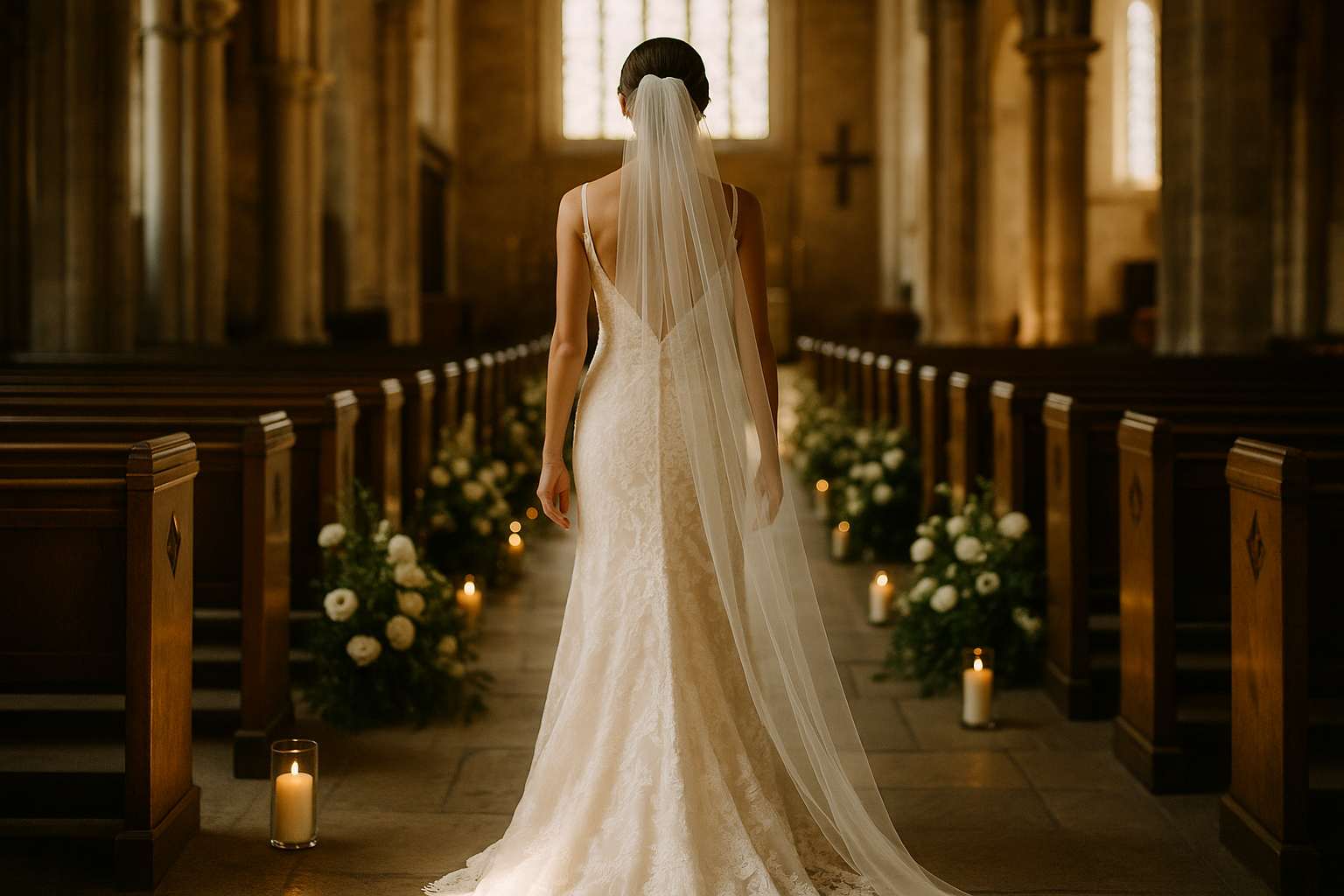
Who walks the bride down the aisle is not a requirement — it is a choice. Both parents, the father alone, the mother alone, a stepparent, a sibling, or the bride herself: all are fully accepted in 2026. The right answer is whoever has genuinely walked beside you to this moment. Have the conversation early and privately with anyone whose expectations may differ from your decision.
Of all the decisions in ceremony planning, the processional escort is among the most emotionally freighted — and the most misunderstood as fixed. Brides who grew up imagining a father's arm on their wedding day sometimes discover that family circumstances have changed that picture. Brides from non-traditional families sometimes feel pressure to stage a tradition that does not reflect their actual relationships. And brides who simply want to walk alone sometimes feel they need permission to make what is, in fact, a completely valid choice.
The truth that ceremony professionals and planners encounter over and over again is simple: the processional moment belongs to the bride. Its purpose is not to fulfill a tradition but to mark the beginning of the ceremony with intention, love, and genuine meaning. How you fulfill that purpose is yours to determine.
The guidance in this article reflects current ceremony practice, The Knot's 2026 survey data on processional choices, and counsel from officiants and wedding planners across every major tradition.
What are all the options available to the modern bride?
The range of meaningful processional escort options is broader than wedding tradition discourse suggests. Here is a complete accounting:
| Option | Best For | Religious / Cultural Compatibility |
|---|---|---|
| Father alone | Close father-daughter relationship; traditional religious ceremony | Universal across all traditions |
| Both parents together | Equal relationships with both parents; Jewish ceremonies (traditional standard) | Jewish (standard); increasingly common in all traditions |
| Mother alone | Single-parent family; father deceased; closer relationship with mother | Accepted across all traditions |
| Stepfather (alongside or instead of biological father) | Stepfather who raised the bride; blended families | Accepted; requires sensitive family communication |
| Sibling (brother or sister) | Parents deceased or absent; extraordinarily close sibling relationship | Accepted in all traditions |
| Grandparent(s) | Grandparent as primary family figure; honoring an elder | Accepted in all traditions |
| Walking alone | Self-funded wedding; father absent or deceased; personal statement | Widely accepted in secular; may differ in religious settings |
| Walking with the groom (entering together) | Partnership-forward couples; secular ceremonies; second marriages | Common in secular/interfaith; less typical in religious |
| Walking with children from a previous relationship | Blended family weddings where ceremony marks a new family | Deeply meaningful in any tradition |
How do you navigate this decision when family circumstances are complicated?
For the many brides whose family landscape involves divorce, stepparents, estrangement, loss, or blended family complexity, the processional escort decision requires both emotional sensitivity and logistical clarity.
Divorced parents who are amicable. Walking with both parents is entirely feasible and is often deeply moving. Mother on the left, father on the right — or the other way around if that reflects the family's actual dynamic. Discuss the plan with both parents privately and directly, giving each an equal and early conversation. When both parents are present at the altar or aisle entrance, their physical proximity communicates something true and beautiful about the family that raised you, even if the structure of that family is not traditional.
Divorced parents with a strained relationship. The most common solution is to walk with one parent while honoring the other in a different ceremony role. The biological parent or the parent who raised the bride typically takes the processional role; the other parent is honored through a reading, a formal seat of honor in the front row, an acknowledgment in the ceremony program, or the formal escorting-to-seat ceremony that some traditions observe. The key: every person whose role differs from expectation hears the plan directly from the bride, privately, and well before the rehearsal.
Stepparents with significant relationships. A stepfather who helped raise the bride deserves a meaningful ceremony role — which may mean walking alongside her biological father, walking in place of a deceased or absent biological father, or walking alone with her if that most accurately reflects who has been her primary family figure. The emotional complexity of this decision sometimes makes brides feel they must minimize the stepparent's role to avoid conflict with the biological parent. In most cases, the honest conversation — 'You both matter to me, and I want to find a way to honor both of you' — yields more grace and flexibility from the family members involved than the couple fears.
What does the processional escort mean in major religious and cultural traditions?
Understanding the tradition your ceremony takes place within helps clarify both the expectation and the range of acceptable variation:
Christian (traditional): The father or father figure has been the standard escort for centuries. In Catholic ceremonies, the bride's mother is formally escorted to her seat as the last seated guest — a distinct ceremonial moment that signals the ceremony is about to begin — and then the processional begins with the father and bride. The mother's seating is an intentional, named event; ensure your ushers and musicians understand its significance.
Jewish: Both parents walking the bride is the traditional Jewish norm — and both parents walking the groom is equally expected, giving the ceremony a processional sequence in which both families are equally and formally honored. The Jewish processional also includes a formal escort of grandparents, making it among the most family-inclusive of any major tradition's ceremony structure.
Secular and interfaith: In the broadest category of contemporary American ceremony, there is no single norm — and that is by design. The officiant and the couple define the meaning of the processional. Walking alone, entering together, being escorted by a chosen family member — all are not only accepted but actively celebrated as expressions of the couple's authentic story.
Whatever you choose, the processional escort is most powerful when it is explained to your officiant so they can reference it in the ceremony if appropriate, when the escorting person understands their role and has practiced it at the rehearsal, and when every family member whose role differs from expectation has received a direct, private, warm conversation before the wedding day. The ceremony itself should be a celebration — not a revelation.
Frequently asked
Who traditionally walks the bride down the aisle?
In Western Christian tradition, the bride's father has historically walked her down the aisle — an act rooted in the older custom of the father 'giving the bride away,' in which a parent or guardian formally transferred the bride to the groom. That specific language has largely disappeared from modern ceremonies, though the gesture of a father escorting his daughter to her groom remains deeply meaningful for many families. Today, the tradition has expanded considerably: both parents walking the bride together is now equally common and is considered a beautiful expression of shared family love. The important shift in how modern couples approach this decision is the underlying question: not 'What is the tradition?' but 'Who has been the defining support in my journey to this moment?' The answer to that question — whether it is a father, a mother, a stepfather, a sibling, a grandparent, or the bride herself — is always the right answer for that ceremony.
What are all the options for who walks the bride down the aisle?
The options for who escorts the bride down the aisle are broader than most brides realize, and every one of them is fully accepted in contemporary ceremony practice. The father alone remains the most common choice in traditional and religious ceremonies. Both parents together — mother on the bride's left, father on her right — has become equally prevalent and is the traditional norm in Jewish ceremonies. The mother alone is a beautiful choice when she has been the bride's primary support, or when the father is deceased or absent. A stepfather who helped raise the bride, alongside or instead of the biological father, honors a significant relationship. A grandfather, brother, uncle, or chosen family member carries equal meaning when that person has been a pillar in the bride's life. Walking alone — with no escort — is a powerful, increasingly common statement of self-determination that many officiants now celebrate. Walking with the groom, entering together as equals, reflects the partnership model many couples prefer for secular ceremonies. Walking with children from a previous relationship is meaningful for blended family weddings where the ceremony marks a new family unit, not just a couple.
How do you handle who walks the bride down the aisle when parents are divorced?
Divorced parents are the most common complication in this decision, and there is no universal template — only a set of principles that help couples navigate it with grace. If the divorce is amicable and both parents have meaningful relationships with the bride, walking with both parents on either side is a beautiful, frequently chosen option. If the relationship between the divorced parents is strained, the bride typically walks with the parent she is closer to — usually her mother or the parent who raised her — and honors the other in a different role: a reading, a seat of honor, or a formal escort to their seat. Stepparents require a thoughtful approach. A stepfather who raised the bride deserves a role equal to his actual significance in her life; dismissing that relationship for a traditional appearance is neither honest nor kind. A stepfather who entered the family more recently can be honored with a boutonniere, a named acknowledgment in the program, and a personal conversation before the wedding. Any parent whose role differs from their expectation deserves to hear the decision privately and directly from the bride — not at the rehearsal.
Is it acceptable to walk yourself down the aisle?
Walking yourself down the aisle is not only acceptable — it is increasingly celebrated as one of the most meaningful processional choices a bride can make. The Knot's 2026 survey data shows a growing percentage of brides choosing to walk alone, and officiant and ceremony trend reports confirm this is now mainstream rather than countercultural in secular and interfaith ceremonies. The reasons are varied and deeply personal: some brides have lost their fathers and find walking alone the most authentic honoring of that loss; others are funding their own wedding and feel that walking alone reflects their independence; others simply feel that the processional moment is most powerfully theirs when they own it entirely. In many Catholic and traditional religious ceremonies, the expectation of a family escort remains strong — in those contexts, choosing to walk alone is a decision worth a gentle conversation with your officiant. In secular, interfaith, and non-denominational ceremonies, the choice is entirely yours and will be embraced by the vast majority of modern officiants.
How do you have the conversation with a parent who expects to walk you down the aisle but will not be asked?
This conversation is one of the most emotionally sensitive in all of wedding planning — and it is made harder by how long it is sometimes delayed. The principle is consistent across every version of this conversation: have it privately, have it early, and have it in person. Tell the person what role they will play, explain your reasoning briefly and warmly, and make clear the decision reflects your relationships and vision rather than a judgment on their importance. An example: 'Dad, I want to talk about the processional. Mom and I are so close that I want her to walk with me, and I also want to honor you — I was thinking you could escort Grandma to her seat, and I want you acknowledged in the program. I hope that feels meaningful, and I want you to know how much you mean to me.' What does not work: deciding by committee, asking multiple family members their opinions before speaking to the person affected, or putting it off until the rehearsal. The earlier this conversation happens, the more time there is for feelings to settle and for everyone to arrive at the wedding holding something they feel good about.
How does who walks the bride vary across different religious and cultural traditions?
The processional escort is one of the most tradition-specific elements of a ceremony, and norms vary across faith and cultural communities. In Jewish ceremonies, both parents walking the bride is the traditional standard — and both parents walking the groom is equally expected, giving both sides a visible role. The groom's parents process before the bride, making the Jewish processional notably different from its Christian counterpart. In Catholic ceremonies, the traditional expectation is the father or father figure, with the bride's mother formally escorted to her seat as the last guest seated before the processional — a named ceremonial moment. In Hindu ceremonies, the bride is traditionally escorted to the mandap by her maternal uncles (mama), reflecting a kinship structure rooted in North Indian tradition. In Filipino Catholic weddings, secondary sponsors (ninang and ninong) participate in distinct roles in the processional sequence. African American church traditions frequently involve the congregation standing and sometimes singing as the bride enters — a celebratory moment that transforms the processional into a collective act of welcome. Understanding your tradition's expectations — and discussing them with your officiant early — lets you make intentional choices rather than discovering constraints on the rehearsal day.