Etiquette & Guests
Blended Family Wedding Ceremony Ideas
When children and stepparents are part of your story, the ceremony should say so. These unity rituals and inclusive gestures honor every member of your new family — authentically and beautifully.
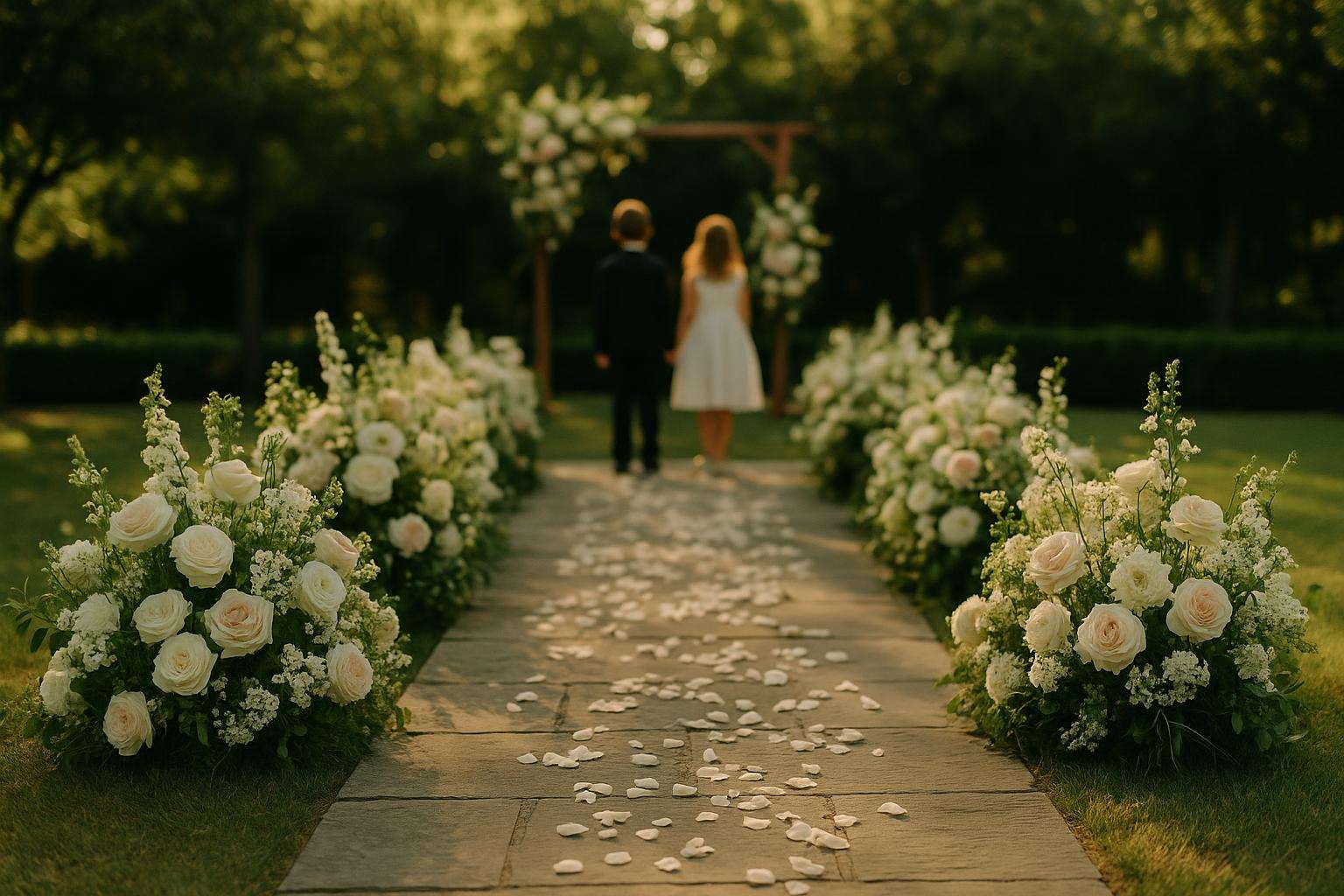
blended family wedding 2026unity ceremony with childrenstepfamily ceremony ritualinclusive wedding ideasfamily vow ceremony
The quick verdict
When children and stepparents are part of your story, the ceremony should say so — with rituals that honor everyone authentically, not performatively.
- Best overall
- Family Medallion Ceremony — The most widely recognized blended-family ritual: it gives the children a named, ring-equal moment and a lasting keepsake, and adapts to any age, faith, or secular ceremony.
- Best value
- Family Promise Vows — Costs nothing but a few sentences of preparation, yet lets the couple make spoken promises directly to the children — emotionally powerful with no budget impact.
- Best for Younger children who respond best to a hands-on, visual ritual
- Sand Ceremony with Children's Individual Colors — Pouring individual colors of sand into one vessel gives even small children a simple, tangible role that visibly forms the new family in front of guests.
How we evaluated
- .
- .
- .
- .
- .
Rating scale:
Last verified .
At a glance
| # | Name | Rating | Best for | Pricing |
|---|---|---|---|---|
| 1 | Family Medallion Ceremony | 5.0 | A tangible symbol of commitment to the children — presented the same moment as the wedding rings. | Family Medallion necklaces or pendants: $15–$60 per child; custom versions from jewelers run $50–$200 per child |
| 2 | Sand Ceremony with Children's Individual Colors | 4.9 | A visual metaphor for the blended family that every guest understands in real time. | Sand ceremony set with multiple vials: $20–$80 for basic kits; custom engraved vessels: $60–$200 |
| 3 | Family Promise Vows | 4.9 | The couple makes promises to the children, not just to each other — and the difference is profound. | Cost: $0 — scripted by the couple and officiant; optional calligraphy print of the promises: $30–$100 |
| 4 | Rose Ceremony for Children and Stepparents | 4.7 | A single rose exchanged as the first gift of the new family — simple, visual, and universally understood. | Single roses or small bouquets: $5–$30 depending on variety; can come from the ceremony florals |
| 5 | Family Puzzle Ritual | 4.6 | Each person brings a piece; together they build something more complete than any one of them alone. | Custom laser-cut wooden puzzle with family portrait or monogram: $40–$150; framing: $20–$80 |
| 6 | Tree Planting Ceremony | 4.5 | A living symbol of the family that will grow alongside the marriage itself. | Young tree sapling: $15–$50; decorative planting vessel: $30–$100; optional personalized plaque: $20–$60 |
| 7 | Anniversary Box with Family Letters | 4.4 | A time capsule sealed on the wedding day — opened when the family needs to remember where it began. | Wooden keepsake box: $30–$120; wine or other symbolic contents: optional; calligraphy labels: $15–$40 |
| 8 | Unity Candle with Full Family Participation | 4.3 | Every person's individual light contributing to the family's shared flame — a classic reimagined for blended families. | Unity candle sets with additional taper candles for children: $25–$80; custom engraved candles: $50–$150 |
Family Medallion Ceremony
A tangible symbol of commitment to the children — presented the same moment as the wedding rings.
The Family Medallion ceremony is one of the most widely recognized and emotionally resonant rituals specifically designed for blended family weddings. Created by Dr. Roger Coleman in the early 1990s and popularized through faith-based family organizations, the ritual involves the couple presenting each child with a medallion — typically a three-ringed pendant symbolizing the union of the couple and the family — immediately after the wedding rings are exchanged. The children join the couple at the altar for this moment, which is narrated by the officiant to explain its meaning to all guests. The effect is immediate and visible: the new family is being formed and publicly acknowledged in real time, not implied. Children who may have been uncertain or anxious about the wedding often describe this as the moment they felt genuinely included rather than accommodated. The ritual works for children of any age — the language the officiant uses adjusts for whether the children are five or fifteen — and adapts beautifully across faith traditions from evangelical Christian ceremonies to secular humanist ones. The medallion itself becomes an heirloom: something the child can pass along as evidence of the family that chose them. As FamilyLife recommends, the ceremony also allows the couple to make specific verbal promises to the children, not just to each other — a distinction that carries enormous weight for kids navigating the emotional complexity of a parent's remarriage.
Strengths
- Creates a specific, named moment for the children that carries equal ceremony weight as the ring exchange
- Offers a tangible keepsake the child keeps for life — an heirloom rather than a program note
- Works for any number of children, any age, any faith tradition or secular ceremony
Weaknesses
- Requires the officiant to be comfortable with unscripted child interaction — a moment that does not go as planned with a nervous seven-year-old can shift the energy unexpectedly
- Best for
- A tangible symbol of commitment to the children — presented the same moment as the wedding rings.
- Pricing
- Family Medallion necklaces or pendants: $15–$60 per child; custom versions from jewelers run $50–$200 per child
Source: Creative Blended Family Wedding Ideas for Your Ceremony — FamilyLife · Visit Family Medallion Ceremony
Sand Ceremony with Children's Individual Colors
A visual metaphor for the blended family that every guest understands in real time.
The sand ceremony is among the oldest unity ritual formats — two colors of sand poured simultaneously into a single vessel, creating a layered pattern that cannot be undone. For blended families, the version that resonates most is expanded: the couple each pours their color, and each child pours their own unique color, so the finished vessel visually represents every individual who makes up the new family. The result is a layered, irreversible, beautiful object that lives in the family's home as a visible reminder of the day. The sand ceremony works outdoors and indoors, for any faith tradition, for any family size, and — critically — it is one of the most visually clear rituals available. Guests watching can follow exactly what is happening without narration: each person is a distinct color, each color is becoming part of something that cannot be unmixed. As Unbridely describes it, "the blending represents the irreversible joining of two lives — and where children are part of the family being celebrated, additional colors can be added for each child, making the ritual a powerful visual representation of a blended family." Children typically find the act itself absorbing and enjoyable rather than pressured, which reduces the risk of a reluctant participant. The finished vessel is engraved with the family name and wedding date and displayed prominently in the home.
Strengths
- Visually immediate — every guest understands the ritual without explanation
- Children find the act itself engaging rather than performative
- Produces a permanent keepsake displayed in the family home for years
Weaknesses
- Not suitable for outdoor ceremonies in wind — sand spills require a protected setup area or a venue with covered aisle space
- Best for
- A visual metaphor for the blended family that every guest understands in real time.
- Pricing
- Sand ceremony set with multiple vials: $20–$80 for basic kits; custom engraved vessels: $60–$200
Source: 8 Blended Family Unity Rituals For Your Wedding Ceremony — Unbridely · Visit Sand Ceremony with Children's Individual Colors
Family Promise Vows
The couple makes promises to the children, not just to each other — and the difference is profound.
Family promise vows are a formal extension of the traditional vow exchange in which the couple addresses not only each other but their children directly — speaking aloud the commitments they are making to the family they are creating together. The format varies: in some ceremonies, each partner addresses their partner's children separately; in others, both partners address all children together; in some, the children are invited to respond with a simple affirmation ('We do' or 'We will'). The power of family promise vows lies in making explicit what a standard wedding ceremony leaves implicit: that this union is also a family formation, that the children are not passengers in this event but principals in this story. For older children who may feel uncertain or even resistant about the wedding, hearing specific, sincere promises spoken in front of witnesses — not whispered privately at home — carries a different psychological weight. The promises themselves should be written by the couple with care: specific, honest, and age-calibrated. Vague promises ('I promise to love you always') mean less than specific ones ('I promise to be at your games, to help with your homework, and to never try to replace your father — only to add to what you already have'). Work with your officiant to find language that fits both the tone of your ceremony and the reality of your specific family relationships. As Destify notes, teens respond especially well when given the option to participate meaningfully rather than being passively included.
Strengths
- Addresses the most emotionally significant dimension of blended family dynamics — the children's place in the new family — directly and publicly
- Flexible format adapts to any family composition, age range, and ceremony style
- Costs nothing; the investment is entirely in the thoughtfulness of the words
Weaknesses
- Requires honest, specific language to be effective — generic or perfunctory language can feel dismissive to children who are genuinely listening
- Best for
- The couple makes promises to the children, not just to each other — and the difference is profound.
- Pricing
- Cost: $0 — scripted by the couple and officiant; optional calligraphy print of the promises: $30–$100
Source: Blended Family Wedding Ceremony Ideas: Tips for an Inclusive Wedding — Destify · Visit Family Promise Vows
Rose Ceremony for Children and Stepparents
A single rose exchanged as the first gift of the new family — simple, visual, and universally understood.
The rose ceremony is one of the most elegant and low-choreography options for including children and stepparents in a blended family wedding ceremony. In its classic form, the couple exchanges a single rose as their first gift to each other as a married couple. For blended families, the ritual expands naturally: the couple also presents roses to each child as a symbol of their welcome into the new family, and optionally to stepparents who are present. A stepparent who raised a child receives their rose before the couple's exchange; one who is newer to the relationship receives their rose as part of a broader acknowledgment. The gesture is clear without requiring explanation: this person is being given a flower by the couple — the same symbol of love — as an act of inclusion. The rose ceremony requires almost no rehearsal beyond knowing who receives a rose and when, making it logistically accessible even for couples who are adding an element late in the planning process. Florists can incorporate the ceremony roses seamlessly into the ceremony florals without a significant additional cost. As Emerson Fields notes in their unity ceremony guide, the rose ceremony "is simple, visually beautiful, and needs no explanation" — a quality that is rare and genuinely valuable in ceremony design for mixed audiences.
Strengths
- Requires no rehearsal, no special equipment, and minimal advance planning
- Visually beautiful and photographically strong without complexity
- Scales naturally to any number of children or stepparents
Weaknesses
- Less distinctive than rituals specifically created for blended families — the rose ceremony's meaning may not immediately register as a family inclusion gesture without narration from the officiant
- Best for
- A single rose exchanged as the first gift of the new family — simple, visual, and universally understood.
- Pricing
- Single roses or small bouquets: $5–$30 depending on variety; can come from the ceremony florals
Source: Top 17 Unity Ceremonies to Consider for Your Wedding — Emerson Fields · Visit Rose Ceremony for Children and Stepparents
Family Puzzle Ritual
Each person brings a piece; together they build something more complete than any one of them alone.
The family puzzle ritual is a newer addition to blended family ceremony repertoire — gaining visibility in 2024–2026 as couples seek rituals that work metaphorically for children at an accessible, concrete level. The concept: each family member holds one puzzle piece, which they bring forward and fit into a shared puzzle at the altar. The finished puzzle is then displayed in the family home. The metaphor is layered and honest in a way that resonates particularly well with children: puzzle pieces sometimes need to be worked to fit together, which acknowledges the reality of blended family life without pretending all transitions are effortless. When the pieces lock, the whole is more beautiful and structurally stronger than any single piece. As Unbridely observes, the tactile act of fitting pieces together gives children something concrete to do during the ceremony — a role that involves genuine participation rather than standing still. Custom wooden puzzles can be laser-cut with the family name, a meaningful image, or a silhouette of the family's first home. The finished piece, mounted and framed, becomes a permanent piece of the family's home. The ritual works particularly well for children in the 5–12 age range, where the concreteness of the action matches their developmental comfort with symbolic activities. Teenagers and adults participate equally without the exercise feeling juvenile.
Strengths
- Tactile participation gives children a genuine role rather than passive presence
- Metaphor is honest and age-appropriate — the effort to fit pieces together mirrors real blended family dynamics
- Produces a distinctive, lasting home display piece
Weaknesses
- Requires more advance coordination than simpler rituals — custom puzzle must be designed and ordered well before the wedding
- Best for
- Each person brings a piece; together they build something more complete than any one of them alone.
- Pricing
- Custom laser-cut wooden puzzle with family portrait or monogram: $40–$150; framing: $20–$80
Source: 8 Blended Family Unity Rituals For Your Wedding Ceremony — Unbridely · Visit Family Puzzle Ritual
Tree Planting Ceremony
A living symbol of the family that will grow alongside the marriage itself.
The tree planting ceremony is one of the most meaningful unity rituals for blended families with children who are old enough to participate in gardening or who have a strong relationship with nature. The couple and each child together plant a young tree in a shared vessel during the ceremony — each pouring a small amount of soil from a personal container as their contribution to the planting. The ritual's power is its living quality: the tree grows alongside the marriage, requiring ongoing shared care, and the family can plant it in a permanent location after the wedding. Some couples gather soil from each family member's childhood home or current residence, so the earth in the pot literally represents every origin story present in the new family. As Wedgewood Weddings describes, the tree becomes a testament to the family's growth — a living, breathing symbol of roots shared and a future built together. The ritual is particularly popular at garden, vineyard, and outdoor estate weddings where the natural aesthetic already centers around growth and seasonal abundance. It requires slightly more ceremony setup than other unity rituals and works best when the officiant narrates the significance of each participant's contribution to the planting.
Strengths
- Produces a living keepsake that the family can watch grow for decades
- Strong resonance with outdoor and nature-centered weddings and families
- Soil from meaningful locations adds a deeply personal dimension
Weaknesses
- Requires more logistical setup than most ceremony unity rituals; best suited to outdoor venues or ceremonies at the family's home property
- Best for
- A living symbol of the family that will grow alongside the marriage itself.
- Pricing
- Young tree sapling: $15–$50; decorative planting vessel: $30–$100; optional personalized plaque: $20–$60
Source: Trendy Unity Ceremony Ideas for a Memorable Wedding — Wedgewood Weddings · Visit Tree Planting Ceremony
Anniversary Box with Family Letters
A time capsule sealed on the wedding day — opened when the family needs to remember where it began.
The anniversary box ceremony involves the couple and each family member placing a sealed letter — written privately in the days before the wedding — into a shared wooden box, along with optional symbolic items: a bottle of wine, a family photo, a small gift. The box is sealed during the ceremony and designated to be opened at a future milestone: the first anniversary, the fifth, the tenth, or when the family faces a significant challenge and needs to return to their roots. For blended families, the letters carry particular resonance — each person writes honestly from where they are right now, at the beginning of this new family, and the future versions of themselves will read those words with the perspective of years lived together. Children's letters, in their unedited handwriting and vocabulary, become extraordinarily precious over time. The ceremony moment itself is quiet and reflective — the family brings their letters to the altar, places them in the box together, and watches it sealed — but guests consistently name it among the most emotionally moving moments they witnessed at weddings incorporating it. As Emerson Fields notes, items like letters, photos, and wine serve as powerful reminders of the love and intentions that were present from the beginning.
Strengths
- Creates a time capsule of the family at its founding moment — permanently meaningful as the family grows
- Children's letters become extraordinary keepsakes
- The ceremony moment is quiet and intimate — a genuine pause in an emotionally full day
Weaknesses
- Requires advance effort from every participant — letters must be written before the wedding, which can be logistically complex with multiple family members across different households
- Best for
- A time capsule sealed on the wedding day — opened when the family needs to remember where it began.
- Pricing
- Wooden keepsake box: $30–$120; wine or other symbolic contents: optional; calligraphy labels: $15–$40
Source: Top 17 Unity Ceremonies to Consider for Your Wedding — Emerson Fields · Visit Anniversary Box with Family Letters
Unity Candle with Full Family Participation
Every person's individual light contributing to the family's shared flame — a classic reimagined for blended families.
The unity candle ceremony in its traditional form involves two individual candles — one representing each partner — lighting a single central candle together. For blended families, the ritual is expanded: each family member holds their own small taper candle, lit before the ceremony begins. At the designated moment, every person — the couple and each child — simultaneously contributes their flame to the central family candle. The symbolism is clear and beautiful: individual lights, each burning on their own, combining to support and enhance a shared family light that is brighter than any one of them alone. The visual impact of multiple flames joining at once is striking and photographs exceptionally well. One important practical note: the unity candle ceremony does not work reliably outdoors due to wind. Even a light breeze extinguishes tapers reliably, turning a meaningful ritual into a frustrating sequence of relighting attempts. For outdoor or partially outdoor ceremonies, the sand ceremony is the more practical equivalent. For indoor ceremonies in protected environments, the expanded unity candle with family participation is among the most visually dramatic and emotionally clear rituals available for blended family weddings. As Destify's inclusive wedding guide describes, giving every family member their own candle communicates that each individual light matters to the family as a whole.
Strengths
- One of the most visually dramatic unity ceremonies — multiple flames joining simultaneously photographs beautifully
- Universally understood symbolism requires minimal narration
- Works for any family size and any faith tradition
Weaknesses
- Not suitable for outdoor ceremonies in any wind — flames extinguish reliably and the logistical disruption can deflate the emotional moment entirely
- Best for
- Every person's individual light contributing to the family's shared flame — a classic reimagined for blended families.
- Pricing
- Unity candle sets with additional taper candles for children: $25–$80; custom engraved candles: $50–$150
Source: Blended Family Wedding Ceremony Ideas: Tips for an Inclusive Wedding — Destify · Visit Unity Candle with Full Family Participation
Frequently asked
How do you include children in a wedding ceremony without putting them under pressure?
The guiding principle is to offer roles, not assign them. Give each child a genuine option — 'Would you like to participate in the sand ceremony with us?' — rather than announcing their participation without consultation. Children who are asked and say yes become willing, genuine participants. Children who feel conscripted perform the role dutifully and remember the pressure rather than the warmth. Age calibration matters: children under five can scatter petals or carry a small sign with minimal involvement in longer rituals; children 5–12 often engage enthusiastically with tactile rituals like the sand ceremony or puzzle; teenagers respond best when given meaningful, autonomous roles — a reading, a toast, their own moment at the mic. For any child who does not want to participate publicly, honor that decision completely. A warm acknowledgment in the ceremony program honors every relationship without requiring any performance.
Should you acknowledge stepparents in the ceremony?
Yes — and the form of acknowledgment should reflect the actual depth of the relationship. A stepparent who raised a child from early childhood deserves a named, visible ceremonial role: participating in the unity ritual, walking the bride or groom down the aisle, receiving a rose or a flower, or being formally acknowledged by the officiant. A stepparent with a newer or more distant relationship still deserves a gracious acknowledgment — in the program, in a toast, or in a brief officiant mention. The goal is not to perform family unity that does not yet exist, but to acknowledge the people who are genuinely part of the couple's and children's lives. Conversations with each stepparent before the wedding — asking what role would feel meaningful to them — prevent the awkward scenario of surprising someone with more visibility than they wanted or less than they hoped for.
How do you handle an estranged child or a child who is resistant to the wedding?
Resist the impulse to choreograph a public display of family unity that the child does not feel. Forced participation in a unity ritual by a genuinely resistant child produces photographs of a child who looks uncomfortable and memories of a moment that felt dishonest to everyone present. Instead: ensure that child has been heard privately, that their concerns have been taken seriously by both the parent who is marrying and their new stepparent, and that no performance is expected of them at the ceremony. A child who is invited to attend and simply witness, with no ceremonial obligation, may find themselves genuinely moved by the event itself — a more natural and lasting emotional outcome than a reluctant participation in a staged ritual. If professional counseling was appropriate to support the transition, the ceremony is not the place to resolve dynamics that are still in progress.
What is the right timing for a unity ritual in a blended family ceremony?
Most unity rituals are placed after the exchange of rings and vows — the couple's central commitment has been made, and the family ritual follows as an expansion of that commitment to include the children and the broader family structure. This sequencing is intentional: it confirms that the couple's relationship is primary and secure before the family layer is added, which is emotionally reassuring for both the children and the guests. Some officiants prefer to place the family ritual earlier, between the vows and the rings, so that the family formation is woven into the covenant rather than appended to it. Either placement works; what matters most is that the officiant narrates the transition clearly so guests understand what they are witnessing and why it matters.
Do unity rituals work for faith-based ceremonies as well as secular ones?
Most unity rituals adapt across faith traditions with only minor adjustments. The unity candle ceremony has deep roots in Christian wedding traditions, particularly Catholic and evangelical Protestant ceremonies, and is fully appropriate in religious settings. The sand ceremony, family medallion, and rose ceremony are tradition-neutral and appear regularly in Jewish, Hindu, interfaith, and secular humanist ceremonies. The tree planting ceremony carries natural symbolism that translates across traditions. The one significant consideration: in strictly liturgical settings — a Nuptial Mass, for example — any addition to the formal ceremony structure must be discussed and approved by the officiating priest or deacon. Most clergy who regularly conduct blended family ceremonies will have established approaches for incorporating family rituals gracefully within the liturgical framework.