Etiquette & Guests
Child-Free Wedding Etiquette: How to Communicate Gracefully
An adults-only wedding is entirely your prerogative — and increasingly common. The art is in communicating the policy early, kindly, and consistently so that guests with children feel respected rather than excluded.
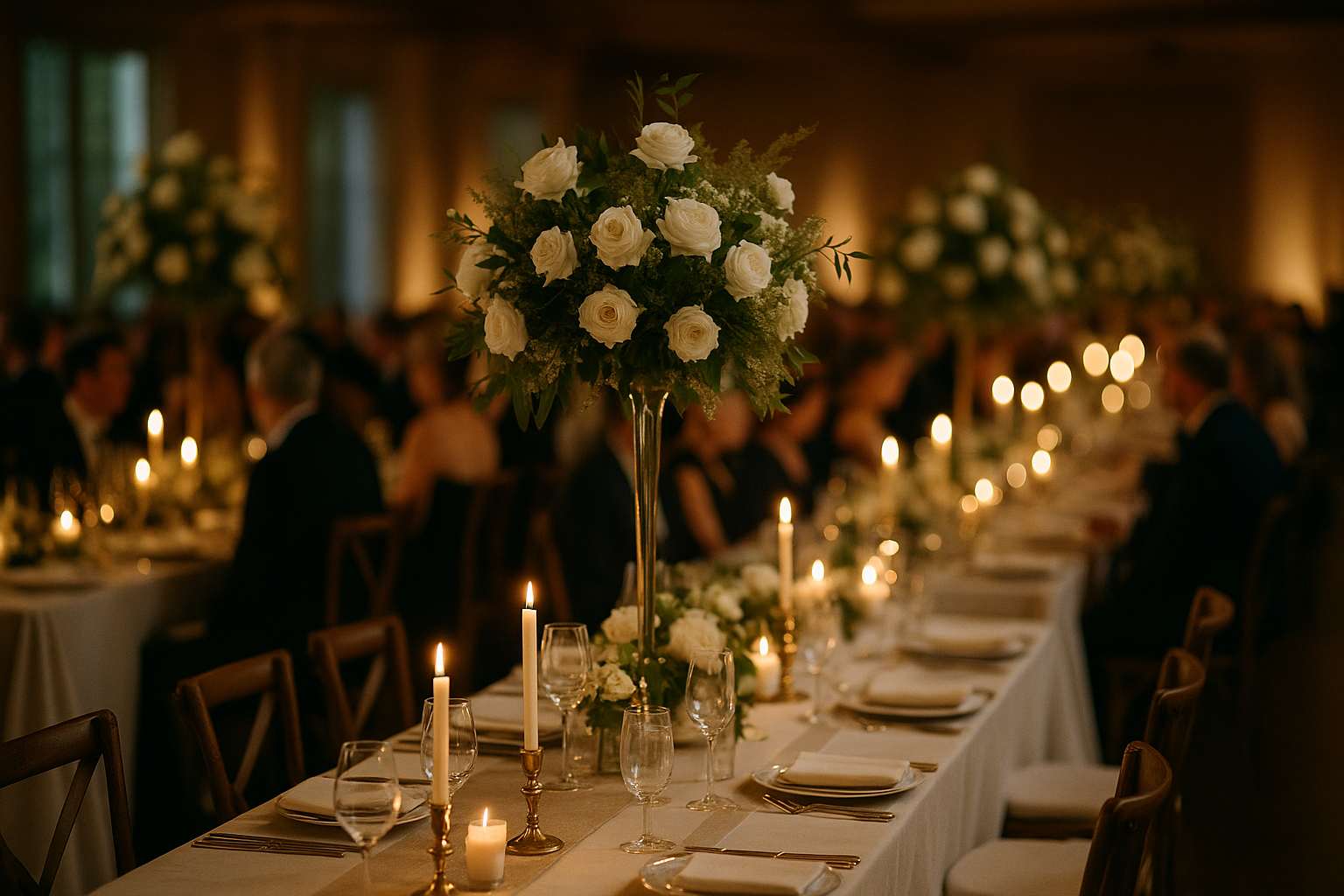
An adults-only wedding is fully acceptable in 2026 — 87% of couples agree it is a standard choice. Communicate the policy early (save-the-dates and wedding website), frame it with warmth rather than restriction, address envelopes only to adults, and hold the line consistently. The policy is never the problem; poor communication is.
The decision to host a child-free wedding has become one of the most normalized choices in modern wedding planning. According to Zola's 2026 First Look Report, 87% of engaged couples now agree that an adults-only celebration is a perfectly acceptable preference — up significantly from attitudes even a decade ago. Venue restrictions, per-plate costs, late evening timing, and a genuine desire for a certain atmosphere are all reasonable grounds for the choice, and no explanation is owed.
The art is entirely in the communication. Every difficult outcome associated with child-free weddings — hurt feelings, surprised guests, awkward RSVPs with children's names added — is a communication failure, not a policy failure. Get the timing, the wording, and the consistency right, and the policy itself becomes a non-issue.
When and how should you first communicate a child-free policy?
The save-the-date is not too early. If you know your wedding will be adults-only, mention it on your wedding website when it launches — which should coincide with or precede your save-the-dates. Guests with children, particularly those who will need to arrange travel and childcare simultaneously, benefit enormously from this lead time. A note in the FAQ section of your wedding website — accessible from the first day guests receive your save-the-date — is the cleanest, most efficient way to set expectations.
For close family members who you know have children — especially if they have reason to expect the children would be included — a personal call or message before the save-the-dates arrive is a meaningful act of respect. This converts what could be a surprising discovery into an appreciated personal conversation. Most guests receive this kind of proactive communication with genuine gratitude.
The most common communication mistake: waiting until invitations are mailed to disclose the policy. By then, guests may have already begun planning travel and assuming childcare would be unnecessary. Six to eight months of lead time is not excessive for a policy that requires guests to arrange childcare for a full day or evening event.
How do you communicate the policy across each touchpoint?
| Touchpoint | Approach | Sample Language |
|---|---|---|
| Save-the-date | No direct mention needed; launch website simultaneously with FAQ note | "Please visit our wedding website for all event details." |
| Wedding website FAQ | Direct, warm, early — from launch day | "Our reception will be an adults-only celebration. We hope this gives you a wonderful evening out." |
| Invitation envelope | Address only the invited adults by name — nothing more needed | "Mr. and Mrs. James Holloway" (no children listed) |
| Details insert card | Brief, gracious note; positively framed | "We have arranged an adults-only evening so every guest can relax and celebrate freely." |
| Wedding website card (in suite) | Direct guests to site where policy is spelled out | Include URL prominently; policy is on the site |
| Word of mouth via wedding party | Brief trusted family ambassadors — particularly parents on both sides | "The wedding will be adults-only — let anyone who asks know now so they have time to plan." |
| RSVP follow-up call | For guests who add children's names to the RSVP — personal, direct, kind | "We are so glad you are coming! I wanted to call personally because we are keeping the reception adults-only." |
One wording choice worth considering: most etiquette advisors, including The Knot's etiquette team, suggest that "adults-only" lands more warmly than "no children" or "child-free." The first frames the event as a particular kind of celebration; the second and third frame it as an exclusion. The distinction in guest perception is meaningful even when the policy is identical.
What about the wedding invitation itself?
Traditional etiquette offers the most elegant solution: the invitation envelope does all the work without a word of explicit policy. By addressing the outer envelope only to the adults who are invited — "Mr. and Mrs. James Holloway" rather than "The Holloway Family" — you are communicating precisely who is welcome. When a traditional inner envelope is included, the same principle applies: list only the adults by first name. The guest list that appears on the envelope is the guest list.
What not to do: write "No children" or "Adults only" on the main invitation card. This phrasing runs against established etiquette across virtually every authority, from Emily Post to modern wedding platforms, because it implies the couple expected the question needed a public correction. It also tends to read harshly regardless of how kindly it is intended. The details insert card — a separate enclosure with dress code, parking, accommodations, and event notes — is the appropriate place for a brief, warm policy note if you feel one is needed beyond the envelope addressing.
How do you handle difficult conversations and exceptions?
Even with flawless early communication, some guests will add children's names to RSVP cards or call to ask whether the policy applies to their specific situation. These conversations, while occasionally uncomfortable, are far more manageable than the alternative of discovering the misunderstanding the week of the wedding.
The most important principle: be consistent. Inconsistency — inviting one family member's children while declining the same for another of equivalent relationship — is the single most reliable source of genuine lasting hurt in this area. Build your exceptions intentionally before the invitations go out, and hold them steady.
Recognized exceptions that most etiquette sources acknowledge:
- Flower girls and ring bearers — children in ceremonial roles are a traditional and universally accepted exception at adults-only events.
- Breastfeeding infants — a private, direct communication to the parent is far more gracious than a blanket policy announcement. Most parents are relieved by a personal conversation.
- Immediate family children — nieces, nephews, and grandchildren of the couple's parents are commonly included even when other children are not, with parallel communication to the families of children who are not invited at that same tier.
For the rare guest who pushes back or expresses hurt despite clear early communication, the most effective response is warm, direct, and without excessive apology: "We made this decision early and communicated it to everyone at the same time — we truly hope you can join us, and we want you to know we are so glad you will be there." Firmness and warmth are not incompatible. The couple who maintains their decision gracefully and without visible guilt almost always receives cooperation in return.
Accommodating guests who need childcare
One of the most generous things a couple can do to support their guests with children is to actively help with childcare logistics rather than leaving guests to figure it out alone. Consider including in your wedding website's FAQ section:
- A referral to a vetted babysitting service in the area (many event venues maintain a referral list for exactly this purpose)
- A note about whether the hotel room block has access to childcare services
- A suggestion for connecting guests who need childcare with each other, so families traveling from the same area can potentially share a sitter
This practical help transforms a potential point of friction into evidence of genuine hospitality. Guests with children consistently report that couples who acknowledge the childcare challenge and offer resources feel far more considerate than those who simply announce the policy and leave the logistics to the guest.
An adults-only wedding, communicated with warmth, consistency, and lead time, is one of the most straightforward decisions in the wedding planning process. The guests who love you will make it work — and they will thank you for the evening out.
Frequently asked
Is it rude to have a child-free wedding?
No — and the social consensus has shifted decisively. According to Zola's 2026 First Look Report, 87% of couples now agree that an adults-only wedding is a standard, socially acceptable choice. The tradition of all-ages weddings was rooted partly in practical circumstances — childcare was less accessible, venues were often family homes, and the event was a community gathering in the fullest sense. Modern weddings are large, logistically complex, often late-evening events held in venues that are simply not designed for children. Choosing to host an adult celebration is a hospitality decision, not a slight. What is considered discourteous is not the decision itself but communicating it poorly — too late, too harshly, or inconsistently. Guests with children respect clarity and lead time; what they resent is discovering the policy the week of the wedding, or learning that one cousin's children were invited while theirs were not.
How do you word a child-free policy on the wedding invitation?
Traditional etiquette is nuanced here: the most elegant approach is never to write 'no children' directly on the formal invitation card. Instead, address the invitation envelopes with only adult names — the outer envelope communicates the guest list precisely. Use the inner envelope, where tradition allows for first-name use, to reinforce the message: 'Mr. and Mrs. James Holloway' with no mention of children leaves no ambiguity. On the details insert card, you may include a brief, warm note: 'We have arranged an adults-only celebration to allow everyone a relaxed evening.' This phrasing frames the choice as an act of hospitality rather than a restriction.
When should you tell guests about a child-free wedding policy?
As early as possible — and the save-the-date is not too early. Guests with young children need significant lead time to arrange childcare, particularly for destination or holiday-weekend weddings where local grandparents or regular babysitters may also be traveling. When you send your save-the-dates and launch your wedding website, include the policy in the FAQ section from day one. For guests you know have children, especially close family members who might be surprised or hurt, a personal phone call or message before the save-the-dates arrive is a meaningful gesture. This proactive communication converts a potential grievance into an appreciated heads-up. The worst outcome is a guest who arranges travel, hotel, and time off — then discovers on arrival, or worse, by the RSVP response date, that their children are not welcome. Early communication prevents that entirely.
What are the exceptions to a child-free wedding policy?
The most widely accepted exception — and the one etiquette authorities including Emily Post's organization and The Knot consistently acknowledge — is the wedding party itself. Flower girls and ring bearers are traditional roles that reasonably belong to children even at an otherwise adults-only event. Breastfeeding infants represent another category where many couples make a quiet, private exception; communicating this directly to the parent rather than publicly is the thoughtful approach. Immediate family children — nieces, nephews, grandchildren of the couple's parents — are commonly invited even when all other children are excluded, though this requires a conversation with the families of children who are not included. The cardinal rule is consistency: if you make an exception for one cousin's children, the same exception should apply to all cousins at the same tier of relationship. Inconsistency is the most common source of genuine hurt feelings in this area.
What do you say when a guest RSVPs with children who were not invited?
This happens at nearly every child-free wedding, and it requires a direct, private, and kind conversation — usually a phone call rather than a text or email. The script that works: acknowledge the RSVP warmly, clarify the policy without apology, and offer a resource if you can. Something like: 'We are so excited to celebrate with you! I wanted to reach out personally because we are hosting an adults-only reception — we would love to connect you with the hotel's babysitting referral service if that is helpful.' Most guests respond well to this framing when it comes from the couple or a parent directly, rather than arriving as a correction by mail. Be prepared to hold the line gently. Changing the policy for one guest after others have made childcare arrangements is an etiquette failure that will generate its own set of hurt feelings.
Can children attend the ceremony but not the reception?
This hybrid approach is entirely reasonable and graciously handled in some families. A religious ceremony in a house of worship, particularly when children are members of that faith community, naturally invites their presence. The reception — which is typically later, louder, and longer — is a more natural place to draw the adults-only line. Communicate this clearly on your details card and wedding website so guests understand the structure: 'Children are warmly welcome at the ceremony. Our reception will be an adults-only celebration.' This gives families with young children the opportunity to attend the most meaningful part of the day while allowing parents a relaxed adult evening. Build it into your timeline: designate a family-friendly moment for photographs with children immediately after the ceremony so those images are captured before the children go home with their caregiver.