Etiquette & Guests
Wedding Dress Codes for Guests: What Every Label Actually Means
From white tie to garden party casual, wedding dress codes use language that sounds self-explanatory but rarely is. Here is what each one actually calls for — and the questions every guest needs answered before getting dressed.
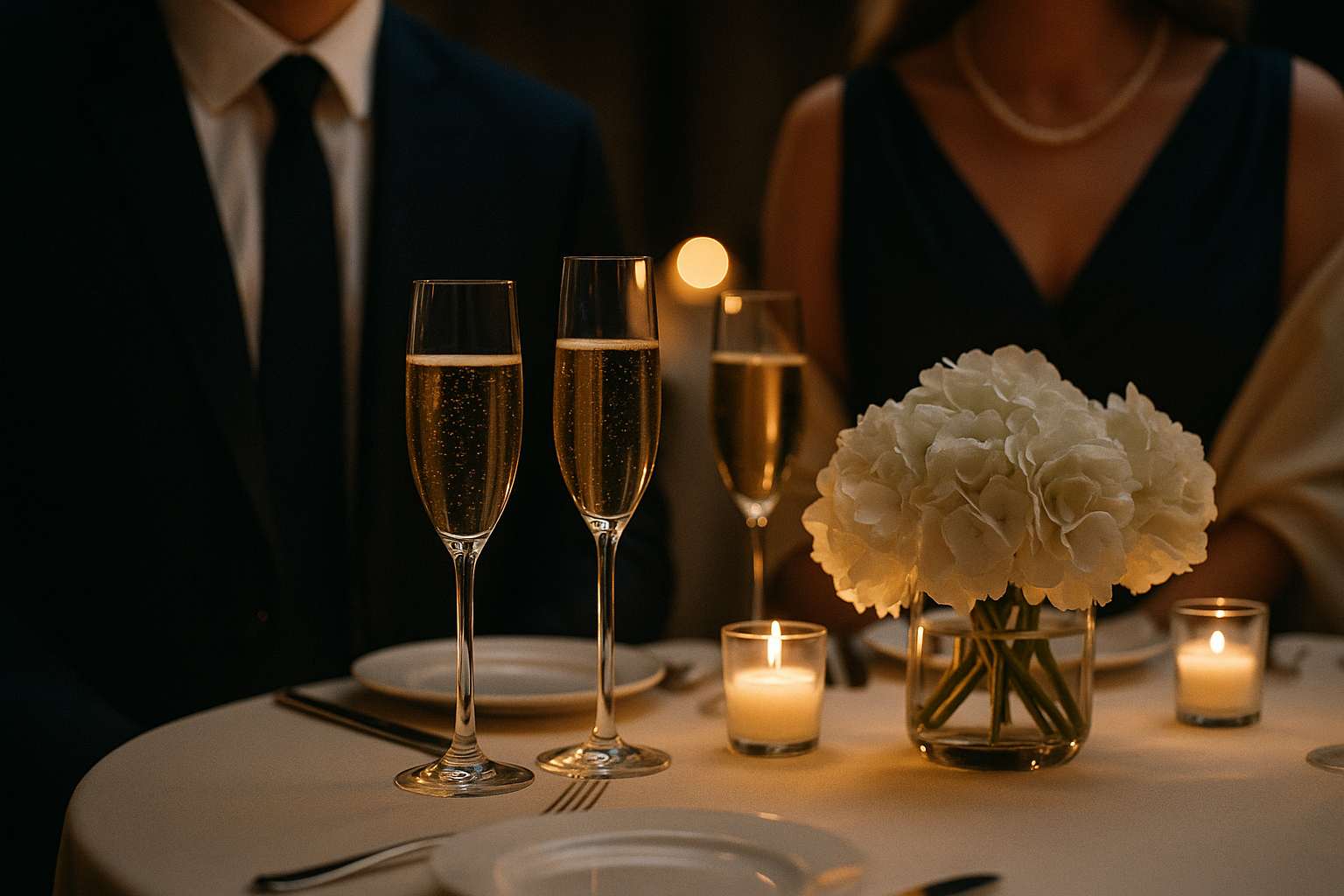
Wedding dress codes follow a formality spectrum from white tie (extremely rare) down through black tie, black tie optional, cocktail attire, garden party, and casual. Each code has a specific meaning for both men and women that the words alone do not fully communicate. When a code is unclear, the wedding website usually provides more detail — and asking the couple or their planner directly is always acceptable.
What do all the wedding dress codes actually mean?
| Dress Code | Men | Women | Typical Occasion |
|---|---|---|---|
| White Tie | Black tailcoat, white waistcoat, white bow tie, formal trousers, patent leather shoes | Full-length formal gown; gloves optional | Ultra-formal, extremely rare in the United States; occasionally seen at European or diplomatic events |
| Black Tie | Black or midnight navy tuxedo, white dress shirt, black bow tie, patent or polished leather shoes | Floor-length gown; formal cocktail at or below the knee in a luxury fabric is the lower boundary | Formal evening receptions; ballroom weddings after 6 p.m. |
| Black Tie Optional | Tuxedo or a formal dark suit (both are equally correct); tie required | Floor-length gown or formal cocktail dress; elevated fabric and silhouette expected | Formal evening with slightly relaxed formality; the 'optional' covers the tuxedo only — formality level remains high |
| Cocktail Attire | Dark suit (navy, charcoal, or black), dress shirt, tie; the minimum lower boundary is a well-fitted blazer with dress trousers | Knee-to-midi dress in a refined fabric; dressy separates; polished shoes or heels | The most common American wedding dress code; appropriate for afternoon and evening events in a range of venues |
| Garden Party / Semi-Formal | Light suit, blazer, or sport coat; tie optional; linen and lighter fabrics appropriate | Flowy midi or maxi dress, sundress in a refined fabric, floral prints welcome; consider block heels or wedges for grass or gravel | Outdoor daytime receptions, garden parties, winery and estate weddings |
| Beach Casual / Tropical | Linen trousers with a linen or light cotton shirt; chinos and a blazer; light loafers or sandals | Breezy maxi dress, sundress in a light fabric; flats, sandals, or wedges | Beach ceremonies, destination weddings in warm climates |
| Casual | Chinos or dress pants, button-down shirt, blazer optional | Casual sundress, maxi dress, or dressy jeans with a refined top; the word 'casual' at a wedding still implies effort above everyday clothes | Backyard celebrations, intimate city hall ceremonies, non-traditional events |
The color rules that still apply in 2026
Most color rules have relaxed considerably over the past two decades, but two endure:
Do not wear white, ivory, or champagne. This remains the firmest color rule in wedding etiquette and applies to guests of all genders, though in practice it primarily applies to women's attire. The tradition exists because white (and its near-white variants) is the ceremonial color of the bride in Western tradition, and a guest wearing the same tone creates a visual distraction that most couples — and families — find genuinely unwelcome. If you own a dress in a pale neutral and are uncertain, choose something clearly different. The stakes are too high for a close call.
Black is now fully acceptable. The historical association of black with mourning has faded from modern American and European etiquette. Black dresses, suits, and formal separates are among the most commonly worn guest outfits at contemporary weddings, and they are appropriate across virtually all dress codes from cocktail attire through black tie. The exception worth knowing: some family backgrounds, cultural traditions, or faith communities still associate black primarily with mourning — if you are attending a wedding in a community where this association may be alive, asking a trusted friend or family member is worthwhile.
What to do when the dress code is confusing or invented
Couples in 2026 increasingly customize their dress code language — phrases like "Romantic Garden Attire," "Elevated Casual," "Festive and Fun," or "Champagne Dreams" appear on invitations with some regularity. These invented labels can leave guests genuinely uncertain. The right approach is to use the standard dress code table as your anchor and then calibrate for the venue, time of day, and any additional notes the couple has provided.
The Emily Post Institute's wedding dress code guidance recommends a simple decision process: identify which standard code the invented label most closely matches, read the wedding website for any clarifying language (most modern couples add a "What to Wear" note), and consider the venue and start time as the final calibration. A rooftop reception at 7 p.m. with a "Festive" code maps to cocktail attire at the elevated end. A beach ceremony at 4 p.m. with "Elevated Casual" maps to garden party or semi-formal.
When you are genuinely uncertain and the event is important enough to worry about it, ask. A brief message to the couple's planning contact — or to a mutual friend who is also attending — is not rude. It communicates care.
What season and terrain change about any dress code
The dress code specifies formality level, but two practical variables modify the right answer for a specific event: season and terrain.
- Season affects fabric, color, and coverage. Summer outdoor weddings call for lighter fabrics and colors even at cocktail attire level; winter ballroom events at the same code call for richer fabrics and darker palettes. A printed linen suit reads as appropriate in July; the same suit in December reads as underdressed regardless of what the dress code says.
- Terrain is the variable guests most frequently underestimate. Grass lawns, gravel paths, cobblestoned terraces, and garden paths are all common wedding venues — and all of them are hostile to stiletto heels. If the invitation or wedding website mentions an outdoor venue, plan your footwear before your outfit. Block heels, wedges, and dressy flats are appropriate across every dress code from garden casual to cocktail attire. A note on the invitation that reads "ceremony is on a grass lawn" is not boilerplate — it is important footwear guidance.
Frequently asked
Can wedding guests wear black to a wedding?
Yes — wearing black to a wedding is entirely acceptable in 2026. The traditional association of black with mourning attire has largely faded from practical etiquette, and black dresses, suits, and formal separates are now among the most commonly worn guest outfits at American weddings. A few genuine exceptions remain: some deeply traditional families, certain faith communities, and some cultural backgrounds (including some Asian and Middle Eastern traditions) still associate black primarily with mourning, and a guest with close knowledge of the family's background might choose a different color. When in doubt and you have a close relationship with the couple, a brief question — "I was thinking of wearing black; does that work for your crowd?" — is entirely appropriate and will be appreciated for its thoughtfulness.
Can wedding guests wear white to a wedding?
No — wearing white, ivory, champagne, or any very light cream shade as a wedding guest remains one of the few firm etiquette rules still observed in nearly all communities. The reasoning is straightforward: the bride wears white (in Western tradition) as a ceremonial distinction, and a guest wearing the same color creates a visual competition that is, at best, distracting and, at worst, deliberately disrespectful. The boundaries of this rule have expanded slightly to include ivory and champagne in many families' expectations, though some traditionalists draw the line only at true white. If you own a dress in a pale, neutral tone, err on the side of caution and choose something different. The stakes — a relationship damaged with someone you care about on one of their most significant days — are too high for a defensible-on-paper color choice.
What is cocktail attire for a wedding guest?
Cocktail attire is the most common wedding dress code in the United States and also, unfortunately, one of the most variably interpreted. In its standard 2026 definition: for women, a dress or dressy separates that fall at the knee or slightly above, in a refined fabric (chiffon, satin, lace, crepe) and a polished color — this is not the occasion for a casual sundress or work trousers. For men, a suit in a dark or neutral color (navy, charcoal, or dark grey are classic choices) with a tie; a well-fitted blazer with dress trousers is the minimum acceptable lower boundary. The setting and time of day matter: a 6 p.m. ballroom cocktail attire event calls for a more elevated interpretation than a 2 p.m. winery luncheon with the same label. When in doubt, dress to the formal end of the definition — you can almost always adjust accessories, but you cannot add formality to an outfit you have already worn.
What does 'black tie optional' mean for guests?
Black tie optional is the attire code that generates the most guest confusion, and the confusion is understandable because the phrase contains an actual ambiguity. The authoritative reading: the couple is giving guests the option to wear a tuxedo or a formal dark suit, and both are genuinely appropriate. A tuxedo is not more correct than a formal suit in this context — that is the explicit intent of the 'optional' language. For women, a floor-length gown is appropriate, as is a formal cocktail dress in a refined fabric at or below the knee. The error guests most frequently make with black tie optional is interpreting it as a license for semi-formal or business formal dress — a blazer without a tie, a casual cocktail dress, or a simple sheath. Those are underdressed for this code. Black tie optional is formal; the optional is only about the tuxedo itself.
How do I dress for a garden or outdoor wedding?
Outdoor and garden wedding dress codes introduce terrain and weather as practical variables that override some standard rules. The most important consideration for women is heel choice: grass, gravel, cobblestones, and soft ground will sink stilettos and damage fine footwear. Block heels, wedges, and dressy flats are both practical and appropriate, and some outdoor venues specifically note this in their invitation language. For fabric and silhouette, flowy midi dresses and lightweight linen or chiffon work beautifully outdoors, as do floral prints that coordinate with a garden setting. For men, a light suit in a pale grey, tan, or linen fabric is the appropriate counterpart to the traditional dark wool — matching the setting matters. On temperature: outdoor evening ceremonies can shift dramatically, and a wrap, light jacket, or blazer is worth bringing regardless of how warm the afternoon was.