Fashion & Beauty
Bridal Accessories: The Complete Guide for 2026
Veils, jewelry, shoes, headpieces, belts, and gloves — every accessory category explained, with current pricing, 2026 trends, cultural notes, and a sequenced shopping timeline so nothing is left to chance.
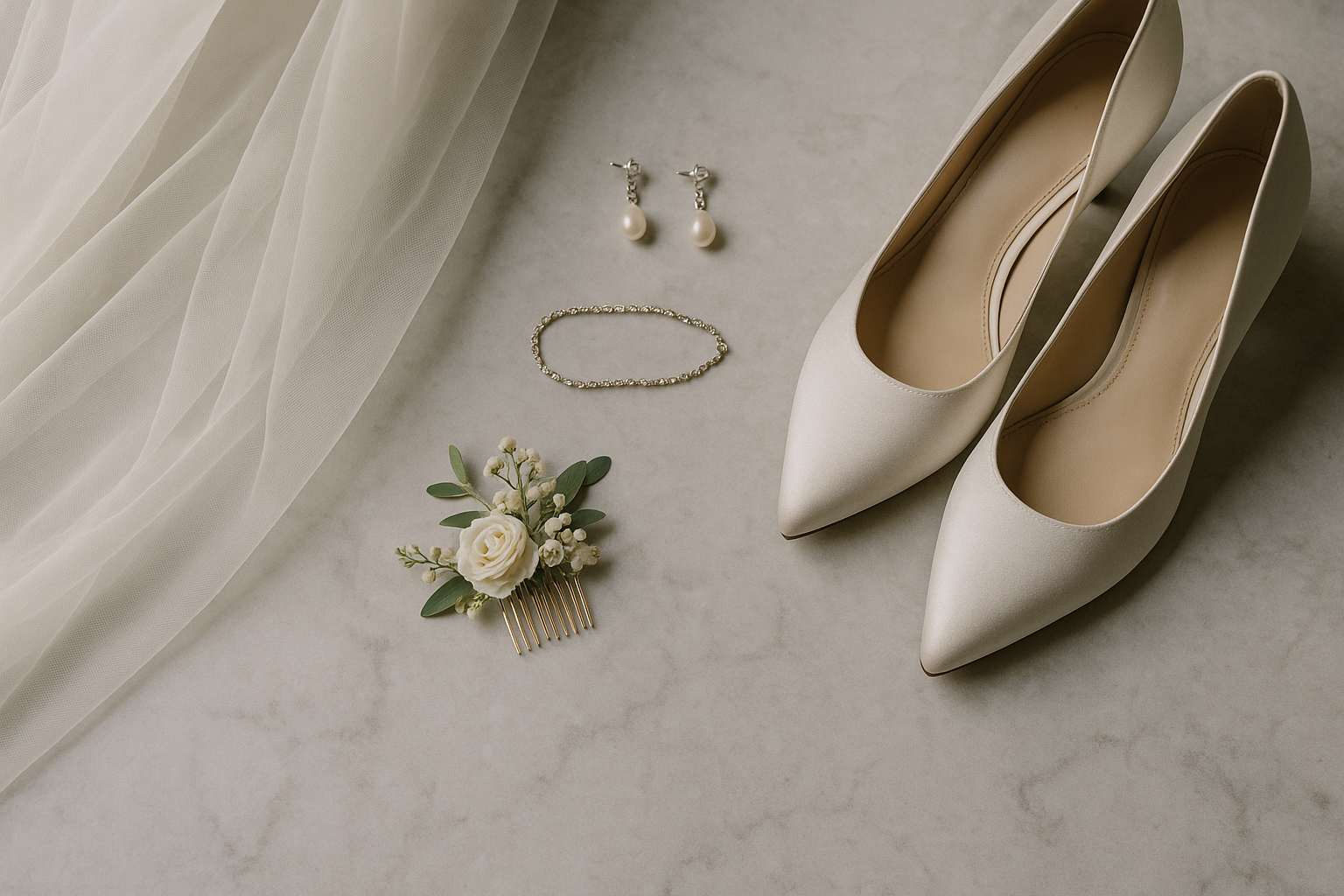
Bridal accessories — your veil, jewelry, shoes, headpiece, and more — are chosen after the gown, in a specific order, to complete your look without competing with it. Budget $600–$1,800 for a polished mid-range set; identify one standout piece and keep everything else quietly elegant.
Your gown earns the first glance, but accessories write the complete sentence. The right veil transforms a minimalist column dress into something reverential; a pair of sculptural earrings gives a romantic ballgown a fashion-forward edge; thoughtfully chosen shoes protect both your hem and your energy for a six-hour reception. Done intentionally, accessories are one of the most expressive — and most forgiving — decisions in wedding planning. Done haphazardly, they compete and clutter.
This guide covers every accessory category, with current 2026 pricing, the runway trends shaping bridal style this season, cultural and faith-tradition variations, and a week-by-week shopping timeline so that nothing is discovered missing at the morning-of getting-ready table.
What are the major bridal accessory categories — and in what order should I shop them?
There are six core accessory categories, and the order in which you address them matters. The gown anchors everything, so accessories are always chosen after the gown has been ordered. Within accessories, the hierarchy runs:
- Shoes first — purchase before your final dress fitting, because the heel height sets the hem length permanently. Wear them to the fitting and break them in afterward.
- Veil or headpiece — try on with the gown at your first fitting appointment; bring photographs of both to your hairstylist trial.
- Jewelry — earrings before necklaces; most contemporary brides wear statement earrings alone rather than a full set.
- Belt or sash — if desired; try it with the gown before purchasing to ensure the waist placement is correct.
- Gloves — if wearing; coordinate with the officiant about ring exchange choreography.
- Something old, new, borrowed, blue — plan the four elements intentionally 2–4 weeks out; do not leave them to the morning of.
How do I choose the right veil for my dress and venue?
The veil remains the single most requested bridal accessory after the gown itself. According to Pinterest's 2026 Wedding Trend Report, editorial, documentary, and fine-art bridal aesthetics are all rising concurrently — and the veil is central to all of them, whether as a dramatic cathedral statement or a delicate blusher for a ceremony reveal.
Veil selection begins with length, then fabric, then edging, in that order.
| Length | Falls To | Best Venue / Style Pairing | Price Range |
|---|---|---|---|
| Blusher / Shoulder | Collarbone | Any venue; ceremony reveal moment; micro-weddings | $30–$120 |
| Elbow | Elbow | Outdoor, barn, vineyard; versatile silhouettes | $60–$250 |
| Fingertip | Fingertips at sides | Universally flattering; most popular choice 2025–2026 | $80–$350 |
| Chapel | 1–2 ft behind train | Formal church, estate, ballroom ceremonies | $150–$600 |
| Cathedral | 6–10 ft behind train | Grand churches, historic estates; maximum drama | $200–$1,200 |
| Royal / Monarch | 10 ft+ | Heritage or royal-style ceremonies; not for tight spaces | $400–$3,000+ |
2026 veil trend notes: The 2026 runway season — including collections from Monique Lhuillier, Ines Di Santo, and the LEIN x Gigi Burris collaboration — has brought the birdcage and netted veil back into sophisticated focus. Harris Reed's AW 2026 show featured colorful veils (blue, green, pink) paired with white lace gowns, signaling that the ivory-only rule is loosening for fashion-forward brides. Hooded veils and Juliette caps are also climbing, offering cinematic drama for brides who want a distinctive aisle moment.
For fabric, silk tulle remains the most luxurious option ($200–$800+ custom); quality nylon or polyester tulle ($40–$200) is crisp, forgiving, and widely available at bridal salons. The raw-cut edge remains the strongest ongoing trend — clean, modern, and effortlessly unfussy.
What jewelry works with my neckline — and what does 2026 style suggest?
The cardinal rule of bridal jewelry: match the jewelry weight and visual complexity to the neckline and embellishment of the dress, not to a general idea of "bridal." A heavily embellished lace bodice calls for quiet earrings; a simple silk slip dress invites a bolder statement piece.
Necklace-to-neckline pairings by formula:
- Choker or collar → off-shoulder, strapless, or wide-square necklines
- Princess length (17–18") → V-neck, scoop, or sweetheart necklines
- Matinee (20–24") → high necks or illusion necklines (layered over)
- No necklace at all → lace or heavily detailed necklines that carry their own visual interest
The 2026 jewelry trend story is dominated by pearls — not as a grandmother's strand but as three-dimensional clusters, pearl-detailed chokers, and scattered pearl motifs on veils and headpieces. Sculptural geometric pieces in silver (which is outpacing warm gold this season) are strong for editorial brides. Statement crystal chandelier earrings — worn alone, without a necklace — remain the most streamlined and photographically impactful formula. Designer brands to know include Lili Claspe for delicate layered pieces and Paula Votteler for sculptural fine jewelry.
How do I choose wedding shoes that look beautiful and survive a six-hour reception?
Wedding shoes are a functional purchase masquerading as a fashion choice. The heel height you wear to your final gown fitting permanently sets your hem length — wear any other height on the wedding day and the hem is wrong. This is the most common, most preventable, and most expensive accessory mistake brides make.
Buy shoes before your final fitting. Break them in for five to ten hours before the wedding. Take them to a cobbler to add a suede or rubber sole for grip on potentially slippery floors. Consider a reception flat or lower-heeled alternative for dancing — the two-shoe strategy is now mainstream and widely photographed.
| Style | Heel Height | Comfort Level | Best For | Price Range |
|---|---|---|---|---|
| Block / kitten heel | 1–2" | High | Long receptions, outdoor venues, comfort-priority brides | $60–$250 |
| Classic pump | 2–3.5" | Medium | Most venue types; timeless photography | $100–$700+ |
| Stiletto | 3.5–5" | Low | Indoor ballroom or ceremony-only; not for long dancing | $150–$1,500+ |
| Wedge | Varies | High | Outdoor grass venues — critical to prevent sinking | $60–$300 |
| Flat / sandal | 0" | Very high | Beach, destination, barefoot-ceremony elopements | $40–$400 |
| Mule | Varies | Medium-high | Modern, editorial; check reception dancing comfort | $80–$600 |
2026 shoe trends from Bella Belle Shoes' 2026 trend report: pearl-embellished pumps and flats lead this season, with three-dimensional pearl clusters appearing across toe boxes and straps. Lace overlay shoes — the lace echoing gown detailing — are growing strongly. Platform heels with romantic feminine embellishments (tulle, florals, crystal trim) are showing a new side of the platform silhouette. And white cowboy boots have moved from novelty to mainstream for barn, country, and outdoor weddings. At the accessible end, beautifully made options from Badgley Mischka range $200–$400; at the luxury tier, Jimmy Choo and Manolo Blahnik start at $700 and reach $1,500+.
What cultural and faith-specific accessories should I know about?
Accessory meaning runs deepest in cultural and faith contexts, where specific pieces carry ceremonial or religious significance rather than merely aesthetic value. Choosing a photographer and stylist with genuine experience in your tradition is as important here as any shopping decision.
| Tradition | Essential Accessories | Notes |
|---|---|---|
| South Asian (Hindu) | Maang tikka, mathapatti, jhumka earrings, bangles/chooda, haath phool, nath (nose ring) | Core ceremony accessories, not optional; coordinate with professional who knows the tradition |
| Jewish (Ashkenazi Orthodox) | The bedeken veil (lowered by the groom before ceremony) | After marriage, Orthodox women typically cover hair with a sheitel or tichel |
| Hispanic / Latina | Mantilla lace veil (often a family heirloom), lazo (lasso for unity ceremony) | Mantilla can double as the ceremony veil; gold jewelry is traditional |
| Sikh | Dupatta (long scarf / veil) draped over head during Anand Karaj | Colors vary by family tradition; often red or pink with gold embroidery |
| Filipino | Yugal ceremony veil — one veil draped over both bride and groom | Symbolizes unity; often paired with the cord (yugal) and coins ceremonies |
| Celtic / Irish | Claddagh ring, family tartan sash, Celtic knotwork jewelry | Claddagh worn on right hand with heart facing out before marriage; left hand after |
For faith-tradition brides, consult your officiant or a trusted community elder well before purchasing anything. Requirements around head covering during the ceremony, restrictions on exposed jewelry, and expectations about color can vary significantly by congregation and family practice.
What is the ideal accessory shopping and preparation timeline?
The sequenced checklist below prevents the most common bridal accessory mistake: discovering on the morning of the wedding that something is missing, broken, or forgotten.
- 6+ months before: Identify veil or headpiece preference; research cultural/faith requirements; locate and inspect any heirloom pieces; set accessories budget allocation.
- 4–6 months before: Purchase shoes and bring to final dress fitting; shop veils and headpieces with the gown for coordination; plan the something old/new/borrowed/blue elements; have heirloom jewelry professionally cleaned.
- 2–3 months before: Finalize all accessories — stop shopping to avoid second-guessing; confirm the "borrowed" item with that person; begin breaking in shoes (five to ten hours total); schedule hair trial with veil or headpiece.
- 2–4 weeks before: Take shoes to cobbler for non-slip soles; pack all accessories in a dedicated labeled bag; confirm all heirlooms are in your possession; do a full-look phone photo in all accessories together.
- Morning of: Designate someone to hold and return any borrowed items; have a jewelry assistant present for clasps and fasteners; confirm the veil is in the venue bag before the car departs.
One last reminder that bears repeating: choose one statement piece, and let everything else support it. A cathedral veil, an extraordinary earring, or a beaded belt — one thing that makes you catch your breath. The rest should simply be beautiful and right. That is the consistent advice of experienced bridal stylists, and it produces the most elegant results in photographs every time.
Frequently asked
Should I choose my bridal accessories before or after buying the dress?
Always after — and ideally after your first fitting, not the moment you order. The gown's neckline, fabric weight, embellishment level, and silhouette dictate every accessory decision. A heavily beaded bodice may call for bare ears; a clean column gown may invite a dramatic chandelier earring. Shopping accessories before the dress creates the very common problem of a tiara that competes with the dress rather than completing it. The one exception: if you already own an heirloom piece you plan to wear (a grandmother's brooch or pearl necklace), that becomes the starting anchor around which you build everything else. Bring it to your first bridal appointment so stylists can factor it into their recommendations from the start.
What veil length is right for my wedding venue?
Think of veil length and venue scale as a matching exercise. A cathedral veil — trailing six to ten feet behind you — looks architectural and magnificent in a grand church, an estate ballroom, or a historic manor. In an intimate garden ceremony for thirty guests, that same veil can overwhelm the setting. The fingertip veil (falling to the fingertips at your sides) is the most universally flattering and forgiving length: it reads as formal without requiring the logistical support of a longer style. Elbow-length veils work beautifully at barn and outdoor venues where you want movement without managing a train. For micro-weddings and elopements, a blusher, a simple birdcage, or no veil at all is often the most elegant choice. When in doubt, photograph the candidate veils in the general setting (or against a photo of the space) before committing.
How much should I budget for bridal accessories in 2026?
Budget planning for accessories is easiest when you think in tiers. A budget-conscious accessory set — modest veil, costume jewelry, and department-store shoes — can come in between $200 and $500 total. The mid-range sweet spot most brides land in runs $600 to $1,800: that might be a quality tulle veil at $200–$350, a pair of pearl or crystal earrings at $100–$400, and a well-made shoe from a brand like Bella Belle or Badgley Mischka at $200–$500. Designer or custom accessories — think a Monique Lhuillier lace veil, fine jewelry, and Manolo Blahnik pumps — can easily reach $3,000–$10,000 or more. The smartest budget move is to identify your one statement piece (perhaps the veil, perhaps a pair of earrings) and allocate generously there, then keep everything else simple and well-made. One standout, the rest quiet — that is the rule every seasoned bridal stylist returns to.
What are the biggest bridal accessory trends for 2026?
The 2026 bridal accessory season is being shaped by several clear directions visible across runway collections from designers including Monique Lhuillier, Ines Di Santo, and Harris Reed. Pearls are the dominant material story — appearing not just in necklaces but in three-dimensional clusters on shoes, as scattered motifs on veils, and layered into headpieces. Sculptural and geometric fine jewelry is gaining ground over delicate chains, particularly for brides with editorial sensibilities. The birdcage and netted veil — featured prominently by milliner Gigi Burris in collaboration with label LEIN — has made a sophisticated return. On the shoe front, Bella Belle Shoes and other dedicated bridal footwear designers are showing pearl-embellished pumps, lace overlay heels, and platform silhouettes paired with romantic feminine details. Colorful veils — from soft blush to bold jewel tones — are a growing niche, with Harris Reed's AW 2026 collection showcasing gowns paired with vivid blue, green, and pink veils.
Do I need to wear a veil at my wedding?
No — and the choice is entirely personal, cultural, and sometimes faith-specific. In 2025–2026, industry estimates suggest roughly fifty-five to sixty-five percent of brides wear some form of veil, which means a meaningful number choose not to. For brides who want headwear without a veil, the 2026 market is rich with alternatives: floral crowns, Juliet caps, embellished combs, silk ribbon bows, and architectural headbands all read as bridal without requiring a veil. Faith and cultural context matters here — certain traditions make a veil (or a specific head covering) part of the ceremony's meaning, while secular ceremonies hold no such expectation. If you feel drawn to a veil because it genuinely excites you, wear one. If you're only considering it because you feel you should, that is a good reason to explore other options.
How do I incorporate the 'something old, new, borrowed, blue' tradition without it feeling forced?
The key is to assign each element intentionally rather than scrambling to satisfy the rhyme at the last minute. Begin by identifying any meaningful heirloom you already plan to wear — that likely covers 'something old' naturally. Your gown itself is almost always 'something new.' For 'something borrowed,' think of a person whose marriage you admire and ask them specifically: a mother's earrings, a friend's bracelet, or a grandmother's hairpin. This transforms a superstition into a personal ritual. For 'something blue,' discreet options abound: a blue ribbon stitched inside the dress hem, sapphire studs, a blue garter, or even a blue-dyed sole on your shoes. The sixpence element is optional and charming — actual sixpences from British eBay sellers cost a few dollars and make a lovely detail inside the shoe. The ritual has most value when each element connects to a real person or memory.