Fashion & Beauty
Bridal Jewelry Guide: What Every Bride Should Know for 2026
From earrings to necklaces, pearls to colored gems — a warm, practical guide to choosing and wearing bridal jewelry in 2026, with current brand recommendations, neckline rules, and a step-by-step shopping timeline.
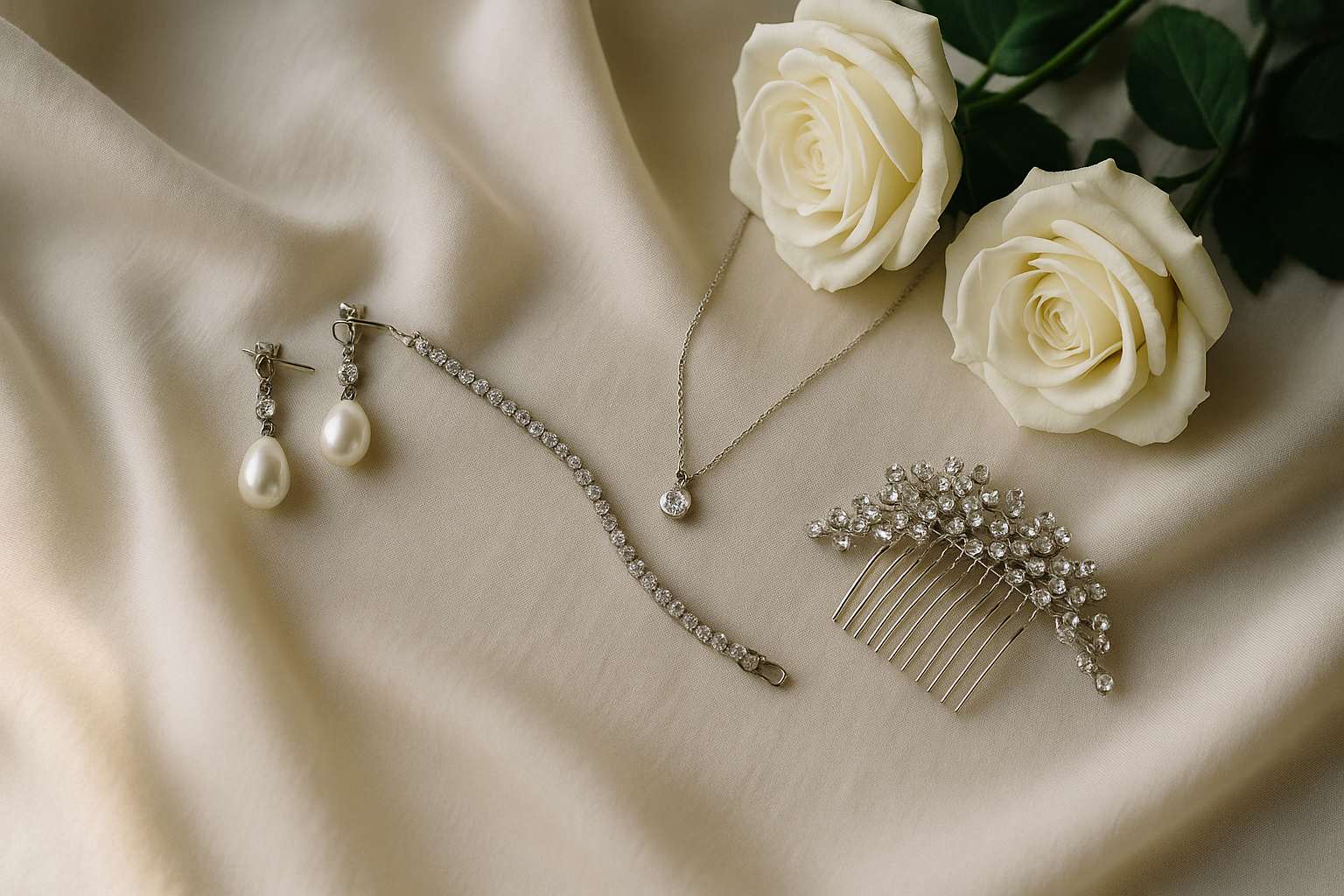
Bridal jewelry in 2026 is about intentional, personal choices rather than matching sets. Choose one standout piece — earrings, necklace, or heirloom — match your necklace length to your neckline, and build a look that feels like you rather than a category on a registry checklist.
Your wedding gown earns the first glance. Your jewelry tells the rest of the story. And in 2026, that story sounds less like a matching set from a bridal boutique case and more like a collection of pieces chosen because they are beautiful, personal, and worth wearing again — on anniversaries, on evenings out, on ordinary Tuesdays when you feel like wearing something that means something.
This guide covers every decision you will make about bridal jewelry: the earring-to-neckline logic, the necklace length rules that actually matter, what the 2026 trends are doing to the classic pearl-and-diamond palette, which brands are making bridal work worth paying attention to, and a shopping timeline that keeps everything sequenced correctly.
What are the most important bridal jewelry decisions, and in what order should I make them?
Sequence matters enormously in bridal jewelry. The most common mistake brides make is shopping for jewelry before finaling — or even choosing — their gown. The gown's neckline, silhouette, fabric weight, and existing embellishment determine everything that comes after it. A heavily beaded bodice calls for quiet earrings; a clean column gown invites a chandelier drop. Shop in this order: gown first, accessories after your first fitting.
The second-most important decision is identifying your anchor piece. Every polished bridal jewelry look has one focal point — one piece that does the work while everything else supports it. Decide whether you want your earrings, necklace, or headpiece to be the statement, and let the others step back. This is the single most consistent advice from experienced bridal stylists, including Rachel Boston of her East London studio, who notes that today's brides are drawn to something that feels personal rather than super traditional.
Third: decide on a metal tone and stick to it. Yellow gold, white gold, platinum, rose gold — each reads differently against different skin tones and against different gown whites. Ivory gowns tend to sing with warm yellow gold; bright white gowns are beautifully complemented by cooler platinum or white gold. Mixed metals are having a genuine moment in 2026, but mixing intentionally (all pieces incorporating the same two tones) differs from accidentally ending up with mismatched pieces from different shopping trips.
How do I choose the right necklace for my wedding dress neckline?
Matching necklace length to neckline is one of the most practical and immediately impactful rules in bridal styling. The logic is simple: the necklace should lead the eye toward the neckline detail rather than competing with it or disappearing into it.
| Neckline Style | Recommended Length | Notes |
|---|---|---|
| Strapless / Sweetheart | Choker or collar (14–16") | Frames the décolletage; pendant optional |
| V-neck / Scoop | Princess (17–18") | Most versatile choice; echoes the V |
| High neck / Illusion | Matinee (20–24") layered, or skip entirely | Layer over illusion; skip if lace is heavy |
| Off-shoulder / Boatneck | Choker or statement cuff | Short length highlights the shoulder line |
| One-shoulder | Skip necklace; use one statement earring | Asymmetry calls for earring-led styling |
| Heavily embellished | No necklace; statement earrings only | Beading and lace need quiet company |
The tennis necklace — a classic diamond rivière in a continuous line — is one of 2026's strongest bridal necklace choices because it works across multiple necklines without overpowering them. According to Jon Richard's 2026 bridal trend report, the tennis necklace strikes a balance between classic and statement that can elevate the simplest bridal look. It is also inherently wearable beyond the wedding day — a significant consideration for brides investing at the fine jewelry level.
For brides who prefer a pendant, match the pendant drop length to the neckline so the pendant rests at the apex of the neckline's opening. A pendant that disappears below the neckline, or rides too high above it, loses its visual purpose.
What are the essential bridal earring categories, and which works best for portraits?
Earrings are the highest single-impact piece in bridal jewelry because they appear in almost every photograph taken on the wedding day — ceremony portraits, candids, tablescape shots, getting-ready documentation. The logic of earring selection is therefore partly photographic: what reads clearly, beautifully, and proportionally at distances between two and fifteen feet?
Studs and clusters are the quietest choice — pearl studs, diamond studs, crystal clusters — and they are never wrong. They read as intentional minimalism when the gown carries its own decoration. Their limitation is that they disappear in wider portraits and offer little movement in video.
Drop and chandelier earrings are the current bridal darling. They add movement to both still photographs and video, complement updos beautifully, and — when the hair is pulled up — become the first thing every guest sees. Fernando Jorge's sculptural diamond hoop earrings, featuring baguette- and princess-cut stones, represent the quality level now considered aspirational in this category. Chandelier styles work best with strapless, sweetheart, or V-neck gowns.
Pearl drops and pearl studs are experiencing a genuine renaissance in 2026 — not the matriarchal strand but freshwater pearls in modern settings: asymmetric drops, mixed-metal frames, baroque shapes that catch light unpredictably. Heavenly London, which creates accessible bridal pieces at approachable prices, has updated classic pearl styles with mixed metals and unusual shapes. Pearl's particular gift to brides: it works against both warm and cool gown whites, and against both yellow gold and platinum settings.
Geometric and sculptural earrings in baguette-cut zirconia, angular bars, and modern arcs have become the signature of the 2026 fashion-forward bride. They photograph crisply in portraits and signal deliberate style rather than default bridal. Angular earrings work particularly well with sleek, low-chignon hairstyles and minimalist gowns.
Asymmetric earrings — one style on each ear, whether mismatched drops or a cuff on one side — have moved from editorial to accessible in 2026. One ear carries a pearl drop while the other wears a minimal stud; the effect reads as intentional and modern in photographs.
The modular strategy, noted across multiple bridal styling surveys, has become the practical default: pearl studs or simple drops for the ceremony, swapped to longer statement pieces once the veil comes off and the reception begins. Budget $80–$250 for a secondary pair worth swapping into.
A practical shopping timeline for bridal jewelry
The most common cause of bridal jewelry regret is poor sequencing — buying pieces too early (before the gown is chosen), or too late (when rush shipping and panic decisions replace intentionality).
| When | What to Do |
|---|---|
| Before gown purchase | Identify heirloom pieces; assess budget; research styles only |
| After gown is ordered (6–9 months out) | Shop earrings and necklaces with gown neckline in mind; bring gown photos |
| 4–6 months out | Finalize all jewelry; stop second-guessing; send heirlooms for professional cleaning |
| 2–3 months out | Photograph all pieces together against gown fabric to check metal tones and proportions |
| 6–8 weeks out | Wear jewelry at hair and makeup trial; confirm they work with the full look |
| Morning of wedding | Have a trusted bridesmaid help with clasps; designate a keeper for borrowed heirlooms |
Have heirloom pieces professionally cleaned at least four to six weeks before the wedding. A jeweler's cleaning takes thirty minutes and typically costs $20–$50; the improvement in how a piece photographs is significant.
Real brands worth knowing in 2026
Bridal jewelry spans an enormous price range, and quality exists at every tier. Here is an honest map of the landscape:
Fine jewelry (investment pieces, wearable forever): Brilliant Earth for lab-grown diamond pieces and gemstone trend pieces; Fernando Jorge for sculptural diamond earrings; Marlo Laz for vintage-inspired gemstone necklaces; Anita Ko for dainty lariat styles; Foundrae for statement pendants with meaning. Prices range from $500 to $10,000+.
Mid-range bridal-specific designers: Jon Richard for classic bridal pieces with current trend sensibility; ADORA by Simona for editorial-forward bridal jewelry with strong online resources; Rachel Boston for personal, artisan commissions. Prices typically $100–$800.
Accessible bridal pieces: Heavenly London for imitation-diamond and mixed-metal pieces that photograph beautifully without fine jewelry pricing; standard bridal sections at Nordstrom and department stores for quality costume jewelry in the $40–$200 range.
Vintage and archival: Susan Caplan Vintage and Stephanie Windsor for curated pre-owned and vintage pieces, often with Art Deco and Edwardian provenance that carries the vintage-inspired aesthetic authentically.
Common bridal jewelry mistakes to avoid
Shopping before choosing the gown is the most common, most avoidable mistake. Every other decision flows from the gown — particularly its neckline and embellishment level. A tiara purchased before the dress reveal may not survive the first fitting.
Over-accessorizing — wearing earrings, necklace, bracelet, hair comb, and headband simultaneously — is a frequent result of loving every piece individually without auditing the full look together. Photograph yourself in everything before the wedding to see what the camera sees. Competing pieces fight for attention; one wins, the others become visual noise.
Wearing brand-new jewelry for the first time on the wedding day is equally problematic with jewelry as with shoes. Earring posts can irritate freshly pierced or newly stretched lobes; heavy drops cause ear fatigue over eight hours. Wear new pieces for at least two to three hours before the wedding to confirm comfort.
Finally: never let borrowed heirlooms leave for the reception without a designated guardian. Photograph the piece before the day. Assign a specific bridesmaid — not a child — to receive and return it safely. The sentimental cost of a lost heirloom vastly exceeds the logistical inconvenience of a brief ceremony swap.
Frequently asked
Do I need a full matching bridal jewelry set, or can I mix pieces?
Matching sets — earrings, necklace, and bracelet from the same collection — can read as dated in 2026 bridal photography. The current approach embraced by jewelers and stylists alike is intentional coordination rather than precise matching. That means building around a consistent theme (all pearl, all diamond, all gold tone) while choosing pieces from different sources. East London jeweler Rachel Boston, whose studio specializes in personal bridal commissions, notes that brides are moving away from matching suites toward pieces they will wear for years beyond the wedding day. The sweet spot: one statement piece that anchors the look, supported by one or two quieter companions. A chandelier earring worn alone without a necklace, or simple pearl studs paired with a meaningful pendant, reads as far more polished and intentional than a boxed three-piece set from a catalog. If you own an heirloom — a grandmother's necklace, a mother's brooch — let it anchor your choices and build everything else around it.
Which necklace length works best with my wedding dress neckline?
Matching necklace length to neckline is one of the most practical rules in bridal styling, and it makes an immediate visual difference in photographs. A choker or collar necklace (14–16 inches) pairs beautifully with an off-shoulder or strapless gown, framing the décolletage without competing with the neckline. A princess-length necklace (17–18 inches) is the most versatile choice, complementing V-necks, scoop necklines, and sweetheart cuts. Matinee-length necklaces (20–24 inches) can be layered over high-neck or illusion necklines as a secondary layer of detail. For heavily embellished necklines — beaded, lace, or jeweled — the most elegant choice is often to skip the necklace entirely and let the gown speak, reaching instead for a pair of statement earrings. Always photograph your jewelry choices against a photo of your dress fabric and neckline before committing. What looks proportional in a shop display may read differently against your specific gown.
What are the biggest bridal jewelry trends for 2026?
The defining theme in 2026 bridal jewelry is individuality over convention. Brides are making personal choices rather than deferring to a traditional matching set. Specific trends include: the tennis necklace moment — a revival of the diamond rivière necklace that balances statement impact with genuine wearability; the continued pearl renaissance, now expressed in asymmetric drops, mixed-metal settings, and stacked bracelets rather than traditional strands; sculptural and geometric earrings in baguette-cut and angular silhouettes from designers like Fernando Jorge; vibrant colored gemstones, with emerald, tanzanite, and aquamarine leading a shift away from all-white bridal palettes; and vintage-inspired designs drawing from Art Deco and Edwardian aesthetics, partly driven by a broader cultural appetite for archival style. Modular earrings — pearl studs for the ceremony that swap to longer drops for the reception — have become so practical that many brides now plan their jewelry in two acts deliberately.
How much should I budget for bridal jewelry in 2026?
Budget planning for bridal jewelry is most effective when you think in tiers. A thoughtful budget-range set — quality crystal earrings, a delicate pendant, and a simple bracelet — can come in between $150 and $400 using retailers like Heavenly London, which specializes in imitation-diamond pieces with genuine bridal sensibility. The mid-range most brides land in runs $400 to $1,500: that might mean pearl or crystal drop earrings at $100–$400 from a brand like Jon Richard or Rachel Boston, a fine chain pendant at $150–$500, and a tennis bracelet at $100–$400. Fine jewelry from designers like Fernando Jorge, Marlo Laz, or Brilliant Earth's diamond collections can reach $2,000–$10,000 or more for a curated set. The strategic rule every experienced bridal stylist returns to: identify your one standout piece and invest generously there, keeping everything else simple and beautifully made. One statement, the rest quiet — it photographs better, it reads as more intentional, and it gives you a single piece worth wearing for decades.
Should I wear my engagement ring during the ceremony, or remove it?
This is one of the most frequently asked practical questions in bridal jewelry, and the answer is: it depends on your ceremony tradition and personal preference. In the classic Western ceremony order, the wedding band is placed on the finger during the vows, which means the engagement ring needs to be temporarily relocated. The most common approach is to move the engagement ring to your right hand before the ceremony begins, then transfer it back to the left hand above the wedding band after the ceremony. Some brides ask their maid of honor to hold the engagement ring during the vows. A small but growing group of brides simply leave the engagement ring in place and have the wedding band placed below it — there is no strict rule requiring the band to be closest to the heart, though tradition suggests it. Discuss your preference with your officiant so any choreography around the ring exchange is clearly understood in advance.
Are colored gemstones appropriate for a bridal jewelry look?
Colored gemstones are not just appropriate for 2026 brides — they are one of the year's most prominent bridal trends. Deep emeralds, rich sapphires, luminous tanzanite, and aquamarine have all emerged as alternatives or complements to all-white diamond bridal jewelry. Jeweler Marlo Laz's 'Alexandra' necklace, which layers tanzanite and aquamarine alongside diamonds, is an example of the caliber of gemstone work being embraced at the bridal level. The key to wearing colored stones gracefully is coordination: choose a gemstone that complements rather than competes with your gown's undertones and any embellishment color. Ivory gowns with warm undertones pair well with warm-toned gems (citrine, morganite, champagne sapphire); cooler off-white or bright white gowns suit cool-toned stones (blue sapphire, aquamarine, violet amethyst). If your gown is clean white, almost any gemstone reads beautifully against it. Colored stones also make for natural heirlooms — a sapphire earring or emerald pendant will be more easily passed to a daughter than a piece that reads explicitly as 'wedding.'