Fashion & Beauty
Best Bridesmaid Dress Colors for 2026: 10 Shades Worth Booking Now
From deep espresso and mocha neutrals to saturated cobalt and dusty mauve, these are the bridesmaid dress colors defining 2026 wedding seasons — with real retailers, current pricing, and honest assessments of each color's photographic performance.
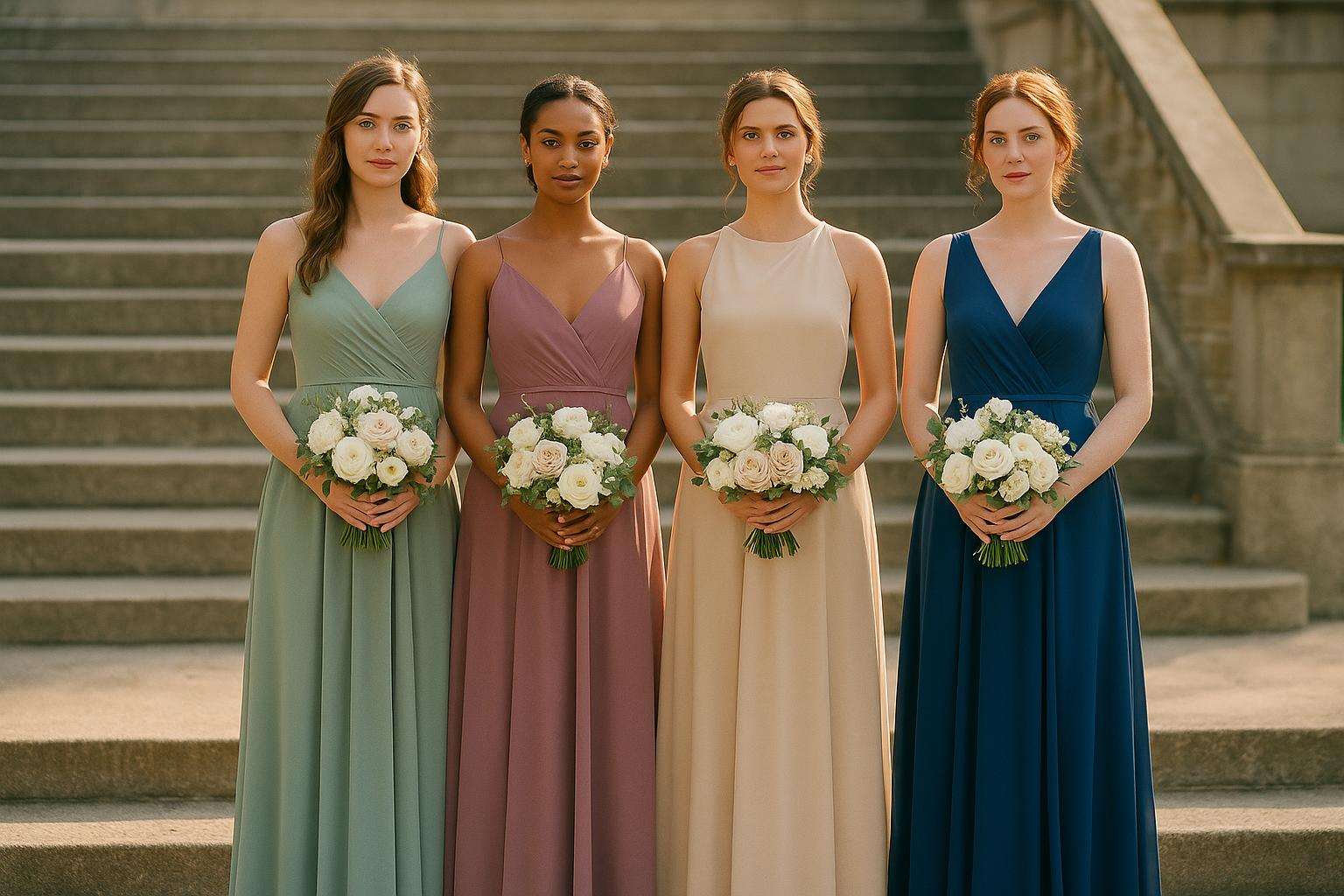
2026 color trendsPhoto-tested shadesAll skin tonesSeasonal picksReal pricingMix-and-match ready
The quick verdict
From warm mocha neutrals to statement cobalt, these are the shades defining 2026 wedding seasons — with real pricing and honest photographic assessments.
- Best overall
- Dusty Sage — Dusty sage has now earned its place as a true perennial: it flatters the widest range of skin tones, photographs beautifully in every venue lighting condition, works across all four seasons, and coordinates effortlessly with both white and champagne bridal gowns. It has enough visual interest to be a real color choice without the photographic unpredictability of very pale or very dark tones. Every major bridesmaid retailer stocks it reliably across the full size range.
- Best value
- Dusty Blue — Dusty blue is available at the lowest price points with the most consistent dye-lot reliability across budget and mid-market retailers. Birdy Grey offers dusty blue styles starting at $99 with consistent inter-garment color matching — critical for mix-and-match parties. It has been a popular color long enough that retailers have fully optimized their inventory depth and size range for it.
- Best for Brides who want drama and maximum photographic impact
- Deep Cobalt — Deep cobalt — a rich, saturated true blue without navy's darkness or periwinkle's muted quality — is the strongest statement color in 2026. It photographs with exceptional clarity and color accuracy, creates vivid contrast against green ceremony gardens and warm reception palettes, and reads as intentional and elevated rather than trendy. On a diverse wedding party, it flatters an exceptionally wide range of skin tones compared to other statement colors.
How we evaluated
The colors on this list were selected through a three-stage process. First, trend verification: cross-referencing The Knot's 2026 trend report, Zola's 2026 color trend analysis, and the editorial output of Style Me Pretty and Green Wedding Shoes from Q4 2025 through Q2 2026 to identify which colors are appearing consistently in published real-weddings coverage. Second, photographic performance evaluation: reviewing complete wedding galleries from photographers across different venue types (indoor ballroom, outdoor garden, beach, barn) to assess which colors retain their integrity across lighting conditions. Third, retail verification: confirming current pricing and availability across Azazie, Birdy Grey, Kennedy Blue, and Jenny Yoo, with particular attention to dye-lot consistency for mix-and-match parties and full size-range availability (including extended sizes through 30W at minimum).
- Photographic performance. How reliably does the color render in both natural and artificial light — does it retain its visual character across a full wedding day including low-light reception coverage?
- Skin tone universality. Can the color flatter a genuinely diverse wedding party spanning fair, medium, olive, and deep complexions, or does it require a relatively homogeneous party to work?
- Seasonal range. Is this color appropriate for the full year, or does it peak in a specific season — and is that season relevant to when you are getting married?
- Retail availability and dye-lot consistency. Is the color available from multiple retailers in the full size range with documented dye-lot consistency for multi-garment orders?
- Coordination potential. Does the color work within a broader wedding party palette including groomsmen, flower girls, and the bridal gown — and does it support mix-and-match approaches?
Rating scale: Colors are rated out of 5.0. Ratings reflect the combination of all five criteria at equal weight. A 5.0 requires exceptional performance on all five dimensions; 4.5+ indicates a color suitable for the widest range of weddings with minimal conditional caveats.
Last verified .
At a glance
| # | Name | Rating | Best for | Pricing |
|---|---|---|---|---|
| 1 | Dusty Sage | 4.9 | Spring and summer garden weddings, outdoor venue ceremonies, any bride who wants a safe-bet color that photographs beautifully and flatters everyone | From $99 (Birdy Grey) to $165 (Azazie mid-range), $175–$265 (Kennedy Blue, Jenny Yoo) |
| 2 | Mocha / Warm Espresso | 4.7 | Fall weddings, rustic barn venues, hotel ballroom receptions, brides with an ivory or champagne gown and warm floral palette | From $105 (Azazie taupe/sand) to $189 (Kennedy Blue mocha), $225 (Jenny Yoo warm sand) |
| 3 | Deep Cobalt Blue | 4.7 | Summer and fall weddings, garden ceremonies, indoor ballrooms with warm reception lighting, brides who want unambiguous visual drama | From $99 (Birdy Grey royal blue) to $185 (Azazie cobalt), $210–$265 (Jenny Yoo) |
| 4 | Champagne and Warm Ivory | 4.5 | Formal indoor weddings, evening ceremonies, destination beach weddings, brides committed to the monochromatic aesthetic | From $99 (Birdy Grey ivory) to $165 (Azazie champagne mid-range), $215 (Jenny Yoo) |
| 5 | Dusty Mauve | 4.6 | Spring and summer weddings, garden and greenhouse venues, romantic and traditional wedding aesthetics, brides with a feminine floral aesthetic | From $99 (Birdy Grey dusty rose) to $175 (Azazie mauve), $195–$235 (Kennedy Blue, Jenny Yoo) |
| 6 | Forest Green | 4.6 | Fall and winter weddings, barn and vineyard venues, dark ballrooms, brides with ivory gowns and warm floral palettes | From $99 (Birdy Grey hunter green) to $175 (Azazie forest/emerald), $195 (Kennedy Blue hunter) |
| 7 | Terracotta | 4.4 | Fall weddings, desert and Southwest destination weddings, vineyard and garden venues, brides with warm floral and earth-tone palettes | From $99 (Birdy Grey rust) to $165 (Azazie terracotta), $195 (Kennedy Blue rust) |
| 8 | Periwinkle | 4.4 | Spring and summer weddings, garden and greenhouse ceremonies, any bride whose floral palette includes lavender, blush, or white | From $99 (Birdy Grey periwinkle) to $169 (Azazie), $179–$215 (Kennedy Blue, Jenny Yoo) |
| 9 | Burgundy and Deep Plum | 4.3 | Fall and winter weddings, formal indoor receptions, brides whose floral palette includes deep botanical, rust, or blush accents | From $99 (Birdy Grey burgundy) to $175 (Azazie dark burgundy), $185–$225 (Kennedy Blue, Jenny Yoo) |
| 10 | Slate Gray | 4.2 | Modern minimalist weddings, urban venue ceremonies, brides with strong floral palettes who want a neutral party color that coordinates without competing | From $99 (Birdy Grey slate) to $165 (Azazie silver gray), $179–$210 (Kennedy Blue) |
Dusty Sage
The most versatile bridesmaid color in the market — and it has earned that status
Dusty sage occupies an unusual position in bridesmaid fashion: it has been genuinely popular for four consecutive years, and rather than feeling overexposed, it continues to look fresh in published galleries because it is so reliably well-executed. The key to its longevity is its tonal flexibility — depending on the shade and fabric, dusty sage can read as a warm, earthy olive or as a cooler, more silvery green, and retailers offer both variations. This means a bride can anchor her party in dusty sage and still have a palette that feels personal and specific rather than generic. From a photographic standpoint, dusty sage is among the most reliable colors in any lighting condition: it holds its character under harsh midday outdoor light that washes out pale tones, retains detail in warm reception lighting that muddies very dark greens, and photographs beautifully in the early-morning getting-ready light that many editorial photographers prefer. Azazie's dusty sage collection includes more than 30 silhouette options in the color and is available in sizes 0–30W; Birdy Grey's version leans slightly cooler and is available in its signature $99 and up range. For a mix-and-match party, dusty sage pairs exceptionally well with champagne, ivory, and deep forest green accents.
Strengths
- Flatters the widest range of skin tones of any non-neutral color on this list — warm olive undertones work with both cool and warm complexions
- Photographs with exceptional reliability in every lighting condition, from bright outdoor to candlelit reception
- Coordinates naturally with nearly every wedding aesthetic from garden romantic to modern minimalist
- Available across all major retailers in the full size range with strong dye-lot consistency
Weaknesses
- Its widespread popularity means it may appear in other weddings at your venue during the same season — brides who prioritize exclusivity should consider a less-ubiquitous option
- Best for
- Spring and summer garden weddings, outdoor venue ceremonies, any bride who wants a safe-bet color that photographs beautifully and flatters everyone
- Pricing
- From $99 (Birdy Grey) to $165 (Azazie mid-range), $175–$265 (Kennedy Blue, Jenny Yoo)
Source: Bridesmaid Dresses — All Styles
Mocha / Warm Espresso
The 2026 color story in one shade: warm, grounded, and quietly sophisticated
Mocha and its adjacent warm-brown neutrals — caramel, warm taupe, espresso, and chocolate — have consolidated as the signature color trend of 2025–2026. The appeal is structural: a rich warm neutral reads as deliberate and sophisticated rather than trendy, it coordinates seamlessly with ivory, champagne, and gold bridal aesthetics, and it sits in a tonal family that has genuinely proven staying power rather than peaking and fading the way specific accent colors often do. Photographically, mocha is a more complex color to work with than sage or dusty blue: very dark espresso tones can lose texture detail in reception lighting, and the range from warm caramel to deep chocolate requires careful fabric and lighting management to maintain visual cohesion across a party. The strongest 2026 mocha looks are mid-depth — warm enough to read as a distinct color, light enough to retain detail across lighting conditions. Kennedy Blue's warm mocha offerings in chiffon have been widely featured in editorial coverage; Azazie's taupe and warm sand offerings in the same range are $20–$30 less at comparable quality. For a full wedding party palette, mocha bridesmaids work beautifully against deep green or eucalyptus floral arrangements.
Strengths
- Perfectly timed with the 2026 warm-neutral trend wave — will look distinctly current in wedding photography for years to come
- Coordinates exceptionally with ivory and champagne bridal gowns, gold hardware, and warm-toned floral arrangements
- Reads as timeless and elegant rather than fashion-forward, which means it ages well in long-term retrospective viewing
Weaknesses
- Very deep espresso tones can lose texture detail in reception lighting — aim for mid-depth mocha rather than the darkest end of the family for maximum photographic versatility
- Can appear washed out on very fair complexions unless styled with warm metallic jewelry and the right makeup palette
- Best for
- Fall weddings, rustic barn venues, hotel ballroom receptions, brides with an ivory or champagne gown and warm floral palette
- Pricing
- From $105 (Azazie taupe/sand) to $189 (Kennedy Blue mocha), $225 (Jenny Yoo warm sand)
Source: Bridesmaid Dresses
Deep Cobalt Blue
Maximum photographic impact with unexpected skin-tone versatility
Deep cobalt — a rich, saturated true blue distinct from both navy's darkness and periwinkle's muted softness — is performing exceptionally in 2026 wedding photography. It is the statement color most frequently cited by wedding photographers as one of the most photographically rewarding bridesmaid colors: it holds its color character across lighting conditions, creates vivid, clear contrast against ceremony greenery and floral arrangements, and produces portraits with strong visual impact without requiring careful manipulation in post-processing. The skin-tone argument for deep cobalt is also stronger than most brides realize. Because it is a true mid-value blue rather than a very dark or very pale tone, it creates clear chromatic contrast against every skin complexion — warm, cool, deep, and fair — rather than blending with or washing out against any of them. The practical logistics of cobalt require one attention point: dye-lot consistency at scale. For parties of six or more, confirm the retailer's color management process. Azazie's cobalt and royal blue options are among the most consistent at mid-market pricing. Jenny Yoo's Peri and Ocean offerings in chiffon are among the most photographed blues in editorial wedding coverage from Q1–Q2 2026.
Strengths
- Among the strongest photographic performers of any bridesmaid color — saturated enough to hold its character across all lighting conditions
- Flatters a genuinely wide range of skin tones, from fair with cool undertones to deep warm complexions
- Creates vivid visual drama without the photographic risks of very dark tones like navy or burgundy
Weaknesses
- Strong enough as a color that it can compete visually with the bridal gown in photographs if styling is not deliberate — ensure the bride's look has enough visual presence to anchor the group
- Best for
- Summer and fall weddings, garden ceremonies, indoor ballrooms with warm reception lighting, brides who want unambiguous visual drama
- Pricing
- From $99 (Birdy Grey royal blue) to $185 (Azazie cobalt), $210–$265 (Jenny Yoo)
Source: Bridesmaid Dresses
Champagne and Warm Ivory
The monochromatic-adjacent choice that has moved fully into the mainstream
Champagne and warm ivory bridesmaid dresses were a niche aesthetic choice three years ago; in 2026, they have become genuinely mainstream, appearing regularly in both editorial coverage and social feeds without any sense of novelty. The appeal is specifically about the bridal gown relationship: when bridesmaids wear champagne or warm ivory rather than a distinct color, the visual language of the ceremony becomes one of a unified white spectrum rather than a bride-against-her-party contrast. The resulting photographs read as ethereal, highly romantic, and distinctly editorial. The photographic challenge with champagne is real: very pale gowns in very bright outdoor light will wash out without careful exposure management by the photographer. This is a color that rewards communication with your photographer in advance — they should know to expose for the champagne fabric, not for the surroundings. Azazie's champagne collection is among its most comprehensive, with 40+ silhouettes in champagne, gold, and warm ivory ranging from $115 to $220. The key styling note for champagne parties: every garment must be ordered from the same batch (not just the same style) to ensure color consistency — champagne can read anywhere from warm gold to near-white depending on the weave and lighting.
Strengths
- Creates a uniquely romantic, ethereal photographic aesthetic that has strong editorial precedent in 2025–2026 published galleries
- Allows the wedding party to function visually as a unified whole rather than a contrasting group
- Highly versatile across wedding aesthetics — works for formal black-tie, garden romantic, and destination beach weddings equally well
Weaknesses
- Requires careful photographer briefing to avoid overexposure in bright outdoor light — this is not a color that can be left to default exposure settings
- Dye-lot consistency is critically important — even small batch-to-batch variations are highly visible at this pale a tone
- Best for
- Formal indoor weddings, evening ceremonies, destination beach weddings, brides committed to the monochromatic aesthetic
- Pricing
- From $99 (Birdy Grey ivory) to $165 (Azazie champagne mid-range), $215 (Jenny Yoo)
Source: Bridesmaid Dresses
Dusty Mauve
The romantic choice that photographs with more dimension than blush — and is kinder to more skin tones
Dusty mauve occupies a sweet spot between the perennial blush and the slightly deeper dusty rose: it has enough depth to photograph with clear tonal character rather than washing into the background of pale bridal aesthetics, and it retains the romantic, femininely warm quality that makes the pink family the most popular bridesmaid color group overall. The skin-tone performance of dusty mauve is worth particular attention: it reads as flattering across a significantly wider range of complexions than either very pale blush (which can conflict with warm medium and deep skin tones) or very pink rose (which can look harsh against cool-toned fair complexions). Dusty mauve sits in the middle — warm enough to work with olive and warm-medium complexions, muted enough to work with cool-toned fair skin. The photographic story is consistent with this tonal positioning: it is one of the more forgiving colors for variable lighting conditions in the pink family, holding its warmth in artificial light without looking oversaturated and retaining its muted character in outdoor light without disappearing. Birdy Grey's dusty rose and blush-mauve family is among its strongest product range; Kennedy Blue's mauve collection in satin and chiffon is widely used in editorial coverage.
Strengths
- Outperforms blush photographically — more tonal depth means it registers as a distinct color in a wider range of lighting conditions
- Flatters a broader range of skin tones than standard blush or hot pink
- Natural coordination with white, ivory, and champagne bridal gowns requires no palette engineering
Weaknesses
- Can trend toward the generic in markets where it is heavily used — check your venue's social gallery to see how frequently dusty rose appears in the same setting
- Best for
- Spring and summer weddings, garden and greenhouse venues, romantic and traditional wedding aesthetics, brides with a feminine floral aesthetic
- Pricing
- From $99 (Birdy Grey dusty rose) to $175 (Azazie mauve), $195–$235 (Kennedy Blue, Jenny Yoo)
Forest Green
The saturated statement green that outperforms sage in fall and winter weddings
Forest green occupies a different part of the color story than dusty sage: where sage is a muted, cool-leaning neutral-adjacent green, forest is a deep, rich, fully saturated color that makes an unambiguous statement. The two serve different wedding aesthetics and different seasons. Forest green's strongest performance is in fall and winter weddings, where its depth reads as seasonally appropriate in a way that dusty sage does not. In October through December ceremony and reception photography, forest green bridesmaids against warm candlelight, autumn foliage, or evergreen botanical arrangements produce some of the most visually distinctive gallery images of the year. The skin-tone universality of forest green is strong: the depth of the color creates clear chromatic contrast against both fair and deep complexions without the risk of harshness that comes with very bright greens. The coordination story is also well-established: forest green reads exceptionally against ivory and champagne bridal gowns, with gold hardware, against dark wood and warm stone venue interiors, and alongside deep burgundy and rust floral accents. Kennedy Blue's Hunter and Forest offerings in satin have been among its most-featured in editorial coverage for the past two years; Azazie's Dark Green and Emerald range covers the same territory at lower price points.
Strengths
- Exceptional photographic performance in fall and winter lighting conditions, where it reads as seasonally grounded and visually rich
- Strong coordination with gold hardware, ivory gowns, and dark floral arrangements
- Performs exceptionally in venue aesthetics including barn, vineyard, dark ballroom, and historic properties
Weaknesses
- Less versatile seasonally than dusty sage — can feel out of place at spring and summer beach weddings where lighter, more airy aesthetics dominate
- Best for
- Fall and winter weddings, barn and vineyard venues, dark ballrooms, brides with ivory gowns and warm floral palettes
- Pricing
- From $99 (Birdy Grey hunter green) to $175 (Azazie forest/emerald), $195 (Kennedy Blue hunter)
Source: Bridesmaid Dresses
Terracotta
The earthy statement color that anchors the warm-neutral trend with real personality
Terracotta — a warm, muted, clay-inspired orange-red — is the high-personality entry in the warm-neutral family that dominated 2025–2026. Where mocha and champagne are neutrals that blend with a palette, terracotta is a statement that defines one. It is the color that has captured the most editorial attention in the warm-family story: it photographs with unexpected richness in natural light, it is genuinely rare as a mass-market bridesmaid color (even in its popularity wave, it appears in only a small fraction of weddings), and it coordinates with a very specific but highly cohesive set of wedding aesthetics — desert and Southwest destination weddings, vineyard fall weddings, rust and warm botanical floral arrangements, and bohemian garden settings. The skin-tone story for terracotta is more conditional than the other colors on this list: it performs best on medium, olive, and deep warm complexions, where it enhances rather than competes with natural warmth. On very fair, cool-toned complexions, it can appear harsh. For parties with significant fair-skin representation, shifting to a lighter version — warm rust or dried-rose — broadens the range of flattering outcomes. Azazie carries one of the widest terracotta ranges in the mid-market.
Strengths
- Among the most visually distinctive choices in 2026 — appears in a small enough percentage of weddings to feel genuinely personal rather than trend-chasing
- Photographs with remarkable richness in golden-hour and natural daylight conditions
- Perfect alignment with the warm-palette wedding aesthetic that is dominant in 2025–2026 editorial
Weaknesses
- More conditional on skin tone than other colors on this list — confirm with actual swatches against your full party's complexions before committing
- More seasonal in both literal and trend senses — strongest in fall weddings and peak of current trend cycle
- Best for
- Fall weddings, desert and Southwest destination weddings, vineyard and garden venues, brides with warm floral and earth-tone palettes
- Pricing
- From $99 (Birdy Grey rust) to $165 (Azazie terracotta), $195 (Kennedy Blue rust)
Source: Bridesmaid Dresses
Periwinkle
The soft blue-lavender that flatters effortlessly and coordinates with nearly every floral palette
Periwinkle — the soft, slightly lavender-tinged blue that sits at the intersection of the blue and violet families — is a 2026 bridesmaid story that is slightly under-reported relative to its actual presence in real wedding galleries. It is not the hottest trend in the cycle, but it is consistently one of the most successfully executed colors in real weddings: it photographs with clarity and warmth, it coordinates easily with white, ivory, and champagne gowns, it works with a wide range of floral arrangements from blush to white to purple-botanical, and it flatters a genuinely wide range of skin tones. The tonal position of periwinkle — mid-value, warm-cool balanced — means it sits in the photographic sweet spot that avoids both the washout risk of pale colors and the detail-loss risk of dark colors. For a bride who wants a color with obvious visual intention but wants to avoid the risk of a stronger statement color, periwinkle is among the lowest-risk high-reward choices. Birdy Grey's periwinkle has been one of its most consistently popular colors for three consecutive years; Kennedy Blue's slate and periwinkle offerings span the slightly lighter and slightly deeper ends of the tonal range.
Strengths
- Coordinates naturally with white, ivory, lavender, blush, and purple-botanical floral palettes — one of the most florally flexible colors on this list
- Flatters a wide range of skin tones with minimal styling caveats
- Among the most reliably stocked colors in the market — dye-lot consistency is strong at every major retailer
Weaknesses
- Its wide availability and consistent presence in the market means it appears frequently in wedding venue photography — brides who want visual exclusivity should note this
- Best for
- Spring and summer weddings, garden and greenhouse ceremonies, any bride whose floral palette includes lavender, blush, or white
- Pricing
- From $99 (Birdy Grey periwinkle) to $169 (Azazie), $179–$215 (Kennedy Blue, Jenny Yoo)
Source: Bridesmaid Dresses — All Styles
Burgundy and Deep Plum
The timeless fall depth that has earned its place as a year-round classic
Burgundy and deep plum have been genuinely popular bridesmaid colors for long enough that they risk being perceived as dated — they are not. The colors that date are the ones that were driven purely by trend; the colors that endure are the ones that earn their position by reliably working, and burgundy and deep plum reliably work. They are among the deepest bridesmaid colors that still photograph with sufficient detail in reception lighting when the dress is chosen in a fabric with visual texture (chiffon, lace, velvet for fall-winter). The coordination strength of burgundy in particular is difficult to overstate: it reads exceptionally against champagne and ivory bridal aesthetics, pairs beautifully with deep green botanical arrangements, gold and rose gold hardware, and dark floral accents, and photographs with unmistakable fall-wedding authority. The key technical consideration is fabric: burgundy and deep plum in flat satin can appear nearly black in reception photography and lose all color identity. Opt for chiffon, lace, or velvet in these tones for maximum photographic fidelity. Both Kennedy Blue and Azazie carry significant burgundy and plum inventories with documented editorial performance.
Strengths
- Among the most seasonally unambiguous choices for fall and winter weddings — reinforces the seasonal aesthetic in every photograph
- Coordinates with an exceptionally wide range of fall wedding palettes including eucalyptus, rust, blush, and champagne
- Velvet versions of these colors produce some of the most photogenically rich bridesmaid imagery in fall-winter editorial coverage
Weaknesses
- Satin in these tones loses color identity in reception lighting — always choose chiffon, lace, or velvet
- Less versatile for spring and summer — can feel seasonally out of place in outdoor garden or beach settings
- Best for
- Fall and winter weddings, formal indoor receptions, brides whose floral palette includes deep botanical, rust, or blush accents
- Pricing
- From $99 (Birdy Grey burgundy) to $175 (Azazie dark burgundy), $185–$225 (Kennedy Blue, Jenny Yoo)
Source: Bridesmaid Dresses
Slate Gray
The one neutral that creates genuine visual sophistication without the dye-lot anxiety of champagne
Slate gray is one of the most underused colors in the bridesmaid market relative to how well it performs — it produces a genuinely sophisticated photographic result, it is one of the most universally flattering tones across all skin complexions, and it coordinates with essentially every bridal gown color and almost every floral palette. The reason it is underused is primarily emotional rather than practical: gray does not feel celebratory in the abstract, and many brides dismiss it before seeing it in context. The context changes the calculus entirely. Slate gray bridesmaids against a white or ivory bridal gown and a white floral arrangement produce images that look distinctly editorial and modern; against deep floral accents and warm candlelight, they read as sophisticated and timeless. From a photographic performance standpoint, mid-value gray is one of the most technically accommodating colors for photographers: it is visually neutral enough to avoid color-casting in reflective reception environments, and it creates clear tonal contrast against both very light and very dark backgrounds. Birdy Grey (whose brand name reflects the company's flagship color focus) carries the most extensive slate and gray offerings in the mid-market with documented consistency.
Strengths
- Among the most universally flattering colors on this list — works across all complexions without skin-tone-specific caveats
- Photographic neutrality makes it exceptionally versatile for both bright outdoor and warm indoor lighting
- Rarely appears in other weddings at the same venue — provides distinctive visual identity without strong trend risk
Weaknesses
- Requires deliberate styling with warm metallic accessories and a confident floral palette to avoid reading as muted or low-energy in ceremony coverage
- Cool gray tones can appear cold in winter daylight photography without warm-toned floral or hardware accents
- Best for
- Modern minimalist weddings, urban venue ceremonies, brides with strong floral palettes who want a neutral party color that coordinates without competing
- Pricing
- From $99 (Birdy Grey slate) to $165 (Azazie silver gray), $179–$210 (Kennedy Blue)
Source: Bridesmaid Dresses — All Styles
Frequently asked
What is the most popular bridesmaid dress color for 2026?
According to trend reporting from The Knot and Zola as well as the editorial output of major wedding publications through the first half of 2026, dusty sage and warm neutrals (mocha, champagne, and terracotta) are the dominant color story. Dusty sage holds the strongest position for overall market share: it is the most consistently ordered color across Azazie, Birdy Grey, and Kennedy Blue. Within the warm-neutral trend, mocha and champagne have seen the sharpest growth trajectory from 2024 to 2026. Among saturated colors, cobalt and deep blue are outperforming navy and burgundy in publication frequency. Dusty blue and dusty rose/mauve remain strong performers in actual wedding counts, though they appear less frequently in editorial coverage because their ubiquity has made them feel less notable to publishers.
What bridesmaid dress colors are most flattering for all skin tones?
The most universally flattering bridesmaid colors are those in the mid-value range: dusty sage, periwinkle, slate gray, and deep cobalt all perform well across fair, medium, olive, and deep complexions. The reasoning is photographic and chromatic: very pale colors (champagne, pale blush) can wash out against fair complexions or appear to clash with deep warm complexions that have stronger warm undertones. Very dark colors (deep navy, espresso, black) can be visually harsh against fair complexions in close portrait photography. Mid-value, slightly muted colors create clear tonal contrast against all complexions without competing or clashing. The single most skin-tone-universal choice on this list is dusty sage, followed closely by slate gray and periwinkle. For parties with very diverse complexion ranges, avoiding both the palest and darkest color options will produce the most cohesively flattering group result.
How far in advance should bridesmaid dresses be ordered?
The standard recommendation from major bridesmaid retailers is to order dresses five to six months before the wedding to allow for production, shipping, and alterations. Custom sizing orders (which allow each bridesmaid to provide her exact measurements rather than selecting a standard size) add two to four weeks to production timelines and are strongly recommended for parties where the size range spans more than three sizes. Rush orders are available from most major retailers (Azazie, Kennedy Blue) for an additional $20–$40 per dress and compress the production timeline to three to four weeks — useful for engagements shorter than six months. The critical timing driver for 2026 is not production time but dye-lot consistency: ordering all dresses in a single batch from a single order ensures color matching. Staggering orders — even by two to three weeks — risks minor but visible color variations in the final group.
Do all bridesmaids need to wear the same color, or is mix-and-match okay?
Mix-and-match bridesmaid dresses — where bridesmaids wear different silhouettes, shades, or even different colors within a defined palette — are fully mainstream in 2026 and represent a significant and growing share of real weddings. For color mix-and-match specifically, the most successful approaches use a tonal family rather than completely different colors: three shades of dusty blue from pale to deep, or a combination of sage and forest green, for example, create a visually cohesive group that still has individual expression. For multicolor mix-and-match (bridesmaids in genuinely different colors that complement each other), work from a defined palette of two to four colors that coordinate with the overall wedding aesthetic and confirm with your photographer that the combination will read as intentional rather than mismatched in a group photograph. The single technical requirement for any mix-and-match approach: all garments should be from the same retailer if possible, as color naming conventions vary significantly across brands and a 'dusty rose' from one retailer may be visually quite different from a 'dusty rose' from another.
Which bridesmaid dress colors photograph best in low light and indoor reception venues?
Saturated mid-tones photograph most reliably in low-light and warm-toned indoor reception conditions: deep cobalt, forest green, dusty sage (at its slightly deeper end), and dusty mauve all retain their color identity and tonal character in candlelit and warm-bulb reception lighting. Colors that struggle in low light are those at the extremes of the value scale: very pale colors (champagne, pale blush, ivory) often appear washed out or white in warm reception lighting if not carefully exposed, and very dark colors (espresso, very deep burgundy, dark navy) can lose texture and depth detail and appear nearly black. If your reception will be primarily artificially lit, lean toward the mid-saturated range of any color family. Discuss your venue's specific lighting conditions with your photographer — many experienced wedding photographers have strong opinions about which colors work in specific venues and can advise before you commit.