Fashion & Beauty
How to Coordinate Mother of the Bride and Groom Outfits
The warm, practical guide to the shopping order, color coordination, formality alignment, and family conversations that make both mothers look beautiful together — without matching and without the drama.
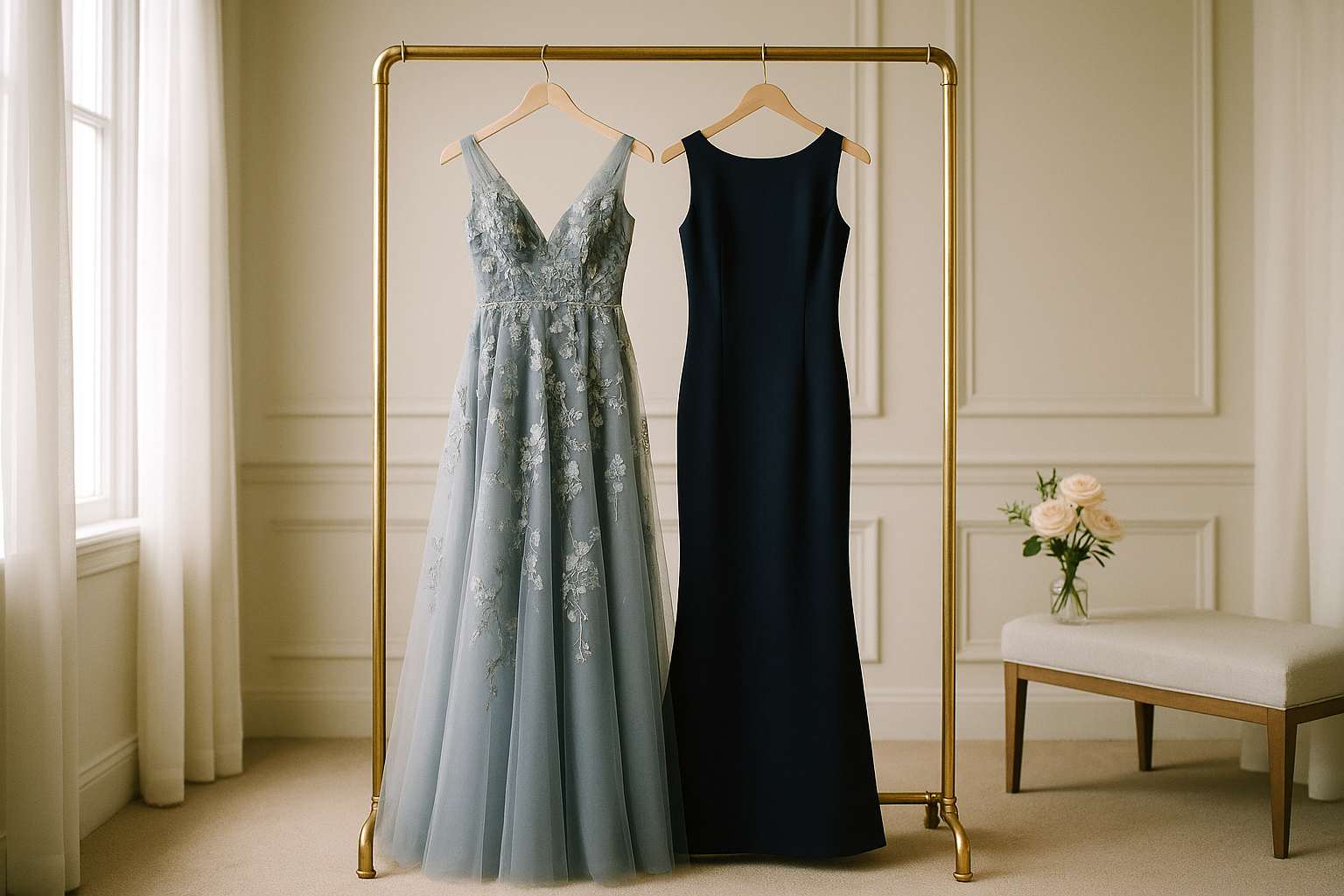
Coordinating the mother of the bride and mother of the groom outfits comes down to three things: following the correct shopping order (MOB first), aligning on formality and color family (not matching exactly), and opening a direct conversation early — by month eight at the latest — so no one shops in isolation and arrives in the same dress.
The mother of the bride and the mother of the groom are the two most photographed women at a wedding after the bride herself. They appear in every major portrait — processional, family formals, reception candids. The mother of the bride is traditionally the last person seated before the wedding party processional begins, making her entrance a formal moment visible to every guest. Their attire matters far more than most families plan for, and it is one of the most consistently under-managed style decisions in the entire wedding.
Done thoughtfully, coordinated family attire creates a visual narrative of unity that photographs beautifully for a lifetime. Done carelessly, it produces jarring clashes, hurt feelings, and photographs that cannot be retaken. This guide covers the entire process — from the shopping order to the final fitting.
What Is the Correct Shopping Order for Mother of the Bride and Groom?
Proper sequencing is not about protocol for its own sake — it is the single most effective way to prevent the most common coordination failure: two mothers independently choosing the same color, or arriving in dramatically mismatched formality levels.
The sequence is straightforward. The bride selects her gown first; the entire palette flows from her. Bridesmaids' colors are chosen next, establishing parameters for family attire. The mother of the bride then shops with right of first selection — she communicates her chosen color family (not necessarily the exact dress) to the mother of the groom so the MOG can avoid clashing. Finally, the MOG selects a dress that coordinates with but does not copy the MOB's choice. Extended family members — fathers, stepmothers, grandmothers — align last to the established palette.
According to The Knot's wedding planning guidance, traditional etiquette holds that the MOB picks her dress first, and her selection should guide the MOG. Once the MOB secures her dress, she communicates the color family to the MOG, giving her ample opportunity to shop. The MOG does not need to wait indefinitely — but she should not commit to a color family before the MOB has shared her direction.
The ideal timeline: the bride communicates the event's formality and color palette to both mothers at the same time by month nine. The MOB begins shopping by month eight. The MOB communicates her color family to the MOG by month seven. The MOG selects her dress by month six. Alterations and fittings run from months four through six, with final fittings completed four to six weeks before the wedding.
How Should the Two Dresses Actually Coordinate?
The goal is coordination, not matching. Two looks coordinate when they belong in the same photograph — when they share a general color temperature, a formality level, and a length range while remaining clearly distinct from one another. First Look Attire's 2026 styling guide puts it well: you do not need to match; you need to look like you are at the same wedding.
The color story approach is the most reliable method. Begin with the wedding's palette — bridesmaids' colors, florals, invitations — and choose complementary shades that live alongside that palette without copying it directly. Then ensure the two mothers differ from each other; the simplest approach is to select shades from the same family but a clear step apart: navy and dusty blue, champagne and soft gold, sage and forest green.
| Wedding Formality | Appropriate Color Families | Lengths That Work | Avoid |
|---|---|---|---|
| Black Tie | Jewel tones, deep navy, champagne, emerald, deep plum | Floor-length gown | Cocktail dress, casual fabrics |
| Formal / Black Tie Optional | Dusty blue, sage, mauve, champagne gold, navy | Floor-length or elegant midi | Sundress silhouettes, casual separates |
| Cocktail / Semi-Formal | Dusty rose, taupe, soft lavender, champagne, slate blue | Midi (tea to ankle) or knee-length | Full ballgown, heavy brocade |
| Garden Party | Floral prints in sage, dusty rose, terra cotta; soft florals | Midi dress, dressy separates | Velvet in summer, structured taffeta |
| Casual / Beach | Soft neutrals, florals, elevated resort tones | Flowy maxi, sundress, elevated separates | Heavy formal gown, structured silhouettes |
Both mothers should firmly avoid white, ivory, and any shade that reads as bridal — off-white, bright white, cream, and very light champagne unless the bride has explicitly approved it. Black was once considered inappropriate at Western weddings but is now fully mainstream and socially accepted as of 2025–2026, including for black-tie events — though traditional Orthodox Jewish and certain other faith ceremonies maintain different conventions.
What Are the 2025–2026 Trends in Mother of the Bride and Groom Style?
The aesthetic direction for family attire in 2026 reflects the broader wedding trend toward elegant simplicity over maximalist formality:
Cape overlays and flutter sleeves add drama and elegance while flattering a range of shoulder and arm shapes. This silhouette detail has been among the most consistently requested in bridal boutiques through 2024–2026.
Structured jumpsuits and two-piece sets have moved from novelty to mainstream for mothers. A wide-leg crepe or satin jumpsuit reads as fully formal at a cocktail-level or above event, and tailored trousers with a beaded or embellished top provide excellent customizable fit.
Embellished jackets over simple gowns remain popular — a sequined or beaded jacket over a clean column dress achieves appropriate formality while giving the mother the option to remove the jacket for dancing.
Midi-length revival. After years of exclusively floor-length dominance, the tea-length and midi dress is at peak popularity in 2026, and is appropriate for cocktail through formal events at most venues.
Sustainability-conscious choices. Rental, pre-owned, and "mother will wear again" purchases are increasingly common. A rented gown from Rent the Runway that photographs beautifully is a genuinely dignified choice — and one that many brides are actively encouraging.
Color palettes for 2026 lean toward muted pastels, rich jewel tones, and sophisticated neutrals: champagne, sage green, dusty blue, mauve, forest green, and deep navy are all strong. Gold, blush, and soft ivory (where the bride approves) are trending for their warmth and photographic beauty in outdoor or naturally lit settings.
How Do We Navigate Faith Traditions and Cultural Attire?
Faith tradition and cultural background shape family attire requirements significantly. Catholic and Protestant high-church ceremonies typically call for covered shoulders and modest necklines for mothers — a floor-length gown with a built-in coverage option or a coordinating jacket is the standard approach. Conservative and Orthodox Jewish ceremonies require modest necklines, covered elbows, and often covered legs in non-sheer fabrics. Reform Jewish ceremonies have broader latitude.
For South Asian weddings, color significance is central: in Hindu ceremonies, red is traditionally reserved for the bride, while white and black are avoided in favor of gold, jewel tones, and bright fuchsia, teal, and orange. Female family members typically wear sarees, lehengas, or salwar kameez. For Chinese weddings, red is celebratory and appropriate for family; qipaos and cheongsams for mothers are beloved and fully correct. When a wedding blends two cultural traditions, both mothers should be briefed on the significance of specific colors to the other family — avoiding inadvertent offense is simply good hospitality.
For blended families and non-traditional structures, the principle is consistent: determine processional and seating roles first, then assign attire guidance proportional to visibility. A stepmother in the family row deserves the same level of coordination guidance as a primary mother. Communication ideally comes from each partner to their own family members, framed as a practical need rather than a style judgment.
The insider tip that experienced bridal stylists emphasize most: share a visual mood board rather than a verbal color description. Three to five reference images of the aesthetic you want communicate more precisely than any word. 'Dusty rose' interpreted by five different people produces five different results. A mood board removes that ambiguity entirely.
Frequently asked
Does the mother of the bride have to shop before the mother of the groom?
Yes — this is one of the firm etiquette traditions that genuinely prevents conflict. The mother of the bride has right of first selection on color, silhouette, and style. Once she has committed to a dress or at least a color family, she communicates that information to the mother of the groom so the MOG can shop accordingly. The MOG does not need to wait indefinitely, but she should avoid committing to a color family before the MOB has. Practically, this means the bride should be encouraging the MOB to begin shopping by the eight-month mark, communicate her selection to the MOG by the seven-month mark, and confirm both mothers are settled by month six. The hierarchy exists not to grant the MOB control over the MOG's appearance, but to prevent the most common coordination failure — two women independently choosing the same color.
What colors should the mother of the bride and groom avoid wearing?
Both mothers should firmly avoid white, ivory, champagne, and any shade that reads as bridal — including off-white, bright white, and cream — unless the bride has explicitly approved it. This applies to both mothers equally. Beyond the bridal-color prohibition, the mothers should avoid wearing the exact same color as each other unless both have agreed that a matching look is intentional, and should avoid wearing the exact same shade as the bridesmaids. Exact matching creates a visual uniformity that reads as costume-like rather than elegant. A color story approach works beautifully: if bridesmaids wear dusty blue, a MOB in silver-grey and a MOG in soft navy creates a cohesive, layered palette. Popular MOB/MOG color families for 2026 include sage green, dusty blue, mauve, champagne gold, navy, taupe, forest green, and jewel tones for formal or evening events.
How formal should the mother of the bride and groom dresses be?
Family attire must match the formality of the event — this is the non-negotiable foundation of any coordination conversation. At a black-tie event, both mothers should be in floor-length gowns; a cocktail dress at black tie reads as underdressed and creates visible dissonance in formal portraits. At a cocktail or semi-formal wedding, floor-length is still appropriate but a midi-length dress or elegant pantsuit is equally correct. At a garden party or casual beach celebration, heavy formal fabrics like structured taffeta or velvet are out of place regardless of how beautiful they are. The bride should communicate the event's formality level — including the venue, time of day, and dress code if there is one — to both mothers at the same time, ideally with a visual mood board.
What should I do if the mothers have very different style preferences?
The healthiest resolution is to agree on two parameters — formality level and complementary color family — and then allow each person to express her own style within those bounds. The MOB in a floral chiffon gown and the MOG in a structured crepe column are both beautiful, both formal, and both coherent in photographs as long as they share a general color temperature. A mood board communicates the aesthetic direction far more precisely than verbal color descriptions; 'dusty rose' interpreted by five different people produces five different results.
Where should the mother of the bride shop for her dress, and what should she budget?
The right retailer depends on budget, lead time, and formality requirements. Bridal boutiques carrying dedicated mother-of collections offer the best match for quality and formality alignment, with prices typically $300–$1,500. Department stores including Nordstrom, Neiman Marcus, and Saks Fifth Avenue carry excellent selection in the $300–$2,500 range. David's Bridal offers budget-friendly MOB/MOG options starting around $150, and Azazie and BHLDN carry elegant options for $100–$400. Rental through Rent the Runway or local formalwear shops provides high-quality gowns for $50–$200 for the rental period — a fully dignified option for those prioritizing budget or who prefer not to store a formal gown after the wedding. For custom or made-to-order options, budget $800–$5,000 and allow four to six months for production.
How do we handle attire coordination for blended families or non-traditional structures?
The guiding principle for non-traditional family structures is to determine processional and seating roles first — attire coordination follows those roles. A stepmother seated in the family row or walking in the processional should receive attire guidance comparable to the primary mothers; one in the general guest section does not require the same coordination. For families where two mothers exist on one side — a birth mother and a stepmother both present — a simple brief covering formality level, length minimum, and a broad color family ('please wear something in the navy or dusty blue family, knee-length or longer') communicated calmly and without pressure is usually sufficient. The communication ideally comes from the couple, with each partner briefing their own family members.