Fashion & Beauty
20 Best Something Old, New, Borrowed & Blue Ideas for 2026
The Victorian rhyme that still rules every bridal morning-of checklist — with five beautiful, meaningful ideas for each element, sourced from real 2025–2026 weddings.
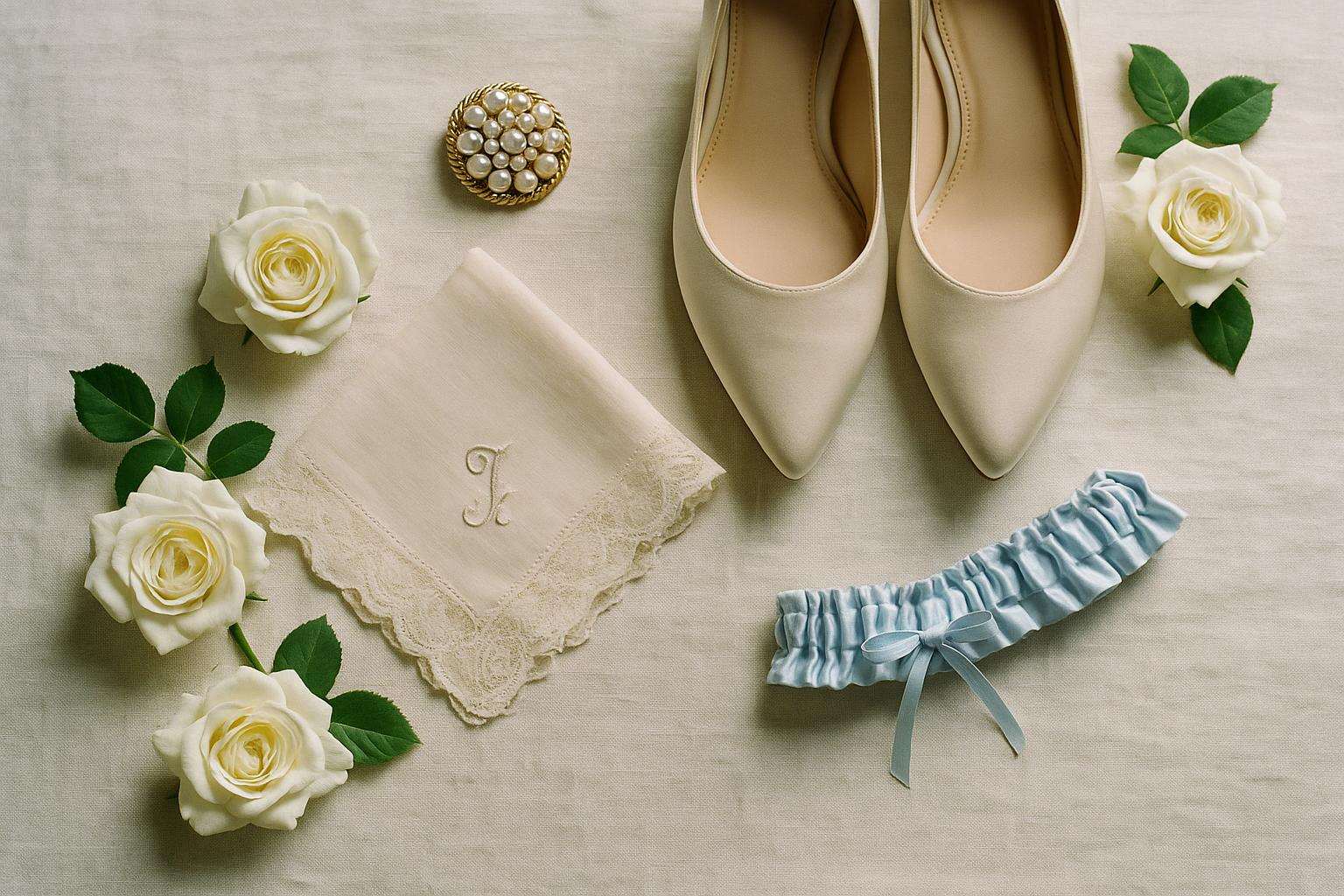
something old new borrowed blue 2026bridal traditionswedding day accessoriessomething blue ideasheirloom wedding jewelrywedding morning checklist
The quick verdict
The Victorian rhyme that still defines every bridal morning-of checklist — 20 real, meaningful ideas for each of the four elements, sourced from 2025–2026 weddings.
- Best overall
- Grandmother's Jewelry (Something Old) — No other something old carries the same combination of personal history, visual elegance, and genuine emotional weight on the wedding day — and it costs nothing if the family has it.
- Best value
- Blue Ribbon Inside the Hem (Something Blue) — A length of blue satin ribbon sewn inside the wedding dress hem by a seamstress costs under $10 and is the most beloved hidden-blue tradition in bridal preparation.
- Best for Brides wanting to honor a close friend
- Borrowed Jewelry from a Happily Married Friend — The specific ask — 'will you share something from your marriage with mine?' — is one of the most meaningful exchanges in the pre-wedding period and creates a genuine emotional bond between the bride and the giver.
How we evaluated
These 20 ideas were selected based on four criteria: authenticity to the tradition's meaning (each idea connects genuinely to the symbolic purpose of its element, not just its aesthetic surface); accessibility across budget levels (ideas span $0 to $300, with clear cost notes); emotional resonance (priority was given to ideas that create genuine connection to people the bride loves, rather than commercial purchases); and practicality for 2026 brides (timing guidance included for each). We drew on The Knot's wedding tradition research, bridal industry publications, and real wedding preparation accounts from 2025–2026 ceremonies.
- Authenticity to symbolic meaning. Each idea genuinely reflects the traditional purpose of its element — not just the superficial category.
- Accessibility across budgets. Ideas span from $0 (using existing heirlooms) to approximately $300, with honest cost guidance.
- Emotional resonance. Priority given to ideas that create real connection between the bride and the people she loves.
- Practical timing. Each idea includes when to plan and secure it relative to the wedding date.
Rating scale: Ratings reflect emotional resonance, practical accessibility, and alignment with the tradition's original meaning on a 1–5 scale.
Last verified .
At a glance
| # | Name | Rating | Best for | Pricing |
|---|---|---|---|---|
| 1 | Grandmother's Jewelry (Something Old) | 5.0 | Any bride with a grandmother, mother, or aunt who has meaningful jewelry they are willing to share for the day | Free (existing heirloom); jeweler cleaning $20–$50; custom resetting $150–$600 |
| 2 | Mother's Wedding Veil (Something Old) | 4.8 | Brides whose mothers have kept their wedding veil and whose gown and hair can accommodate a vintage style | Free; professional cleaning $50–$150 if needed; hairstylist consultation included in trial |
| 3 | Fabric Swatch from a Parent's Wedding Dress (Something Old) | 4.7 | Brides who want a deeply personal something old that is invisible in photographs but profoundly meaningful in private | $30–$80 for the alteration |
| 4 | The Wedding Gown Itself (Something New) | 4.5 | Brides who want to honor the tradition without sourcing multiple separate items, or who are focusing their creative energy on a particularly meaningful something old or borrowed | Already included in wedding gown purchase |
| 5 | New Personalized Jewelry (Something New) | 4.6 | Brides who want the something new to be a keepsake piece they will wear for decades, not only on the wedding day | $50–$500+ depending on material and style |
| 6 | Earrings Borrowed from a Happily Married Friend or Family Member (Something Borrowed) | 5.0 | Any bride with a mother, grandmother, friend, or mentor with a marriage she admires and a piece of jewelry she is willing to share | Free — return with a handwritten thank-you note and a photograph |
| 7 | A Friend's Wedding Veil (Something Borrowed) | 4.6 | Brides with a close friend who married recently and has a well-kept veil she is willing to lend | Free; cleaning and pressing $30–$80 if needed |
| 8 | Blue Satin Ribbon Sewn Inside the Hem (Something Blue) | 4.9 | Brides who want a something blue that is deeply personal, invisible to guests, and inexpensive | $5–$40 (ribbon + seamstress fee); add $15–$30 for embroidered date |
| 9 | Classic Blue Garter (Something Blue) | 4.4 | Brides who want a traditional, recognizable something blue with a feminine aesthetic and a potential physical keepsake | $15–$60; custom embroidery adds $10–$25 |
| 10 | Sapphire Jewelry (Something Blue) | 4.7 | Brides who want a something blue that doubles as a meaningful piece of jewelry they will wear on anniversaries and other significant occasions | $80–$250 (lab-grown); $200–$2,000+ (natural sapphire, depending on size and setting) |
Grandmother's Jewelry (Something Old)
The most universally treasured something old — worn not just as an accessory but as a living connection to the women who came before
Wearing a grandmother's pearls, a great-aunt's diamond earrings, or a mother's antique bracelet is the quintessential something old for good reason: it is simultaneously a style choice and a ceremony within the ceremony. The piece does not need to be financially valuable to carry enormous weight. A grandmother's simple gold chain, worn for her wedding fifty years ago and offered again for yours, is priceless in the way that no commercial accessory can be. If the original jewelry needs cleaning before the wedding, a professional jeweler's cleaning costs $20–$50 and takes approximately 30 minutes. For brides whose grandmother's jewelry is a different metal or stone than the rest of their look, a jeweler can create a custom setting that incorporates the heirloom stone into a new piece (typically $150–$600). Photograph the piece alone before the wedding day as a documentary keepsake, and consider a brief mention in your ceremony program: 'The bride's earrings were worn by her grandmother at her own wedding in 1968.' Guests who read that will not forget it.
Strengths
- Carries the highest possible emotional resonance of any something old — a specific, irreplaceable personal connection
- Photographs beautifully as a close-up detail shot that becomes one of the most treasured images from the day
- Costs nothing if the family has the piece; a jeweler's cleaning is the only investment needed
Weaknesses
- Risk of loss or damage is real — for very valuable heirlooms, consider removing before the reception begins and assigning a trusted person to keep it safe
- Best for
- Any bride with a grandmother, mother, or aunt who has meaningful jewelry they are willing to share for the day
- Pricing
- Free (existing heirloom); jeweler cleaning $20–$50; custom resetting $150–$600
Source: The Knot
Mother's Wedding Veil (Something Old)
Wearing the same veil your mother wore down her aisle — the most visually dramatic form of bridal continuity
A mother's wedding veil is the most visually striking something old because it appears in photographs in the same way her mother's did: framing the bride's face as she walks toward her partner. Veils from the 1970s, 1980s, and 1990s are often in excellent condition if properly stored (in acid-free tissue, away from light). A veil in good condition may need only gentle pressing or a light steam before the wedding. One that needs cleaning can be professionally done by a bridal cleaner for $50–$150. Important consideration: vintage veil lengths and attachment styles may not match a modern hairstyle — consult your hairstylist before committing. A 1980s pouf-attached cathedral veil may require a different attachment point than your 2026 updo. The consultation between your stylist and your mother about how the veil was worn is often one of the most moving pre-wedding conversations that happens. Even if the veil ultimately does not work with the gown or hair, the conversation it occasions is worth pursuing.
Strengths
- Produces the most visually memorable something old in photographs — the connection to the mother's wedding is immediate and unmistakable
- Creates a ceremonial moment in itself: the act of your mother placing her veil on your head is a powerful passing-of-the-torch ritual
- Zero additional cost if the veil is in wearable condition
Weaknesses
- Vintage veil attachment points and lengths may not work with a modern gown or hairstyle — requires consultation with the hairstylist before committing
- Best for
- Brides whose mothers have kept their wedding veil and whose gown and hair can accommodate a vintage style
- Pricing
- Free; professional cleaning $50–$150 if needed; hairstylist consultation included in trial
Source: Danversport Weddings
Fabric Swatch from a Parent's Wedding Dress (Something Old)
A hidden piece of family history sewn into the lining of your own gown — invisible to guests but unforgettable to you
Ask a seamstress or your bridal alterations specialist to cut a small square from a parent's or grandmother's wedding dress and sew it into the inside hem or lining of your own gown. The piece is entirely invisible from the outside and costs very little — most alteration specialists charge $30–$80 for the addition. What it creates is a private, physical point of connection between your wedding and the generation before you. Some brides choose to photograph the inside hem before the wedding as a documentation shot; others keep it as a private secret between themselves and the person whose dress is represented. This idea has grown significantly in popularity on bridal blogs and Pinterest in 2025–2026, partly because it requires no compromise with the aesthetic of the gown (it is entirely hidden) and partly because it is genuinely touching in a way that a purchased novelty item rarely is. Check with the original gown owner before cutting; some mothers prefer to keep their gown intact.
Strengths
- Completely invisible — requires no compromise with the aesthetic of your own gown
- Creates a deeply personal private ritual that you carry literally on your body throughout the day
- Low cost: $30–$80 for the alteration; the meaningful investment is asking permission and choosing the fabric
Weaknesses
- Requires access to the original garment and the original owner's permission to cut from it — not always available or comfortable to request
- Best for
- Brides who want a deeply personal something old that is invisible in photographs but profoundly meaningful in private
- Pricing
- $30–$80 for the alteration
Source: Shutterfly
The Wedding Gown Itself (Something New)
The most natural something new of all — no additional purchase required, full symbolic meaning intact
The traditional interpretation of something new has always included the wedding gown as the primary candidate, and for most brides, it remains the most natural choice. A custom-ordered or newly purchased wedding gown is new by definition — it is the piece that most visually represents the new life the couple is beginning together. For brides who prefer not to source multiple items for the ritual, designating the gown as something new and focusing creative energy on the old, borrowed, and blue elements is entirely legitimate and historically consistent with how the tradition has been practiced. If the gown itself is not new (for example, a bride wearing a vintage or second-hand gown, or a family heirloom gown), then new shoes, new jewelry, or a new personalized accessory purchased specifically for the wedding serves equally well. The something new is the element least burdened by symbolism — it requires only that it be genuinely new and represent the couple's hopeful beginning.
Strengths
- No additional purchase required for brides buying a new gown — the tradition's new element is already being fulfilled
- Keeps the something new simple and allows more creative energy for the more symbolically rich borrowed and blue elements
- Consistent with the original Victorian understanding of the rhyme
Weaknesses
- The least emotionally resonant choice on its own — the gown is already the center of the day; designating it as the something new adds little additional meaning beyond logistics
- Best for
- Brides who want to honor the tradition without sourcing multiple separate items, or who are focusing their creative energy on a particularly meaningful something old or borrowed
- Pricing
- Already included in wedding gown purchase
Source: The Knot
New Personalized Jewelry (Something New)
A piece commissioned or purchased specifically for the wedding day — the new that marks the beginning of your new chapter
A piece of jewelry purchased or commissioned specifically for the wedding — whether a diamond tennis bracelet, a custom-engraved ring, a delicate gold initial necklace, or pearl earrings — serves as something new in the most intentional way. Unlike the gown, which is primarily functional, a new jewelry piece chosen specifically for its symbolism carries the meaning of the something new element actively rather than incidentally. Many brides use this element to invest in a piece they will wear on anniversaries, on other significant occasions, or as an everyday reminder of their wedding day. Consider having the piece engraved with the wedding date or your new initials inside. Pearl earrings in particular are having a significant moment in 2025–2026 bridal style — they function as something new, work beautifully with virtually every gown, and serve as timeless keepsakes. Budget from $50 for delicate gold-fill costume jewelry to $500+ for fine jewelry.
Strengths
- Creates a meaningful purchase that carries the something new symbolism actively and intentionally
- A piece worn on anniversaries and significant occasions extends the meaning of the wedding day indefinitely
- Pearl and diamond jewelry trending strongly in 2025–2026 bridal style, making it both traditional and contemporary
Weaknesses
- Adds to the accessories budget, which is already a significant category; requires careful coordination with the existing gown and accessory look
- Best for
- Brides who want the something new to be a keepsake piece they will wear for decades, not only on the wedding day
- Pricing
- $50–$500+ depending on material and style
Source: Spruce Mountain Events
Earrings Borrowed from a Happily Married Friend or Family Member (Something Borrowed)
The act of asking is as meaningful as the wearing — a genuine ceremony of connection before the ceremony begins
The something borrowed is theologically the most meaningful of the four elements, because it requires an explicit act: asking a woman with a happy marriage to share something from hers with yours. The borrowed item is intended to carry the happiness of the giver into the recipient's new marriage — a lovely, gentle folk theology that creates genuine human connection regardless of whether one believes literally in its power. Earrings are the most practical borrowed item because they are highly visible in photography, easy to return safely, and require no alteration to the bridal look. Request the borrowed earrings at least two to four weeks before the wedding, not the morning of — logistics matter, and you want to be sure the earrings work with your gown, hairstyle, and other jewelry before the day itself. Photograph them with a thank-you note when you return them. The woman you borrowed from will treasure that photograph. The earring ask, the wearing, and the return together constitute a small, beautiful ritual of female mentorship that many brides describe as one of the most moving exchanges of their wedding preparation.
Strengths
- The explicit act of asking creates a genuine human connection that no purchased item can replicate
- Earrings are photographically prominent, easy to return, and typically require no coordination logistics
- Costs nothing, and the thank-you photograph given to the lender is itself a meaningful gift
Weaknesses
- Must be planned at least 2–4 weeks in advance to ensure the earrings work with the full bridal look; last-minute borrowing creates unnecessary stress
- Best for
- Any bride with a mother, grandmother, friend, or mentor with a marriage she admires and a piece of jewelry she is willing to share
- Pricing
- Free — return with a handwritten thank-you note and a photograph
Source: Danversport Weddings
A Friend's Wedding Veil (Something Borrowed)
Wearing the veil a close friend wore at her own wedding — a deeply personal bridge between two chapters of friendship
Borrowing a wedding veil from a close friend who married before you is a particularly meaningful interpretation of the something borrowed tradition — it connects your ceremony directly to hers and produces a visible, photographically prominent tribute to your friendship. The logistics require some planning: the veil must be cleaned and pressed before borrowing; it must be compatible with your gown and hair; and it must be returned carefully after the wedding. Discuss this with your hairstylist at your trial appointment — bring the veil so the stylist can plan the attachment. The symbolic weight of wearing the veil a friend wore at her own happy wedding is genuinely moving for both the bride and the lender. Some brides choose to have a small ribbon label sewn discreetly inside the borrowed veil with the lender's name and wedding date: "First worn by Sarah, June 2022." That hidden detail becomes part of the veil's history — and if the bride later lends it to someone else, the label grows.
Strengths
- Creates an explicit visual and physical connection between your wedding and a friend's happy marriage
- Photographically prominent — the veil appears in many of the most important photographs of the day
- The tradition of the growing label (documenting each bride who wears it) gives the veil an enduring legacy
Weaknesses
- Requires advance planning and a stylist consultation to ensure the veil works with gown and hair; not all veils are compatible with all looks
- Best for
- Brides with a close friend who married recently and has a well-kept veil she is willing to lend
- Pricing
- Free; cleaning and pressing $30–$80 if needed
Source: Shutterfly
Blue Satin Ribbon Sewn Inside the Hem (Something Blue)
The most beloved hidden-blue tradition in bridal preparation — invisible to everyone but you, and a private source of joy throughout the day
A length of blue satin ribbon sewn by a seamstress into the inside hem of the wedding gown is one of the most cherished something blue ideas precisely because it is entirely private. No one at the ceremony can see it. No guest will photograph it. It is known only to the bride and whoever helped her plan it — often a mother, a sister, or the seamstress herself. The ribbon costs under $5 at any fabric store; a seamstress charges $20–$40 to sew it in cleanly. It typically becomes one of the small, sweet details that brides remember most vividly from the morning of the wedding: lifting the hem to show a mother, a sister, or a close friend the hidden blue and seeing their faces light up. Many brides have the ribbon embroidered with the wedding date (add $15–$30 for the embroidery). Some ask a seamstress to stitch the ribbon in a small looping pattern, or to create a tiny bow. The something blue tradition asks for a color; what this idea adds to it is a secret — and secrets, on a day that belongs to everyone, are one of the most personal things a bride can carry.
Strengths
- Entirely invisible — requires no compromise with the gown's aesthetic or the overall look
- One of the least expensive something blue ideas ($5–$40 total)
- Creates a private joy that belongs only to the bride throughout the entire day
Weaknesses
- Requires a scheduled alteration appointment to add — cannot be done the morning of the wedding
- Best for
- Brides who want a something blue that is deeply personal, invisible to guests, and inexpensive
- Pricing
- $5–$40 (ribbon + seamstress fee); add $15–$30 for embroidered date
Source: Spruce Mountain Events
Classic Blue Garter (Something Blue)
The most traditional something blue — a piece of bridal history with a feminine, romantic aesthetic
The blue garter is the most classically recognized something blue, and it remains a beloved choice for brides who embrace its traditional, feminine aesthetic. Blue satin garters with lace trim are available from virtually every bridal boutique and online retailer for $15–$40. Many couples have moved away from the garter toss at receptions (it is widely considered dated), but wearing the garter purely for the something blue tradition — without the toss — is entirely common and requires no explanation to guests. For brides who feel the garter toss is a meaningful tradition for their wedding style, blue garters designed specifically for tossing (with a removable outer garter and a keep-garter underneath) are available at $25–$60 per set. The garter can be embroidered with the wedding date or initials for a small additional fee. Bridal boutiques that carry garters include Etsy vendors with custom embroidery options, David's Bridal, and specialty online retailers. Order at least three to four weeks before the wedding to allow time for custom embroidery.
Strengths
- The most historically recognized something blue — immediately understood by guests and family
- Available at virtually every price point from $15 to $60; easy to source quickly
- A keep-garter becomes a lasting physical keepsake from the wedding day
Weaknesses
- If the garter toss is not planned, wearing the garter is a private choice that requires no public explanation — but some brides feel it is an unnecessary layer of undergarment for a long day
- Best for
- Brides who want a traditional, recognizable something blue with a feminine aesthetic and a potential physical keepsake
- Pricing
- $15–$60; custom embroidery adds $10–$25
Source: The Knot
Sapphire Jewelry (Something Blue)
The most photographically elegant something blue — a gemstone that carries the tradition's original symbolism of fidelity and love
Sapphire is perhaps the most semantically appropriate something blue in the entire tradition: the gemstone was historically associated with fidelity, wisdom, and divine grace — exactly the qualities the 'something blue' element was intended to invoke. A sapphire accent in jewelry — a delicate pendant, a pair of sapphire stud earrings, a slender sapphire bracelet — adds an understated pop of color that reads as sophisticated rather than decorative. Lab-grown sapphires have made this option considerably more accessible in 2025–2026: a lab-grown sapphire pendant in sterling silver is available from retailers including Brilliant Earth and James Allen for $80–$250. Natural sapphire jewelry ranges from $200 (smaller stones in silver) to several thousand dollars for larger gems in gold settings. For brides with an existing diamond engagement ring, a single sapphire accent at the ear or wrist adds blue without competing with the primary jewelry. Sapphire is also the birthstone for September — a natural choice for fall brides seeking a personal connection in the gemstone.
Strengths
- Carries the original symbolic meaning of the 'something blue' element most explicitly — fidelity and love are what sapphire has always represented
- Photographically elegant — a sapphire accent appears as a deliberate, sophisticated detail in close-up photography
- Lab-grown options make this accessible at $80–$250 without compromising appearance or meaning
Weaknesses
- Natural fine sapphire jewelry can be expensive; the bride must decide whether she wants a piece she will wear again or a wedding-day-only accessory
- Best for
- Brides who want a something blue that doubles as a meaningful piece of jewelry they will wear on anniversaries and other significant occasions
- Pricing
- $80–$250 (lab-grown); $200–$2,000+ (natural sapphire, depending on size and setting)
Source: Shutterfly
Frequently asked
Where does the something old, new, borrowed, blue tradition come from?
The tradition originates in 19th-century Lancashire, England, and derives from the Old English rhyme: "Something Olde, Something New, Something Borrowed, Something Blue, and a Sixpence in your Shoe." Each element was believed to bring a specific form of good fortune to the bride: the old honored her connection to family and past; the new invited optimism about the future; the borrowed carried the happiness of a successfully married woman; and the blue signified fidelity, purity, and love. The sixpence represented financial prosperity for the new household. Though the rhyme is Victorian in its written form, the practice of wearing protective or symbolic items on the wedding day appears across many cultures far older than Victorian England. The tradition has survived two centuries of changing wedding fashions precisely because it gives the bride a meaningful, structured way to connect her wedding-day look to the people and history she loves.
Do you need all four elements or is it optional?
Entirely optional — though most brides who take it seriously find it one of the most quietly enjoyable parts of wedding preparation. There is no version of this tradition that requires all four elements, and no negative consequence to skipping one or all of them. That said, the framework has real utility: it gives the bride a structured reason to incorporate family heirlooms, connect a beloved grandmother or friend directly to the ceremony, and make intentional accessory choices rather than purely aesthetic ones. Many brides find the "borrowed" element especially meaningful — it is an explicit invitation to honor a woman with a happy marriage by asking her to be part of your day. The act of requesting and receiving the borrowed item often produces one of the most tender moments in wedding preparation. Whether or not you believe in Victorian good-luck superstitions, the tradition is worth taking seriously as a framework for intention and connection.
Can one item count for more than one element?
Yes — and this is actually a beautifully elegant solution when the right piece presents itself. A grandmother's sapphire ring, for example, is simultaneously something old (her history), something borrowed (if she is lending it for the day), and something blue (the sapphire). A mother's antique pearl earrings worn for the ceremony can be old, borrowed, and perhaps already part of a new jewelry set purchased to complement them. The rhyme was never intended as a strict accounting exercise; it is a framework for meaningful intention. If a single item carries multiple symbolic meanings authentically — especially if it connects directly to a beloved family member — that is arguably more meaningful than sourcing four separate items from a novelty shop. Photograph the multi-purpose heirloom piece and tell its story in your ceremony program or on your wedding website.
What are the best budget-friendly something blue ideas?
The most meaningful something blue ideas are often among the least expensive. A length of blue satin ribbon sewn into the inside hem of the wedding dress (invisible from outside, known only to the bride) costs under $5 and is a favorite of seamstresses and alteration specialists who do this on request. Blue nail polish on the toenails — particularly a soft dusty cornflower or powder blue — costs nothing extra at most nail appointments and is a playful personal choice. A small blue sapphire pendant bought at a costume jewelry retailer for $20–$50 provides a genuine visual pop. Blue embroidery inside the gown, stitched by a local seamstress, is a beloved personal touch that many brides later photograph as a close-up detail shot. If you plan to wear a garter, a classic blue satin garter with lace trim is available from bridal boutiques and online retailers for $15–$40. None of these require significant budget; all of them require only a little advance planning.
How do I incorporate something old into my look in a modern way?
The most elegant modern interpretations of something old take the heirloom piece and integrate it with intention rather than treating it as an afterthought pinned to a bouquet. Have a jeweler reset a grandmother's stone into a contemporary pendant or ring band that pairs with your modern aesthetic ($150–$600 depending on complexity). Commission a seamstress to incorporate a small square of fabric from your mother's or grandmother's wedding dress into your bridal belt, inner hem, or veil ($50–$200 for the alteration). Wear an antique hair comb from a family member styled into an updo — a detail that reads as sophisticated in photography and carries enormous personal weight in private. If you carry a handkerchief, have a monogrammer embroider it with your new initials on a vintage piece from a grandmother ($20–$60). The principle: honor the old by integrating it into the new, rather than setting it aside as a separate obligation.