Fashion & Beauty
Suit vs Tuxedo for a Wedding: The Complete 2026 Guide
The choice between a suit and a tuxedo is not a matter of personal preference — it is a matter of formality. Get it right and every man in the wedding party looks intentional and polished. Get it wrong and the photographs record it permanently.
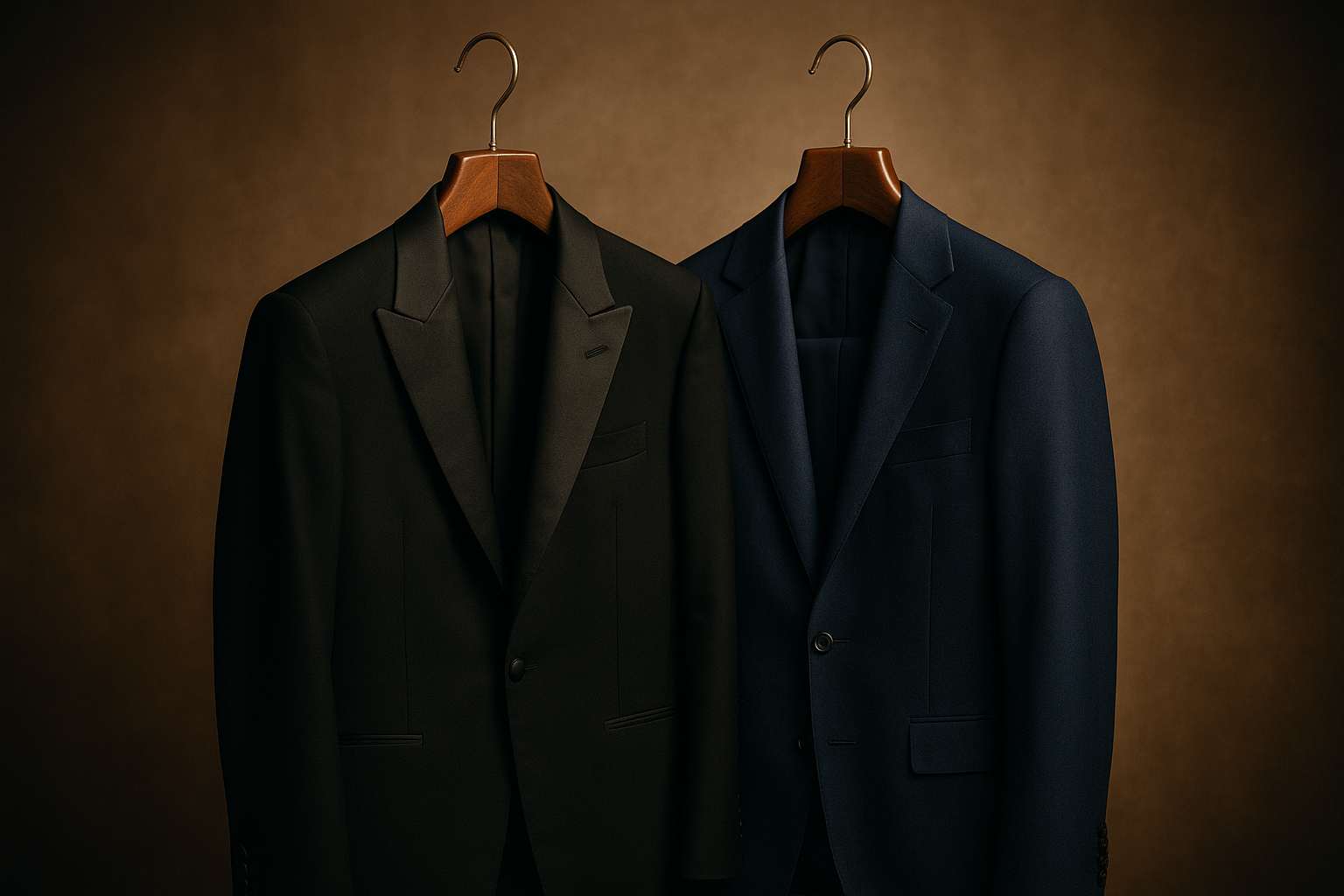
Choose a tuxedo for black-tie or formal evening weddings (6 p.m. or later, grand venues, ballgown brides). Choose a suit for afternoon, garden, destination, or semi-formal weddings. The single rule that overrides everything: all men in the wedding party must dress at the same formality tier, with the groom differentiated by silhouette, fabric, or accessories — not by mixing formalwear categories.
What actually makes a tuxedo different from a suit?
This is the question that resolves most groom attire confusion. A tuxedo and a suit can look similar from a distance — both involve a jacket and matching trousers — but the distinguishing details are precise and intentional.
A tuxedo features satin or grosgrain accents on three specific locations: the lapels (which are faced in satin rather than the same fabric as the jacket body), the trouser outseam (a narrow satin stripe running down each leg), and the waistband of the trousers. These accents do not reflect light — they absorb it, creating the distinctive high-contrast, matte-to-sheen visual that makes a tuxedo identifiable across a room. Traditional tuxedo pairings include a pleated white dress shirt, a bow tie, a cummerbund or low-cut waistcoat, and black patent leather or highly polished cap-toe Oxford shoes.
A suit has none of these accents. The fabric is consistent throughout — jacket, lapels, trousers — and the garment is appropriate across the full range of formality levels from business to black tie adjacent (but not black tie proper). The versatility of a suit is its defining advantage: a quality navy or charcoal suit purchased for a wedding will be worn for years afterward in professional and social settings that a tuxedo rarely enters.
| Factor | Suit | Tuxedo |
|---|---|---|
| Formality level | Casual through black tie adjacent | Black tie and formal evening only |
| Satin accents | None | Lapels, trouser stripe, waistband |
| Ceremony timing | Anytime — morning through evening | 6 p.m. or later is the traditional threshold |
| Best venue types | Garden, barn, vineyard, beach, destination, restaurant | Ballroom, grand estate, private club, historic hotel |
| Rental cost (full package) | $75–$150 | $138–$249 |
| Purchase cost (off-the-rack) | $200–$499 | $500–$1,000 (off-the-rack); $1,400–$3,700+ (designer) |
| Post-wedding rewearability | High — professional and social events | Low — limited to black-tie occasions |
How do you choose based on your specific wedding?
The decision framework is primarily driven by three variables: the time of the ceremony, the venue type, and the bride's gown. These three factors align more consistently than most couples realize.
Choose a tuxedo when:
- The wedding begins at or after 6 p.m.
- The venue is a ballroom, grand estate, private club, or historic hotel
- The dress code reads "black tie" or "formal"
- The bride's gown is a full ballgown, cathedral-train, or heavily embellished design
- The aesthetic is glamorous, classic, or old-Hollywood
Choose a suit when:
- The ceremony begins before 6 p.m.
- The venue is a garden, vineyard, barn, winery, beach, or destination setting
- The dress code reads "cocktail," "semi-formal," or "garden party"
- The bride's gown is an A-line, sheath, or informal style
- Budget or groomsmen rewearability is a meaningful priority
The formality-matching rule that no exception overrides: the groom's formality level sets the standard for every man in the wedding party. According to The Black Tux, one of the leading wedding tuxedo rental services in the U.S. with 42 showroom locations, the most common attire regret in post-wedding surveys is a mix of tuxedos and suits within the same wedding party — an inconsistency that reads as unplanned in photographs regardless of how intentional it felt at the time of ordering.
What are the realistic costs for 2026?
The U.S. wedding attire rental market is served by several strong national providers with meaningfully different positioning. For tuxedo rentals, The Black Tux starts at approximately $138 for a full nine-piece package including jacket, trousers, shirt, shoes, vest, and accessories, with garments delivered to the door 10 to 14 days before the wedding. Men's Wearhouse offers comparable rental packages from $99 to $249, with the added advantage of nationwide in-store fitting locations — practical for wedding parties spread across multiple cities. Men's Wearhouse frequently offers the groom's rental free when the wedding party includes a minimum of four to five paying rentals; confirm this promotion directly when booking.
For suit purchases, off-the-rack options in the $200 to $499 range from retailers including SuitShop, J. Crew, and Banana Republic offer quality adequate for a wedding day. Made-to-measure suits from services including Indochino or Suit Supply run $600 to $1,500 and deliver meaningfully better fit. Budget an additional $75 to $200 for alterations regardless of where the suit is purchased — virtually every off-the-rack garment requires at minimum a hem adjustment and sleeve shortening.
Whichever route you choose, order or buy early. According to The Knot's tuxedo rental review, the most common attire failure is not the wrong category but the wrong timeline — leaving fittings, alterations, or rental delivery until the final two weeks. Confirm every man's measurements at least eight to ten weeks before the wedding, schedule a fitting when rentals arrive, and keep one backup option in mind for any groomsman whose package does not fit on first try.
Frequently asked
What is the actual difference between a suit and a tuxedo?
A tuxedo is formally distinguished from a suit by its satin or grosgrain accents — the satin facings on the lapels, the satin stripe running down the trouser outseam, and the satin waistband. These accents absorb light rather than reflecting it, creating the distinctive high-contrast visual effect that makes a tuxedo immediately identifiable. A suit has no such accents; the jacket and trouser fabric are consistent throughout. Tuxedos are traditionally worn for black-tie events beginning at or after 6 p.m. and pair with a white dress shirt, bow tie, and patent leather shoes. Suits are appropriate for morning through evening events across virtually every formality level, and offer significantly more post-wedding versatility — a quality navy or charcoal suit will be worn dozens of times over the years following the wedding. A black suit occupies a practical middle ground: more formal than navy or charcoal, but without the satin details that define a tuxedo; it reads similarly to a tuxedo in photographs while offering broader rewearability.
When should the groom wear a tuxedo vs. a suit?
Choose a tuxedo when the wedding begins at or after 6 p.m., the venue is a ballroom, historic estate, private club, or grand hotel, the dress code reads black tie or formal, the bride's gown is a full ballgown or cathedral-train design, or the aesthetic is glamorous, old-Hollywood, or classically elegant. Choose a suit when the ceremony is before 6 p.m., the setting is a garden, vineyard, barn, beach, or destination venue, the dress code is cocktail, semi-formal, or garden party, or the wedding has a relaxed, nature-forward, or colorful aesthetic. The single most important rule: the groom and all groomsmen must dress at the same formality tier. Mixing a tuxedo among suit-wearing groomsmen creates visible inconsistency that reads as disorganized in photographs and is one of the most common wedding attire regrets.
Is it better to rent or buy a wedding suit or tuxedo?
For suits: buying is almost always the better decision. The cost differential between renting and purchasing a quality suit is modest — a well-made off-the-rack suit from a brand like SuitShop or J. Crew costs $200 to $400, compared to $75 to $150 for a rental — and a purchased suit can be properly tailored to fit precisely. More importantly, a quality suit will be worn again: to job interviews, client meetings, graduation ceremonies, and the next decade of formal events. For tuxedos: renting is typically more practical unless the groom attends black-tie events regularly. The Black Tux, which starts at approximately $138 for a full package with free home delivery, and Men's Wearhouse, which offers comparable packages from $99 to $249, both offer high-quality tuxedo rentals with nationwide service. Men's Wearhouse frequently provides the groom's rental at no charge when the wedding party reaches a minimum of four to five paying rentals — always ask about this offer upfront.
How do you make the groom look different from the groomsmen?
The groom must be visually distinct from his groomsmen so that guests, photographers, and the bride can identify him immediately. The most effective strategies, in order of visual impact: wear a three-piece suit or a double-breasted jacket while groomsmen wear a two-piece; choose the same color family in a slightly richer or distinct shade (midnight navy for the groom while groomsmen wear slate blue); wear a different fabric (herringbone, velvet, or tweed for the groom; standard wool blend for the party); choose different neckwear (groom in a bow tie, groomsmen in long ties); or wear a waistcoat or vest when groomsmen do not. The boutonniere distinction — the groom's boutonniere is slightly more elaborate or complex than the groomsmen's — is the smallest but most traditional differentiator. Any one of these strategies, applied consistently, ensures the photographs tell the right visual story.
What are the 2026 trends in wedding suits and tuxedos?
The leading 2026 trends in groom attire reflect the same broad aesthetic that defines the wedding industry this season: warmth, texture, and intentional personalization. Earth tones — terracotta, sage green, warm camel, and espresso — are prominent at outdoor and garden weddings, replacing the navy-navy-navy uniformity of the previous several seasons. Jewel tones for formal evening weddings include deep sapphire, emerald, and rich burgundy. The 'coordinated, not matching' approach to groomsmen attire is the dominant organizational trend: the same suit color in slightly varying shades, or the same suit with each groomsman wearing a different tie within the palette. Suspenders paired with high-waisted trousers have emerged as a particularly photogenic choice at rustic, vintage-themed, and garden weddings. Relaxed-fit suits with softer shoulder construction and natural movement are growing in popularity for outdoor ceremonies, offering comfort over the precision-tailoring aesthetic that dominated the prior decade.