Fashion & Beauty
Types of Wedding Dress Bustles: The Complete 2026 Guide
From the seamless French under-bustle to the architectural Royal, here are the seven bustle styles your seamstress can create — with honest trade-offs, cost estimates, and a clear decision framework.
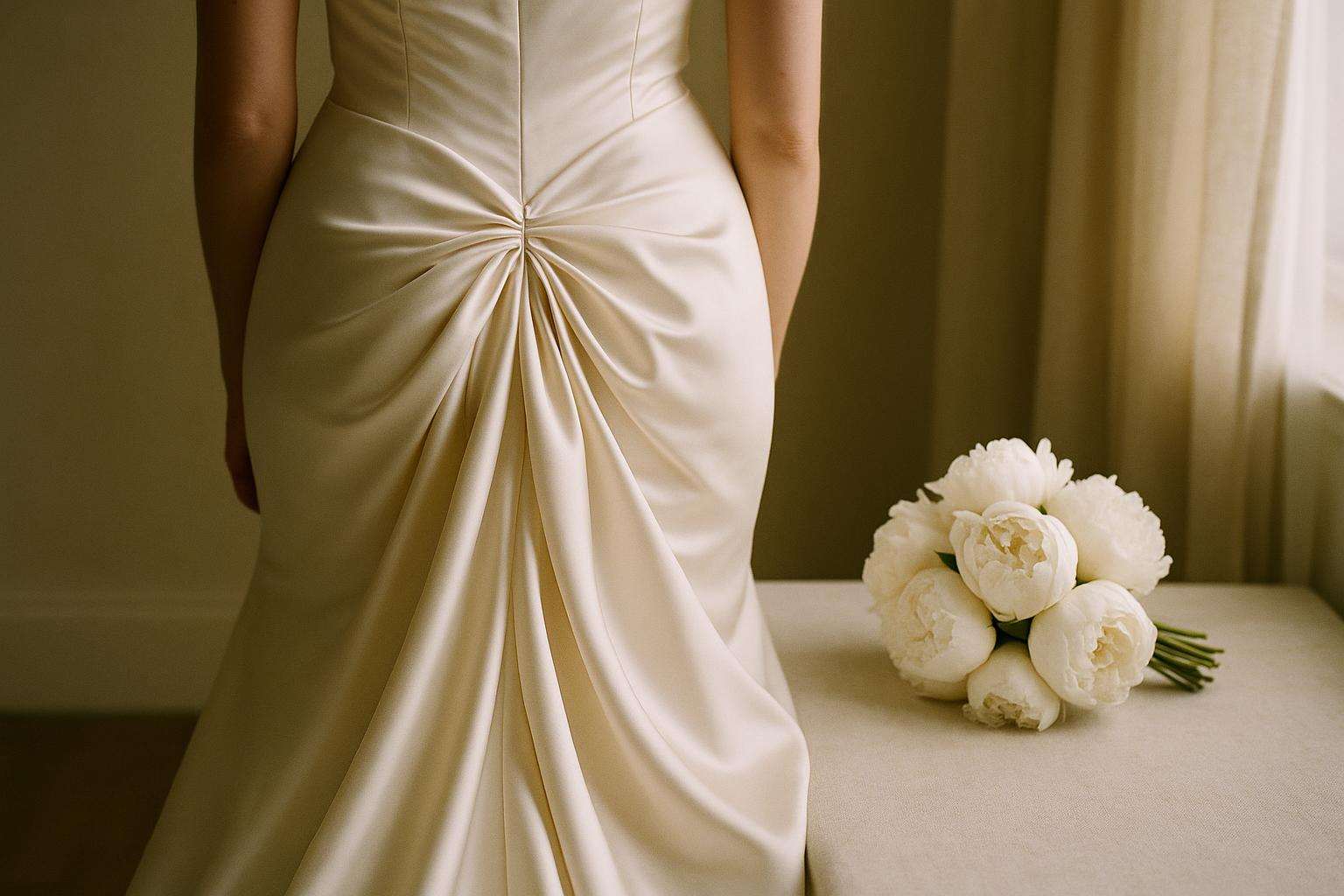
wedding dress bustle types 2026American bustle vs French bustlewedding gown alteration costbridal train bustle guideAustrian bustleRoyal bustle wedding
The quick verdict
Every bride with a train needs a bustle. But which type is right for your gown, your back embellishments, and your reception dancing ambitions? Here is every style explained.
- Best overall
- French (Under) Bustle — The most elegant and widely flattering bustle for brides who have embellishments or lace on the back panel — it keeps the design fully visible while lifting the train cleanly and seamlessly.
- Best value
- American (Over) Bustle — The most common, most intuitive to fasten, and most forgiving across a wide range of gown types — at the lowest cost of any bustle style.
- Best for A cathedral-length train on a formal ballroom gown
- Royal (Victorian) Bustle — The Royal bustle gathers a long, heavy train at multiple architectural points that spread its weight and create a truly dramatic, regal reception silhouette.
How we evaluated
This guide draws on expert guidance from Moonlight Bridal, The Knot, Inspired Bride, and Durand Bridal, as well as on the practical alteration knowledge in our research dossier compiled from bridal industry sources (2024–2026). Cost estimates reflect 2025–2026 U.S. industry averages; urban markets (New York City, Los Angeles, Chicago) typically run 20–40% above these ranges. Every bustle style listed is evaluated on: compatibility with common gown silhouettes; impact on back embellishments and lace; ease of fastening on the wedding day; cost; and the visual effect created in reception photographs. This is an independent editorial guide — we took no payment from any brand or seamstress.
- Silhouette compatibility. Which gown shapes and train types the bustle works with naturally without disrupting the garment's architecture.
- Embellishment preservation. Whether the bustle keeps back lace, beading, and embroidery visible after it is fastened.
- Ease of fastening. How quickly and reliably the bustle can be fastened during cocktail hour by a bridesmaid with one practice run and a reference video.
- Visual result. The silhouette the bustle creates from behind — layered, seamless, draped, or minimal — and how it photographs.
- Cost. The typical alteration cost range for the bustle style, separate from other gown alterations.
Rating scale: Ratings are on a 1–5 scale in half-point increments.
Last verified .
At a glance
| # | Name | Rating | Best for | Pricing |
|---|---|---|---|---|
| 1 | American (Over) Bustle | 4.5 | Brides with A-line, ballgown, or mermaid silhouettes whose gown's key design elements are on the front or sides rather than the back | $75–$150 |
| 2 | French (Under) Bustle | 5.0 | Brides with gowns featuring significant back embellishment, illusion lace panels, open backs, or any design element that should remain visible throughout the reception | $100–$250 |
| 3 | Austrian Bustle | 4.0 | Brides with lightweight chiffon or georgette gowns who want a reception bustle that reads as artful and intentional rather than merely functional | $150–$350 |
| 4 | Royal (Victorian) Bustle | 4.0 | Brides with cathedral or royal chapel trains at formal ballroom or church receptions who want a reception silhouette as impressive as the ceremony look | $200–$400 |
| 5 | Ballroom Bustle | 3.5 | Brides with full ballgown silhouettes who want a reception look that appears deliberately floor-length without any visible gathering or lift | $100–$250 |
| 6 | Bow Bustle | 3.5 | Brides with a romantic, feminine, or coquette aesthetic whose gown silhouette is A-line or modified ballgown | $100–$200 |
| 7 | Wristlet / Loop Bustle | 3.0 | Brides with shorter sweep or chapel trains who want the most discreet, fastest-to-execute, and most affordable bustle solution | $50–$100 |
American (Over) Bustle
The most widely used bridal bustle — a layered cascade over the skirt that works with nearly every gown
Editor's pick
The American bustle, also called the over-bustle, is the most popular bustle style in the United States and for good reason: it is versatile, visually beautiful, and relatively simple to execute. The train is gathered and fastened overtop the back of the skirt using hooks, buttons, or fabric loops, creating a layered, cascading effect that adds dimension and movement to the gown. The result has a celebratory quality — the train does not disappear but instead becomes a decorative feature of the reception look. It suits A-line, ballgown, and mermaid silhouettes beautifully, and works with most fabric weights from chiffon to satin. The attachment points can be configured as a single dramatic pickup or multiple points for a more sculpted effect — your seamstress will advise based on the train's weight and the fabric's behavior. Fastening is intuitive: one or two anchor buttons or hooks that a practiced bridesmaid can manage in under two minutes. The honest trade-off is that the over-bustle sits above the skirt's surface, which means it partially conceals any embellishments or lace on the back panel. If the most beautiful feature of your gown is its back embroidery, the French bustle preserves more of that visual. Cost estimate: $75–$150 for a standard American bustle.
Strengths
- Compatible with most gown silhouettes and fabric weights — the most versatile bustle option
- Creates a beautiful layered cascade that adds visual interest to the reception look
- Simple to fasten — a brief practice at the final fitting is sufficient
Weaknesses
- Sits overtop the skirt, partially concealing back embellishments and lace embroidery
- Best for
- Brides with A-line, ballgown, or mermaid silhouettes whose gown's key design elements are on the front or sides rather than the back
- Pricing
- $75–$150
Source: The Knot — Wedding Dress Bustle Types and How They Work · Visit American (Over) Bustle
French (Under) Bustle
The most seamless and elegant bustle — the train tucks underneath, keeping every back detail fully visible
The French bustle, also called the under-bustle, is the style that bridal designers and seamstresses most frequently recommend for gowns with significant back embellishment, illusion lace, or structured back design. Rather than lifting the train over the exterior of the skirt, the French bustle tucks the train underneath the dress and secures it with interior ribbons or fabric ties attached to the inner layers. The result, viewed from behind, is seamless: the back of the gown looks virtually unaltered, with every bead, every inch of lace, and every structural detail of the back design fully visible. For brides who chose their gown specifically for the beauty of the back, this is the only bustle that preserves that investment. It is particularly effective on mermaid and trumpet silhouettes, where the French bustle creates a smooth, voluminous sweep at the floor that maintains the fitted silhouette through the body. The two honest caveats: the French bustle is more complex to fasten than the American, requiring a bridesmaid who has practiced carefully and ideally has a step-by-step video from the final fitting. And it is not ideal for gowns with embellishments at the hemline itself, as those details are partially folded under when the train is tucked. Cost estimate: $100–$250 depending on the number of tie points and the weight of fabric being managed.
Strengths
- Keeps every back embellishment, lace panel, and design detail fully visible after the train is bustled
- Creates a seamless, polished silhouette that reads as though the gown was always floor-length
- Particularly elegant on mermaid and trumpet silhouettes
Weaknesses
- More complex to fasten than the American bustle — a practice run and a reference video from the final fitting are genuinely necessary
- Best for
- Brides with gowns featuring significant back embellishment, illusion lace panels, open backs, or any design element that should remain visible throughout the reception
- Pricing
- $100–$250
Source: Inspired Bride — 9 Bustle Styles to Showcase Your Wedding Gown's Beauty · Visit French (Under) Bustle
Austrian Bustle
A drawstring-gathered vertical ruche that creates a distinctive, artistic silhouette — particularly beautiful in lightweight fabrics
The Austrian bustle is the most architecturally distinctive of the standard bustle styles, and it tends to appeal to brides who see the bustle itself as a design element rather than a purely functional solution. Rather than gathering the train horizontally overtop or underneath the skirt, the Austrian bustle draws the fabric together vertically through a drawstring mechanism, creating a ruched, textured column of fabric down the center back. The effect is sculptural and uniquely artistic — it transforms the train into a gathered textile composition rather than a hidden or layered fold. The Austrian bustle is particularly effective on lightweight fabrics like chiffon, georgette, and soft satin, where the drawstring mechanism produces a flowing, organic ruche rather than a stiff gather. On heavier fabrics, the result can look forced. It is growing in popularity for 2026 brides in the bohemian, editorial, and garden categories who want a reception look that is genuinely different from the expected. The complexity caveat is real: the drawstring mechanism requires careful training and a bridesmaid who can manage it efficiently during cocktail hour. Cost estimate: $150–$350, with the higher end reflecting the labor involved in creating a clean, even vertical gather in delicate fabrics.
Strengths
- Creates a genuinely distinctive, sculptural silhouette that reads as an intentional design choice rather than a practical concession
- Particularly beautiful in lightweight chiffon and georgette fabrics
- The ruched vertical creates a slimming effect that flatters most body types
Weaknesses
- Not recommended for heavier fabrics — structured satin and multi-layer skirts produce a stiff, bulky gather rather than the intended flowing ruche
- Best for
- Brides with lightweight chiffon or georgette gowns who want a reception bustle that reads as artful and intentional rather than merely functional
- Pricing
- $150–$350
Source: Moonlight Bridal — 9 Types of Wedding Dress Bustles · Visit Austrian Bustle
Royal (Victorian) Bustle
The most dramatic bustle style — multiple architectural gather points that create a regal, draped reception silhouette
The Royal bustle, sometimes called the Victorian bustle, is designed for the most formal weddings with the most elaborate trains. Rather than gathering the train at one or two points, the Royal bustle draws the fabric into multiple pickup points across the back width, creating a series of draped folds that cascade from the waistline or upper back downward in a structured, architectural composition. The effect is unmistakably formal and deeply impressive — it transforms a cathedral train into a sculptural reception element rather than simply lifting it out of the way. According to Nanina's in the Park, the Royal bustle "is the epitome of regal luxury," and it reads that way in photographs: the back of a Royal-bustled gown looks finished and deliberate, with none of the informality of a simply gathered train. It suits very long trains — cathedral and royal chapel lengths — that carry enough fabric to create the multiple folds required. The meaningful limitation is complexity: fastening a Royal bustle takes more time and confidence than any other style, requires clear labeling of each attachment point by the seamstress, and benefits from a very organized, calm bridesmaid. Cost estimate: $200–$400, reflecting the significant labor involved.
Strengths
- Creates the most dramatic and formal reception silhouette of any bustle style — appropriate for ballrooms and cathedral venues
- Multiple gather points distribute the weight of a heavy train more comfortably than a single attachment
- Reads as regal and intentional in every reception photograph
Weaknesses
- The most time-consuming bustle to fasten — requires the most bridesmaid preparation and the clearest labeling from the seamstress
- Best for
- Brides with cathedral or royal chapel trains at formal ballroom or church receptions who want a reception silhouette as impressive as the ceremony look
- Pricing
- $200–$400
Source: Naninas in the Park — Bustle Options for Your Wedding Dress · Visit Royal (Victorian) Bustle
Ballroom Bustle
The only bustle that completely hides the train — creating the illusion of a floor-length gown with no train at all
The ballroom bustle is the most invisible of all bustle styles — and that invisibility is precisely its purpose. Multiple internal attachment points conceal the train entirely beneath the skirt, so that from any angle, the gown appears to be a traditional floor-length dress with no visible train. For brides who want their reception look to feel different from the ceremony look without any dramatic gathering or draping, the ballroom bustle delivers a clean, contained transformation. It is particularly suited to full ballgown silhouettes with significant skirt volume, where the train can fold into the existing fullness without adding bulk. The limitation is that the ballroom bustle requires the train to fold inward, which means some of the skirt's original sweep is lost — the floor circumference of the gown at the reception is slightly smaller than at the ceremony. For brides who love the train and want it to remain an aesthetic element, one of the other styles will be more satisfying. For brides who simply want the train gone for the reception without any transition drama, the ballroom bustle is exactly right.
Strengths
- Completely conceals the train — the reception look appears deliberately train-free
- Eliminates all train management for the bride and wedding party
- Clean and seamless from every angle
Weaknesses
- Reduces the floor circumference of the skirt slightly — brides who love the fullness of their train at the ceremony may find the reception silhouette feels slightly diminished
- Best for
- Brides with full ballgown silhouettes who want a reception look that appears deliberately floor-length without any visible gathering or lift
- Pricing
- $100–$250
Source: Durand Bridal — Choosing the Right Bustle for Your Wedding Dress · Visit Ballroom Bustle
Bow Bustle
The American bustle with a romantic decorative bow — a feminine detail that becomes a focal point of the reception look
The bow bustle is a variation of the American over-bustle in which the gathering points are concealed with or replaced by decorative bows or sashes. Where the standard American bustle uses hidden hooks and loops, the bow bustle makes a feature of the attachment — the bow becomes an intentional design element that adds a romantic, whimsical quality to the back of the gown. For brides with a soft, feminine, or coquette aesthetic, the bow creates a detail that photographers specifically seek out for back shots during the reception. The bow can be constructed in the gown's own fabric (the most seamless look), in a contrasting ribbon for a fashion-forward moment, or in a structured satin that holds its shape throughout the evening. The bow bustle works best on A-line and modified ballgown silhouettes where the back has moderate volume to frame the bow attractively. Very slim or sheath silhouettes can make the bow feel proportionally large, and very full ballgowns can make a single bow feel proportionally small. A qualified seamstress can adjust the bow's scale to the gown.
Strengths
- Transforms the bustle into a decorative design element rather than a purely functional one
- Particularly photogenic in reception back shots — photographers are drawn to the detail
- Adaptable in scale, fabric, and color to match the gown and overall aesthetic
Weaknesses
- A bow that is not proportionally scaled to the gown can look either overwhelmed or overwhelmingly large — scale must be considered carefully with the seamstress
- Best for
- Brides with a romantic, feminine, or coquette aesthetic whose gown silhouette is A-line or modified ballgown
- Pricing
- $100–$200
Source: Inspired Bride — 9 Bustle Styles to Showcase Your Wedding Gown's Beauty · Visit Bow Bustle
Wristlet / Loop Bustle
The simplest, fastest, and most affordable bustle — a minimal lift using pre-sewn loops and buttons
The wristlet or loop bustle is the most minimal of all bustle styles: small fabric loops are pre-sewn into the underside of the train, which hook onto matching buttons sewn into the back seam of the gown. The bride can fasten it herself by slipping a loop over a wrist, pulling it back to hook on a button — giving the style its common name. The result is a clean, modest lift that keeps the train off the floor without adding any cascade, drape, or visual complexity to the back of the gown. For brides with shorter chapel or semi-cathedral trains who simply want the train managed quietly and without drama, the wristlet is perfectly adequate. Its primary limitation is capacity: it is not suitable for cathedral or royal chapel trains, where the weight and volume require more anchor points and structural engineering than simple loop-and-button can provide. For a sweep or short chapel train, however, the wristlet is a reliable, understated, and inexpensive solution that executes in seconds. Cost estimate: $50–$100.
Strengths
- The fastest bustle to execute — seconds, not minutes, with minimal practice
- The most affordable bustle alteration at any skill level
- Completely invisible from the exterior — the back of the gown looks untouched
Weaknesses
- Suitable for shorter trains only — sweep, chapel, and short semi-cathedral; not adequate for cathedral or royal chapel lengths where weight and volume exceed what loops and buttons can reliably manage
- Best for
- Brides with shorter sweep or chapel trains who want the most discreet, fastest-to-execute, and most affordable bustle solution
- Pricing
- $50–$100
Source: Moonlight Bridal — 9 Types of Wedding Dress Bustles · Visit Wristlet / Loop Bustle
Frequently asked
Do I need a bustle on my wedding dress?
If your gown has a train of any length beyond a sweep, a bustle is very strongly recommended for the reception. Without one, the train will be underfoot during every dance, dragged across carpeting, and requiring constant management by a bridesmaid who is also trying to enjoy your wedding. Even a minimal wristlet loop bustle — which costs $50–$100 and takes seconds to fasten — transforms your reception experience. The only bride who can skip a bustle entirely is one whose gown has no train at all (a true floor-length dress with no extended fabric at the back) or one who has made a deliberate and fully considered decision to remove the train entirely by having it cut off as a post-wedding alteration.
Which bustle is best for a mermaid wedding dress?
The French under-bustle is almost universally recommended for mermaid and trumpet silhouettes, and for a clear reason: it works with the gown's fitted hip structure rather than against it. The American over-bustle can add unwanted bulk to a silhouette that is specifically designed to be streamlined through the body, while the French bustle tucks the train cleanly beneath the skirt and creates a voluminous floor-length sweep that maintains the fitted bodice and hip. A secondary option is the sling bustle, which lifts one side of the train asymmetrically at the hip — a modern, fashion-forward choice for editorial mermaid brides. Always confirm the recommendation with your seamstress after she has assessed the specific gown's construction.
How do I prepare my bridesmaid to bustle my dress on the wedding day?
The single most important preparation step is to record a short video at your final fitting while the seamstress demonstrates the bustle procedure. Have your designated bridesmaid watch the video before the wedding day. At the fitting itself, have the bridesmaid practice the full procedure a minimum of two times: once with coaching from the seamstress, and once without. Ask the seamstress to label each bustle point with a small numbered or colored thread marker. The label system means that on the wedding day, your bridesmaid is matching numbered points to numbered hooks rather than guessing. Allocate 10–15 minutes at the cocktail hour transition for the bustle — this is not a 30-second task, particularly for French or Royal styles. Rushing the bustle is how gowns get stressed at attachment points.
Can I have more than one bustle style on the same gown?
Yes, technically — a skilled seamstress can create a hybrid bustle using elements of two styles, such as an American bustle with bow accents, or a French bustle with an additional loop at a different point. Whether this is advisable depends entirely on the gown's construction, train weight, and the practical complexity of managing the result on the wedding day. In most cases, a single well-chosen bustle style executed cleanly is superior to a hybrid that attempts to combine features. The exception is brides with very long, multi-layered trains where a combination of a French under-bustle for the main train and a secondary American attachment for an additional overskirt layer is occasionally the right structural solution. Discuss this with your seamstress specifically; it is not a standard request and requires an experienced bridal alteration specialist.
What if I do not want any bustle at all?
You have two primary alternatives. The first is a detachable train: some gowns are designed with a train that attaches via hooks and snaps, which can simply be removed after the ceremony and handed to a bridesmaid to carry or store. This option is only available if the gown was originally designed with a detachable train. The second option is to have the train cut and re-hemmed — a post-wedding alteration that creates a shorter reception dress from the same gown. This is a permanent, irreversible decision and should only be made after the wedding, with a qualified bridal seamstress, when you are certain you do not want to preserve the original gown's length for sentimental reasons. Both options require planning in advance; neither should be decided at the final fitting.