Fashion & Beauty
Wedding Dress Alterations Cost: A 2026 Breakdown
Most brides budget for the dress and forget to budget for the alterations — and discover the oversight when they are six weeks from the wedding. Here is every alteration type, what it costs, and how to plan so there are no surprises.
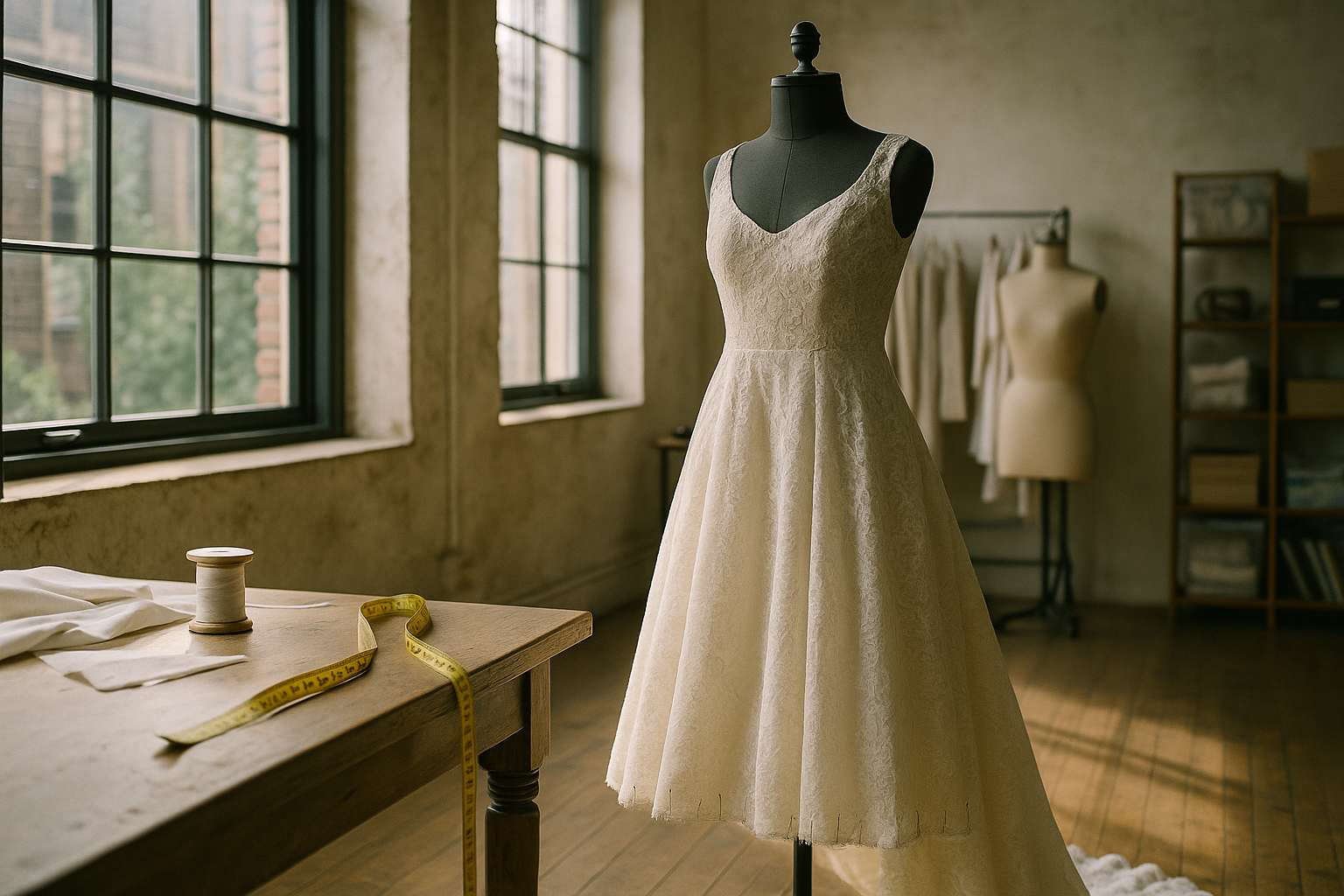
Wedding dress alterations cost $300–$600 for most brides in 2026, rising to $600–$1,200 for complex, beaded, or heavily structured gowns. Budget 15–20 percent of your dress price for alterations before you fall in love with any gown, and book your seamstress the same week you order — not when your gown arrives.
Every year, brides purchase a gown at the ceiling of their dress budget and discover — four months later when the dress arrives — that alterations will cost several hundred dollars more. This is not an unusual experience. It is one of the most common and most avoidable budget surprises in all of wedding planning, and it happens because the alteration cost is not quoted at the boutique counter alongside the dress price.
This guide exists to close that gap: a complete accounting of what alterations cost, what drives those costs, what to budget, and how the fitting process works from first appointment to final pickup. The data is drawn from The Knot's bridal alteration cost reporting, Zola's 2026 wedding spending data, and pricing reported by independent bridal alteration studios in markets across the United States.
What do individual wedding dress alterations cost in 2026?
The total alteration bill for most brides is a sum of several individual modifications rather than a single procedure. Understanding what each alteration actually costs allows you to anticipate your specific total based on the gown you have purchased and the body you are fitting it to.
| Alteration Type | Typical Cost Range | Complexity Drivers |
|---|---|---|
| Hem (simple fabric) | $70–$150 | Straightforward chiffon, satin, or crepe |
| Hem (lace, chiffon, multi-layer) | $150–$300 | Matching lace patterns; multiple underlay layers |
| Bodice: taking in or letting out | $100–$400 | Boning removal and reinsertion; multiple size changes |
| Waist suppression | $75–$200 | Depends on gown construction and fabric type |
| Strap / shoulder adjustment | $40–$100 | Embellished straps cost more to preserve |
| Bustle (American / wristlet) | $75–$150 | Simple fastening system; most common style |
| Bustle (French, Austrian, Royal) | $150–$400 | Complex internal tuck systems; multiple attachment points |
| Adding sleeves (cap, flutter) | $75–$200 | Fabric match and attachment to existing bodice |
| Adding sleeves (full, structured) | $150–$400 | Illusion mesh, lace, or crepe; boning integration |
| Neckline modification | $100–$350 | Raising or lowering; adding illusion or lace panel |
| Adding bra cups | $20–$50 | Straightforward insertion into existing bodice |
| Adding pockets | $50–$150 | A-line and ballgown skirts accommodate more easily than fitted silhouettes |
| Shortening train | $150–$300 | Preserving lace or embellishment at train edge |
| Adding modesty panel | $100–$300 | Illusion back or neckline insert; fabric match |
A typical bride requires hem adjustment, bodice fitting, and a bustle — a combination running $300 to $600 in most markets. A bride with a heavily beaded mermaid gown who also wants added illusion sleeves and a complex French bustle may spend $700 to $1,200. Urban markets run 25 to 40 percent above these figures.
What does the complete fitting timeline look like?
The fitting schedule for a wedding gown is more structured than most brides anticipate going in. Understanding the standard schedule — and the consequences of deviating from it — prevents the most common timeline mistakes.
First fitting (8–12 weeks before the wedding): The seamstress assesses the gown on your body in the exact shoes and undergarments you will wear on the day. She marks adjustments with pins, discusses the plan for every modification, and provides a written itemized cost estimate. Brides should photograph the pinning in detail so subsequent appointments can reference it accurately. This is the appropriate moment to discuss bustle style — the seamstress needs to plan for it structurally from the first fitting, not add it as an afterthought at the final appointment.
Second fitting (4–6 weeks before): Major structural work is complete. The hem is preliminary, the bodice is fitted, and the bustle may be partially constructed. Fine-tuning begins: minor bodice adjustments, strap refinements, and additional hem corrections. This fitting typically reveals a short list of small items to address at the final appointment.
Third or final fitting (1–2 weeks before): The gown should fit. This appointment is for confirmation: sit down, stand up, walk, and breathe deeply. Test the bustle completely — practice the full procedure with the person who will manage it on your wedding day, and record a brief video of the process for reference. Verify the closure fastens smoothly, the hem clears your shoes at every point, and there are no visible stress marks or alteration lines.
What are bustle options and why do they matter?
The bustle is the mechanism that lifts and secures a train after the ceremony so you can move, dance, and embrace freely during the reception. Every bride with a train should plan for one, and the bustle type affects both the cost and the visual result at your reception.
The American bustle (also called an over-bustle) gathers the train and fastens it overtop the back of the skirt using hooks and buttons — creating a cascading, layered effect. It works on almost every silhouette and costs $75 to $150. The French bustle (under-bustle) tucks the train beneath the skirt and secures it with interior ribbons — the result is seamless and preserves full visibility of back embellishments. It costs $150 to $250 and is ideal for mermaid and trumpet silhouettes. The Austrian bustle uses a drawstring mechanism to gather the train vertically into a ruched, textural look — artistic and distinctive, at $150 to $300. The Royal bustle gathers the train at multiple points across the back for an architectural, formal effect — appropriate for full cathedral trains at formal venues, at $200 to $400.
Always practice the bustle multiple times at your final fitting, designate a specific bridesmaid or family member to manage it on the wedding day, and record a step-by-step video before leaving that last appointment. A bustle that no one knows how to fasten on the wedding day is among the most preventable and most stressful day-of complications. The $75 to $150 spent on even the simplest bustle is genuine insurance for your reception freedom.
Frequently asked
How much do wedding dress alterations cost on average in 2026?
According to The Knot's 2026 Real Weddings Study and reported pricing from bridal alteration studios nationwide, the average total alteration cost for a wedding dress in 2026 ranges from $300 to $600 for a typical bride — meaning a gown with standard modifications such as hemming, bodice fitting, and a bustle. More complex gowns — those with heavy beading, lace overlays, multiple tulle layers, cathedral trains, or significant structural customizations like added sleeves or a modified neckline — routinely cost $600 to $1,200 or more in total alteration work. At the couture end, brides with heavily embellished designer gowns report alteration bills of $800 to $1,500-plus, particularly in major metropolitan markets where skilled specialist labor is priced accordingly. The most important planning rule: budget 15 to 20 percent of your dress purchase price for alterations before you fall in love with any gown. On a $2,000 dress, that means setting aside $300 to $400 as a floor estimate; on a $4,000 gown, $600 to $800 should be reserved before the dress is ever ordered.
What are the most common individual wedding dress alterations and what do they cost?
Individual alteration costs vary by the complexity of the modification, the fabric of the gown, and the market in which you are having work done. Hemming is the most universal alteration: a straightforward hem on a simple fabric runs $70 to $150, while a multilayer hem involving lace, chiffon, or horsehair trim costs $150 to $300. Taking in or letting out the bodice typically runs $100 to $400 depending on how many zones require adjustment and whether the gown has boning or corset construction. Waist suppression runs $75 to $200. Strap and shoulder adjustments cost $40 to $100. A bustle — the mechanism that lifts the train for dancing — adds $75 to $150 for a simple American bustle and $150 to $400 for a complex French or Austrian style. Adding sleeves ranges from $75 to $200 for cap or flutter styles and $150 to $400 for full structured sleeves. Neckline modifications cost $100 to $350. Adding bra cups costs $20 to $50. Inserting in-seam pockets runs $50 to $150. Most brides require several of these modifications simultaneously, which is why the realistic total tends to land in the $300 to $600 range for a typical gown.
When should you start wedding dress alterations and how many fittings will you need?
The responsible minimum timeline for starting alterations is 8 to 12 weeks before your wedding date. This window allows for the standard three-fitting schedule: a first fitting for assessment and major structural work (8 to 12 weeks out), a second fitting for fine-tuning (4 to 6 weeks out), and a final fitting for confirmation and bustle testing (1 to 2 weeks out). Most brides need three to four fittings for a typical gown; heavily embellished or custom gowns may require five to eight. The single most consequential mistake brides make with alterations is starting too late. Seamstresses with strong bridal reputations book 8 to 10 weeks in advance during peak season (April through September). Arriving at a studio with fewer than 6 weeks to the wedding triggers a rush premium of 25 to 50 percent added to the base alteration cost — an avoidable expense. Book your alteration appointment the same week you order your gown, even though your gown will not arrive for months. The appointment can always be rescheduled; you cannot create lead time that has already passed.
What can wedding dress alterations fix — and what can they not change?
A skilled bridal seamstress can accomplish a great deal within the structure of any gown. Taking a gown in by one to four sizes in the bodice is generally achievable, and experienced tailors can often manage two full sizes through the bodice, waist, and hip. Letting a gown out is limited by seam allowance — most gowns hold only one to two inches of fabric in the seams, and expansion beyond that requires adding panels. Any hem can be shortened, though lengthening one requires added fabric that must match the original precisely. Straps can be shortened, converted, or removed; necklines raised, lowered, or reshaped; sleeves added in almost any style. What alterations cannot reliably do is change the fundamental silhouette (a mermaid cannot become a ballgown) or restore fit after weight changes of more than two to three sizes. The governing principle: alterations perfect the gown you chose — they do not transform it into a different one. Choose a silhouette you love, then tailor it to your body.
Should you use the boutique's in-house alteration service or an independent seamstress?
Many bridal boutiques offer in-house alteration services, but the pricing and quality vary considerably. A common practice is that boutiques outsource alterations to independent contractors and add a meaningful markup — the same seamstress who charges $350 independently may cost $550 when booked through the boutique, because the boutique adds a coordination fee. The boutique's value proposition is convenience and accountability: if something goes wrong, the boutique is responsible. An independent seamstress with strong bridal references may offer better pricing and more personalized attention — and she is typically just as accountable because her reputation depends on every gown she returns. The most important criterion is not boutique versus independent: it is the individual seamstress's specific experience with bridal construction, particularly the specific silhouette and fabric of your gown. Ask specifically about experience with your gown's construction style, request to see examples of similar work, and read recent reviews from other brides. Bridal gowns have boning, internal corsetry, layered skirts, and delicate embellishments that a general tailor may not be equipped to manage. Experience matters more than affiliation.
How do alteration costs vary by region in the United States?
Regional variation in bridal alteration pricing tracks the cost of skilled labor in your market. In New York City, San Francisco, and Los Angeles, bridal alterations run 25 to 40 percent above national averages: a basic hem that costs $120 in a Midwest studio may cost $160 to $180 in Manhattan, and a complex full alteration package that runs $500 in Atlanta may run $700 to $900 in New York. Mid-Atlantic and metropolitan areas on the coasts are consistently higher. The Midwest, Southeast, and Mountain West typically offer the most competitive pricing for comparable quality. Destination wedding brides face a particular challenge: resort and vacation areas often have very limited bridal alteration specialists, forcing couples to either work with a trusted seamstress at home and travel with a partially altered gown, or accept premium pricing from the limited local options. In destination scenarios, planning to complete all alterations with a seamstress in your home market is almost always the better choice logistically and financially.