Fashion & Beauty
Wedding Dress Fabric Types: The Complete Guide for 2026
Silk, tulle, crepe, lace, satin, mikado, chiffon — every fabric a bride needs to understand before she shops, with seasonal guidance, cost ranges, and a no-regrets decision framework from bridal industry experts.
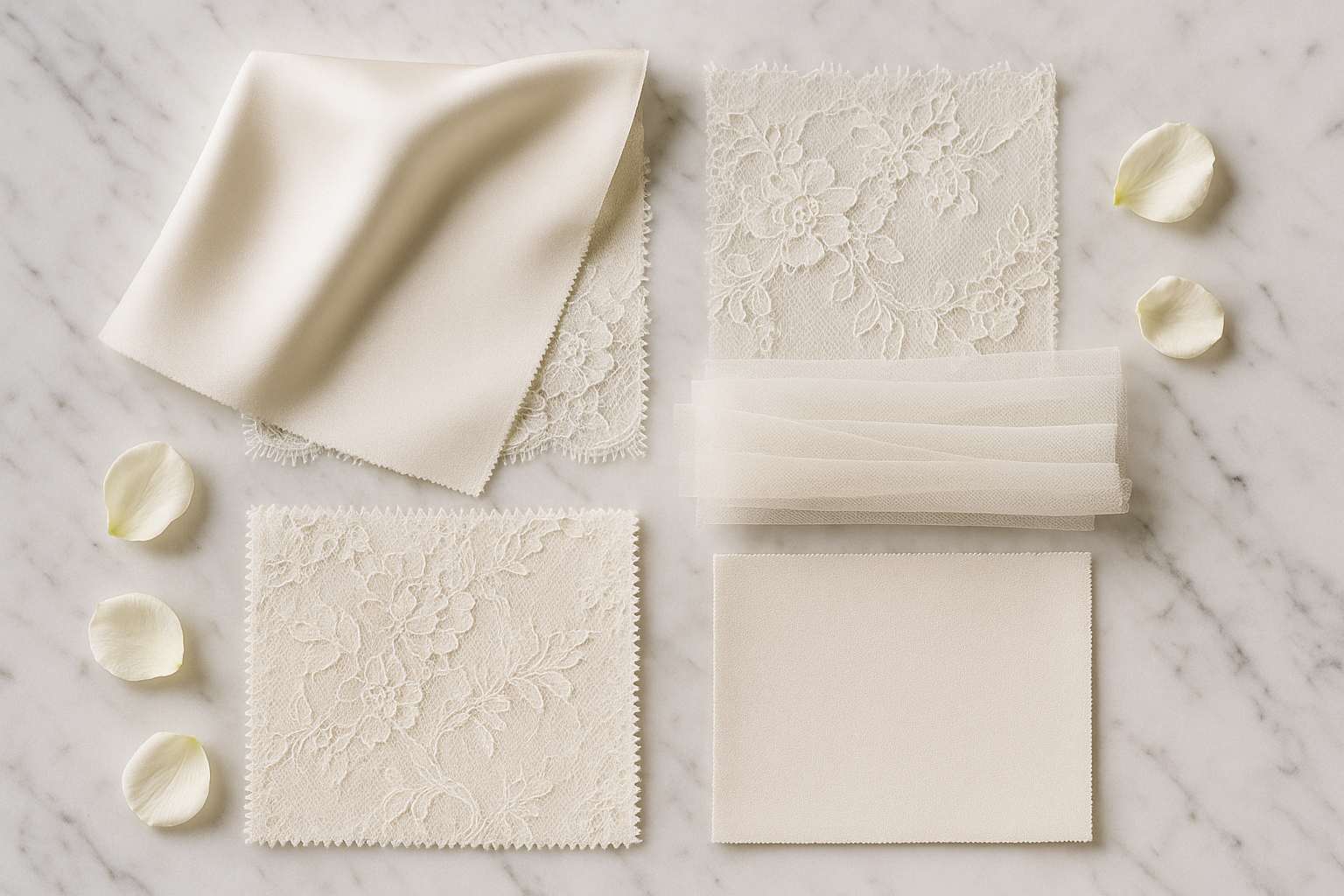
Wedding dress fabric determines how a gown drapes, photographs, feels after eight hours of wear, and performs in your specific season and venue. The six core bridal fabrics — silk, lace, tulle, crepe, satin, and mikado — each serve a different silhouette, season, and aesthetic. Understanding them before your first boutique appointment is the single best preparation you can make.
The average American bride spends $2,100 on her gown before alterations, according to The Knot's 2025 Real Weddings Study. It is almost always the largest single apparel purchase of her life. And yet most brides walk into their first boutique appointment without knowing the difference between silk charmeuse and crepe-back satin, between Chantilly lace and Alençon, between English net and illusion tulle.
This guide is designed to fix that. Fabric knowledge is not technical jargon — it is the vocabulary that lets you tell a boutique consultant exactly what you want, evaluate why one gown feels different from another, and make a confident decision rather than a beautiful-but-confused one.
What are the core wedding dress fabric types every bride needs to know?
There are six fabric families that account for the vast majority of wedding gowns sold in bridal boutiques today. Each has a distinct drape, weight, sheen, price range, and optimal use case.
Silk and Silk-Weave Variants
Silk is the prestige fiber of bridal fashion — breathable, luminous, and possessed of a drape that synthetic fabrics consistently fail to replicate. When a bride describes a gown as "liquid" or "weightless," she is usually describing silk. Within the silk family, the key variants are:
- Silk Charmeuse: Ultra-smooth face, slightly matte back. The liquid-drape bias-cut gown is almost always charmeuse. Delicate; requires careful handling.
- Silk Satin: High-luster face; more structured than charmeuse. The classic ballgown and fit-and-flare fabric. Photographs magnificently in natural light.
- Crepe-Back Satin: One side shiny (satin), one side matte (crepe). Versatile; many designers use it reversibly or for architectural interest.
- Mikado: A slightly heavier silk blend with a medium sheen. Holds shape without boning; ideal for structured modern silhouettes. The fabric of choice for modern bridal designers seeking structured drama without steel boning.
- Organza: Sheer, crisp, high-volume. Used for overlays, sleeves, full skirts, and the theatrical oversized sleeves trending on 2026 runways.
- Chiffon: Lightweight, multi-layered, and flowing. The signature fabric of bohemian, garden, and destination gowns. Extraordinarily forgiving in outdoor photography.
Cost indicator: Silk-content gowns typically begin at $2,500–$3,500. Silk charmeuse-based designer gowns from houses like Vera Wang or Oscar de la Renta routinely exceed $8,000–$15,000. Note that the 2025–2026 tariff environment has added approximately 20% to the retail cost of imported silk gowns — budget accordingly.
Lace
Lace is the most-used embellishment and overlay in bridal fashion. According to The Knot's 2024 Fashion and Attire Study, 46% of brides wore lace gowns — more than any other fabric category. The three types most commonly seen in bridal boutiques:
- Chantilly Lace: Fine, delicate, with a tulle-like net background and airy floral patterns. Lightweight; best for full-coverage romantic gowns where you want the lace to feel soft and floating.
- Alençon Lace: Heavier net base; intricate motifs; scalloped edges; often corded for dimensional effect. The standard for couture bridal lace. Photographs with extraordinary detail. Per-yard prices range from $150–$400 for hand-worked versions.
- Guipure (Venetian) Lace: No net background — the pattern floats on itself. Graphic, modern, substantial. Increasingly popular in contemporary minimalist bridal design.
Tulle
Tulle is the foundation of the fairy-tale ball gown: a lightweight, fine-mesh netting that creates volume without weight. It is one of the most beloved fabrics in bridal design precisely because it allows enormous skirt volume while remaining comfortable to wear. The key variants:
- Silk Tulle: Softer, drapier, more luminous than synthetic alternatives. Photographically spectacular outdoors. Significantly more expensive — silk-tulle ball gowns start around $4,000.
- Nylon/Polyester Tulle: Most affordable; holds shape well; slightly stiffer. The standard for most bridal boutique ball gowns at $800–$2,000.
- Illusion Tulle: Ultra-fine, nearly transparent. Used for illusion necklines, sleeves, and backs — the fabric that allows a dramatic open-back effect while meeting coverage requirements.
- Glitter Tulle: Embedded metallic micro-glitter. Catches direct light dramatically; most appropriate for evening, indoor, and winter weddings.
Crepe
Crepe has become the signature fabric of modern minimalist bridal design. Its subtly pebbled, matte surface photographs cleanly under any lighting, molds to the body with elegant precision, and is the default fabric for the sleek fit-and-flare and column silhouettes that have dominated contemporary runways. Silk crepe drapes with extraordinary refinement; polyester crepe achieves a similar effect at a fraction of the cost. Important caveat: crepe does not forgive undergarment lines. A seamless, smooth foundation garment is non-negotiable with a crepe gown.
Satin
Satin is technically a weave finish rather than a fiber — it can be woven from silk, polyester, rayon, or blends — but in bridal contexts, it refers to the high-sheen, smooth-faced fabric that remains one of the most-requested bridal materials. Duchess satin (very heavy and structured) is the classic ballgown choice; polyester satin offers similar sheen at significantly lower cost. The practical limitation of polyester satin in warm weather is real: it retains body heat and is less breathable than silk or crepe. For summer outdoor weddings, ask specifically whether a satin-faced gown is silk-lined or polyester-lined.
| Fabric | Weight | Sheen | Best Silhouette | Best Season | Price Tier |
|---|---|---|---|---|---|
| Silk Satin | Medium | High | Ballgown, A-line | Fall/Winter | $$$ |
| Crepe | Light–Med | Matte | Sheath, Fit-and-Flare | Year-round | $–$$$ |
| Chiffon | Light | Low | A-line, flowing | Spring/Summer | $ |
| Tulle (synthetic) | Very light | None–slight | Ballgown | Year-round | $ |
| Tulle (silk) | Light | Subtle | Ballgown, A-line | Year-round | $$$ |
| Alençon Lace | Medium | Low | A-line, sheath overlay | Fall/Winter | $$$ |
| Chantilly Lace | Light | Low | Full-coverage, A-line | Spring/Summer | $$–$$$ |
| Mikado | Med-Heavy | Medium | Structured modern | Fall/Winter | $$$ |
| Organza | Light | Crisp sheen | Volume overlay, sleeves | Spring/Summer | $$–$$$ |
How does season affect wedding dress fabric choice?
This is one of the most consistently underweighted factors in bridal fabric decisions — particularly for brides who fall in love with a gown during a summer boutique appointment without considering how they will feel wearing it in a July outdoor ceremony. The season of your wedding should be the first filter on your fabric conversation.
Spring: Chiffon, soft tulle, light Chantilly lace, and cotton eyelet are ideal. Avoid heavy mikado and any velvet or faille, which will be inappropriately heavy and warm in April through May weather.
Summer: Chiffon, lightweight crepe, and illusion lace are the strongest choices. Avoid polyester satin (heat retention is significant), heavily boned gowns (restrict movement and increase heat), and heavy beading (adds weight that compounds over an 8–10 hour day). Ask every boutique consultant about breathability when shopping for a June through August wedding.
Fall: The widest range of fabrics is appropriate. Crepe, satin, Alençon lace, mikado, and organza overlay all work beautifully in September through November. This is the season where a truly structured architectural silhouette can be worn comfortably.
Winter: Duchess satin, velvet, heavier mikado, and brocade are all appropriate and beautiful for December through February ceremonies. Lighter chiffon alone will feel seasonal misaligned (though as a layer under a structured organza overlay it can work). Winter is the season for maximalist bridal weight — the gowns that would be uncomfortable in heat feel absolutely right in a grand, warm interior.
What are the 2026 bridal fabric and embellishment trends?
The 2026 bridal season is defined by a clear counter-movement to the minimalism that dominated the 2018–2022 period. Designers including Anne Barge, Monique Lhuillier, Elie Saab, and emerging boutique labels are embracing what the industry is calling "romantic maximalism": corset-structured bodices, dramatic volume, dropped and basque waists, and a return to deliberate grandeur.
Specifically in fabric and embellishment:
- Pearl resurgence: Pearls are having the most significant moment in bridal design since the 1950s. Pearl embellishment appears along necklines and cuffs, scattered across tulle skirts, and as all-over coverage on bodices. Freshwater pearl trim adds material cost; glass imitation pearls achieve a similar look at a fraction of the price.
- 3D florals: Fabric and organza flowers built up dimensionally from the surface of the gown — on sleeves, along hems, at shoulders. Extraordinarily photogenic and trending across the strongest 2026 collections.
- Exaggerated bows: The oversized ribbon bow at the back waist was one of the defining 2025–2026 bridal details. Simple to add via seamstress; reads as immediately contemporary.
- Silver beadwork: Replacing pearl-and-gold as the dominant embellishment tone — cooler, more contemporary, still luminous under indoor lighting.
- Matte crepe with structural details: The minimalist impulse has not disappeared — it has evolved. Clean crepe silhouettes with one significant architectural detail (a dramatic back, a structural sleeve, a single embellishment panel) are among the most sophisticated looks in current collections.
One practical note on the 2026 tariff environment: import tariff changes have added approximately 20% to the retail price of gowns manufactured overseas, which is the majority of U.S. bridal market inventory. A gown that retailed at $2,000 in 2024 may now cost approximately $2,400. Budget accordingly, and ask boutiques specifically about sample sales, which offer significant savings on pre-tariff inventory already in country.
Frequently asked
Should I choose a fabric or a silhouette first when shopping for a wedding dress?
Start with silhouette. Silhouette is determined by two fixed factors — your body shape and your venue's formality — so it narrows the decision space before you even open a fabric conversation. A ball gown can be executed in silk tulle (fairy-tale, airy) or structured mikado (architectural, dramatic). An A-line can be made in romantic Chantilly lace or clean minimalist crepe. Choosing silhouette first means that when you walk into a boutique and the consultant asks what you are drawn to, you already know the shape — and you can ask intelligently about which fabrics serve that shape at your specific venue and season. Trying to simultaneously choose both silhouette and fabric in a first appointment is one of the most common sources of decision fatigue in bridal shopping. Separate the questions and both answers become clearer.
What is the best wedding dress fabric for a summer outdoor wedding?
For warm-weather outdoor ceremonies, prioritize breathability and movement above all else. Chiffon is the gold standard: it is lightweight, flows beautifully in natural outdoor light and gentle breezes, and does not retain heat the way polyester satin does. Soft tulle (particularly English net or silk tulle) is an excellent choice for brides who want some volume without weight. Lightweight crepe — particularly polyester crepe, which drapes well and is slightly cooler than silk crepe — works beautifully for modern minimalist brides who want a sleek silhouette in the heat. Avoid heavy mikado, duchess satin, or velvet, which retain warmth and restrict movement. Also be cautious with heavily boned gowns: a tight boning structure is uncomfortable in heat for an all-day event. Ask boutique consultants to pull only lightweight, lined options when the temperature on your wedding date will exceed 80°F.
What is the difference between Chantilly lace and Alençon lace on a wedding dress?
Both are exquisite — but they serve different aesthetics and price points. Chantilly lace is fine and delicate, with a lightweight tulle-like net background and airy floral patterns that give it a soft, romantic quality. It is ideal for full-coverage lace gowns where you want the lace to float rather than structure. Alençon lace is heavier and more substantial, with an intricate net base, dimensional corded motifs, and the signature scalloped edges that photograph with extraordinary detail. Alençon is the standard in couture bridal lace — its richness and depth read as more formal and more expensive in photographs, because it is. Per-yard, hand-worked Alençon lace ranges from $150 to $400, compared to $15–$25 for synthetic Chantilly. A full Alençon lace gown in a mid-range boutique will typically run $2,500–$4,000+; couture Alençon gowns exceed $10,000. For brides on a tighter budget, a Chantilly lace gown at $1,800–$2,500 achieves a similarly romantic look at a more accessible price point.
How do 2025–2026 import tariffs affect wedding dress fabric pricing?
This is a real and underreported consideration for brides shopping in 2025–2026. New trade policy changes have added an estimated 20% to the retail price of gowns manufactured overseas — which includes the vast majority of gowns sold in U.S. boutiques. A gown priced at $2,000 before tariff adjustments may now retail at approximately $2,400. Silk-content gowns and those using hand-worked European lace (Alençon, Guipure) are particularly affected because their raw materials are sourced internationally. Brides budgeting for 2026 weddings should add a 15–20% buffer above pre-2025 price expectations when setting their gown budget. Off-the-rack sample gowns (purchased from boutique floors) and domestically made or altered samples are somewhat insulated from tariff impacts — ask specifically about sample sales when you visit boutiques, particularly if your timeline allows for alterations rather than custom production.
Does wedding dress fabric affect how a gown photographs?
Significantly — and this is one of the most underappreciated factors in fabric selection. High-sheen fabrics (silk satin, duchess satin) can create specular highlights in direct flash photography — bright spots on the bodice that wash out detail. In natural or diffused light, however, those same fabrics create a luminous glow that is unmistakably bridal. Matte fabrics (crepe, Chantilly lace) photograph consistently across lighting conditions without hot spots — which is why many editorial photographers prefer them. Tulle photographs beautifully in outdoor natural light and creates dreamy, layered movement in portraits. Heavily beaded gowns photograph most spectacularly in dimmer, controlled light where the crystal-and-bead work catches the source light selectively. Ask to photograph any candidate gown near a window at your boutique appointment — it is the single fastest way to evaluate how the fabric will behave under the conditions of your actual wedding photography.
How do I know if a wedding dress fabric meets church modesty requirements?
Contact your officiant or ceremony venue coordinator before you shop — not after you have fallen in love with a gown. Requirements vary enormously: some traditional churches require covered shoulders and upper back; Catholic church ceremonies often require similar coverage; LDS temple ceremonies require full sleeves and covered shoulders at minimum; Orthodox Jewish ceremonies require elbows and knees covered. Get requirements in writing so there is no ambiguity. For brides who want a strapless or sleeveless gown for the reception but need coverage during the ceremony, several practical fabric solutions exist: a custom lace or illusion-tulle jacket or bolero by your seamstress ($200–$600) that matches the gown's fabric; a detachable sheer lace sleeve; or a separate ceremony cape. Many 2026 bridal designers — including lines carried at David's Bridal and independent boutiques — now design gowns with detachable coverage elements as a built-in feature, specifically for this use case.