Fashion & Beauty
Wedding Dress Fitting Timeline: A Complete Guide for Brides
When to schedule your first, second, and final dress fittings, how many appointments to expect, what to bring to every appointment, and what alterations can and cannot accomplish — the definitive guide to the alteration process.
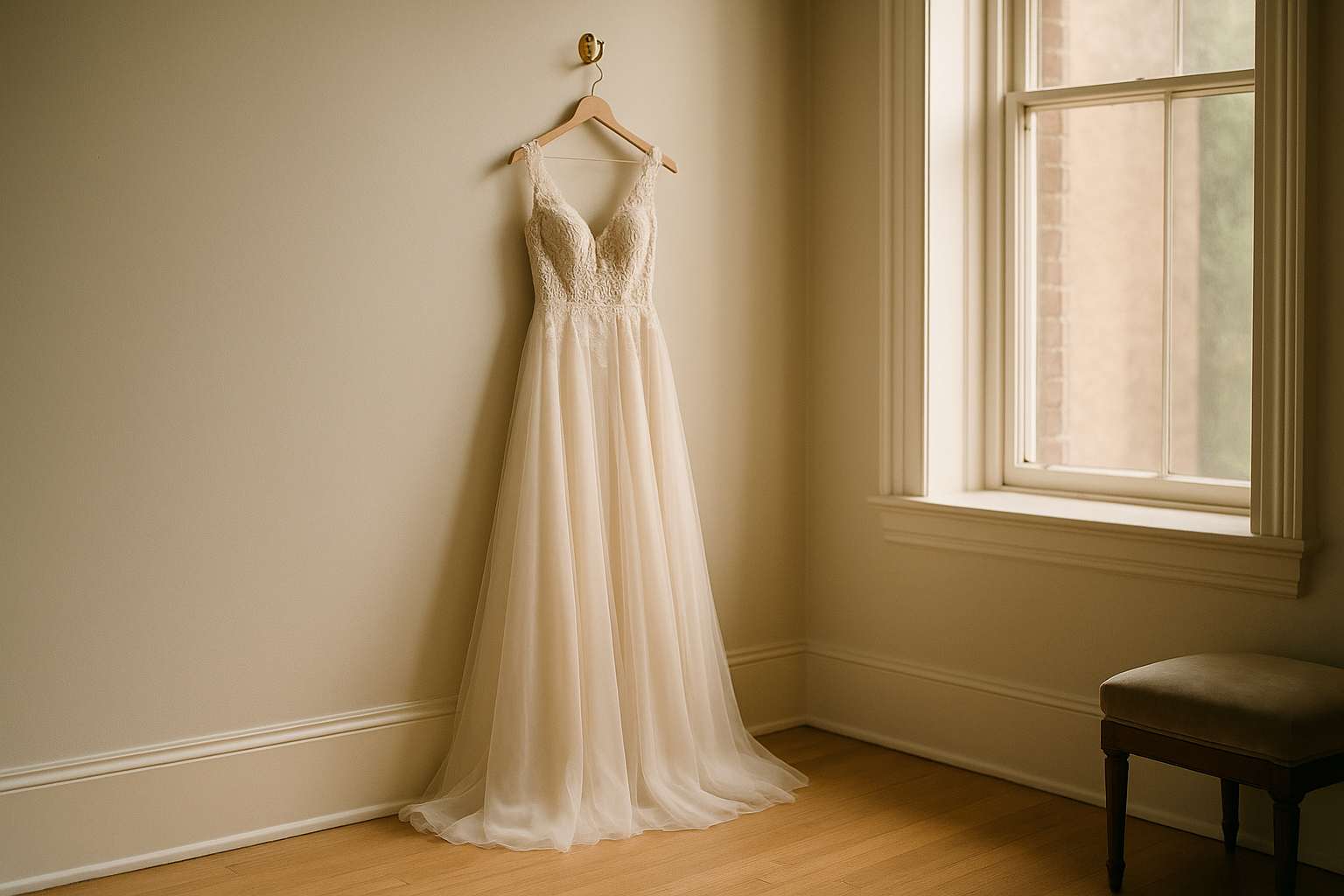
Most brides need three to four fittings over six to eight weeks, beginning eight to twelve weeks before the wedding date. Book your first appointment the same week your gown arrives — peak-season seamstresses fill their calendars eight to ten weeks in advance, and arriving with fewer than six weeks typically triggers rush premiums of 25–50%. Budget 15–20% of your gown's purchase price for alterations.
No wedding gown leaves the boutique fitting a bride exactly as nature intended. Bridal gowns are manufactured in standardized sizes that bear little resemblance to how women's bodies are actually shaped. Add the reality that heel heights vary, bodies change between ordering and wedding day, and every silhouette is unique — and the alteration process is not an optional step in the bridal journey. It is the step that transforms a beautiful gown into your gown.
The alteration room is where that transformation happens. A skilled bridal seamstress can raise a hemline so you don't trip, cinch a waistline so the silhouette is genuinely yours, engineer a bustle so you can dance freely, and add modesty coverage if your faith tradition requires it. When managed thoughtfully — with the right timeline, the right accessories at every appointment, and the right seamstress — the result is a gown that moves with you rather than against you on the most photographed day of your life.
What Is the Complete Wedding Dress Fitting Timeline?
The standard fitting schedule for most brides involves three to four appointments across a six-to-eight-week window. According to guidance from David's Bridal and Leora Bridal, the key milestone is beginning fittings eight to twelve weeks before your wedding date:
| Fitting | Timing Before Wedding | Primary Purpose | Duration |
|---|---|---|---|
| First Fitting | 8–12 weeks out | Assessment; major structural work planned and pinned; bustle style selected | 45–75 min |
| Second Fitting | 4–6 weeks out | Major adjustments complete; fine-tuning begins; full walk-test in wedding shoes | 30–60 min |
| Third / Final Fitting | 1–2 weeks out | Final hem verification; bustle rehearsal; full-dress walk and movement test | 30–45 min |
| Optional Fourth Fitting | As needed | Complex gowns; major changes; significant fit adjustments between fittings | 30–60 min |
The most consequential rule in this timeline is booking the first appointment the same week the gown arrives. Most boutiques call when the gown is ready — the correct response is to schedule your first fitting within days, not weeks. During peak wedding season, experienced bridal seamstresses with strong reputations fill their calendars eight to ten weeks in advance. Arriving with fewer than six weeks to spare triggers rush premiums of 25–50% above base alteration costs, in addition to limiting your options for who can take the work.
What Alterations Can — and Cannot — Accomplish
Understanding what alterations can realistically achieve prevents one of the most common and costly planning mistakes: purchasing a gown that requires more transformation than the fabric and structure will support.
A skilled bridal seamstress can take a gown in by two to four sizes in the bodice, waist, and hip. She can hem any length — though lengthening requires added fabric that must match the original precisely. She can add sleeves from delicate cap sleeves to full structured long sleeves, raise or reshape a neckline, engineer any of six standard bustle styles, add boning or restructure internal corset panels, and incorporate pockets into A-line or ballgown silhouettes. Modesty alterations — full sleeves, raised necklines, back panels in illusion mesh or lace — are among the most frequently requested and entirely achievable customizations.
What alterations cannot reliably accomplish: changing the fundamental silhouette (a mermaid cannot become a ballgown); adding significant length without adding fabric; letting out beyond seam allowance (most gowns have one to two inches of allowance — exceeding that requires adding fabric panels); or fully restoring a gown after a fluctuation of more than two to three sizes between purchase and wedding day. If you are pursuing a fitness or health program during the engagement, be transparent with your seamstress from the first appointment — she needs to build the fitting schedule around a stable endpoint body, not a moving target.
How Much Do Wedding Dress Alterations Cost?
The most common budgeting error brides make is purchasing a gown at the absolute ceiling of their dress budget with nothing reserved for alterations. Treat alterations as a line item from the moment you begin gown shopping — 15–20% of the gown's purchase price is a reliable planning estimate.
For a $2,000 gown, budget $300–$400. For a $4,000 couture design with intricate beadwork and multiple layers, $600–$1,000 is realistic. Total alteration packages for most brides run $300–$600 for a standard complexity gown; $600–$1,200 for complex alterations; and $800–$1,500 or more for couture or heavily embellished designs. Urban markets — New York City, San Francisco, Chicago, Los Angeles — run 20–40% above national averages. Always request an itemized written quote before authorizing any work.
A practical note on boutique versus independent seamstress: many bridal boutiques outsource alterations to the same independent facilities as their competitors and add a markup of 30–50%. An independent certified seamstress with strong bridal references may offer equivalent or superior quality at lower cost. Ask for examples of similar gowns she has altered and read reviews from other brides — bridal experience and general tailoring are distinct skill sets.
Bustle Styles: Choosing and Rehearsing Yours
A bustle lifts and secures the train after the ceremony so you can move, dance, and embrace freely during the reception. Every bride with a train beyond sweep length should plan for one. The bustle is engineered and sewn by your seamstress as part of the alteration process and demonstrated at the final fitting.
The American bustle (over-bustle) gathers the train overtop the skirt with hooks, buttons, or loops, creating a cascading, layered effect — versatile and works on most silhouettes. The French bustle (under-bustle) tucks the train beneath the skirt with interior ribbons or ties, preserving all back embellishments in full view — ideal for mermaid and trumpet silhouettes. The ballroom bustle conceals the train entirely beneath the skirt for a clean floor-length look — perfect for very full ballgowns. The Royal or Victorian bustle gathers at multiple points across the back for a draped architectural effect suited to long, elaborate trains at formal venues. The Austrian bustle uses a drawstring mechanism for a ruched, textural appearance on lightweight fabrics.
At the final fitting, practice the bustle procedure multiple times with the bridesmaid or family member who will manage it on the wedding day — and record a step-by-step video before leaving. The most common reception complication is a bustle that no one can execute correctly under the pressure of the moment. A recorded reference resolves this entirely.
What to Bring to Every Fitting
The accessories you bring to each fitting determine the accuracy of every adjustment made at that appointment. Bring: the exact shoes you will wear on the wedding day (heel height affects the required hem length by inches — arriving in flats produces an entirely incorrect hemline); all undergarments including your specific bra solution, backless option, or shapewear; your veil if it attaches to the dress; any belt, sash, or neckline jewelry; and one trusted companion only. Multiple people with competing opinions create genuine confusion and make it harder for the seamstress to work. Keep fittings as functional appointments, not group events.
Grace and Ivory's alteration guide emphasizes one additional practical step: photograph every fitting. Pin placements, bustle configurations, and hem lines documented in photos give the seamstress clear references at each subsequent appointment and protect both parties if any confusion arises about what was agreed.
Frequently asked
When should I schedule my first wedding dress fitting?
Your first formal alterations appointment should be scheduled eight to twelve weeks before your wedding date — and you should book the appointment the same week your gown arrives at the boutique, not weeks later. Most bridal gowns are ordered four to six months before the wedding, arriving four to five months before the date. When the call comes that your gown is ready, schedule your first fitting appointment within days. During peak wedding season (March through June, September through November), experienced bridal seamstresses book eight to ten weeks out in advance. Arriving with fewer than six weeks before the wedding typically triggers rush premium charges of 25–50% on top of base alteration costs.
How many fittings will I need for my wedding dress?
Most brides require three to four fittings for their wedding gown. Two fittings are occasionally sufficient for a simple gown with only minor adjustments, but three to four is the standard benchmark to plan against. Custom-made gowns, heavily embellished designs, or dresses requiring significant structural changes — such as adding sleeves, raising a neckline, or modifying a corset — may need five to eight fittings. Complexity drivers that increase fitting count include: full cathedral trains, multiple layers of tulle, illusion necklines with intricate lace, and significant size differences between measurement zones. Each fitting typically runs 30–60 minutes; structured or embellished gowns may require longer. When in doubt, plan for four fittings and let your seamstress guide the actual number based on what the gown requires.
What should I bring to every wedding dress fitting?
Bringing the correct accessories to every fitting is one of the most important things a bride can do — and one of the most consistently overlooked. Your heel height changes the hem length requirement by literal inches; showing up in flats when you plan to wear 3-inch heels produces an entirely incorrect hemline. Bring: the exact shoes you will wear on the wedding day; all undergarments including your specific bra or backless solution and any shapewear; your veil if it attaches to the dress; any belt, sash, or jewelry that touches the neckline or waist; and one trusted companion (not a group — multiple people with competing opinions create confusion and make it harder for the seamstress to work). Bring a phone for photos and video of the bustle demonstration.
How much do wedding dress alterations cost?
Budget 15–20% of your gown purchase price for alterations as a starting point. For a $2,000 gown, that means setting aside $300–$400; for a $4,000 design with intricate beadwork, $600–$1,000 is realistic. The most common total alteration packages run $300–$600 for a typical bride, $600–$1,200 for complex alterations, and $800–$1,500 for couture or heavily embellished gowns. Individual alteration costs vary: a simple hem runs $70–$150; a lace, chiffon, or multi-layer hem $150–$300; taking in or letting out the bodice $100–$400; a simple bustle $75–$150; a complex French or Royal bustle $150–$400; adding sleeves $75–$400 depending on style; and a full custom redesign $300–$1,000+. Urban markets (New York City, San Francisco, Chicago) run 20–40% above these national estimates. Always get a written itemized quote before authorizing any work.
What types of bustles are available, and how do I choose?
A bustle lifts and secures the train after the ceremony so you can move and dance freely during the reception — every bride with a train should plan for one. The American bustle (over-bustle) gathers the train overtop the skirt with hooks or buttons, creating a layered cascade; it works on most silhouettes. The French bustle (under-bustle) tucks the train beneath the skirt, preserving all back embellishments — ideal for mermaid and trumpet silhouettes. The ballroom bustle conceals the train entirely for a clean floor-length look. The Royal or Victorian bustle gathers the train at multiple points for a draped architectural effect suited to formal ballroom weddings. The Austrian bustle uses a drawstring mechanism for a ruched, textural look.
What is the final fitting, and what should I confirm before leaving?
The final fitting, scheduled one to two weeks before the wedding, is a verification appointment rather than a work session — all major alterations should be complete. Before leaving, run through this checklist: sit down, stand up, and walk in the gown and check for any pulling or gaping in the bodice; test the bustle through its complete procedure with your designated bridesmaid and confirm she can replicate it confidently; verify the zipper or closure fastens smoothly without strain; check that the hem clears your wedding shoes at all points including when walking and standing; confirm there are no visible alteration lines or fabric stress marks; and ask the seamstress to note any areas that need monitoring on the day itself. Photograph everything.