Fashion & Beauty
Wedding Dress Train Lengths: The Complete 2026 Guide
The chapel train is the most popular for a reason. But knowing every train length — sweep through royal — their exact measurements, the venues they suit, and the bustle implications for twelve hours of dancing helps you choose with confidence rather than defaulting to whatever the boutique floor has available.
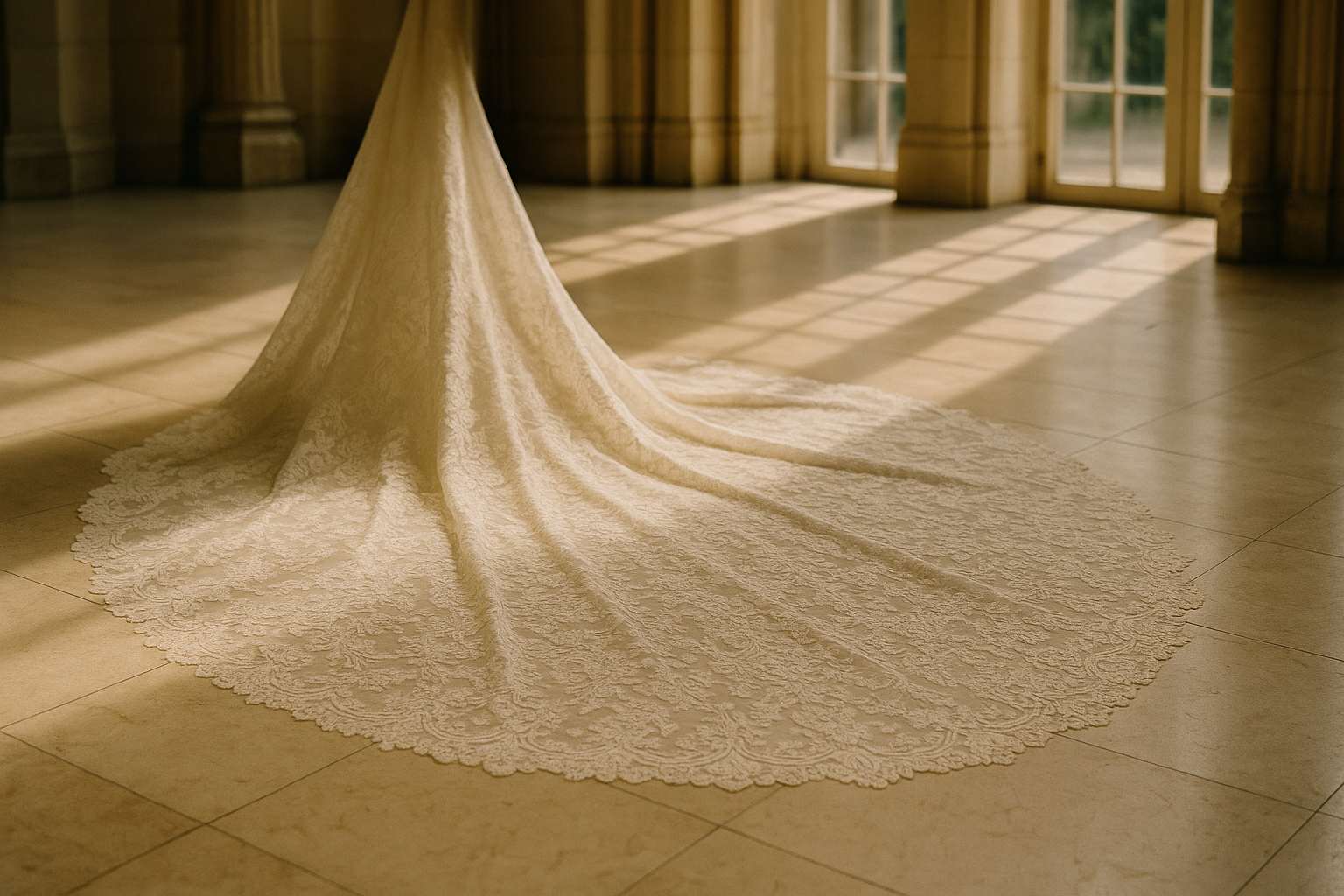
The chapel train — approximately 3 to 4 feet behind the hemline — is the most popular and versatile choice for 2026 brides for good reason: it creates a genuine bridal silhouette, bustles cleanly, and works in almost every venue. Cathedral trains (5 to 7.5 feet) are magnificent in grand churches and ballrooms but require wide aisles, smooth floors, and a clear bustle plan. Train choice is one of the few dress decisions with real practical consequences for a 12-hour day.
The train is the one element of a wedding gown that everyone in the room will notice during your processional, that appears prominently in your ceremony photographs, and that will determine how freely you move for the rest of the day. It is also the element most likely to be chosen hastily — by falling in love with a particular gown on the boutique floor without considering how its train length fits your specific venue, aisle, and reception plans.
This guide covers every train length available in 2026, their exact measurements, the venues and silhouettes they best suit, the practical implications for the reception, and the detachable train innovation that is changing how brides approach this decision.
What are the different wedding dress train lengths, and how long is each one?
Train measurements are typically given from the waistline to the end of the train, though some sources measure from the hemline. Both conventions exist in bridal retail; always clarify which measurement your boutique is using.
| Train Type | Approximate Length | Best Venue Types | Bustle Needed? |
|---|---|---|---|
| Sweep (Brush) | 6–12 inches behind hemline | Outdoor, garden, casual, beach | No |
| Court | 1–2 feet behind hemline | Garden, city hall, semi-formal indoor | Rarely |
| Chapel | 3–4 feet (approx. 60 inches from waist) | Church, ballroom, hotel — most venue types | Yes (for reception) |
| Semi-Cathedral | 4–5 feet | Large churches, grand ballrooms | Yes |
| Cathedral | 5–7.5 feet | Grand churches, luxury ballrooms, formal estates | Yes — plan carefully |
| Royal / Monarch | 10+ feet | Cathedrals, grand estate ceremonies | Yes — complex bustle required |
| Watteau | Varies (attaches at shoulders) | All — particularly suited to sheath/column gowns | Detaches or flows freely |
Per Kleinfeld Bridal's train length guide, the chapel train is the most commonly chosen length across all markets because it accomplishes what most brides want — a genuinely formal, photographically dramatic bridal silhouette — without the logistical demands of the longer options.
How do you choose the right train length for your venue and body?
Two factors matter most: your venue and your processional aisle.
Venue: Match train length to physical space. A cathedral train in a small chapel where the aisle is 8 feet long will be managing fabric, not gracefully processing. A royal train in a grand cathedral with a 150-foot center aisle is exactly what that space was designed for. Research your venue's aisle width and length, and ask the coordinator whether previous brides have had issues with specific train lengths.
Silhouette: Train length works with silhouette rather than independently of it. A ball gown typically carries a chapel or cathedral train most naturally — the volume of the skirt transitions into the train with visual consistency. A column or sheath gown looks most architectural with a court or sweep train, or the distinctive Watteau treatment. A mermaid or fit-and-flare gown creates maximum drama with a semi-cathedral or cathedral train because the flare of the skirt feeds naturally into the spreading train fabric.
From True Society Bridal: if you are unsure, start with chapel — it flatters almost every bride and venue, and you will have a clear comparison point when you try other lengths.
The detachable train: the 2025-2026 innovation every bride should know
One of the most significant developments in contemporary bridal design is the refinement of detachable trains. A cathedral or royal train that clips cleanly to a floor-length gown using discreet hooks or a waistband mechanism allows a bride to process in full ceremony drama, then remove the train entirely for the reception without the complexity of a bustle. The gown becomes a different dress — still floor-length and elegant, but free for dancing.
Designers including Maggie Sottero, Justin Alexander, and Essense of Australia have integrated detachable train options into their 2025–2026 collections. Ask your boutique consultant specifically about this option when you are drawn to a long train but concerned about reception mobility. The key question to ask: does the attachment mechanism photograph cleanly from the back? Request to see the train attached in a photograph before purchasing.
How should you plan the bustle and timeline for a longer train?
If you choose a chapel train or longer and do not opt for a detachable design, the bustle is the single most important alteration to plan well in advance. A bustle gathers the train up off the floor and secures it to the back of the gown for the reception, and the two most common approaches are the French bustle, which folds the train underneath for a smooth, draped silhouette, and the American bustle, which lifts it on top for a layered, ruffled effect. Cathedral and royal trains often need multiple bustle points to distribute the fabric weight evenly, and a heavy beaded or lace train can require reinforced loops and ribbons so the stitches hold through hours of dancing. Build this into your timeline: most seamstresses recommend booking alterations roughly three months before the wedding, allowing for two or three fittings, and asking a bridesmaid or your mother to practice the bustle at the final fitting so someone in your party can secure it confidently on the day itself.
Frequently asked
What is the most popular wedding dress train length?
The chapel train is consistently the most popular length across all venue types and in every major bridal market. At approximately 3 to 4 feet behind the hemline, it creates the recognizable formal bridal silhouette — visible in ceremony photographs, graceful during the processional, and dramatic enough to feel genuinely bridal — without the management complexity of longer trains. It bustles cleanly, which means a bride can go from ceremony formality to reception dancing without needing significant assistance. It works in 80% of venue types: traditional churches, ballrooms, garden venues, hotel grand stairways, and modern event spaces. Bridal consultants consistently recommend beginning with a chapel train as the baseline if you are undecided, because it flatters virtually every silhouette, fits almost every aisle width, and photographs beautifully in every lighting condition.
What is the difference between a chapel train and a cathedral train?
Measurement is the primary distinction. A chapel train extends approximately 3 to 4 feet behind the hemline from the waist; a cathedral train extends 5 to 7.5 feet — nearly double the length. The difference in presence is significant: a cathedral train requires wide, smooth-floored aisles and significant physical management throughout the ceremony and processional. It photographs magnificently in grand churches and luxury ballrooms where the full length can be displayed, but becomes awkward in smaller or more intimate venues where it crowds the aisle or requires constant adjustment. The cathedral train typically takes more time to bustle for the reception and requires a seamstress's attention to create a bustle that handles the additional fabric weight gracefully. For brides drawn to the cathedral silhouette, a detachable train option — a cathedral-length extension that clips cleanly to a floor-length gown and removes entirely for the reception — has become one of the most practical innovations in modern bridal design.
Should train length be chosen based on height?
Height is a factor, but it is not the most important one. The key consideration is proportion: a very long train on a petite bride can overwhelm her silhouette if the gown's overall design does not account for it. However, ball gowns with cathedral trains on petite brides have been a classic bridal silhouette for generations — the train creates vertical visual elongation from the back view that can actually enhance rather than diminish the appearance of height. More important than height is venue: a cathedral train in an intimate garden ceremony venue looks more like a logistics challenge than a dramatic bridal moment. The most useful guidance is to try your target silhouette with both a chapel and cathedral train in a boutique fitting room, then photograph both from the back. The difference in presence is immediately visible, and the physical weight and management difference is equally immediate. Let the in-person experience inform the decision more than any measurement chart.
What is a Watteau train and when would a bride choose it?
A Watteau train — named for the French painter Jean-Antoine Watteau, whose 18th-century paintings frequently depicted elegant figures with cascading fabric from the back — attaches at the shoulders or upper back and flows freely to the floor, separate from the main skirt silhouette of the gown. Unlike all other train types, which extend from the hemline, a Watteau train creates a cape-like or overlay effect. It is one of the most distinctive and artistic train choices available and suits brides drawn to a romantic, artistic, or vintage-inspired aesthetic. The Watteau pairs particularly beautifully with a sheath or column gown where a traditional hemline train would read as inconsistent with the minimal silhouette. It is not widely available in standing boutique inventory and typically requires special order or custom work, so brides interested in a Watteau train should begin conversations with their boutique or designer 12 to 14 months out.
Do all wedding dress trains need to be bustled for the reception?
Sweep and court trains do not require bustling — they are short enough to navigate a reception floor without underfoot risk, though they may collect minor dirt or moisture at an outdoor venue. Chapel trains should be bustled for extended dancing; most brides find the chapel train comfortable at cocktail hour without a bustle but prefer it up for the reception. Semi-cathedral, cathedral, and royal trains must be bustled for any reception that includes movement and dancing; wearing them down all evening is impractical and risks both damage to the dress and injury to other guests. A French bustle (fabric lifted and attached from underneath, creating a smooth back silhouette) and an American bustle (lifted and attached from the outer surface, creating a visible floral or gathered effect) are the two most common types; your seamstress should discuss the best option for your specific gown during alterations. Never leave the bustle plan as an afterthought — it should be confirmed and practiced before the final fitting.
What is a detachable wedding dress train, and is it worth considering?
A detachable train is a separate train piece that attaches to the gown — typically via hooks, snaps, or a waistband mechanism — for the ceremony and removes completely for the reception. It allows a bride to have the full drama of a cathedral or royal train during the processional and ceremony photographs, then transition to a floor-length gown for reception dancing without any bustling complexity. A growing number of designers now offer this as a standard option; Maggie Sottero, Justin Alexander, and Essense of Australia all have detachable train styles in their 2025–2026 collections. The trade-off is that a detachable train must be carefully constructed to hang and move exactly as an integrated train does, and poorly attached detachable trains can shift or gap at the attachment point in photographs. Ask your boutique consultant to demonstrate how the attachment mechanism looks in photographs before committing. For brides who want ceremony drama and reception freedom, a well-engineered detachable train is one of the most practical innovations in modern bridal design.