Fashion & Beauty
Wedding Hairstyles for Humidity: Styles That Hold All Day
Outdoor ceremonies in summer heat demand styles built to last — braids, updos, and textured looks that use humidity rather than fight it. Here is what actually holds and what to tell your stylist.
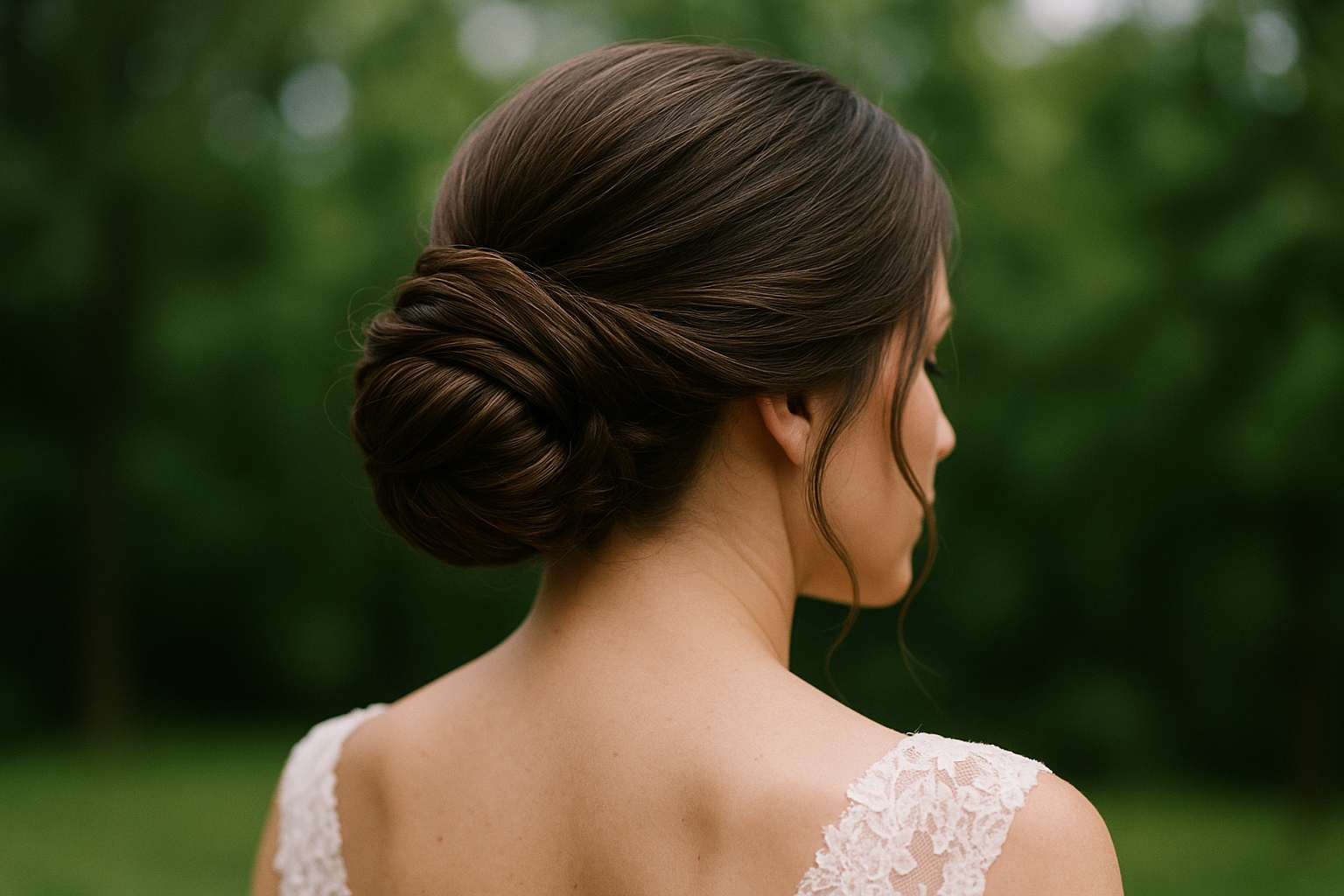
The most reliable wedding hairstyles for humidity are fully structured updos and braided constructions — styles with fewer exposed surface strands for moisture absorption. Smooth blowouts and precision-straight styles carry the highest frizz risk outdoors in summer. The right product protocol — humidity-blocking primer before styling, humidity-resistant finishing spray over the completed look — extends any style's hold significantly. Always schedule a humidity-condition trial 6 to 8 weeks before your outdoor summer wedding.
Humidity is not hair's enemy — friction is. The mechanics of frizz begin when the cuticle layer of the hair shaft opens in response to atmospheric moisture and absorbs it unevenly, causing each strand to swell at different rates and break the smooth surface a blowout creates. A style that minimizes exposed surface area and uses products that seal the cuticle before moisture enters will hold through a humid outdoor ceremony. A style that relies entirely on thermal straightening — without cuticle-sealing products — will not.
This guide covers the hairstyles that work mechanically in humidity, the product categories that do real work, and the stylist questions that separate brides who love their 4 PM hair from those who don't. All information reflects 2026 product availability and stylist practice.
Which wedding hair styles are most resistant to humidity?
The hierarchy by humidity resistance runs from most resilient to most vulnerable:
1. Fully structured updos — Low chignons, braided buns, French twists, and interlocking updo constructions have the fewest exposed surface strands. There is simply less hair available for moisture to act on. A well-constructed low chignon with proper pin architecture can withstand high humidity for six to eight hours without significant structural change. This is the gold standard for outdoor summer brides.
2. Braided styles — Dutch braids, fishtail braids, side braids, and crown braids hold through humidity because the mechanical interlocking of the braid structure resists frizz disruption. Frizz can affect individual strands within a braid's surface, but the braid's shape remains intact. Braids are also photogenic through the day in a way that a blowout often isn't: they look intentionally textured at 4 PM in a way that a smooth style gone frizzy does not.
3. Textured natural styles — Hair styled in its natural texture with curl-defining or wave-enhancing products is working with humidity rather than against it. A bride with naturally wavy or curly hair who leans into that texture with anti-frizz products will maintain her style's essential character through the day, even if individual strands evolve.
4. Half-up, pinned styles — A soft half-up style anchors the crown section, providing structural security while allowing the lower half to express natural texture. Lower risk than a fully-down style; more visually relaxed than a full updo.
5. Blowouts and straight styles — The highest-risk options in humidity. Thermal straightening opens the cuticle for tension; moisture re-closes it unevenly. Without strong anti-humidity product protection, a precision-straight blowout in high humidity can begin reversing within 30 to 45 minutes of outdoor exposure.
| Style Category | Best Hair Types | Humidity Risk | Key Maintenance | 2026 Trend Status |
|---|---|---|---|---|
| Low chignon / structured updo | All hair types | Low | Edge serum on face-framing pieces; final-coat hairspray | Strong — editorial trend toward polished updos in 2026 |
| Braided updo (Dutch, fishtail) | Medium to thick; wavy or straight | Low to medium | Smoothing serum before braiding; finishing spray | Strong — braided bridal styles growing 2024–2026 |
| Crown braid / half-crown | Medium to long; any texture | Low | Light anti-frizz oil on surface strands | Moderate — romantic and nature-forward aesthetic |
| Natural curls / textured look | Curly or wavy natural texture | Low (with right products) | Curl-defining cream; anti-humidity spray | Rising — natural texture bridal looks gaining in 2026 |
| Soft half-up with loose lower half | Wavy, curly, or thick straight | Medium | Crown secured with strong pins; lower half product-treated | Moderate — popular for garden and outdoor ceremonies |
| Smooth blowout / straight down | Fine to medium straight | High | Heavy anti-humidity product layering essential | Declining for outdoor use; maintained for indoor venues |
Which products actually hold up against humidity?
The style sets the ceiling for humidity resistance, but the product protocol is what gets you there. Effective humidity protection is built in layers, applied at the right stage of styling — not sprayed on at the end as an afterthought. The first layer is a smoothing primer or serum applied to damp hair before any heat styling: it seals the cuticle before the dryer opens it, so atmospheric moisture has a harder time getting in. Moroccanoil's humidity guidance emphasizes this cuticle-sealing step as the single most overlooked part of humid-weather styling.
The decisive layer is a finishing spray that specifically reads "humidity resistant" or "anti-humidity" on the label — a distinct formulation from a standard "strong hold" hairspray, which controls movement but does nothing to block moisture. Stylist-recommended options across price points include Oribe Superfine Hair Spray, Kenra Platinum Silkening Mist, and R+Co's flexible-hold sprays; for a smoothing serum on exposed strands, Oribe Supershine Moisturizing Cream and Schwarzkopf Professional's BC Fibre Force serum are common choices. The application technique matters as much as the product: mist the finishing spray from 10 to 12 inches away so it falls as a fine, even veil rather than a wet patch, because concentrated wet spots reverse styling and become frizz entry points.
One ingredient to actively avoid in humid conditions is glycerin near the top of the ingredient list. Glycerin is a humectant — it draws moisture toward the hair shaft, which is exactly the wrong behavior outdoors in summer. In dry climates a humectant adds softness; in humid air it invites the swelling that creates frizz. Ask your stylist to keep humidity-specific touch-up products in their kit for portraits and the early reception, and have a small emergency kit with travel-size anti-frizz serum and color-matched bobby pins held by a member of your wedding party.
What should you ask your stylist at the bridal hair trial?
The trial is where humidity preparation either happens or doesn't. These are the questions that distinguish a well-prepared outdoor bridal hair experience from an improvised one on the wedding day itself:
- Have you worked at outdoor summer weddings with high humidity before? Can I see photos?
- Which products do you plan to use specifically for humidity protection — and what are their active mechanisms?
- Can we schedule the trial on a similarly humid day, or can you simulate product performance for humid conditions?
- What is the plan if the style starts to loosen during portraits? Do you stay through the first hour of reception?
- Will you bring anti-humidity product touch-up supplies to the wedding day kit?
- What is the one style adjustment you would make if the humidity forecast is higher than expected on the day?
According to Brides magazine's 2026 bridal hair guidance, the most common regret among brides who experienced humidity-related hair challenges was not the style choice itself, but the absence of a trial under realistic weather conditions. A stylist who has never thought through their humid-weather protocol before your wedding day is building that protocol on your day — which is precisely when you do not want experimentation.
Frequently asked
What are the best wedding hairstyles for humidity?
Fully structured updos — particularly low chignons, braided buns, and interlocking updo constructions — are the most reliable humidity-proof wedding hairstyles because they have the fewest exposed surface strands for moisture absorption to act on. Braided styles (Dutch braids, fishtail braids, crown braids) are the second-most resilient category because the braid's interlocked structure provides mechanical stability that frizz cannot easily disrupt. Textured styles deliberately styled with curl-enhancing products fare better than straightened styles because they work with the hair's natural moisture response rather than against it. The styles most vulnerable to humidity are smooth blowouts with loose volume and precision-straight styles — both rely on thermal styling that moisture reverses. Your hair type matters as much as the style itself: naturally curly or wavy hair handled with texture-enhancing products in a structured updo is nearly immune to humidity; fine, straight hair in a loose half-up style is not.
How do I keep my wedding hair from frizzing in humidity?
Anti-humidity products applied at the right stage of the styling process are the primary defense. A smoothing serum or cream applied to damp hair before blow-drying seals the cuticle against moisture before styling begins. A humidity-blocking finishing spray — Oribe Superfine Hair Spray, Kenra Platinum Silkening Mist, and R+Co Outer Space Flexible Hairspray are stylist-recommended options at multiple price points — applied over the finished style provides a physical barrier against atmospheric moisture. The critical instruction is to mist the finishing spray from at least 10 to 12 inches away: spraying too close creates wet spots that reverse styling and create frizz entry points. Ask your stylist to use a silicone-based serum on any exposed strands. Avoid touching your hair after styling is complete — the oils on fingertips break down product hold. Products marketed as 'frizz control' work by humidity blocking, not by heat styling, and they remain effective through weather exposure in a way that thermal styling alone does not.
Should I have a bridal hair trial before my wedding day?
A bridal hair trial is essential if your wedding takes place in a humid environment, outdoors, or in summer heat. The trial serves three specific functions in a humidity context: first, it establishes which products your specific hair absorbs vs. builds up on — important because anti-humidity product effectiveness varies significantly by hair type and porosity; second, it tests the hold of your chosen style under real conditions, ideally scheduled on a day with similar weather to your wedding date; third, it gives you and your stylist actionable feedback on what needs adjustment before the day itself. Request your trial at the same time of day as your wedding ceremony to match the heat and light conditions. Photograph the result in both indoor and outdoor light. A good stylist will adjust product selection and technique based on trial results — not simply repeat the same approach and hope the weather cooperates.
Can I wear my hair down at a humid outdoor wedding?
Wearing hair fully down at a humid outdoor wedding is achievable for some hair types but requires specific product layering and realistic expectations about the style's evolution through the day. Hair that is naturally straight or very fine will almost certainly gain frizz and lose shape in sustained humidity — a completely down style is the highest-risk option for this hair type outdoors. Naturally wavy or curly hair styled with curl-defining products in its natural texture can wear down beautifully because it is working with the hair's moisture response rather than against it. A middle-ground option growing popular in 2026 is a 'soft half-up' style where the top section is secured with a well-placed pin or clip — anchoring the style's structure — while the lower section has freedom to express its natural texture. This gives the visual impression of wearing hair down while providing structural security at the crown.
What products should I ask my stylist to use for humid wedding hair?
Request that your stylist's product protocol includes four categories: a humidity-blocking primer applied before blow-drying (Moroccanoil Frizz Control, Kenra Platinum Silkening Mist); a smoothing serum applied to damp or dry hair before heat styling (Oribe Supershine Moisturizing Cream, Schwarzkopf Professional BC Fibre Force Serum); a strong-hold hairspray that specifies 'humidity resistant' on its label rather than simply 'strong hold' — these are distinct formulations; and a final anti-frizz serum or shine gloss applied over the completed style on surface strands. Avoid products with glycerin listed high in the ingredients — glycerin is a humectant that actively draws atmospheric moisture into the hair shaft, which is counterproductive in humid conditions. Ask your stylist to keep anti-humidity products in their kit for touch-ups if your ceremony or photos run long.
How far in advance should I book a bridal hair stylist for a summer wedding?
Book your bridal hair stylist 9 to 12 months before your wedding if your date falls on a summer weekend — June through September in most of the United States. Stylists who specialize in bridal work at popular venues often fill their summer Saturdays before the 12-month mark; in destination markets such as Napa Valley, Aspen, or coastal New England, the most sought-after stylists book 12 to 18 months out. Securing your stylist early also allows you to schedule the trial 6 to 8 weeks before the wedding — close enough that the trial style is current and relevant but early enough that adjustments can be made. When booking, confirm the stylist's experience specifically with outdoor and humid-weather weddings and ask to see portfolio photos of work at outdoor summer events. A stylist's work in climate-controlled studios looks different from their work in a tent in July.
What backup plan should I have for outdoor wedding hair in case of unexpected humidity?
Build a backup protocol into your stylist agreement. Before your wedding day, confirm with your stylist that they will bring humidity-specific finishing products — not just their standard kit — and that they have the materials for emergency bobby pin reinforcement and hairspray touch-ups available through the ceremony and into portraits. Ask your bridal party coordinator or maid of honor to hold a small emergency beauty bag that includes travel-size versions of the anti-frizz serum your stylist used, additional bobby pins matching your hair color, and a small comb. Accept that hair at an outdoor summer wedding will look slightly different at 4 PM than at noon — this is normal, expected, and what photographers know to work with. The goal of humidity preparation is not to make your hair look as though you were in a climate-controlled studio all day; it is to ensure your style holds its essential structure through the ceremony, the portraits, and the first hour of reception. Build that realistic expectation with your stylist at the trial.