Fashion & Beauty
Wedding Makeup Artist Cost: What Brides Actually Pay in 2026
Bridal makeup costs range from $150 to $900 or more depending on market, artist experience, and services selected. Here is the complete, honest price guide — including trial fees, bridal party rates, and what the total beauty bill looks like in 2026.
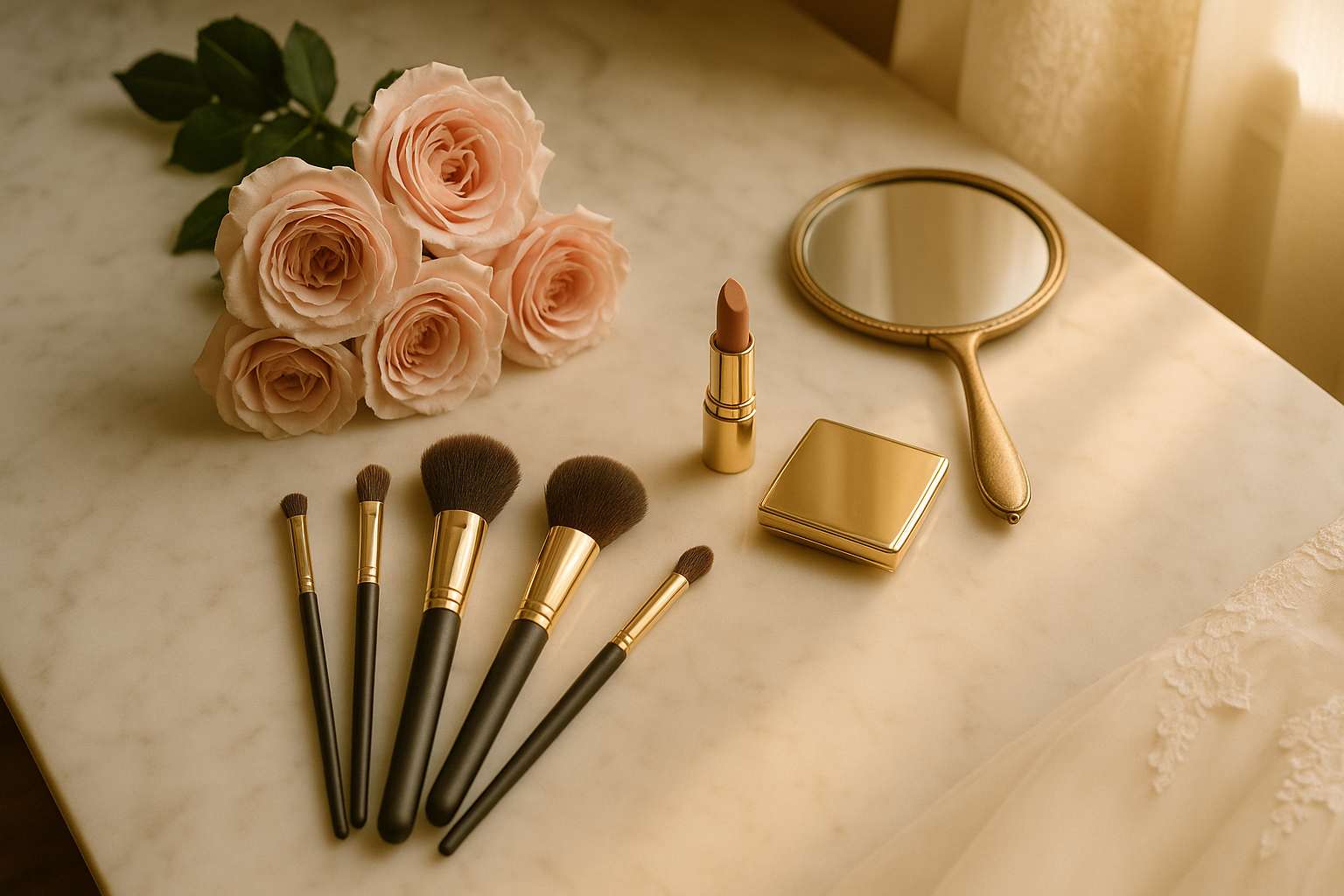
Wedding makeup artists in the U.S. charge $300 to $800 nationally for bridal application in 2026, with major metro areas running $700 to $1,200 or more. The full bridal beauty bill — including trial, hair, and bridal party — typically ranges from $900 to $2,700 depending on market and artist tier. Top artists book 9 to 12 months in advance.
A bride's face is among the most photographed subjects on her wedding day, and those images last a lifetime. The bridal makeup investment is one that brides feel every time they open their wedding album. It is also one of the most opaque vendor categories to price before booking — artists set their own rates, market prices vary significantly by geography, and the wide range of services that may or may not be included in a quoted price makes apples-to-apples comparison genuinely difficult.
This guide gives you the honest numbers: what bridal makeup artists charge nationally, how location moves the price, what the full beauty bill looks like for a complete bridal party, and what to watch for when reviewing quotes.
What does a wedding makeup artist actually charge in 2026?
National pricing data for 2026 places most brides between $300 and $800 for the bridal makeup application alone. According to The Knot's wedding beauty data, the combined average for wedding hair and makeup nationally runs around $982, with makeup alone in the $300 to $500 range for most markets. Research from Thumbtack's 2025 wedding makeup pricing survey places the national average for bridal makeup at approximately $305, with a typical range of $218 to $424 — though this data skews toward newer artists and non-peak-season bookings.
| Market | Bridal Makeup Only | Combined Hair + Makeup | Notes |
|---|---|---|---|
| National Average | $300–$550 | $600–$1,200 | Mid-tier independent artist; excludes trial and travel |
| New York City / Los Angeles / San Francisco | $700–$1,200+ | $1,200–$2,500+ | 30–100% premium above national average; celebrity-tier artists reach $2,000+ |
| Chicago / Boston / Miami / D.C. | $550–$900 | $900–$1,800 | 15–25% above national average |
| Nashville / Atlanta / Dallas / Denver | $450–$750 | $700–$1,400 | Near national average; demand rising with popularity of these wedding markets |
| Midwest / Rural Markets | $300–$550 | $500–$900 | Broadest access to talented artists at accessible price points |
According to Doll Face Beauty's 2026 NJ and NYC pricing analysis, increased booking demand, rising product costs, and limited availability among experienced artists are continuing to drive pricing higher in competitive markets — particularly for Saturday peak-season dates from May through October. Friday, Sunday, and winter wedding dates often carry discounts of 10 to 20 percent from the same artist's Saturday rate.
What does the full bridal beauty budget actually include beyond the application?
The base bridal makeup rate is just one line in a fuller beauty budget. Calculating the complete investment before booking prevents the most common beauty budget frustration: discovering mid-planning that the number you budgeted covered only a fraction of the actual bill.
Line items beyond the base bridal application that should be projected in advance:
- Bridal makeup trial: $150 to $350, often credited toward booking. Non-negotiable.
- Hair styling (if separate): $150 to $500 for the bride depending on market and complexity.
- Bridesmaid makeup: $75 to $200 per person; simpler looks, shorter application time.
- Mother of the bride or groom: $75 to $175 per person.
- Travel fee: $50 to $200 flat, or $0.50 to $1.50 per mile beyond the artist's base radius.
- Early morning fee: $50 to $150 for call times before 7 a.m.
- Airbrush upgrade: $75 to $150 additional per person if not included in the base rate.
- Lashes: $20 to $50 per person if not included; semi-permanent extensions applied pre-wedding run $150 to $400.
- Touch-up kit: $50 to $150 if assembled and documented by the artist.
- Gratuity: 15 to 20 percent of the total service cost, prepared in advance.
What makes a bridal makeup application worth its price — and how do you evaluate it?
Bridal makeup must perform across 10 to 16 hours under multiple lighting environments — candlelight, camera flash, golden-hour sun, fluorescent ballroom — through tears, humidity, embraces, and a full meal, and look equally luminous in person and in a photograph taken from 30 feet away. This is a specialized technical challenge that everyday makeup artistry does not necessarily prepare an artist for.
What to evaluate in a portfolio before booking: real brides under real event lighting (not only styled editorial shoots), multiple skin tones and textures represented, results that hold across both candid and posed images, and an aesthetic level consistent with your own. According to Zola's wedding beauty guide, your photographer's recommendation is among the most reliable referral sources for makeup artists — photographers see finished results under event lighting conditions every weekend and quickly learn which artists produce work that holds.
A professional bridal artist uses a layered longevity strategy: a pore-filling, oil-controlling primer (Smashbox Photo Finish, Laura Mercier Radiance); a long-wear transfer-resistant foundation (NARS All Day Luminous, Armani Luminous Silk, Estée Lauder Double Wear); a setting powder; and a setting spray that fuses all layers (Urban Decay All Nighter, MAC Fix+). The finished touch-up kit — concealer, lip product, powder, mini setting spray, blotting papers — is the bride's insurance policy for the rest of the day. Ask every artist you consult whether they provide this and whether they document the exact products used. A color mismatch in the touch-up concealer is a photographically visible problem that preparation entirely prevents.
Frequently asked
How much does a wedding makeup artist cost in 2026?
Nationally, bridal makeup alone costs between $300 and $800 for most U.S. brides in 2026, with the median falling around $450 to $550 for an experienced independent artist. In major metro areas — New York City, Los Angeles, San Francisco, Miami — pricing ranges from $700 to $900 for a mid-tier artist and can reach $1,200 or more for highly sought editorial specialists. In mid-sized cities like Chicago, Boston, and Washington D.C., expect $550 to $900. In the Midwest and smaller markets, talented artists typically charge $350 to $650. These figures are for the bridal application only and do not include the trial session, bridal party members, travel fees, or gratuity. According to The Knot's 2025 Real Weddings Study, 73 percent of couples hired a professional beauty team for the wedding day — making it one of the most universally used vendor categories.
What does a bridal makeup trial cost, and is it worth it?
A bridal makeup trial typically costs $150 to $350 and is universally worth the investment. The trial is the single best insurance policy against day-of disaster: it confirms whether the artist can execute your vision, reveals any product sensitivities or skin reactions, establishes the correct foundation shade for your photography environment, and times the application accurately for schedule planning. Most artists credit the trial fee toward the booking, meaning the standalone cost is primarily paid when you do not proceed with that artist. Schedule your trial 4 to 8 weeks before the wedding — early enough to request adjustments and, if necessary, find a different artist, but close enough that your skin and hair color reflect their actual wedding-day state. Skipping the trial is the single most commonly cited beauty mistake brides report after the wedding.
What will the total bridal beauty bill look like for hair and makeup combined?
For a bride who books both a makeup artist and a hairstylist, the combined beauty investment in 2026 typically runs $600 to $1,200 nationally. The combined hair and makeup package — when booked as a single service from a dual-skilled artist or a team — averages around $982 nationally, per current industry data. In major coastal cities, full bridal beauty (hair and makeup) from a mid-tier artist runs $1,200 to $2,000. Add the trial session for both hair and makeup ($300 to $700 combined), and the full pre-wedding beauty investment for the bride alone typically runs $900 to $2,700 depending on market and artist tier. Bridal party members (bridesmaids, mothers) add $75 to $200 per person for makeup and a similar amount for hair, making the full beauty budget for a large bridal party substantial — well worth projecting in full before booking.
How much should you tip a wedding makeup artist?
The standard gratuity for a wedding makeup artist is 15 to 20 percent of the service total. Beauty professionals are among the most consistently tipped vendors in the wedding industry, and 71 percent of couples report tipping their beauty team, according to industry surveys. If you prefer a flat amount rather than a percentage calculation on the wedding morning, the average tip per beauty stylist sits around $150. For artist-owned businesses — where the artist keeps the full fee rather than splitting with a salon — a slightly lower percentage (10 to 15 percent) remains appropriate and genuinely appreciated, since the base rate already carries the artist's overhead. If an assistant or second artist worked on bridal party members, tip them separately: $10 to $30 per assistant is standard. Prepare gratuity envelopes before the wedding morning and delegate distribution to the maid of honor or a trusted family member.
When should you book a wedding makeup artist?
The top-tier wedding makeup artists in popular markets fill their calendars 9 to 12 months in advance, particularly for peak-season Saturday dates in May, June, September, and October. Booking your beauty artist at the same time you sign your venue contract — 10 to 12 months before the wedding — is the most protective approach. In smaller markets or for off-peak dates, 4 to 6 months may be sufficient, but earlier is always safer. If you have your heart set on an artist whose portfolio you have been admiring, reaching out even before your date is fully confirmed to establish availability is entirely appropriate. Most artists hold a date with a signed contract and a deposit of 25 to 50 percent of the estimated service total, with the balance due on or before the wedding day.
What fees beyond the base bridal makeup rate should brides anticipate?
Several costs consistently appear beyond the base bridal rate, and projecting them in advance prevents budget surprise. Trial sessions run $150 to $350, though many artists credit the fee toward booking. Travel fees apply when the artist travels beyond a base radius — typically $0.50 to $1.50 per mile or a flat fee of $50 to $200. Early morning fees (for call times before 7 a.m.) add $50 to $150. Airbrush foundation upgrades cost $75 to $150 extra per person. Individual or cluster lashes, if not included in the base price, add $20 to $50 per person. A touch-up kit assembled by the artist and documented with product names — so your maid of honor can execute precise touch-ups throughout the day — may be offered as an add-on at $50 to $150. Calculate the full beauty invoice before comparing artist quotes to avoid comparing a base price from one artist against an all-inclusive quote from another.
Should brides choose airbrush or traditional hand-applied makeup?
Neither technique is categorically superior. Airbrush foundation excels on oily skin and in humid climates, offering exceptional wear-time of 12 to 16 hours when properly sealed, with a photograph-ready finish that holds in heat and perspiration. However, it can look flat or mask-like on mature skin with fine lines, is less adaptable mid-application, and produces its best results only in the hands of an artist who has practiced it extensively. Traditional hand or brush application is warmer and more dimensional in appearance, more forgiving on dry or textured skin, and draws on a wider skill base among experienced artists. The honest answer: a master hand-application artist using premium long-wear products from brands like NARS, Armani, or Estée Lauder's Double Wear line will outperform a mediocre airbrush artist every time. Choose your artist based on portfolio results and your specific skin type — not technique alone.