Fashion & Beauty
Who to Bring Wedding Dress Shopping: How to Choose Your Bridal Squad
More guests at your bridal appointment is almost never better. Two to three people who know your style, support your vision, and will not project their own preferences onto you is the consistently right answer — here is how to choose them and manage the experience.
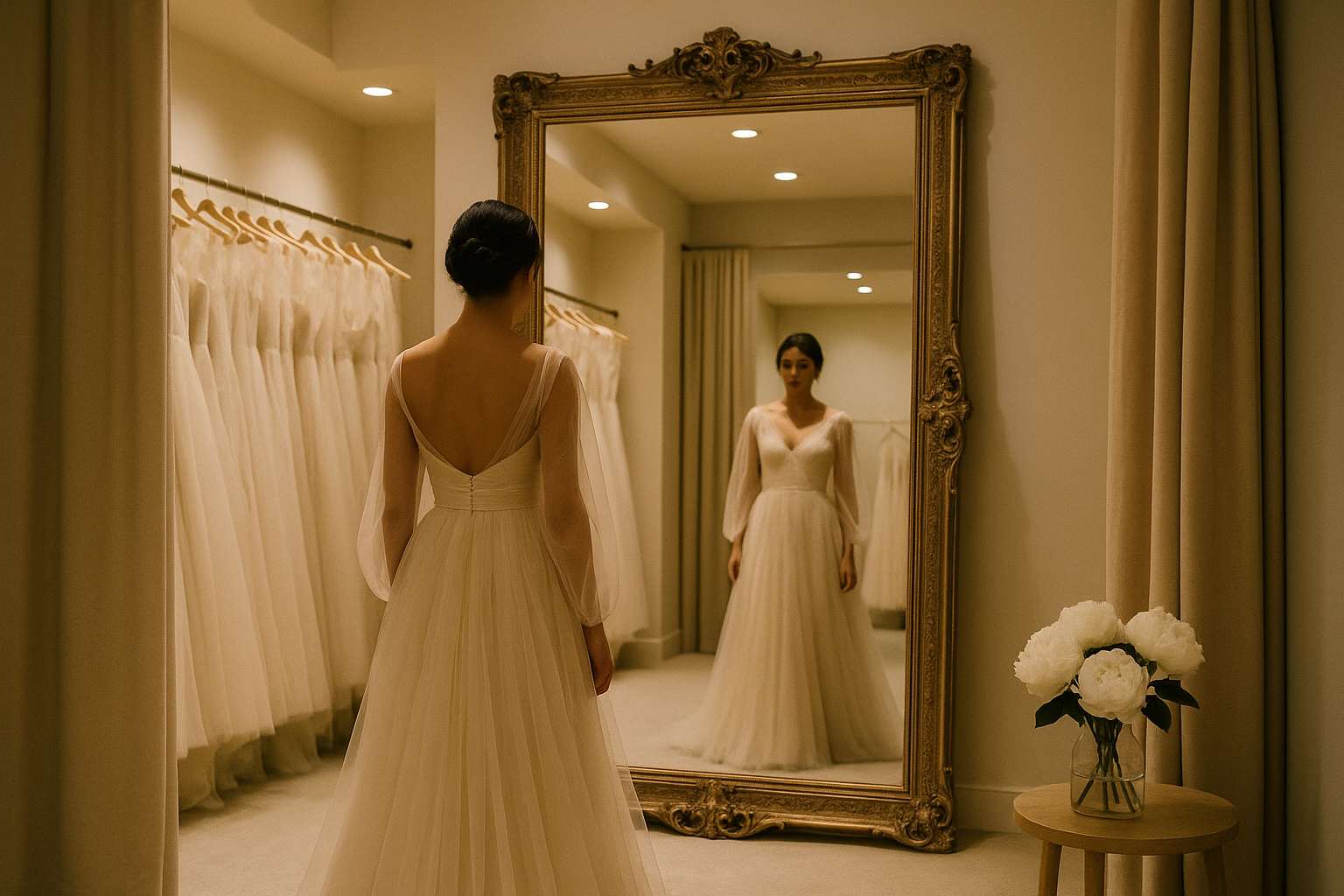
Bring two to three people whose opinions you genuinely trust and who will center your experience rather than their own. More guests almost always means more noise, harder decisions, and a higher likelihood of talking yourself out of a dress you loved. Choose for presence, not obligation.
Of all the wedding planning moments that exist in the imagination before they happen in real life, the wedding dress appointment is perhaps the most mythologized. The reality, when it arrives, is slightly different from the champagne-and-happy-tears fantasy — and the single variable that most determines whether your appointments are joyful and productive or chaotic and confusing is who is in the room with you.
Bridal stylists at boutiques from David's Bridal to Kleinfeld Bridal and the couture ateliers of designers like Vera Wang and Monique Lhuillier are consistent in their guidance: two to three well-chosen companions produce better outcomes than larger groups, and the criteria for choosing them matter more than most brides initially realize.
How many guests should you bring to a bridal appointment?
Two to three people is the consistently right number. This is not an arbitrary boutique restriction — it reflects the genuine dynamics of how decisions are made in groups.
A single trusted companion is also entirely appropriate if that person knows you well, holds your aesthetic sensibilities in high regard, and will support your vision rather than advocate for their own. Many brides report that their most productive appointment was one where they brought only their mother or only their maid of honor — because the conversation was clear, the feedback was targeted, and there was no social performance involved.
Larger groups — five, six, eight — create a specific kind of difficulty that is hard to articulate but easy to feel: you begin shopping for the group's approval rather than listening to your own response. The moment you find a gown that makes you catch your breath but elicits a lukewarm reaction from the three people on the sofa, the risk is real that you will talk yourself out of the dress you loved. That particular form of appointment regret — leaving behind a gown because of a social dynamic rather than a genuine aesthetic mismatch — is more common than most brides expect.
Before extending invitations, check your boutique's guest policy. Many salons in major bridal markets have formal limits on appointment attendees, both for physical space reasons and because they have learned from experience that smaller groups produce better outcomes for their clients.
Who makes the best companion for wedding dress shopping?
The right companions share three qualities: they know your personal style well, they can contain their own reactions in service of yours, and they will tell you the truth honestly when you ask for it — not when they feel like offering it. The difference between these two things is significant. You want someone who will tell you that a gown is not serving you if you ask, not someone who will interrupt every appointment with unrequested comparisons to what they would have chosen.
| Companion type | Bring if... | Reconsider if... |
|---|---|---|
| Maid of honor / closest bridesmaid | She knows your style and will follow your lead | She has strong personal taste she tends to project onto others |
| Mother | You have a supportive relationship with aligned sensibilities | She has a very specific vision for what the dress should be |
| Sister | She is your most honest, trusted sounding board | She tends to compete with or second-guess your choices |
| Person paying for the gown | Always — if someone else is contributing financially, their presence is both courteous and practical | N/A — this one is nearly always the right call |
| Close friend outside bridal party | She knows you well and will center your experience | You would feel obligated to defend your choices to her |
| Large group of bridesmaids | Rarely — at most one or two from this group | Competing opinions will make decisions harder, not easier |
One practical consideration that surprises many brides: if someone is contributing financially to your gown purchase, their presence at the appointment is not just courteous — it is genuinely important. A gown decision made in the absence of the person whose money is involved creates a fragile dynamic. Invite the financial contributor as a matter of principle; the conversation about taste and budget is much easier to have in the room than after the fact.
What should you bring to your bridal appointment?
The practical items that most significantly affect your experience at an appointment are less romantic than the ones in the planning guides and more consistently important:
- A strapless or convertible bra. A large proportion of wedding gown silhouettes require it, and trying on a ballgown or sweetheart neckline over the wrong bra distorts both the fit and your impression of the dress. This is the single most important practical item.
- Shapewear, if you plan to wear it on your wedding day. The difference between how a fitted silhouette looks with and without smoothing shapewear can be significant. Bring what you intend to actually wear.
- Heeled shoes at approximately your planned wedding heel height. The length of a gown is calibrated for a specific heel height; evaluating it in flat feet or the wrong heel will give you an inaccurate picture of how it will photograph and feel on the day.
- A hair clip or hair tie. Pull your hair up before trying on strapless and sweetheart necklines so you can see them clearly and so your stylist can help you in and out of gowns efficiently.
- Inspiration images. A curated Pinterest board or saved Instagram collection — not a single dress you are attached to, but a collection of elements you are drawn to — helps your stylist understand your aesthetic faster than words alone.
- Your budget, communicated upfront. Tell your stylist your budget at the beginning of the appointment. A stylist who pulls within your range protects you from the painful dynamic of falling in love with a dress you cannot purchase.
How do you manage conflicting opinions at your appointment?
Set the social contract before the appointment begins, not during it. When you invite your guests, tell them what role you would like them to play: "I want honest reactions if I ask for them, but I need you to follow my energy — if I love something, help me understand why it works rather than why it does not." This framing shifts the dynamic in advance without requiring you to police it in the room.
During the appointment, your body's honest response to a dress is nearly always more reliable than a group vote. Does your posture change when you step onto the pedestal? Do you smile differently? Do you feel reluctant to take it off when the stylist says the session is ending? These physical signals are the data that matters most. When a group reaction is ambivalent about a dress you love, the right question is not "Am I wrong?" but "Do I trust what I am feeling in this dress?"
A good bridal stylist will create space for you to have a private moment with your own reflection. If you need it, ask for it — step away from your companions for two minutes and just stand with the dress. The answer is usually already there.
For loved ones who cannot be present in person — a mother across the country, a best friend who cannot travel — most boutiques now offer live video streaming during appointments. This allows a meaningful person to be present in a contained way, offering their perspective without the social weight of a full additional companion in the room. It is a genuinely gracious option when someone important cannot be there, and it protects your decision-making environment at the same time.
Frequently asked
How many people should I bring to my wedding dress shopping appointment?
The consistent guidance from bridal stylists and boutique coordinators across all price points — from David's Bridal to Kleinfeld Bridal — is two to three guests. This is not an arbitrary restriction; it reflects the real dynamics of bridal appointments. Two to three supportive, well-chosen companions offer perspective and encouragement without creating the opinion overload that makes decisions harder. Larger groups consistently generate noise: conflicting reactions, competing aesthetic preferences, and the subtle social pressure of performing for an audience rather than listening to yourself. Many boutiques also have physical constraints — a dressing room that comfortably holds four people seats awkwardly when eight are crowding around a pedestal. Check your boutique's guest policy before extending invitations, as some salons have formal limits on appointment attendees.
Who should I invite to my wedding dress appointment?
Invite the one or two people whose opinions you genuinely value on this specific subject and who will center your experience rather than their own. The most consistently useful companions are a maid of honor or closest bridesmaid who knows your personal style well, a mother or sister with whom you have a supportive relationship and aligned aesthetic sensibilities, and — if applicable — the person contributing financially to the gown purchase. That last point carries real practical weight: if someone else is paying for your dress, their presence at the appointment is both courteous and practical. Beyond those priorities, choose presence over obligation. You do not need to invite everyone in your bridal party, every family member who would feel honored, or every close friend who would enjoy the outing. This is your appointment — the goal is to hear your own voice clearly, and the right companions make that easier, not harder.
Who should I leave at home for my bridal appointment?
Leave home anyone who consistently steers your decisions toward their preferences rather than yours — even with the best intentions. Well-meaning guests who have strong aesthetic opinions, a tendency to project what they would want to wear, or difficulty containing their reactions when they see something they dislike can inadvertently steer you away from the dress that is right for you toward the dress that makes your group the most comfortable. This is one of the most common forms of appointment regret: a bride who fell in love with a gown and then talked herself out of it because the group reaction was lukewarm. Also consider leaving home anyone who is easily overwhelmed in social situations, anyone with unresolved opinions about your wedding choices, and very young children if the boutique environment does not accommodate them. The goal is not exclusion — it is protecting your ability to be genuinely present and make an honest decision.
What should I bring to my wedding dress appointment?
A strapless or convertible bra is one of the most important practical items — a large proportion of wedding gown silhouettes require it, and trying on a gown over the wrong undergarment distorts both fit and appearance. If you plan to wear shapewear on your wedding day, bring it to the appointment; how the dress looks and feels over shapewear may differ from how it looks without it. Bring a pair of heeled shoes at approximately your planned wedding heel height so you can evaluate the gown's length and movement accurately. A hair clip or hair tie allows you to see necklines clearly without your hair obscuring them. Most importantly, know your budget before you arrive and tell your bridal stylist at the beginning of the appointment — not at the end. A stylist who pulls within your range can focus your session on realistic options; one who does not know your budget will pull aspirationally and may create the painful dynamic of falling in love with a dress you cannot purchase.
How far in advance should I book my bridal appointments?
Book your first bridal appointments nine to twelve months before your wedding date. This timeline accommodates the production windows that most bridal designers require: custom or made-to-order gowns typically need six to nine months of production time from the date of order, plus an additional two to three months for alterations before the wedding. Beginning your search nine to twelve months out means you can order a gown at the six-to-nine-month mark without rushing alterations. Popular boutiques in major bridal markets — New York, Los Angeles, Nashville, Charleston — often have appointment availability four to six weeks out during spring and fall peak seasons, so booking early protects your calendar flexibility. If your timeline is compressed at six months or less, shift your search strategy toward in-stock, off-the-rack, and sample gowns rather than custom orders; many exceptional options exist in this category.
How do I handle conflicting opinions from my bridal appointment guests?
Set expectations before the appointment, not during it. When you invite your guests, tell them what role you would like them to play: 'I want honest reactions, but I also want you to follow my lead — if I love something, I need you to help me understand why it works rather than convincing me why it does not.' This framing shifts the group's social contract in advance. During the appointment, if a guest's reaction is making it harder to hear your own response, it is entirely appropriate to step away and take a moment alone with your stylist. A good stylist will create this space naturally. At the end, if you have found a gown you love but your guests are mixed, trust the data point of your own physical reaction: Does your posture change? Do you smile differently? Do you feel reluctant to take it off? Your body's honest response to a dress is nearly always more reliable than a group vote.