Flowers & Décor
2026 Wedding Color Trends: The Palettes Every Bride Is Pinning Right Now
From Pantone's Cloud Dancer to jewel-toned emerald and moody burgundy-plum — the eight most influential wedding color palettes of 2026, with real florist insight, seasonal bloom pairings, and honest guidance on what actually photographs beautifully.
2026 color trendsPantone Cloud DancerEmerald & goldFlorist pairingsBudget-smart palettesPhotography tips
The quick verdict
Pantone named Cloud Dancer the Color of the Year, emerald is leading the jewel-tone charge, and moody plum-burgundy is the consensus pick for fall — here are the eight palettes florists and designers are actually executing in 2026.
- Best overall
- Emerald Green + Gold — The consensus leader across florists and forecasters for 2026 — rich, sophisticated, photographs beautifully in low light and candlelight, and suits both fall and winter weddings across a wide range of venue types.
- Best value
- Raspberry Blush + Spring Green — Spring-season blooms like ranunculus, sweet peas, and anemones are at peak availability and lowest cost in the March–May window, making this one of the most budget-friendly saturated palettes of the year.
- Best for Couples who want a timeless palette with a modern anchor
- Cloud Dancer (Pantone 2026) + Warm Neutrals — Pantone's 2026 Color of the Year offers a versatile off-white base that works across all seasons and formality levels — elevated through texture and layering rather than color volume.
How we evaluated
These eight palettes were identified through cross-referencing Pantone's 2026 Color of the Year announcement, The Knot's 2026 editorial color coverage, Whole Blossoms' bulk-order trend data, and reported booking patterns from working wedding florists including Jill Heaton Floral Design and The Perfect Petal. Palettes were evaluated on real-world executability — seasonal bloom availability, floral cost benchmarks, photography performance, and venue compatibility — not purely on visual trendiness. Each description is original editorial analysis, not copied from vendor marketing. Pricing reflects 2025–2026 U.S. wedding market benchmarks from Poppy Flowers and Whole Blossoms.
- Florist executability. Can a working florist reliably source the blooms needed in the stated season at reasonable cost, without exotic imports?
- Photography performance. Does the palette photograph well under the lighting conditions typical of its recommended venue type — natural garden light, candlelit ballroom, golden-hour outdoor?
- Budget range. What is the realistic per-guest floral spend to execute the palette well? Is it accessible at moderate budgets or primarily a luxury palette?
- Venue and season fit. Which venue types and wedding seasons does the palette suit most naturally — and where does it struggle?
- Longevity. Will photographs from this palette feel timeless in a decade, or will they read as products of a specific trend moment?
Rating scale: Items are rated on a 1–5 scale across Visual Impact, Florist Executability, Photography Performance, Budget Accessibility, and Seasonal Versatility.
Last verified .
At a glance
| # | Name | Rating | Best for | Pricing |
|---|---|---|---|---|
| 1 | Cloud Dancer (Pantone 2026) + Warm Neutrals | 4.8 | Pantone's Color of the Year anchors the most elegant and versatile palette of 2026 | $28–$45/guest; ~$2,800–$4,500 / 100 guests |
| 2 | Emerald Green + Gold | 4.9 | The consensus jewel-tone leader of 2026 — rich, sophisticated, and built for candlelight | $22–$35/guest; ~$2,200–$3,500 / 100 guests |
| 3 | Deep Burgundy + Plum + Blackberry | 4.7 | The most romantic moody palette of 2026 — layered, cinematic, and built for fall | $20–$32/guest; ~$2,000–$3,200 / 100 guests |
| 4 | Raspberry Blush + Spring Green | 4.6 | 2026's breakout spring palette — deeper than blush, brighter than the garden-rose era | $18–$28/guest; ~$1,800–$2,800 / 100 guests |
| 5 | Warm Peach + Honey Gold + Copper Beech | 4.5 | Late summer and fall's warmest palette — earthy elegance at golden hour | $22–$35/guest; ~$2,200–$3,500 / 100 guests |
| 6 | Purple — Lavender to Deep Violet | 4.5 | 2026's most flexible romantic palette, from soft pastoral to bold and dramatic | $18–$36/guest by value & season |
| 7 | Tonal Browns + Earth Neutrals | 4.3 | The Japandi-inspired palette that turns brown from overlooked to essential | $14–$30/guest; ~$1,400–$2,200 / 100 guests |
| 8 | Strawberry Lemonade — Coral + Chartreuse + Buttery Yellow | 4.2 | The boldest, most joyful palette of 2026 — meadow-inspired and photographically electric | $15–$24/guest; ~$1,500–$2,400 / 100 guests |
Cloud Dancer (Pantone 2026) + Warm Neutrals
Pantone's Color of the Year anchors the most elegant and versatile palette of 2026
Pantone named Cloud Dancer — PANTONE 11-4201, a soft, aerated off-white that hovers between ivory and the faintest cream — its 2026 Color of the Year, describing it as "a lofty white neutral whose presence acts as a whisper of calm and peace." For weddings, this translates into something richer than the stark all-white aesthetic of previous decades: it is an intentional, textured canvas that shifts character with every lighting condition. In natural daylight it reads nearly translucent and cool; under candlelight it takes on a warm, honey-toned luminosity; on silk or organza it photographs with a luminous depth that flat white never achieves. The design challenge of Cloud Dancer is that it rewards texture and suffers without it. Layering matte ceramics, heavy linen, brushed brass, frosted glass vessels, and organic sculptural florals builds the kind of dimensional atmosphere that makes a neutral palette feel luxurious rather than sparse. David's Bridal's editorial team identified Cloud Dancer as "made for brides" precisely because it is not a color to be matched — it is a mood to be inhabited. White bridesmaid dresses in varying textures and silhouettes (all within the cream-to-ivory family) are having a significant moment in 2026, and this palette accommodates that trend naturally. Florally, the palette performs best with loose, garden-gathered arrangements: white garden roses, white ranunculus, cream lisianthus, and heavily textured greenery — eucalyptus, fern, dusty miller — all in varying stem lengths with deliberate negative space. Clustered bud vases of different heights outperform traditional symmetric centerpieces in this aesthetic. Accent colors that elevate without undermining Cloud Dancer include warm sage, dusty blue, champagne gold, and soft taupe — a single accent goes further than several competing ones.
Strengths
- Pantone's designation creates immediate editorial resonance — easy to communicate to vendors and guests through mood board alone
- Exceptional photography performance across all lighting conditions, particularly in candlelit venues where the palette achieves genuine luminosity
- Maximally versatile across all seasons, venue types, and formality levels — from garden ceremonies to black-tie ballrooms
- Pairs naturally with 2026's white bridesmaid dress trend, creating cohesive bridal party imagery without demanding an exact match
Weaknesses
- Unforgiving of under-execution: without rich texture in linens, florals, and tableware, the palette reads spare rather than serene — it demands a higher baseline vendor quality and budget than it may initially appear
- Best for
- Pantone's Color of the Year anchors the most elegant and versatile palette of 2026
- Pricing
- $28–$45/guest; ~$2,800–$4,500 / 100 guests
Emerald Green + Gold
The consensus jewel-tone leader of 2026 — rich, sophisticated, and built for candlelight
Editor's pick
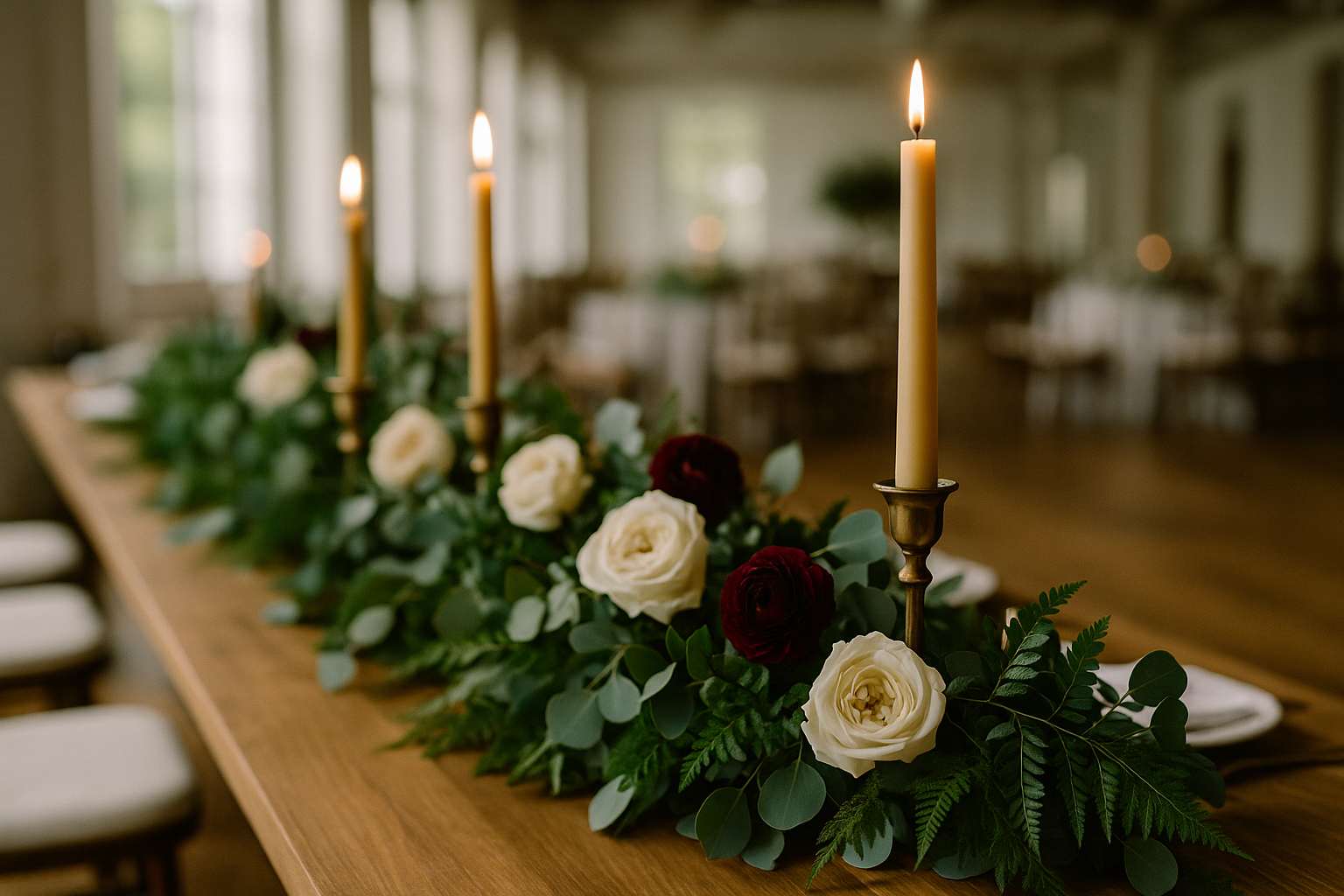
Emerald green sits at the top of every 2026 wedding color forecast that matters — not sage, not mint, not olive, but rich, deep, jewel-toned emerald that carries associations of growth, prosperity, and harmony. Dunn-Edwards named a deep blue-green its first-ever "Color of the Century" in recognition of how central this family of greens has become to contemporary design, and the wedding market has responded in kind. The Knot's 2026 editorial coverage identifies emerald as the single most-searched jewel tone direction for this wedding season. Its natural partner is warm gold — specifically burnished or antique gold, not chrome yellow-gold — and the combination performs brilliantly in fall and winter venues where candlelight, velvet, and dark-stained wood create the layered warmth that makes the palette feel like an event rather than a decoration. Florally, emerald weddings are extraordinarily well-served by lush greenery-forward designs: heavy eucalyptus garlands, fern installations, and tropical leaf arrangements form the structural bones, while white garden roses, cream ranunculus, and ivory lisianthus provide the floral brightness that keeps the palette from reading funereal. The florist team at Cortiella notes: "From olive to eucalyptus to emerald, shades of green are being layered into floral designs and table settings — lush greenery with gold flatware and soft ivory florals is nature meeting luxury." One practical advantage of emerald: greenery-forward designs are often 15–25% less expensive than bloom-dense centerpieces, because foliage is consistently less costly per stem than flowers. For linens, deep emerald velvet tablecloths with gold charger plates and white taper candles execute the editorial vision at accessible budgets.
Strengths
- The consensus forecast leader across The Knot, Whole Blossoms, and Bridal Guide — vendors are stocked, inspiration is abundant, and the editorial vocabulary is mature
- Greenery-forward execution keeps floral budgets lower than equivalent bloom-dense designs — a rare case where the trend-right choice is also the budget-smart choice
- Photographs with extraordinary richness in low light and candlelight — the palette is genuinely designed for the evening reception atmosphere most couples prioritize
Weaknesses
- Reads heavy in bright, minimalist venues or daytime outdoor ceremonies; natural garden light can make deep emerald feel visually dense rather than sophisticated — best reserved for the candlelit reception rather than the outdoor ceremony if both are planned
- Best for
- The consensus jewel-tone leader of 2026 — rich, sophisticated, and built for candlelight
- Pricing
- $22–$35/guest; ~$2,200–$3,500 / 100 guests
Deep Burgundy + Plum + Blackberry
The most romantic moody palette of 2026 — layered, cinematic, and built for fall
If emerald is 2026's sophistication story, then burgundy and plum are its romance story. The editorial team at Bridal Guide identifies deep burgundy as consistently the most-booked fall palette color year over year — and for 2026 specifically, the trend has evolved from simple burgundy-and-blush combinations into richer, tonal layering: deep plum, blackberry, wine-red, and cranberry stacked against one another to create an immersive, almost cinematic depth. Florist and designer Cindy Ollig, Owner of The Perfect Petal, describes the effect precisely: "Black cherry, aubergine, and creamy ivory come together perfectly with burgundy calla lilies, cherry baby orchids, inky purple tulips, and smokebush — the drama stays because it lives in texture and depth." That insight captures what makes this palette photographically exceptional: it is not one dramatic color but multiple values of deep red-purple that interact with candlelight in complex, shifting ways. The blooms available for this palette are among the most abundant in fall: garden roses in deep burgundy and plum, chocolate cosmos, amaranth, scabiosa, and dahlias in burgundy, wine, and eggplant. Poppies and anemones in dark ink tones extend the palette into early spring and late fall. Styling guidance from Cortiella recommends using "wine-red, burgundy, and cranberry paired with sage, olive, and eucalyptus greens" as the grounding structure, with "cream tones to break up the combination" — this prevents the palette from reading monolithic while preserving the moody depth that makes it powerful.
Strengths
- The most readily available and consistently cost-effective jewel-tone palette in fall — burgundy, plum, and deep-toned dahlias and garden roses are all in peak season and maximum supply from September through November
- Tonal layering (multiple values of red-purple-plum) creates photographic complexity that a single-color palette cannot achieve — images have genuine depth at every focal length
- Works across the full venue spectrum from rustic barn to formal ballroom, making it one of the most versatile deeply saturated palettes available
Weaknesses
- Challenging in summer outdoor ceremonies under full natural light — the palette's richness and drama require low or warm lighting to fully activate; in bright midday sun it can read flat or muddy rather than romantic
- Best for
- The most romantic moody palette of 2026 — layered, cinematic, and built for fall
- Pricing
- $20–$32/guest; ~$2,000–$3,200 / 100 guests
Source: 2026 Wedding Color Trends + Flowers for Every Palette
Raspberry Blush + Spring Green
2026's breakout spring palette — deeper than blush, brighter than the garden-rose era
Best value
Raspberry is the breakout color of spring 2026, and it marks a meaningful evolution in how couples approach soft, romantic palettes. For the better part of a decade, blush-and-ivory has been the default spring choice — beautiful but ubiquitous. Raspberry responds to that saturation by asking: what if the depth stays but the warmth goes bolder? It is not a difficult color to love: deeper and more saturated than classic blush, with a vibrancy that photographs cleanly under the bright, diffuse light of spring ceremonies without the risk of washing out that can haunt paler pinks. The natural palette partner is the spring green of fresh foliage — not the muted sage of dried arrangements, but the bright, living green of new ranunculus leaves, sweet pea tendrils, and fern fronds. Flourish Flower Farm, which specializes in wedding-focused specialty cut flowers, identifies this combination as one of the most frequently requested for spring 2026 bookings. The bloom selection for this palette is exceptional: ranunculus (available in raspberry, blush, and pale pink), sweet peas (among the most photogenic spring wedding flowers), anemones in blush and white, hellebores, and cosmos. These are all peak-season blooms in the March–May window, which means they are among the most affordable fresh flowers of the year when sourced from domestic growers. For couples working with tighter floral budgets, this is a rare case where the trend-right choice is also the budget-smart choice — no imported specialty flowers, no out-of-season premiums, just the most beautiful blooms of the season in colors that are genuinely having a moment.
Strengths
- Peak-season spring blooms (ranunculus, sweet peas, anemones) are at maximum availability and minimum cost from March through May, making this one of the most budget-accessible saturated palettes of the year
- Photographs exceptionally well under the bright, diffuse natural light of spring ceremonies — raspberry holds its value and does not wash out the way pale pinks can in outdoor midday sun
- A confident evolution of the blush-and-ivory era that reads as current and intentional without abandoning the warmth and femininity that made that palette so beloved
Weaknesses
- Limited natural bloom availability outside the March–May window — executing this palette in summer or fall requires sourcing imported or greenhouse-grown flowers, which can increase floral costs by 20–35% and reduce the freshness that makes spring blooms so appealing
- Best for
- 2026's breakout spring palette — deeper than blush, brighter than the garden-rose era
- Pricing
- $18–$28/guest; ~$1,800–$2,800 / 100 guests
Warm Peach + Honey Gold + Copper Beech
Late summer and fall's warmest palette — earthy elegance at golden hour
This is the palette that understands golden-hour photography better than any other in 2026. Warm peach, soft honey gold, and the burnished copper-brown of copper beech foliage are colors that are essentially designed by light: they are at their most beautiful when the sun is low, warm, and directional — precisely the conditions of a late summer afternoon ceremony or an estate reception under early October skies. The palette originated in the slow evolution of the terracotta-and-sage trend that dominated 2022–2024, but it has matured considerably: terracotta has refined toward a warmer, more luminous peach, and the sage has given way to honey gold and copper, creating a palette that feels less bohemian-rustic and more editorial-elegant. The bloom pairings are exceptional: late-summer dahlias in peach, coral, and apricot; garden roses in warm cream and blush; celosia in copper; and foliage from copper beech, maple, and ornamental grasses. Tented vineyard receptions, estate ceremonies, and outdoor ballroom setups with warm uplighting are the natural homes for this palette. The warm peach-and-gold combination also performs particularly well against wood — barn beams, walnut-finished furniture, cedar tables — which allows couples at rustic venues to execute a palette that reads elevated and current rather than predictable.
Strengths
- Exceptional golden-hour photography performance — the palette's warm tones are literally lit by late-afternoon sunlight, producing images with a depth and warmth that no other color story can replicate under those conditions
- Bridges the gap between the still-popular terracotta aesthetic and a more polished, editorial sensibility — familiar enough to feel safe, refined enough to read as current in 2026
- Works exceptionally well with natural and warm-wood venue environments, which represent a large share of the U.S. wedding venue market
Weaknesses
- Low-light and candlelit reception performance is softer than deeper jewel-tone palettes — warm peach can read as pale or undefined under dim indoor lighting; copper accents and warm uplighting are essential to maintain the palette's visual richness after sunset
- Best for
- Late summer and fall's warmest palette — earthy elegance at golden hour
- Pricing
- $22–$35/guest; ~$2,200–$3,500 / 100 guests
Purple — Lavender to Deep Violet
2026's most flexible romantic palette, from soft pastoral to bold and dramatic
Purple is having one of its most commercially significant moments in wedding design in years. Wezoree's trend analysis of 2026 weddings identifies plum and aubergine as the trending wedding color this season, and the range within the purple family is genuinely exceptional — from the soft, pastoral quality of lavender that suits a garden afternoon ceremony, through the romantic mid-range of dusty mauve and lilac, to the deep, dramatic richness of aubergine and violet that competes head-to-head with burgundy for moody candlelit reception supremacy. The critical design insight is that purple palettes work best when they commit to a position on this spectrum and use a single contrasting tone — typically ivory or champagne — to provide breathing room. Scattered across multiple values without a clear hierarchy, purple can read chaotic; anchored to a dominant value with champagne as a foil, it reads cohesive and intentional. Florally, the range of available purple-family blooms is extraordinary across every season: wisteria, lavender, and sweet peas in spring; scabiosa, lisianthus, and delphinium in summer; asters and anemones in fall; and hellebores and hyacinths in winter. Deep violet and plum tones are particularly well-served by the fall-to-winter bloom calendar, which also offers the dark taper candles, dark velvet linens, and low warm lighting that make the palette its most powerful.
Strengths
- The widest internal range of any 2026 palette — lavender to deep violet covers pastoral garden ceremonies and dramatic candlelit receptions with equal confidence, giving couples genuine flexibility within a single color family
- Year-round bloom availability in some value of purple: sweet peas and wisteria in spring, delphinium and scabiosa in summer, asters in fall, hyacinths in winter
- Deep violet and plum are trending specifically for 2026 evening receptions, making this palette highly current even in its more saturated forms
Weaknesses
- Requires a clear, committed hierarchy — a pale lavender ceremony palette and a deep violet reception setup can coexist across a wedding weekend, but trying to use both simultaneously in a single space creates visual incoherence; the palette rewards decisiveness
- Best for
- 2026's most flexible romantic palette, from soft pastoral to bold and dramatic
- Pricing
- $18–$36/guest by value & season
Source: Wedding Color Trends 2026: The Most Stylish Wedding Color Palettes
Tonal Browns + Earth Neutrals
The Japandi-inspired palette that turns brown from overlooked to essential
Brown is, as one event designer was quoted saying in 2026, "criminally underutilized in event design." The tonal brown palette — built from chocolate, latte beige, portobello mushroom, espresso, and warm sand tones, layered against each other with varied texture — is one of the most distinctive and photographically interesting choices a couple can make in 2026. It draws explicitly from the Japandi design movement (a hybrid of Japanese and Scandinavian aesthetic philosophies) that has dominated interior design over the past three years, and it translates to wedding design through a commitment to natural materials, negative space, and the interaction of warm tones in candlelight. The palette's great practical strength is that it can be executed primarily through dried, preserved, and foliage-forward arrangements — ornamental grasses, pampas grass, dried branches, cotton stems, preserved eucalyptus — which are consistently less expensive than fresh bloom-dense designs and available year-round without seasonal sourcing premiums. The Pantone 2025 Color of the Year, Mocha Mousse — a warm, brown-adjacent shade — built significant consumer vocabulary for this palette direction, and 2026 extends that comfort into deeper, richer executions: espresso-dark table linens, walnut charger plates, beeswax taper candles, and raw linen napkins. For couples at barn venues, desert outdoor settings, or industrial loft venues, this palette provides an editorial sophistication that most competitors cannot match.
Strengths
- Dried and foliage-forward execution keeps floral costs significantly lower than fresh bloom-dense designs — often the most budget-efficient of the 2026 palettes for couples willing to work with texture over flower volume
- Distinctive and memorable: most couples default toward conventional floral palettes, meaning a tonal brown design reads as intentional and original against the competition
- Pantone Mocha Mousse (2025 Color of the Year) built consumer familiarity with warm brown aesthetics, making vendor communication and inspiration sourcing unusually easy
Weaknesses
- Requires very deliberate lighting design — tonal browns under cool LED pin spots look flat and slightly institutional; the palette demands warm-white uplighting, beeswax candles, or lanterns to activate the depth and warmth that makes it work photographically
- Best for
- The Japandi-inspired palette that turns brown from overlooked to essential
- Pricing
- $14–$30/guest; ~$1,400–$2,200 / 100 guests
Source: 2026 Wedding Floral Trends: Immersive Luxury, Bold Color, and Curated Experiences
Strawberry Lemonade — Coral + Chartreuse + Buttery Yellow
The boldest, most joyful palette of 2026 — meadow-inspired and photographically electric
This palette is not for every couple, and it knows it — which is precisely what makes it so right for the couples it suits. The Strawberry Lemonade story is an homage to wildflower meadows and summer abundance: warm buttery yellow and punchy coral anchor the palette while vibrant pink and chartreuse accents inject a visual energy that no other 2026 direction can match. Flourish Flower Farm's blog notes that the zinnias, cosmos, celosia, gomphrena, and dahlias that execute this palette all "let each arrangement feel hand-gathered and full of movement" — and that quality, the sense that the flowers were gathered from a living garden rather than assembled from a floral distributor's catalog, is the experiential core of what this palette communicates. Open-air settings are its natural home: mountain meadow ceremonies, farm-table receptions, vineyard outdoor dinners, and sunset beach celebrations. The palette performs particularly well with wooden farm tables (no linen required), wildflower-style arrangements in simple bud vases, and natural jute or cotton napkins. Chartreuse is the risk element: it is unexpected, joyful, polarizing — and exactly right for brides who want their wedding photographs to be genuinely memorable rather than generically beautiful. Wedding planner and designer Cortiella identifies it as one of the most distinctive signature choices available in 2026. Budget-wise, it is excellent: summer wildflower-style blooms are among the most cost-effective in the market, and the deliberately un-precious, hand-gathered aesthetic means that professional design execution does not require expensive structural engineering or import-dependent specimens.
Strengths
- Executes beautifully with widely available, cost-effective summer blooms — zinnias, cosmos, celosia, and dahlias are all peak-season, domestic, and inexpensive at the height of summer
- Photographically distinctive: the palette's high energy and saturated variety creates images that are immediately recognizable and memorable — particularly in open-air golden-hour settings
- The hand-gathered, wildflower aesthetic forgives minor asymmetry in execution, making it one of the most forgiving palettes for couples working with smaller or less experienced floral teams
Weaknesses
- Limited to outdoor and casual-to-semi-formal settings — the palette's exuberant energy is fundamentally incompatible with formal ballrooms, black-tie events, or venues with traditional architectural gravitas; attempting to force it into those contexts creates dissonance rather than contrast
- Best for
- The boldest, most joyful palette of 2026 — meadow-inspired and photographically electric
- Pricing
- $15–$24/guest; ~$1,500–$2,400 / 100 guests
Frequently asked
What is Pantone's 2026 Color of the Year and how does it apply to weddings?
Pantone's 2026 Color of the Year is Cloud Dancer — PANTONE 11-4201 — a soft, warm off-white that sits between ivory and the faintest cream. Pantone describes it as "a lofty white neutral whose aerated presence acts as a whisper of calm and peace." For weddings, Cloud Dancer functions beautifully as a primary palette anchor: it shifts character with every change in fabric and light — luminous on silk, matte on linen, honeyed in candlelight — and pairs naturally with the white bridesmaid dress trend that is prominent in 2026. The critical execution requirement is texture: layering heavy linen, frosted glass, brushed brass, and sculptural botanical arrangements ensures the palette reads luxurious rather than sparse. A single saturated accent — sage, dusty blue, or soft raspberry — integrated at 10–15% of visual space prevents Cloud Dancer from disappearing into the background while preserving its calming, airy quality.
Which 2026 wedding color palette is most budget-friendly?
The most budget-accessible fully saturated 2026 palettes are Raspberry Blush + Spring Green (for spring weddings) and Strawberry Lemonade (for summer weddings), both of which rely on peak-season domestic blooms that require no import premiums. For fall and winter, the Tonal Browns + Earth Neutrals direction is consistently the most affordable because it relies heavily on dried botanicals, foliage, and preserved elements that cost significantly less per stem than fresh flowers. Poppy Flowers and Whole Blossoms, two of the U.S. market's largest wedding floral suppliers, both identify seasonal sourcing alignment as the single most effective lever for reducing floral costs — working within-season can reduce total floral spend by 15–30% compared to sourcing against the calendar. Budget-forward couples should also consult with their florist about lisianthus as a cost-effective substitute for peonies in light-toned and purple palettes.
Which 2026 wedding color trends will look timeless in photographs — and which might look dated?
The palettes with the strongest long-term photographic permanence are Cloud Dancer + warm neutrals (essentially an elevated extension of the perennial white palette), Emerald + Gold (jewel tones with classic foundations photograph without temporal fingerprints), and Tonal Browns + Earth Neutrals (which draw from interior design movements with demonstrated staying power). The palettes carrying the most trend-specific risk are Strawberry Lemonade, which is tied to a specific wildflower aesthetic moment, and highly specific novelty color combinations built around single pop-culture references. The hybrid formula that bridal designers consistently recommend is a timeless foundation — neutral whites, champagne, champagne-adjacent neutrals — with one trend-forward accent color executed at 10–20% of visual volume. This approach keeps photographs grounded in classicism while giving the day a genuine sense of the year in which it happened.
How do I choose between jewel tones and soft neutrals for my 2026 wedding?
The most reliable decision framework starts with your venue, not your personal color preference. Jewel tones — emerald, burgundy-plum, deep violet — activate in warm, low, or candlelit light and read most powerfully in ballrooms, châteaux, estate venues, and barn interiors with warm uplighting. Soft neutrals — Cloud Dancer, warm peach, lavender — perform best in natural light: garden ceremonies, greenhouse venues, outdoor chapels, and whitewashed or bright interior spaces. If your ceremony is outdoors in natural light and your reception is candlelit indoors, the palette decision is yours to make freely — both can work beautifully in the right half of the event. A practical additional consideration: your gown's undertone. A warm ivory or champagne gown coordinates most harmoniously with warm palettes (peach, gold, raspberry, tonal brown); a cool or bright white gown pairs most cleanly with cool or neutral palettes (lavender, dusty blue, Cloud Dancer).
What flowers should I request for an emerald and gold 2026 wedding?
For an emerald and gold palette, the floral design is most powerful when greenery does the structural work and white or cream blooms provide the floral brightness. Request lush eucalyptus (silver dollar, seeded, and spiral varieties), fern, tropical philodendron leaves, and ruscus as the greenery base. For bloom accents that complement without competing, white or cream garden roses, ivory lisianthus, white ranunculus, and white scabiosa are all excellent. Gold-adjacent bloom accents — yellow-cream garden roses, cream dahlias with honeyed centers — bridge the palette from pure green-and-white into the warmer gold register. Warm gold brass taper candles, gold flatware, and deep green or hunter-green velvet linens complete the palette at the table level without requiring expensive specialty blooms. Ask your florist to verify seasonal availability; emerald-family greenery is available year-round from most domestic suppliers, with fall being the optimal season for this palette overall.
Is the burgundy and plum palette still relevant in 2026, or is it oversaturated?
Deep burgundy remains the most consistently booked fall wedding palette color in the U.S. market — Poppy Flowers' booking data confirms burgundy-inclusive palettes represent the highest percentage of fall orders year over year. The evolution in 2026 is not whether to use burgundy, but how: the current direction moves away from simple burgundy-and-blush pairings toward richer tonal layering — deep plum, blackberry, wine-red, and cranberry stacked against one another for cinematic depth and complexity. This approach, which florist Cindy Ollig of The Perfect Petal describes as "drama that lives in texture and depth, not trend," is producing images that are genuinely distinctive from the 2022–2024 burgundy-blush era. Pairs specifically recommended for 2026: burgundy and plum with sage and eucalyptus green (not blush), with cream as the neutral foil rather than ivory or champagne. The tonal-layered execution — rather than the burgundy-plus-one-light-color formula — is what makes this palette feel current.