Flowers & Décor
Bridal Bouquet Styles: 9 Shapes Every Bride Should Know in 2026
From the asymmetrical free-form bouquet dominating 2026 runways to the reimagined cascade and the sculptural single-stem, here are the nine bridal bouquet styles that matter this year — with honest guidance on which works for your gown, your venue, and your vision.
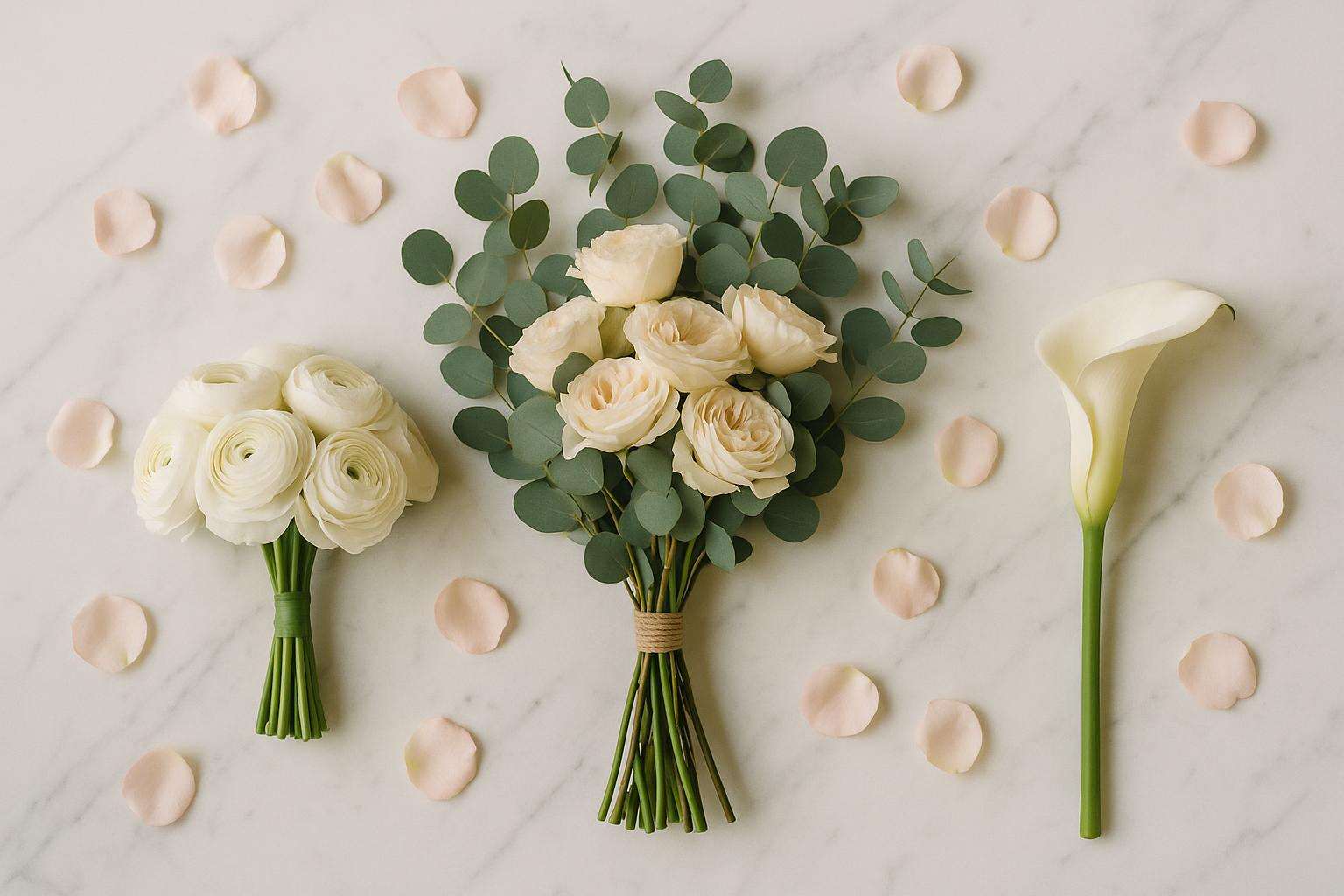
2026 trendsGown pairingCost rangesFlorist tipsFlower choicesStyle guide
The quick verdict
The asymmetrical free-form bouquet leads 2026 trends, but the right shape depends on your gown, venue, and personality — here are nine styles with honest guidance on each.
- Best overall
- Asymmetrical / Free-Form Bouquet — The dominant bridal bouquet style of 2026 for good reason: it works across a wide range of gown silhouettes, photographs beautifully in natural light, and feels personal and authentic in a way the tightly structured round posy cannot. It allows the florist to showcase seasonal blooms at their natural best, rewards the use of interesting textures and varied stem lengths, and creates the just-gathered aesthetic that 2026 brides are asking for by name. Most importantly, it looks like you chose it deliberately — not like every other bouquet carried down every other aisle.
- Best value
- Wildflower / Garden-Style Bouquet — At $150 to $280, the wildflower and garden-style bouquet is among the most cost-effective ways to achieve a lush, romantic, seasonally grounded look. Because it uses seasonally available local blooms and embraces a loosely gathered aesthetic, it does not require premium imported flowers or labor-intensive construction. It photographs beautifully at outdoor venues, pairs well with most gown silhouettes, and is among the easiest styles for a skilled florist to personalize with specific colors, textures, and meaningful bloom choices.
- Best for Formal black-tie ceremony in a grand venue (cathedral, historic estate, grand hotel ballroom)
- Cascading / Waterfall Bouquet — reimagined — The cascade is the only bouquet style with the scale and drama to match the grandeur of a formal cathedral or black-tie estate ceremony. The 2026 reimagining replaces the heavy 1980s waterfall with delicate trailing tendrils and light vines that feel modern and bridal rather than theatrical. Against a full ball gown at a cathedral setting, a properly proportioned cascade is the single most photographically arresting bouquet choice available.
How we evaluated
These nine bouquet styles were selected and evaluated by cross-referencing 2026 florist trend reports from The Knot, Pedestals Floral Decorators, CHIC Flowers, Poppy Flowers, and Naluda Magazine; real-world booking frequency data from wedding planning platforms; and the research dossier on wedding flowers and bouquets drawn from professional florist guidance and industry planning resources. Each style was evaluated on 2026 trend relevance, versatility across gown types and venues, cost accessibility, and the practical wedding-day factors (heat durability, photography performance, ease of carrying) that make a bouquet genuinely work.
- 2026 trend relevance. Is this style actively being requested by brides in 2025–2026, and is it aligned with the current aesthetic direction of bridal florals?
- Gown and venue versatility. How broadly does this style work across different gown silhouettes and venue settings — or is it best suited to a specific context?
- Cost and florist accessibility. What does this style realistically cost, and can skilled florists across different markets execute it well?
- Photography performance. How does this style photograph in natural light, from multiple angles, and in the specific lighting conditions common at wedding ceremonies?
- Practical day-of factors. Is this style comfortable and easy to carry for four or more hours? Does it hold up in various weather conditions? Is a toss bouquet version feasible?
Rating scale: Items are rated on a 1–5 scale across 2026 Trend Relevance, Versatility, Cost Accessibility, Photography Performance, and Day-of Practicality.
Last verified .
At a glance
| # | Name | Rating | Best for | Pricing |
|---|---|---|---|---|
| 1 | Asymmetrical / Free-Form Bouquet | 4.9 | A-line, sheath, and boho gowns; outdoor garden, vineyard, barn, and bohemian ceremony settings; brides who want a bouquet that feels personal rather than conventional | $200–$350+ |
| 2 | Round / Posy Bouquet | 4.7 | All gown silhouettes; any ceremony style and formality level; brides who want a timeless, dependable choice that will not look dated in photographs | $150–$300 |
| 3 | Cascading / Waterfall Bouquet | 4.6 | Ball gowns and full A-line silhouettes; formal ceremony venues including cathedrals, grand hotel ballrooms, and historic estates; brides who want maximum ceremony drama | $250–$500+ |
| 4 | Arm / Presentation Bouquet | 4.5 | Sheath, column, and slim A-line gowns; modern, minimalist, and editorial ceremony aesthetics; brides who want to look effortlessly cool rather than conventionally formal | $175–$300 |
| 5 | Wildflower / Garden-Style Bouquet | 4.5 | Barn, vineyard, outdoor garden, and bohemian ceremony settings; summer and fall weddings with abundant seasonal flowers; sustainable-minded brides | $150–$280 |
| 6 | Nosegay Bouquet | 4.2 | Second weddings, vow renewals, courthouse ceremonies, micro-weddings, elopements, and minimalist brides who prefer understatement | $100–$200 |
| 7 | Composite / Glamelia Bouquet | 4.3 | High-fashion and editorial ceremonies; glamorous black-tie events; brides who want an artisanal statement piece that signals craft and intentionality | $300–$600+ |
| 8 | Sculptural / Single-Stem Bouquet | 4.4 | Modern, minimalist, and architectural ceremony venues; brides with a strong personal editorial aesthetic; sustainability-focused weddings; budget-conscious brides who want maximum elegance at minimum cost | $75–$200 |
| 9 | Purse / Sculptural Handle Bouquet | 4.1 | Fashion-forward, editorial, and couture bridal aesthetics; highly photographed styled ceremonies; brides with a strong personal style who want their bouquet to be a conversation piece | $300–$700+ |
Asymmetrical / Free-Form Bouquet
The defining bridal bouquet style of 2026 — organic, personal, and intentionally imperfect
The asymmetrical or free-form bouquet is the most requested bridal bouquet style of 2026, according to florists across the industry. Unlike the tightly structured round posy that defined the previous decade, the free-form bouquet embraces organic shapes, varied stem lengths, intentional negative space, and a just-gathered-from-the-garden quality that makes each arrangement feel genuinely one-of-a-kind. Florists describe these designs as 'intentionally imperfect' — with blooms at different heights, some stems longer than others, greenery that escapes the edges and catches the breeze. The style mirrors the broader 2026 bridal aesthetic shift toward authenticity over flawlessness. In practice, the free-form bouquet rewards the use of interesting textures and varieties: amaranthus draped over the edge, a spray of ornamental grasses, ranunculus at the center, and eucalyptus trailing below. Because the arrangement is deliberately organic rather than precisely packed, it allows seasonal and locally sourced flowers to appear at their natural best rather than forced into a geometric form. It photographs beautifully in natural light, particularly at golden hour, when loose petals and trailing stems catch directional rays with a warmth that tightly bundled arrangements cannot replicate. This style pairs beautifully with A-line and sheath gowns and works across outdoor garden, vineyard, and barn settings. At formal venues, the florist's skill in controlling the 'organic' quality so that it reads as deliberate rather than simply undone is the critical variable — which is why reviewing portfolios of this specific style, not just finished round arrangements, matters so much when booking your florist.
Strengths
- The dominant 2026 trend — brides and florists alike are moving toward this style, meaning the best talent in any market is practicing and perfecting it right now
- Photographs exceptionally well in natural light and at golden hour; loose stems and varied heights create visual movement that static round arrangements lack
- Highly personalizable — almost any flower, greenery, and seasonal variety can be incorporated, making each bouquet unique to the bride
Weaknesses
- Requires a highly skilled florist to execute well — an asymmetrical design that looks 'organic and intentional' versus 'sloppy and undone' is separated by technique; always review portfolios of this specific style before booking
- Best for
- A-line, sheath, and boho gowns; outdoor garden, vineyard, barn, and bohemian ceremony settings; brides who want a bouquet that feels personal rather than conventional
- Pricing
- $200–$350+
Source: Bridal Bouquet Styles for 2026: A Complete Guide to Shapes, Flowers, and Trends
Round / Posy Bouquet
The classic — still the most universally flattering bridal bouquet shape for every gown and setting
The round posy is the most traditional bridal bouquet form and the most universally versatile. A compact dome of blooms, symmetrical and tightly packed, it works beautifully against every gown silhouette, in every venue from courthouse to cathedral, and across every aesthetic from classic to contemporary. Its enduring appeal is structural: the circular shape creates a clean focal point that photographs with clarity from every angle, never appears lopsided in candid shots, and sits comfortably in the hand for hours without fatigue. In 2026, the round posy is evolving rather than disappearing. The tight, formal version is giving way to a looser, softer interpretation — still rounded in overall silhouette but with petals and leaves allowed to breathe beyond the dome's edge, creating a more dimensional, breathing version of the classic shape. White monochromatic round bouquets — all white ranunculus, or all white garden roses, or a mix of white peony and white sweet pea — are among the most requested designs of 2026, according to The Knot's flower trend coverage. The appeal is clear: a monochromatic white posy is simultaneously modern and timeless, pairs with virtually every gown color, and photographs with a clean elegance that is hard to date to any specific trend era. The round posy is also among the most accessible styles in terms of cost, as it uses a known quantity of stems in a straightforward construction format that skilled florists execute efficiently.
Strengths
- The most universally versatile bouquet style — works well with every gown silhouette, every formality level, and every venue aesthetic from courthouse to black-tie cathedral
- Photographs cleanly and consistently from every angle, making it the lowest-risk choice for brides who are uncertain about how various styles will read on camera
- Typically the most cost-accessible bouquet style at a given quality level, because the construction format is standardized and efficient for experienced florists
Weaknesses
- The tightly formal version of the round posy is declining in popularity as brides increasingly request the free-form asymmetrical aesthetic; a classic dense round posy may read as less contemporary in 2026 editorial photography
- Best for
- All gown silhouettes; any ceremony style and formality level; brides who want a timeless, dependable choice that will not look dated in photographs
- Pricing
- $150–$300
Cascading / Waterfall Bouquet
Dramatically romantic and unmistakably bridal — reimagined for 2026 with a lighter, modern silhouette
The cascading or waterfall bouquet — trailing stems and vines flowing downward from a compact top — is experiencing a significant 2026 resurgence. This is not the heavy waterfall arrangement associated with 1980s and 1990s formal weddings, where dense floral material cascaded in a weighty downward shape. The 2026 reimagining is dramatically lighter: delicate tendrils, thin trailing vines, loosely wired blooms that fall with graceful movement rather than bulk. Flowers commonly used in the modern cascade include trailing amaranthus, long-stemmed sweet peas, orchid sprays, wisteria, and bougainvillea, combined with fine-leaf eucalyptus, ivy, and smilax vine for greenery. The result is romantic, undeniably bridal, and uniquely suited to movement — this bouquet is spectacular in processional photographs, where the trailing elements create a dynamic visual line that follows the bride's movement. The cascading bouquet is most harmonious with full-skirted gowns — ball gowns, A-line silhouettes with full tulle skirts — where the scale of the arrangement matches the scale of the dress. On narrow sheath or column gowns, even the modern cascade can overwhelm the vertical line of the silhouette. For formal venues — cathedrals, historic estates, grand hotel ballrooms — the cascade is the bouquet style with the most natural architectural sympathy, its trailing line echoing the height and grandeur of the space. Queen Victoria herself carried a cascade of orange blossoms and snowdrops in 1840, cementing the style as the original formal bridal choice.
Strengths
- Creates the most dramatic and unmistakably bridal visual in processional photographs — the trailing silhouette is uniquely suited to movement and creates a dynamic, romantic image
- The 2026 reimagined version is significantly lighter and more modern than its historical predecessor, making it accessible to brides who want drama without weight
- The deepest historical resonance of any bouquet style — traces back to royal bridal tradition and is immediately recognizable as a formal bridal statement
Weaknesses
- Requires significant florist skill to execute well — the trailing components must be structured and secured to cascade naturally without drooping or detaching over the course of the day, which adds both complexity and cost
- Best for
- Ball gowns and full A-line silhouettes; formal ceremony venues including cathedrals, grand hotel ballrooms, and historic estates; brides who want maximum ceremony drama
- Pricing
- $250–$500+
Source: The Bridal Bouquet Trends Taking Over Weddings in 2026
Arm / Presentation Bouquet
Effortlessly modern and directional — the bouquet style that suits the bride who moves like she means it
The arm or presentation bouquet is carried cradled in the arms rather than held in a bundled grip — long, loose stems extending in one direction, blooms resting naturally in the crook of the elbow. The result is a look that is simultaneously casual and sophisticated, immediately modern, and strongly associated with editorial bridal photography. The style is particularly harmonious with sheath, column, and slim A-line gowns, where the long horizontal line of the bouquet echoes and extends the vertical, clean silhouette of the dress. On full-skirted gowns, the arm bouquet can read as disproportionately small, though a long, lush arm bundle can work against a ball gown if the scale is increased accordingly. Popular flower choices for arm bouquets include calla lilies (whose natural long-stemmed form is ideally suited to this style), sunflowers, large garden roses, tulips, and protea — blooms with structure and presence that make a statement when carried horizontally. The style also suits dried and preserved flowers beautifully, as the horizontal presentation showcases the natural forms of dried pampas, lunaria, and strawflower without requiring them to be bundled. For practical purposes, the arm bouquet requires that the bride is comfortable carrying something in the crook of one arm throughout the processional — it is a slightly different physical experience than a two-handed held bouquet, and trying the approximate weight and form during planning is advisable.
Strengths
- Immediately modern and directional — photographs distinctively and reads as fashion-forward in editorial ceremony images
- The natural long-stemmed form of calla lilies and tulips makes the arm bouquet one of the most cost-effective styles at a given quality level, since fewer stems are needed for full impact
- Suits dried and preserved flower arrangements particularly well, making it a natural choice for bohemian, autumn, and sustainability-minded weddings
Weaknesses
- Requires practice and comfort — carrying a bouquet in the crook of one arm throughout the processional is a different physical experience than a two-handed held bouquet, and some brides find it less natural without rehearsing the posture
- Best for
- Sheath, column, and slim A-line gowns; modern, minimalist, and editorial ceremony aesthetics; brides who want to look effortlessly cool rather than conventionally formal
- Pricing
- $175–$300
Source: 2026 Wedding Flower Trends: What's In, What's Out, and What Couples Are Actually Asking For
Wildflower / Garden-Style Bouquet
Looser, earthier, more alive — the bouquet that feels like it was just gathered from the most beautiful garden you have ever walked through
The wildflower or garden-style bouquet is a loosely gathered arrangement of seasonal blooms, herbs, and mixed greenery that looks as though the bride walked through a garden on a perfect morning and collected what was blooming. Unlike the formal round posy, it has no rigid geometric shape. Unlike the asymmetrical free-form, it is not deliberately structured — it is simply seasonal and abundant and alive. Typically incorporating a mix of smaller-scale blooms (chamomile, cosmos, Queen Anne's lace, sweet peas, scabiosa, lavender, ranunculus) alongside greenery and herbs (rosemary, eucalyptus, Italian ruscus, fern fronds), the style appeals to brides who want their bouquet to feel natural and connected to the land rather than to a design concept. It is the most forgiving style for seasonality: almost every month has beautiful flowers that suit this aesthetic, and working with whatever is locally grown and currently in bloom is both budget-friendly and sustainable. Garden-style bouquets pair beautifully with bohemian, barn, vineyard, and outdoor ceremony aesthetics and suit a wide range of gown silhouettes — particularly softer, less structured styles such as chiffon A-lines, boho lace gowns, and simple flowy silhouettes. At formal venues or with highly structured gowns, the looseness of the style may feel underdressed. For summer and fall weddings, this style is at its most spectacular: dahlias, zinnias, sunflowers, and berry-laden branches are beautiful in this format and unavailable in any other season.
Strengths
- The most budget-accessible style at a given quality level — using seasonal, locally sourced blooms reduces cost significantly while often producing more interesting, fresher arrangements than imported premium varieties
- Suits a wide range of outdoor and semi-formal venue aesthetics and works with almost any gown silhouette outside of the most formal black-tie contexts
- Aligns with sustainability goals — locally sourced, seasonal flowers have a significantly lower environmental footprint than imported specialty blooms
Weaknesses
- The looseness of the style can read as underdressed at formal cathedral or black-tie estate venues, and it requires a florist who genuinely understands the aesthetic to avoid looking simply unfinished rather than intentionally garden-gathered
- Best for
- Barn, vineyard, outdoor garden, and bohemian ceremony settings; summer and fall weddings with abundant seasonal flowers; sustainable-minded brides
- Pricing
- $150–$280
Source: Top 10 Wedding Flower Trends for 2026: A Luxury Florist's Guide
Nosegay Bouquet
Small, deliberate, and quietly lovely — the right bouquet for brides who want something understated
The nosegay is the smallest and most intimate of the classic bouquet styles — a compact, tightly gathered bundle of blooms, slightly smaller and less formal than a traditional round posy, carried close to the body with a clean, decisive quality. The name derives from an Old English term for a small fragrant bunch of flowers meant to be held near the nose, and the style has historically been associated with simplicity, intimacy, and personal meaning rather than grand floristry statement. In 2026, the nosegay suits second weddings and vow renewals particularly well — its quiet scale signals intentionality rather than showmanship. It also works beautifully for minimalist brides, courthouse ceremonies, micro-weddings, and elopements where every detail is deliberately understated. Common flower choices for nosegays include a single variety at its most perfect: a tight bundle of all white lily of the valley, a compact sphere of all pink ranunculus, a few stems of garden roses with their leaves intact. The monofloral nosegay — one flower variety, gathered and bound — is a 2026 trend within the nosegay format that emphasizes botanical simplicity. At $100 to $200, the nosegay is one of the most budget-accessible bouquet styles, and its small scale means it does not compete with intricate gown details, statement accessories, or venue decor.
Strengths
- Ideal for second weddings, courthouse ceremonies, micro-weddings, and elopements where the overall scale of the event calls for restraint and intention rather than grandeur
- Among the most budget-accessible bouquet formats at $100 to $200 for a beautifully executed monofloral or mixed-bloom design
- Does not compete visually with intricate gown details, statement jewelry, or architectural venues — its quietness is its elegance
Weaknesses
- Too small for most large-scale formal ceremonies and traditional church weddings, where it risks reading as an oversight rather than an intentional aesthetic choice; the gown-to-bouquet proportion is the critical factor
- Best for
- Second weddings, vow renewals, courthouse ceremonies, micro-weddings, elopements, and minimalist brides who prefer understatement
- Pricing
- $100–$200
Source: 2026 Wedding Floral Design Trends Every Bride Needs to Know
Composite / Glamelia Bouquet
A work of artisanal craft — individual petals wired together into one magnificent oversized bloom
The composite or glamelia bouquet is one of the most labor-intensive and visually striking of all bridal bouquet styles — individual petals are individually wired and assembled to create a single enormous "flower" that is itself an artistic creation rather than a natural bloom. The result is a bouquet that looks like one perfect, impossibly large rose or gardenia, perfectly spherical and deeply textured, unlike anything that actually grows in nature. The style has deep roots in mid-century American floristry and was popularized in the era of formal Hollywood-glamour weddings; it is having a 2026 revival among brides who want high-fashion, editorial, and unapologetically glamorous wedding aesthetics. A glamelia is most commonly constructed from rose petals, gardenia petals, or dahlia petals — each one individually wired through its base and assembled in concentric rings from the center outward, consuming hundreds of individual petals per bouquet. The labor cost is significant, which places this style firmly in the premium tier. The tradeoff is a bouquet that is genuinely unlike anything else in modern floristry — an extraordinary photographic subject and an unforgettable detail for a bride who wants her accessories to make an artistic statement.
Strengths
- Visually unlike any other bouquet style — the oversized single-bloom appearance is instantly striking and photographs dramatically, particularly in close-up portrait and editorial-style images
- Suits high-fashion, glamorous, and editorial ceremony aesthetics with a conviction that no other style matches
- The construction technique allows precise color control — petals can be selected for exact gradient effects and color transitions that natural arrangements cannot achieve
Weaknesses
- Among the highest-cost bouquet styles due to intensive labor: assembling hundreds of individually wired petals takes several hours, and the price reflects that craftsmanship — budget $300 to $600 or more
- Best for
- High-fashion and editorial ceremonies; glamorous black-tie events; brides who want an artisanal statement piece that signals craft and intentionality
- Pricing
- $300–$600+
Source: Bridal Bouquet Styles for 2026: A Complete Guide to Shapes, Flowers, and Trends
Sculptural / Single-Stem Bouquet
The most minimalist bridal choice — one perfect stem or a clean architectural bundle, carried with complete conviction
The sculptural or single-stem bouquet is exactly what it sounds like: one exceptional stem, or a small gathered bundle of a single variety, carried with the confidence of someone who chose simplicity on purpose. This style has grown significantly in 2026 as brides increasingly reject the idea that a bouquet must be large and complex to be beautiful. Calla lilies are the defining flower for this style — their long, clean stems and architectural bloom shape make a single large calla lily one of the most striking objects a bride can carry. Long-stemmed amaranthus, large protea, bird of paradise, and anthurium also work beautifully as single-stem or minimal bundle choices. A bundle of all-white tulips — fifteen or twenty stems, loose and simple — is one of the most beautiful and cost-effective single-variety bouquets available, and it is genuinely unforgettable in photographs when the bride has the confidence to carry it. The sculptural bouquet is best suited to minimalist bridal aesthetics, modern ceremony venues (urban lofts, galleries, rooftops), and brides with a strong personal style who specifically want their flowers to feel like an editorial choice. It is also the most sustainable and cost-effective of all bouquet styles at a given quality level: fewer stems, straightforward construction, and local sourcing all contribute to a lower environmental footprint and lower cost.
Strengths
- The most cost-accessible bouquet style at a given quality level — a bundle of white tulips or a single large calla lily costs a fraction of a complex mixed arrangement while achieving equal visual impact in photographs
- Aligns perfectly with 2026's strong trend toward architectural and minimalist bridal aesthetics, particularly for urban, modern, and gallery ceremony settings
- The most sustainable bouquet choice — minimal stems, simple construction, local sourcing, and no complex wiring or foam infrastructure
Weaknesses
- Requires genuine commitment to the aesthetic — a single-stem bouquet carried tentatively reads as unfinished rather than intentional; this style works only for brides who are fully convinced by and comfortable with minimalism
- Best for
- Modern, minimalist, and architectural ceremony venues; brides with a strong personal editorial aesthetic; sustainability-focused weddings; budget-conscious brides who want maximum elegance at minimum cost
- Pricing
- $75–$200
Purse / Sculptural Handle Bouquet
2026's most talked-about statement bouquet — where floristry meets fashion accessory
The purse or sculptural handle bouquet is the most distinctly 2026 entry on this list — an emerging style that blends the traditional bridal bouquet with elements of a fashion accessory, resulting in something that is part arrangement, part statement clutch, part wearable art. In its most refined form, it features a structured handle (crafted from forged metal, pearl-adorned wire, or architectural acrylic) from which flowers cascade or are tightly arranged above. Some versions resemble a small structured bag of florals; others feature sculptural metal cuffs or wirework encasing the stems, turning the handle itself into the design element. The style has been featured on 2026 bridal runways and is being described by trend observers as one of the most shareable and photographable bouquet designs of the year. It aligns with 2026's broader bridal couture direction of treating accessories as artistic statements rather than functional additions. Practically, this style is most suited to brides with a fashion-forward sensibility, who are comfortable with attention to detail and who want their bouquet to be talked about. It is less suited to traditional or conservative ceremony settings where it may read as too unconventional. This is also a premium-tier design: the structural handle elements add both cost and the need for a florist with specific expertise in this emerging technique.
Strengths
- The most visually distinctive and conversation-generating bouquet style of 2026 — immediately identifiable as a deliberate fashion-forward choice that merges floristry and accessory design
- Extraordinarily photogenic from multiple angles, particularly in detail shots and flat-lay photography where the handle and floral elements create a graphic, editorial composition
- Aligns with 2026's broader couture bridal aesthetic direction of treating every element as an intentional style statement
Weaknesses
- Requires a florist with specific expertise in this emerging format — this is not a style that every florist currently offers, and portfolio review of this specific design is essential before booking; also higher-cost due to structural handle materials and specialized construction
- Best for
- Fashion-forward, editorial, and couture bridal aesthetics; highly photographed styled ceremonies; brides with a strong personal style who want their bouquet to be a conversation piece
- Pricing
- $300–$700+
Source: 10 Major Bouquet Trends for 2026
Frequently asked
Which bridal bouquet style is most popular in 2026?
The asymmetrical or free-form bouquet is the dominant bridal bouquet style in 2026, according to florists across the industry. This organic, loosely structured design — characterized by varied stem lengths, intentional negative space, and a just-gathered-from-the-garden quality — has replaced the tightly rounded posy as the most-requested style. Florists report that brides are actively asking for bouquets that feel "imperfect" and natural rather than symmetrical and controlled. The trend mirrors a broader cultural shift toward authenticity over polish that is visible throughout 2026 wedding aesthetics. The reimagined cascade is also seeing a significant resurgence — not the heavy waterfall style of the 1980s, but a modern version with delicate tendrils and light trailing vines. For something entirely fresh, purse-style and sculptural bouquets with metal-wrapped stems are emerging as the most fashion-forward choice of the year.
How do I choose a bouquet style that works with my gown?
The foundational principle is visual proportion: the bouquet should balance the gown's silhouette without competing with it. Ball gowns, with their full, voluminous skirts, can support the drama of a cascading bouquet or a large round arrangement — a tiny nosegay would be lost against the scale. Sheath and column gowns — which are narrow and long — are most beautifully paired with arm or presentation bouquets, where long stems are cradled rather than bundled, or with architectural single-stem designs that echo the gown's clean lines. A-line gowns are the most versatile and support almost every bouquet style. Mermaid gowns, which have their own drama at the hem, typically pair best with moderate round or garden-style bouquets that do not compete for attention below the waist. Beyond silhouette, consider the neckline: a heavily embellished bodice calls for a simpler bouquet so neither fights for the eye; a clean, minimal gown invites a more elaborate floral arrangement.
How much does a bridal bouquet cost in 2026?
The bridal bouquet ranges from $150 for a simple seasonal arrangement to $350 or more for a premium design featuring imported blooms, intricate wiring, or specialty varieties. The average falls between $200 and $300 for most mid-range designs at professional florists. Several factors drive cost higher: off-season flowers (peonies in October, lily of the valley in December), imported specialty blooms (garden roses, gardenias, orchids), labor-intensive construction such as composite glamelias or sculptural metal-wrapped stems, and market location. Couples in New York, Los Angeles, and San Francisco typically pay 20 to 30% above national averages for equivalent designs. Cost-reducing strategies include choosing seasonally available blooms, embracing greenery-forward designs (foliage costs significantly less than blooms), and opting for monofloral designs (a simple armful of white tulips is striking and efficient). The toss bouquet — a secondary, smaller version for the bouquet toss — should be budgeted separately at $35 to $75.
What are the trendiest flowers for bridal bouquets in 2026?
Several specific flowers have become defining choices for 2026 bridal bouquets. Amaranthus — with its graceful draping stems and effortless movement — has become the floral star of the year, with some florists reporting 285% year-over-year growth in requests. Calla lilies are having their biggest moment in decades, particularly in long-stemmed, minimal architectural arrangements rather than the traditional compact bundles. King protea is emerging as a bold statement choice for modern brides, often styled as a single-stem bouquet or with minimal greenery. Among classics, peonies, garden roses, ranunculus, sweet peas, and anemones remain perennially popular. For structural texture, ornamental grasses and wheat are appearing more frequently, particularly in bohemian and late-summer weddings. Color-wise, the white monochromatic palette is the most requested for 2026, followed by warm neutral tones inspired by Pantone's 2025 Color of the Year, Mocha Mousse.
What is the difference between a posy and a nosegay bouquet?
Both are compact, rounded bouquet styles, and the terms are often used interchangeably — but there are meaningful distinctions in scale and context. A posy bouquet is a classic dome-shaped arrangement, tightly packed with blooms, and is one of the most traditional bridal bouquet forms. It typically ranges from 8 to 12 inches in diameter and suits a wide range of gown styles and ceremony settings. A nosegay is slightly smaller and less structured than a classic posy — the name itself derives from a small fragrant bunch of flowers meant to be held near the nose. In contemporary usage, a nosegay suggests a more casual, intimate tone: it is well-suited to second weddings, courthouse ceremonies, and minimalist brides who want something delicate rather than declarative. Both styles are highly portable, photograph well from every angle, and are among the most budget-friendly bouquet types because they use fewer stems than larger arrangements.
Should my bridesmaids' bouquets match mine?
They should harmonize, not necessarily be identical. The bridal bouquet is the statement piece; bridesmaids' bouquets should complement it without competing. The most classic approach is the same flowers in a smaller scale — the bridesmaids carry a smaller version of the bride's bouquet design. A popular modern approach is same color, different flowers, which creates the feeling of a gathered garden rather than a uniform arrangement. Another effective approach is the same flowers but in a different color — for example, the bride carries white garden roses and the bridesmaids carry blush garden roses. In 2026, many brides are embracing a deliberately varied approach where each bridesmaid carries a different arrangement within a shared color palette, reinforcing the free-form, garden-gathered aesthetic that defines the year's bouquet trends. What matters most is that the bridal bouquet remains visually distinct as the most elaborate arrangement in the processional.
When should I book my wedding florist and discuss bouquet styles?
Begin researching and contacting florists 12 to 18 months before your wedding date. In peak-season markets (spring and fall Saturdays in major cities), top florists book out 9 to 12 months in advance. Secure your florist with a deposit as soon as you decide to work with them — most will not hold dates without one. Your bouquet style conversation typically happens at the first consultation, where you share inspiration images, discuss your gown silhouette and venue aesthetic, and align on a color palette. A good florist will guide you through practical considerations — which blooms are in season on your date, which styles photograph best in your venue's lighting, and how to achieve your vision within your stated budget. Finalize all floral details 3 to 4 months out when you can confirm headcounts and table numbers, which affects centerpiece quantities but does not change the bouquet design. Revisit your bouquet selection once more 4 to 6 weeks before the wedding to confirm availability of any specific requested flowers.