Flowers & Décor
How to Layer a Wedding Tablescape
A beautiful wedding tablescape is built in deliberate layers, from the linen base through the place card on top. This guide walks you through every layer — in order — with 2026 trend context, real cost data, and the design principles that separate an intentional table from a rented one.
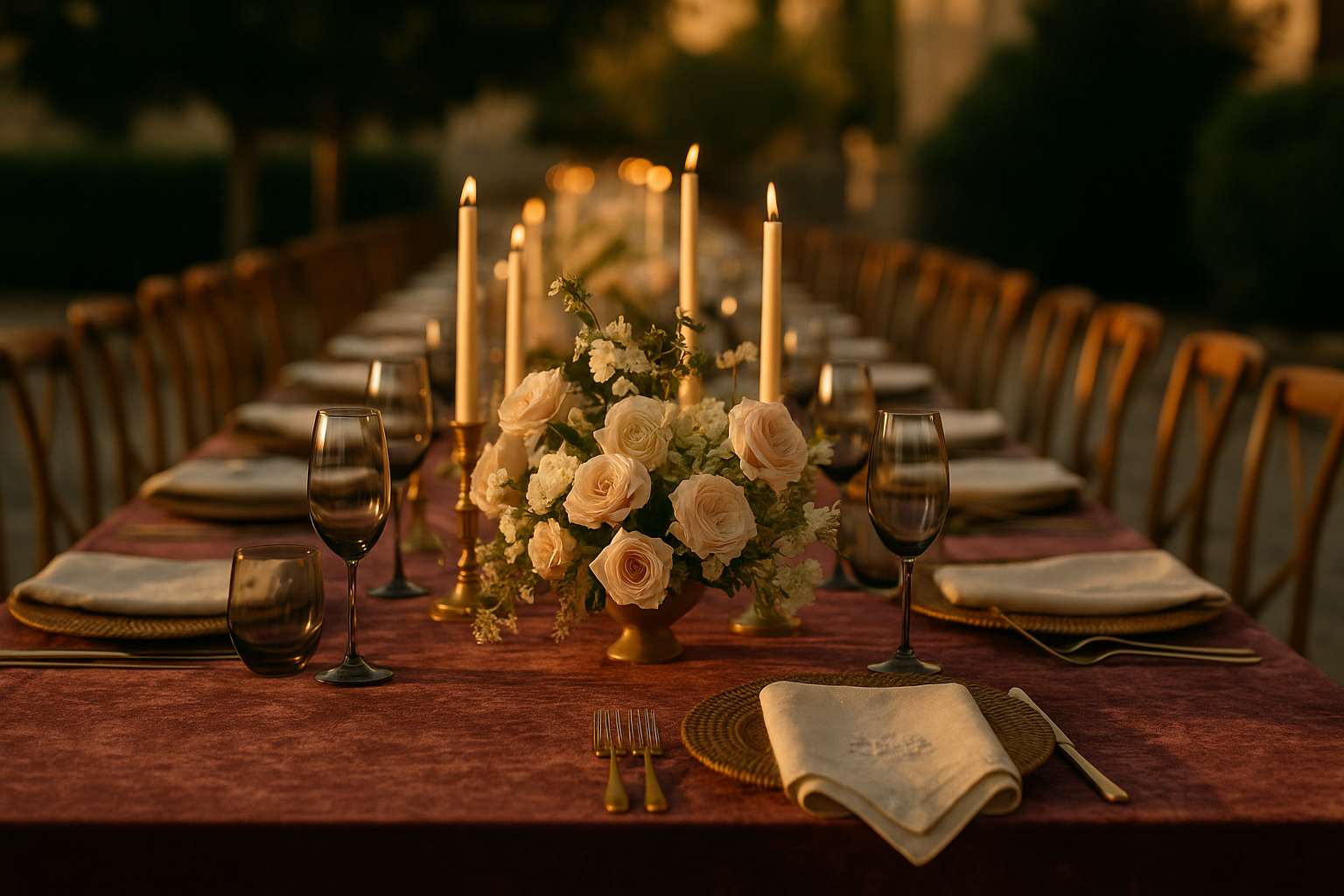
A wedding tablescape is built in eight sequential layers, from the linen base through the final micro-detail. Begin with the linen — it sets the color story for everything else. Add texture, structure, and height intentionally, with each layer either echoing or contrasting the one beneath it.
The tablescape is the landscape your guests will inhabit for two to four hours of your reception. While the ceremony holds the emotional weight of the day, the reception table is where the celebration actually lives — where toasts are given, where laughter builds, where the evening becomes a memory. It is also the most continuously photographed space at your reception: not in a single composed shot, but across hundreds of images taken throughout the evening from every angle and distance.
A well-layered tablescape is not an accident. It is the product of deliberate decisions made in a specific order. Top event designers — including Jennifer Matteo of Jennifer Matteo Event Planning, whose work appears regularly in Martha Stewart Weddings and Brides — describe the approach plainly: "Linens are the new florals. Start with linens first, then let everything else fall into place." This guide follows exactly that sequence.
What are the eight layers of a wedding tablescape — and what order do they go in?
Building a tablescape from the ground up means making decisions in a sequence where each choice constrains and informs the next. Here is the complete layer architecture, with the key decision at each stage:
| Layer | Item | Design Role | Typical Rental Cost |
|---|---|---|---|
| 1 — Foundation | Full tablecloth | Establishes the base color story; largest surface area in the room | $8–$100+ (poly to silk) |
| 2 — Texture contrast | Runner, overlay, or placemat | Introduces a second material; creates a visual focal channel | $5–$25 to rent |
| 3 — Structure | Charger plate | Grounds the place setting; adds formality and visual weight | $0.50–$5.00 per charger |
| 4 — Pattern or color | Dinnerware (china) | Introduces pattern, rim color, or intentional simplicity | $2–$28 per person (by tier) |
| 5 — Metallic accent | Flatware | Metal finish (gold, silver, matte black, rose gold) reinforces the palette | $0.50–$3.00 per place setting |
| 6 — Height and light | Glassware | Adds vertical dimension; color or crystal scatter light | $0.75–$5.00 per glass |
| 7 — Atmosphere | Candles and centerpiece | Light, height, organic material — tells the visual story of the table | $10–$80+ per table (candles only) |
| 8 — Personal touch | Napkin, ring, place card, menu | The final human layer; creates the feeling of being individually welcomed | $1–$8 per guest |
A critical design principle runs through all eight layers: each item should either echo or intentionally contrast with the layer beneath it. A rough linen runner on a smooth satin tablecloth is intentional contrast — two different textures in dialogue. A cotton napkin on a cotton tablecloth is echo — one material reinforced. Both work. What fails is when neither choice has been made: a polyester cloth under a polyester napkin under plastic glassware with no metallic or textural variation reads as purely functional, because it is.
Layer 1 and 2: Why you must start with the linen
The linen is the largest single surface in the room. Its color and texture are visible from every corner of the venue, read in every photograph, and set the tone for every other visual element at the table. Locking the linen before sourcing chargers, china, or florals is not a stylistic preference — it is a practical requirement. A linen that is chosen after the florals and chargers are selected is almost always a compromise.
The 2026 trend landscape has shifted meaningfully away from the poly-blend ivory tablecloth that has dominated wedding rentals for a decade. According to reporting from Reverie Social's 2026 wedding design trend coverage, the defining linen movements are: velvet (rich jewel tones; dramatic candlelight interaction), boucle and gauze (soft, organic-luxury textures), embroidered overlays (particularly botanical and geometric motifs), and intentional bold color (deep sage, Verona orange, peony pink). The silver renaissance — cool metallics replacing warm gold dominance — also runs through linen choices, with silvery or pewter-toned linens appearing at a significant share of late-2025 and 2026 receptions.
Layer 2 — the runner or overlay — introduces textural contrast across the table's center line. A raw-edge linen runner on a smooth satin base cloth creates visual layering at a cost of $5–$11 to rent or $5–$30 to purchase. Two parallel runners down a rectangular farm table is one of the highest-return investments in tablescaping at any budget level: the visual effect of two coordinating textures running the length of a long table is significantly more dynamic than a single surface, and the material cost is modest.
Layers 3 through 5: Charger, china, and flatware — the structural core
The charger plate grounds the place setting. Its sole purpose is visual and structural: it anchors the setting to the table surface, adds a layer of formality that elevates perceived value, and provides a surface for the napkin presentation before the first course. At $0.50–$5.00 per charger in rental pricing, chargers are one of the highest-return visual investments per dollar in tablescaping. The 2026 palette: hammered copper and bronze (warm, earthy, pairs beautifully with velvet linens), rattan and natural wicker (organic-modern; strongest in garden and outdoor settings), chrome and polished silver (the silver renaissance, playing directly into the cool-metallic trend), and acrylic (contemporary; lets the linen color read through the base).
China introduces the table's relationship with pattern, color rim, or deliberate simplicity. The defining trend for 2025–2026 is intentional mismatched china: deliberately varied patterns — often vintage china sourced by the couple over time — that create an eclectic, collected aesthetic when curated within a consistent color story. This trend also makes heirloom incorporation natural and visually coherent. For couples using standard rental china, colored rim options (deep navy, forest green, dusty rose, matte black) have largely replaced plain-gold-on-white as the contemporary choice at mid-range and upmarket receptions.
Flatware is the most consistently underestimated layer. The metal finish of your flatware — gold, silver, matte black, rose gold, or brushed steel — touches every other metallic element on the table. A warm gold flatware in tension with cool silver chargers and chrome glassware creates visual noise; the same gold flatware paired with gold-rim china, brass candlesticks, and warm amber glassware creates a coherent warm-toned palette. Choose the flatware finish after the charger and glassware have been selected, not before.
Layer 6: Glassware — the most accessible trend upgrade of 2026
Colored glassware is the single highest-value, most accessible trend upgrade available in 2026 tablescaping. Switching from clear standard rental glassware to smoked, amber, cobalt, or sage-tinted stems adds visual personality and a strongly current aesthetic for a rental cost difference of $0.75–$2.00 per glass. The visual impact on photographs — particularly in golden-hour and candlelight conditions — is dramatically disproportionate to the cost difference. A table dressed in clear rental glassware and a table dressed in smoke-tinted stems, identical in every other respect, read entirely differently in photographs.
Per Bally Spring Inn's 2026–2027 trend analysis, colored glassware — particularly amber, smoke grey, cobalt blue, and jewel-toned sage — remains one of the strongest-trending tablescape choices heading into the second half of 2026. Rent in quantities 10–20% above your guest count to account for breakage and replacement during service.
Layer 7: Candles and the centerpiece — the most powerful single layer
No element transforms a reception table as completely as candlelight. Even a modest place setting reads as intentional and romantic under well-placed candles. The design principle for candle placement is simple: odd numbers always read more organic than even numbers. Groups of three, five, or seven tapers at varied heights create the naturalistic density that characterizes the best-styled reception tables. Mixed candle types — taper candles in brass candlesticks, votives in glass holders, and one or two pillar candles in a coordinating vessel — provide height variation that a single candle type cannot.
The mass taper candle trend that emerged strongly in 2025 continues to define 2026 reception design: long farm tables lined with rows of identical slim ivory tapers, dense and architectural, is one of the defining visual motifs of the era. It is also achievable at a relatively modest material cost: twelve taper candles per farm table at $1–$3 each plus candleholders runs $30–$60 in materials, plus rental of holders at $3–$15 each.
The floral centerpiece is Layer 7's other half. The 2026 directional from leading event florists is sculptural and asymmetrical: ikebana-influenced arrangements with negative space, organic shapes, floating blooms, and floral compositions that feel more like fine art than a vase arrangement. Trending botanical choices include ranunculus, sweet peas, poppies, anthuriums, and hellebores, in palettes of butter yellow, sage green, powder blue, terracotta, and lilac.
Layer 8: The micro-detail layer — where the table becomes personal
The napkin is the most tactile element at the place setting: guests pick it up within the first minute of sitting down. Fabric quality, fold complexity, and placement all signal the level of care that went into designing their experience. The 2026 trend: textured napkins — linen-weave, waffle-weave, or velvet — paired with smooth tablecloths for tactile contrast. The napkin has evolved from a functional item into a styling element in its own right. Velvet napkins at $1–$3 more per guest than a standard rental napkin represent the highest per-dollar perceived luxury upgrade in the micro-detail layer.
Place cards and menu cards complete the layer. Custom illustrations on place cards, menus that recount the story of the couple's first meal together, or table names that reflect meaningful shared destinations all add narrative depth at minimal material cost. In 2025–2026, personalization is the defining guest experience trend: guests who feel individually acknowledged — seen by name, considered in the detail of the card or menu in front of them — remember the reception differently than those who experience it as a mass-produced event.
The sweetheart table deserves one final note: it is the most photographed table in the room, and it should receive a disproportionate share of the tablescaping investment. Upgraded linens, special chargers, crystal rather than standard rental glassware, more candles, a more elaborate centerpiece, and embroidered rather than standard napkins at the couple's own table compounds across every image taken at the reception. Allocate 15–20% of your tablescape budget to the sweetheart table alone.
Frequently asked
What is the correct order for layering a wedding tablescape?
Build your tablescape from the ground up in eight sequential layers: linen (the base color and texture story), runner or overlay (a second material for visual contrast), charger plate (the structural anchor for the place setting), dinnerware (china or ceramic with pattern, color, or simplicity), flatware (the metallic accent running the length of the setting), glassware (height, color, and light reflection above the plate), candles or centerpiece (light, height, and organic material that tells the visual story), and finally micro-details (napkin, napkin ring, place card, menu card, and any favor). Each layer should either echo or intentionally contrast with the layer beneath it — a smooth satin tablecloth under a rough linen runner is intentional contrast; a poly napkin on a poly tablecloth is echo. Both work when chosen deliberately. The failure mode is when neither choice has been made consciously.
What is the single highest-return upgrade for a wedding tablescape on a limited budget?
Candles, without question. A generous arrangement of mixed-height taper candles and votives adds $10–$25 per table in material cost, creates warmth and atmosphere that no amount of additional florals can replicate, and photographs strikingly under evening reception lighting. The second-highest-return upgrade is fabric napkins over paper: switching from paper to basic linen napkins is immediately perceptible to guests, who handle them within the first minute of sitting down. A further step up — velvet napkins — costs roughly $1–$3 more per guest than a standard rental napkin and transforms the perceived luxury of the entire place setting for a negligible per-person cost. Among design choices that do not involve candles or napkins, colored glassware is the most accessible trend upgrade available: switching from clear standard rental glassware to smoked, amber, or sage-tinted glass adds personality and a 2026-current aesthetic without meaningfully increasing your rental line item.
How do I create a cohesive tablescape when mixing different textures and materials?
The principle that top event designers apply consistently is this: build around a unified color palette first, then introduce textural variety within it. When the color story is coherent — even if that palette is complex — mixed textures read as curated rather than chaotic. Choose one warm metallic (gold or copper) or one cool metallic (silver or chrome) and let it anchor all other material choices. A velvet linen in deep sage, paired with hammered copper chargers, matte ceramic plates in warm ivory, and aged brass flatware, achieves rich textural complexity while remaining coherent because the color temperature is consistent throughout. The rule of three is practical shorthand: choose three primary materials and let everything else support them. Jennifer Matteo of Jennifer Matteo Event Planning describes the contemporary approach precisely: 'Linens are the new florals — start with linens first, then let everything else fall into place.' Lock your linen before sourcing chargers, china, or centerpieces.
What are the biggest tablescape mistakes brides make?
The most consequential mistake is not doing a mock table — a styled sample of the full place setting viewed together in your actual venue's lighting before finalizing any rental contracts. Colors look different under warm tungsten versus cool LED versus natural daylight, and a linen combination that photographs beautifully in a rental showroom can look flat or clash under your venue's specific lighting. The second most common mistake is forgetting what the venue provides: many venues include tablecloths, chairs, and standard white china in their package fee. Paying a rental company for items the venue already provides wastes budget that could elevate your actual design choices. Third: under-ordering candles. Couples almost universally order fewer candles than they need; tables that look sparse at 6 PM are a fixable problem at the planning stage and an unfixable one at 3 PM the day before. When in doubt, round up on candles and round down on almost everything else.
When should I finalize my tablescape choices?
Finalize your linen color, charger style, china pattern, and glassware selection by six months before your wedding date. Top rental vendors in high-demand markets — particularly for peak-season May through October dates — routinely book premium inventory nine to twelve months in advance. Beginning rental conversations early also gives you time to schedule a mock table styling session, which most established rental companies offer in their showrooms. Napkin folds, napkin ring selection, place card holders, and micro-detail choices can be finalized at four to six months out. Adjust your rental quantities against your final guest count at six to eight weeks before the wedding — most rental contracts allow quantity adjustments within a defined window, so confirm that cutoff with your vendor early and add it to your planning calendar.
How do I handle candle restrictions at my wedding venue?
Confirm your venue's open-flame policy before committing to any candle-based design — ideally during the venue tour, not after signing the contract. Many historic buildings, barns, enclosed tents, and urban loft spaces prohibit open flames entirely, while others permit candles with specific restrictions: enclosed glass holders only, minimum distance from floral arrangements, a venue-provided fire extinguisher on the floor. If open flames are restricted, battery-operated LED candles have improved dramatically in realism since even 2022. In evening reception conditions — low ambient light, warm color temperature — quality LED tapers (brands such as Luminara) are photorealistic and produce comparable warmth to real wax. The investment is higher upfront ($5–$15 per LED candle versus $1–$3 for real wax), but rental companies increasingly carry them, and they can also be purchased and resold after the event through wedding resale platforms.