Flowers & Décor
Outdoor Wedding Lighting Ideas: 8 Ways to Transform Your Venue in 2026
From Edison bistro strings to dramatic taper clusters to dynamic uplighting — eight outdoor wedding lighting approaches with honest cost ranges, photography guidance, and the design principles that separate beautiful from merely decorated.
outdoor wedding lightingstring lightsuplightingwedding candleswedding decor 2026
The quick verdict
The eight outdoor lighting approaches that work — with honest cost ranges, layering guidance, and the photography decisions that determine how it all looks in your photographs.
- Best overall
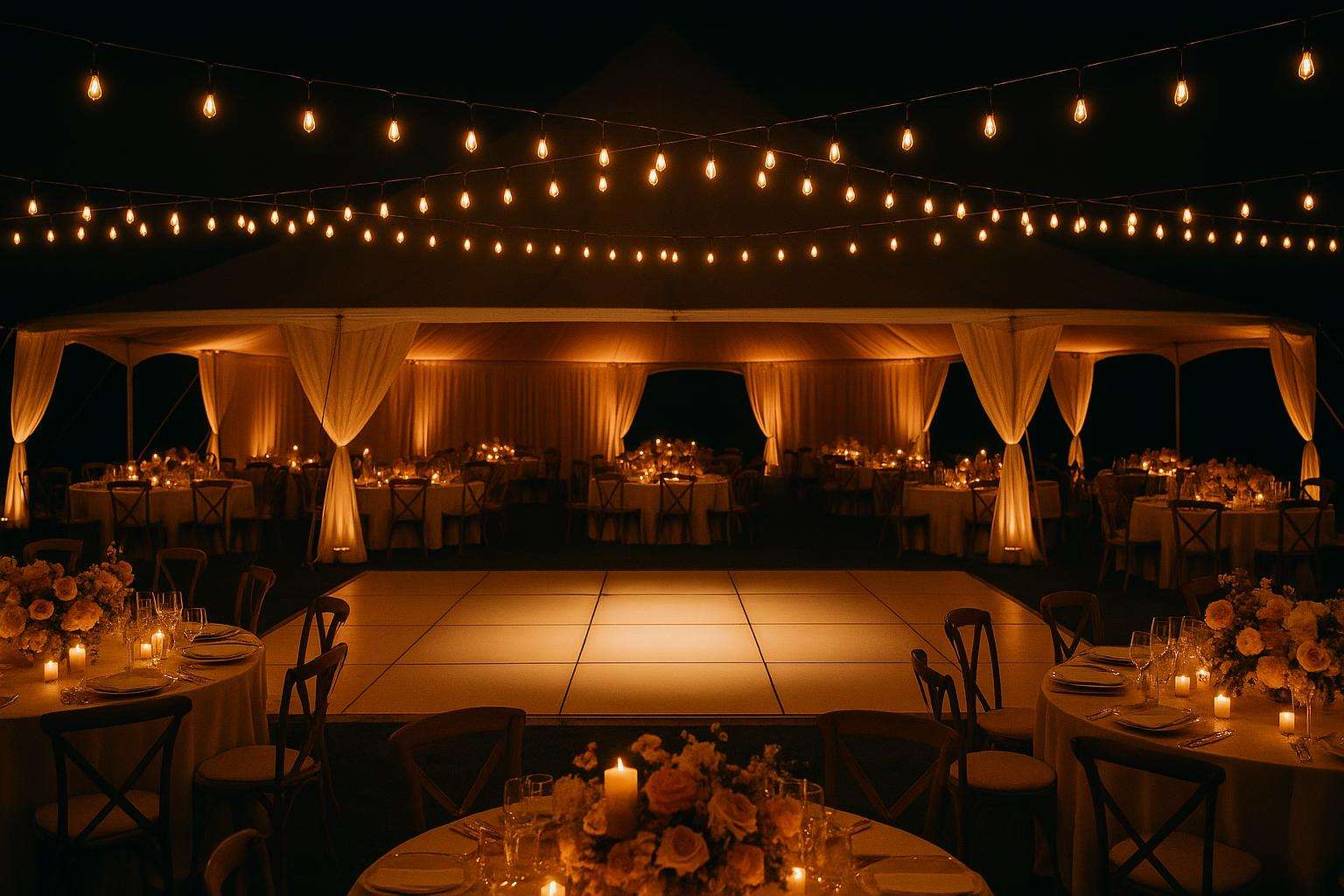
- Edison Bistro String Lights — No single outdoor wedding lighting element delivers the warmth, visual impact, and photographic quality of a well-executed bistro light installation. They create a psychological ceiling in open-air spaces, define the reception zone, and produce the amber warmth that makes every photograph look like it belongs in a magazine. At three to five dollars per linear foot professionally installed, they are also among the most cost-effective upgrades available.
- Best value
- LED Uplighting — A basic uplighting package — eight to twelve units in warm white or blush — costs three hundred to nine hundred dollars and transforms a flat, institutional-looking outdoor venue into a warm, intentional space. No other single investment delivers this level of visual transformation at this price point. The effect on photographs is disproportionate to the cost.
- Best for Couples who want dramatic, magazine-quality reception photography
- Pin Spots on Cake and Centerpieces — Pin spots are the professional photographer's secret weapon and the most underutilized element in outdoor wedding lighting. A single pin spot aimed at your wedding cake makes it glow like a still-life painting in every photograph taken from any angle in the room. At twenty-five to sixty dollars per unit, the photography return on investment is extraordinary.
How we evaluated
These eight outdoor wedding lighting ideas were selected by cross-referencing current industry cost data from Zola, The Lighting and Sound Company, and Rob Alberti Photography; design guidance from Junebug Weddings and The Knot's wedding lighting coverage; and the wedding lighting design research dossier compiled from real event professional experience. Each option was evaluated on visual impact, photographic performance, cost-effectiveness, installation complexity, and suitability for outdoor conditions. All cost ranges reflect 2025–2026 U.S. market data.
- Visual impact. Does this lighting element transform the space in a meaningful way, or does it provide only incremental improvement?
- Photographic performance. How does this element appear in professional wedding photographs? Does it flatter skin tones and add warmth, or does it create challenges for the photographer?
- Cost-effectiveness. What is the visual return per dollar invested? Are there DIY alternatives that deliver meaningful savings without sacrificing quality?
- Installation complexity. Can this element be installed by a DIY couple with reasonable effort, or does it require a professional lighting vendor?
- Outdoor suitability. Does this element perform reliably in outdoor conditions — wind, humidity, variable power sources, open-air acoustics?
Rating scale: Items are rated 1–5 on Visual Impact, Photography Performance, Cost-Effectiveness, Installation Ease, and 2026 Trend Alignment.
Last verified .
At a glance
| # | Name | Rating | Best for | Pricing |
|---|---|---|---|---|
| 1 | Edison Bistro String Lights | 4.9 | Any outdoor or tented reception seeking the warm, cinematic aesthetic that dominates current wedding photography; barn, garden, estate, and vineyard settings | $3–$5 per linear foot (professional install); $17–$30 per strand (DIY) |
| 2 | LED Uplighting | 4.8 | Any outdoor reception seeking visual warmth and definition; tented venues with draped walls; barn and estate settings; couples prioritizing photography quality | $300–$2,000 depending on quantity and programming |
| 3 | Candles and Lanterns | 4.8 | Any outdoor reception seeking intimate, romantic atmosphere; garden, estate, and vineyard settings; tented receptions with permits for enclosed flame | $0.25–$1.00 per votive; $4–$15 per pillar; $50–$150 per taper cluster arrangement |
| 4 | Pin Spots on Cake and Centerpieces | 4.6 | Any reception where the wedding cake or centerpieces are significant design investments; couples prioritizing photography quality; tented outdoor receptions with ceiling rigging capacity | $25–$60 per unit; full table package $400–$1,200 |
| 5 | Fairy Light Ceiling Draping | 4.5 | Romantic, fairy-tale, and luxury wedding aesthetics; tented outdoor receptions; couples for whom the overhead visual environment is a design priority | $1,200–$4,000 (professional full-ceiling installation) |
| 6 | Pathway and Perimeter Lighting | 4.3 | All outdoor weddings — this element should be planned regardless of other lighting choices; particularly critical for evening receptions in rural, unlit, or multi-level outdoor venues | $200–$800 for professional pathway lighting; lanterns $15–$60 each |
| 7 | Rattan and Woven Chandeliers | 4.3 | Garden, greenhouse, outdoor tented, and estate receptions; couples pursuing a bohemian, earthy, or nature-inspired aesthetic; 2026 couples who want current trend alignment | $150–$500 per fixture plus rigging; floral integration $200–$600 additional |
| 8 | Fire Pit Lounge with Ambient Lighting | 4.2 | Outdoor and resort-style weddings with evening receptions; couples planning a casual after-party extension; any couple whose guest demographic includes a meaningful contingent who will want to linger after the formal program ends | $400–$1,500 for fire pit and lounge setup; ambient lighting additional |
Edison Bistro String Lights
The gold standard of outdoor wedding lighting — warm, versatile, and universally flattering
Edison bistro string lights — heavy-gauge strands of larger bulbs with exposed vintage-style filaments, typically spaced twelve to eighteen inches apart — are the defining outdoor wedding lighting element of the current era and the first recommendation from virtually every professional lighting designer. The reason is simple: the exposed filament produces a warm amber glow at approximately 2700K color temperature that is genuinely flattering to every skin tone, creates a warm "ceiling" of light in open-air spaces that makes guests feel contained and comfortable, and photographs with a cinematic quality that flat LED alternatives cannot replicate. In a tented reception, stringing bistro lights in a grid pattern overhead — often combined with a row of small chandeliers down the center — creates the most sought-after outdoor reception aesthetic in current wedding photography. In garden and backyard settings without a tent, bistro lights can be suspended between existing trees, poles, or purpose-built support structures to define the reception space after dark. Professional installation runs three to five dollars per linear foot, with a complete installation for a forty-by-eighty-foot tent running approximately fourteen hundred to twenty-five hundred dollars. DIY purchase of the string lights themselves runs seventeen to thirty dollars per two-hundred-light strand, with significant additional cost for poles, rigging hardware, and the labor hours to install safely — DIY bistro light installation is feasible but underestimated in complexity by most couples who attempt it.
Strengths
- Warm 2700K amber tone is universally flattering to all skin tones and photographs with exceptional quality
- Creates a psychological ceiling in open-air spaces that defines the reception zone and makes guests feel warmly contained
- Aesthetically versatile — works for rustic barn, garden, industrial, and elegant estate settings equally
Weaknesses
- Professional installation cost for a full tent can reach $1,400–$2,500, making it one of the higher-budget outdoor lighting investments; DIY installation is feasible but requires proper rigging hardware and significantly more labor hours than most couples anticipate
- Best for
- Any outdoor or tented reception seeking the warm, cinematic aesthetic that dominates current wedding photography; barn, garden, estate, and vineyard settings
- Pricing
- $3–$5 per linear foot (professional install); $17–$30 per strand (DIY)
Source: The Lighting and Sound Company
LED Uplighting
The highest return-on-investment outdoor lighting upgrade available to most couples
Uplighting places programmable LED fixtures on the ground and aims them upward to wash tent walls, draped fabric, trees, architectural features, or any vertical surface in color. In outdoor settings, uplighting serves a particularly important function: it defines the visual boundary of the reception space and provides a level of ambient fill light that prevents the dramatic shadows and flat backgrounds that plagued outdoor reception photography before LED uplighting became standard practice. Modern uplighting systems are wireless, programmable, and battery-powered — eliminating the cable runs and power infrastructure requirements that made earlier uplighting systems logistically challenging for outdoor events. A basic package of eight to twelve warm-white or blush uplights costs three hundred to nine hundred dollars and is one of the most reliable transformations available at this price point. A full-coverage package of sixteen to twenty-four units with custom color programming for an outdoor reception typically runs seven hundred to two thousand dollars. The most important design decision: color selection. Warm white and amber uplighting are universally flattering to all skin tones and photograph beautifully. Blush and dusty rose have become among the most popular choices in 2025–2026. Cool white and saturated reds, blues, and greens produce unflattering skin casts in photographs — always discuss color selection with your photographer before committing.
Strengths
- Transforms a flat outdoor space into a warm, visually defined environment at a price point accessible to most budgets
- Programmable to shift color during the reception — warmer during dinner, more saturated during dancing
- Battery-powered modern systems require minimal power infrastructure — ideal for outdoor and tented venues
Weaknesses
- Saturated color choices (deep reds, blues, greens) create unflattering skin casts in photographs — couples who choose bold uplight colors must confirm with their photographer that the color temperature is workable
- Best for
- Any outdoor reception seeking visual warmth and definition; tented venues with draped walls; barn and estate settings; couples prioritizing photography quality
- Pricing
- $300–$2,000 depending on quantity and programming
Source: Zola
Candles and Lanterns
The most flattering light source on earth — no technology comes close
No artificial light source produces the warmth, depth, and photographic quality of real candle flame. The 1,800 to 2,000 Kelvin color temperature of a burning candle is the gold standard against which all warm LED alternatives are measured, and the reason that the taper cluster trend — statement centerpieces featuring five to nine tapers at varied heights — has become the defining décor aesthetic of 2026 is that nothing else photographs the same way. For outdoor receptions, candles must be placed in hurricane cylinders or enclosed glass vessels to protect the flame from wind and comply with most venue candle policies; before planning any candle-based design, request your venue's candle policy in writing, as many outdoor venues and tented setups distinguish between enclosed flame (permitted) and open flame (often not). Lanterns serve a complementary function: they are portable, wind-protected, and can serve double duty as ceremony aisle markers (processional) and cocktail-hour table accents (reception), delivering a cohesive aesthetic across multiple event spaces at reasonable cost. For outdoor tables, plan twelve to twenty votives per sixty-inch round table plus two to four pillar candle or taper arrangements for visual height. If your venue prohibits real flame, today's high-quality LED flameless candles — particularly those with a realistic flicker mode and warm 2700K amber temperature — are nearly indistinguishable from real flame in dim outdoor lighting; never mix real and LED candles at the same table.
Strengths
- The most flattering, skin-warming light source available — produces photographs that no LED alternative can fully replicate
- Taper cluster centerpieces are the dominant 2026 décor trend and add height, drama, and intimacy simultaneously
- Lanterns serve double duty between ceremony and reception, delivering strong value per dollar invested
Weaknesses
- Many outdoor venues prohibit open flame or require enclosed glass vessels — confirm the venue's candle policy in writing before designing any candle scheme; last-minute discovery of a no-flame policy is among the most disruptive pre-wedding surprises couples encounter
- Best for
- Any outdoor reception seeking intimate, romantic atmosphere; garden, estate, and vineyard settings; tented receptions with permits for enclosed flame
- Pricing
- $0.25–$1.00 per votive; $4–$15 per pillar; $50–$150 per taper cluster arrangement
Source: Junebug Weddings
Pin Spots on Cake and Centerpieces
The lighting professional's most overlooked outdoor secret — and your photographer's best friend
Pin spots are narrow-beam, highly focused lights typically rigged from the ceiling of a tent or from portable stands and aimed directly at a specific object: the wedding cake, a floral centerpiece, the escort card display. In the dim ambient lighting of an outdoor evening reception, an unlit floral centerpiece simply disappears into shadow — no matter how extraordinary its design or how much was spent on it. A pin spot aimed at that same centerpiece makes it glow like a still-life painting, illuminated from above with a quality of light that makes the blooms appear to come forward from the darkness. The photographic effect is dramatic and immediate. For the wedding cake specifically — which will be photographed dozens of times from every angle in the room — a pin spot is not a luxury but a practical necessity if the cake is to appear in photographs at anything like its intended glory. Pin spots are almost always bundled with uplighting packages by professional vendors, making the incremental cost minimal when added to an existing lighting contract. When budget forces a choice between design elements, prioritizing pin spots on the cake and the sweetheart table over additional uplighting units delivers a higher photographic return per dollar.
Strengths
- Transforms any unlit centerpiece or cake from invisible shadow to illuminated focal point in photographs
- Typically bundled with uplighting packages, making the incremental cost low when added to an existing contract
- The single most impactful photography upgrade available for the cake cutting moment
Weaknesses
- Requires rigging points — either tent ceiling structure or portable stands — which adds logistics and occasionally additional labor cost for outdoor setups; not practical for very casual or DIY lighting approaches
- Best for
- Any reception where the wedding cake or centerpieces are significant design investments; couples prioritizing photography quality; tented outdoor receptions with ceiling rigging capacity
- Pricing
- $25–$60 per unit; full table package $400–$1,200
Source: The Lighting and Sound Company
Fairy Light Ceiling Draping
A starlit ceiling effect that transforms any tent into a private universe
Fairy light ceiling draping — tens of thousands of fine LED points on hairpin wire, installed across an entire tent ceiling to produce a dense, starlit effect — is among the most visually dramatic outdoor wedding lighting options and among the most labor-intensive to install. The aesthetic is unmistakable: when done fully and well, it produces the sensation of being inside a private sky, with the reception space below taking on a hushed, magical quality that no other lighting approach replicates. The effect works best when combined with dimmed perimeter uplighting (to provide some ambient fill at the walls) and candlelit tables below — the contrast between the dense overhead sparkle and the warm ground-level candlelight is the design's defining visual quality. Cost is significant: a full fairy light ceiling installation for a ballroom or large tent runs twelve hundred to four thousand dollars, with higher-end installations using multiple layers at varied depths to create dimensional depth. Labor hours are substantial — ten to sixteen hours of installation time versus four to six for bistro lights — which is reflected in the pricing. DIY fairy light draping is feasible for small spaces (an arch, a sweetheart table backdrop) but impractical for full-ceiling installation. The trend has been strong since the mid-2010s and shows no signs of fading; it remains one of the most frequently pinned outdoor wedding lighting aesthetics.
Strengths
- Among the most visually arresting outdoor wedding lighting effects available — the full-ceiling installation creates an unrepeatable atmosphere
- Pairs beautifully with candlelit tables below, creating a layered lighting environment with dramatic ceiling contrast
- Highly photogenic and consistently popular on wedding photography platforms
Weaknesses
- Significantly higher cost and installation time than bistro string lights — the labor-intensive installation drives pricing to $1,200–$4,000 for a full ceiling; not suitable for DIY installation at full scale
- Best for
- Romantic, fairy-tale, and luxury wedding aesthetics; tented outdoor receptions; couples for whom the overhead visual environment is a design priority
- Pricing
- $1,200–$4,000 (professional full-ceiling installation)
Source: Zola
Pathway and Perimeter Lighting
The functional lighting that doubles as elegant design — and the safety element no outdoor wedding should skip
Pathway and perimeter lighting encompasses the practical illumination of guest walking routes — from parking to ceremony, from ceremony to reception, from reception to restrooms — as well as the aesthetic definition of the outdoor reception space's boundaries after dark. In outdoor settings without permanent infrastructure, this lighting layer is both a safety requirement and a design opportunity that many couples overlook in favor of purely decorative elements. A dark pathway between the ceremony and reception venue is not a charm; it is a trip hazard and a source of genuine guest discomfort, particularly for older guests or those wearing heels. Lanterns placed every six to eight feet along a pathway serve the dual function of illumination and aesthetic continuity — and when the same lanterns used as ceremony aisle markers are moved to pathway positions during cocktail hour, the investment serves multiple purposes simultaneously. For perimeter definition in an open-air setting without a tent, a line of uplights aimed outward at intervals of eight to twelve feet around the reception's outer boundary creates a visual wall of warmth that makes the space feel intentional and protected. Solar pathway lights are a cost-effective DIY option for shorter or less traveled routes; for main guest pathways, battery-powered lanterns or professionally installed ground-level lighting delivers more reliable and aesthetically coherent results.
Strengths
- Addresses both a safety requirement and an aesthetic opportunity — the only outdoor lighting element that is non-negotiable from a guest safety standpoint
- Lanterns used for ceremony aisles can be repurposed for reception pathways, delivering strong value per dollar invested
- Perimeter lighting at the reception edge creates a visually contained, welcoming space from any arrival angle
Weaknesses
- Purely functional — does not deliver the photographic drama of bistro lights or uplighting; couples who budget only for functional lighting will achieve safety without significant visual transformation
- Best for
- All outdoor weddings — this element should be planned regardless of other lighting choices; particularly critical for evening receptions in rural, unlit, or multi-level outdoor venues
- Pricing
- $200–$800 for professional pathway lighting; lanterns $15–$60 each
Source: The Knot
Rattan and Woven Chandeliers
The 2026 breakout chandelier trend — organic, imperfect, and completely enchanting
Rattan and woven chandeliers have emerged as the defining chandelier trend of 2026, displacing the crystal drop fixtures that dominated bridal aesthetics through much of the previous decade. The appeal is rooted in the broader design movement toward warmth, texture, and organic imperfection — the rattan's natural material and the woven fixtures' slight irregularity feel human and handcrafted in a way that polished crystal can sometimes fail to convey. When combined with trailing greenery (Pothos, Monstera, or eucalyptus threaded through the weave), Edison bulbs fitted inside the fixture, and soft candlelight below, a rattan chandelier becomes a botanical focal point as well as a light source. For outdoor and tented receptions, rattan chandeliers work particularly well because their earthy aesthetic is contextually coherent with the natural setting — they feel as though they belong in a garden or under a forest canopy in a way that crystal fixtures do not. Rental pricing for rattan chandeliers runs one hundred fifty to five hundred dollars per fixture plus rigging labor; floral integration adds cost but also produces the most visually distinctive results. Confirm with your venue that overhead rigging points are available and that the fixture weight is within the allowable load.
Strengths
- The dominant 2026 chandelier trend — strong aesthetic coherence with current bridal design direction
- Combines beautifully with trailing greenery for a botanical-lighting hybrid that functions as both light source and decorative installation
- Earthy, organic aesthetic is contextually coherent with outdoor and natural-setting venues
Weaknesses
- Requires secure overhead rigging points and professional installation — not suitable for venues without tent structure or ceiling attachment hardware; floral integration adds meaningful additional cost
- Best for
- Garden, greenhouse, outdoor tented, and estate receptions; couples pursuing a bohemian, earthy, or nature-inspired aesthetic; 2026 couples who want current trend alignment
- Pricing
- $150–$500 per fixture plus rigging; floral integration $200–$600 additional
Source: Junebug Weddings
Fire Pit Lounge with Ambient Lighting
The late-night gathering destination that anchors the after-party and extends the evening
The late-night fire pit lounge has been one of the strongest outdoor reception trends since 2023 and shows no signs of diminishing in 2026. The concept is simple: a clean-burning propane fire pit (or multiple fire pits for larger receptions) surrounded by lounge furniture — comfortable sofas, chairs, low tables — positioned at the perimeter of the reception space as a destination spot for guests who want to step away from the dance floor without leaving the celebration entirely. When combined with the appropriate ambient lighting — string lights overhead, lanterns on low tables, perhaps a few ground-level LED spotlights aimed at surrounding trees or shrubs — the fire pit lounge becomes a warm, distinctly atmospheric space with its own character. The photographic opportunities it creates are among the most natural and candid of the entire wedding weekend: guests gathered around firelight, faces warm and relaxed, the formalities of the reception replaced by genuine conversation. Propane fire pits are preferable to wood-burning for most outdoor wedding venues because they are cleaner, more controllable, and easier to extinguish; confirm with your venue that open flame is permitted and what the fire safety requirements are. A s'mores station or a hot beverage station positioned nearby adds a hospitality element that keeps guests engaged and the space animated through the later hours.
Strengths
- Creates a natural late-evening gathering destination that extends the reception's active energy past the formal program
- Produces some of the most natural, candid photography of the entire wedding weekend
- The combination of propane fire, lounge furniture, and ambient lighting creates a warmth and intimacy distinct from the reception's main space
Weaknesses
- Requires open flame clearance from the venue and potentially a fire marshal permit; not suitable for venues with strict fire restrictions or dry outdoor conditions; additional propane fire pit rental and lounge furniture adds meaningful cost
- Best for
- Outdoor and resort-style weddings with evening receptions; couples planning a casual after-party extension; any couple whose guest demographic includes a meaningful contingent who will want to linger after the formal program ends
- Pricing
- $400–$1,500 for fire pit and lounge setup; ambient lighting additional
Source: The Knot
Frequently asked
How much should I budget for outdoor wedding lighting?
The typical budget range for professional outdoor wedding lighting is one thousand to four thousand dollars for a mid-sized reception. At the lower end of this range, a basic bistro string light installation or a simple uplighting package delivers meaningful transformation. At the higher end, a full layered installation combining bistro lights, uplighting, pin spots, and candlelit tables produces the level of visual sophistication visible in high-end wedding photography. The highest return-on-investment items, dollar for dollar, are bistro string lights (three to five dollars per linear foot installed), a basic uplighting package of eight to twelve units, and pin spots on the cake and sweetheart table. Adding these three elements to a venue that has little existing lighting typically delivers the most dramatic per-dollar transformation available. If budget requires choosing only one element, bistro string lights in a warm Edison style almost always produce the strongest overall atmospheric change in an outdoor or tented space. Always request itemized quotes from your lighting vendor that separate fixture cost, labor, delivery, and breakdown — these line items vary significantly between vendors and can add twenty-five to forty percent to a quoted base price.
What color temperature should outdoor wedding lighting be?
2700K to 3000K is the ideal color temperature range for outdoor wedding reception lighting — this range mimics candlelight and is universally flattering to all skin tones in both photographs and in person. Edison bistro bulbs and most quality LED uplighting systems operate in this range. The most common color temperature mistake in outdoor wedding lighting is choosing cool white LEDs (4000K or above) because they are inexpensive or already installed at a venue — cool white reads as clinical or institutional in photographs and removes the warmth that makes outdoor wedding reception images feel inviting. Warm amber uplighting photographs beautifully; saturated colored uplighting (red, blue, green) can produce strong skin-tone casts in photographs. Before finalizing any uplight color that is not warm white or blush, schedule a brief conversation with your photographer to confirm the color is workable under their flash and ambient exposure settings. This conversation takes fifteen minutes and can prevent thousands of dollars of photography investment from being undermined by a lighting color choice.
Can I DIY outdoor wedding lighting to save money?
For several elements, DIY is genuinely feasible and can save meaningful money. Votive candles and pillar candle assemblies for tables are among the easiest DIY lighting investments — purchasing candles and hurricane cylinders in bulk from vendors like Afloral or wholesale club retailers delivers substantial savings over florist-supplied candle packages. Lanterns for ceremony aisles and cocktail-hour tables are another strong DIY category; they are widely available and do not require installation expertise. String light purchases for a small backyard or garden setting are also DIY-appropriate. Where DIY becomes genuinely problematic: overhead bistro light installation in a tented or outdoor setting, which requires secure anchor points, weather-rated hardware, and knowledge of the load-bearing capacity of rigging locations — incorrect installation creates both aesthetic and safety risks. Electrical work, any rigging requiring ladders or lifts, and venue-attached hardware should always be handled by a licensed professional vendor with appropriate insurance.
When should I book my outdoor wedding lighting vendor?
Twelve to eighteen months out is the recommended booking window for professional outdoor wedding lighting vendors at popular venues and peak-season dates. Lighting vendors at in-demand venues — particularly those serving multiple weddings per weekend — book significantly in advance, and the best vendors with strong portfolios fill their calendars faster than most couples expect. Nine to twelve months is workable for most markets. Under six months, the available vendor pool narrows and pricing may reflect late-booking premiums. Book your lighting vendor in the same general time window as your florist and photographer — all three inform each other's work, and an early joint venue walk-through with all three present is among the most valuable planning investments you can make. Your photographer needs to know uplight colors and dimmer levels; your florist needs to know where pin spots will be aimed; your lighting designer needs to know where centerpieces will be positioned. The earlier these conversations happen, the more cohesive the result.
What outdoor lighting mistakes do most couples make?
The most consequential and most common outdoor lighting mistake is discovering the venue's candle policy — or open-flame restrictions — for the first time in the final weeks before the wedding, after the lighting design has been fully planned around real flame. Request the candle and open-flame policy in writing on the first venue tour; this single question can spare the stress of a last-minute design revision. The second most common mistake is choosing uplight colors without consulting the photographer — saturated reds, blues, and greens photograph as strong skin-tone casts and can compromise thousands of dollars of photography investment. The third mistake is failing to confirm who will be on-site managing the lighting during the event. Automated or timer-based systems without a live technician mean that when something fails mid-reception, it fails permanently. Always confirm that a human being with technical authority will be present through the end of the night. Finally: forgetting functional lighting. Bathroom pathways, escort card tables, buffet stations, and parking-to-ceremony routes all need adequate illumination for guest safety — these functional needs should be addressed before any purely decorative elements are added to the budget.