Flowers & Décor
Should You Skip Wedding Favors? A Planner's Honest Answer
Favors are one of the most obligatory-feeling budget line items in wedding planning — and one of the easiest to skip. Here is an honest framework for deciding whether to offer them, and what actually makes guests feel thanked.
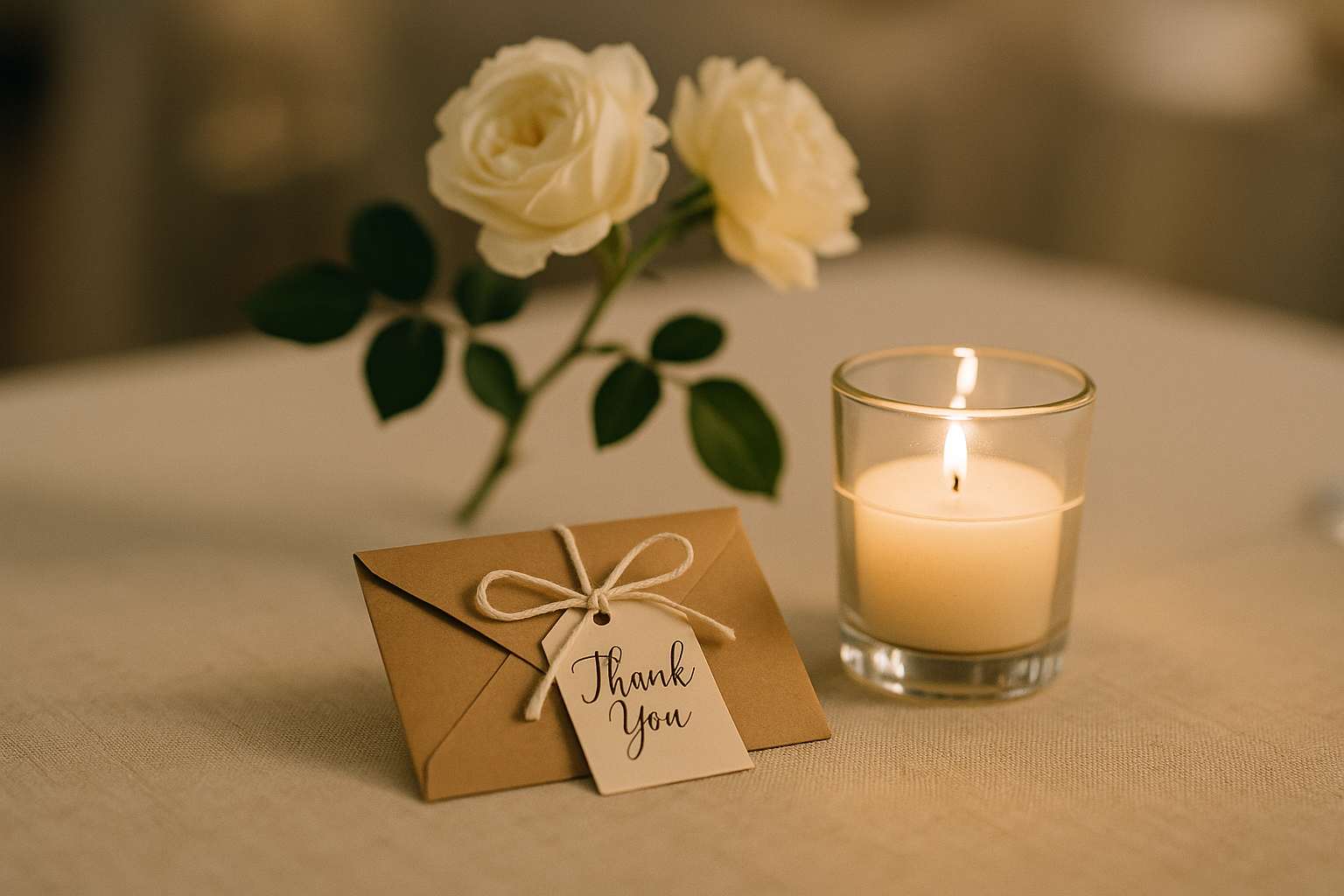
Wedding favors are not required by any standard of etiquette. Surveys consistently show that guests notice neither their presence nor their absence as much as couples fear — but they do notice poor ones. Skip them freely when budget is a constraint. When you do offer them, choose something edible, functional, and personally meaningful — or redirect the budget to the guest experience itself, where it will be remembered far longer.
Do guests actually notice or care about wedding favors?
The short answer from survey data and the longer answer from anyone who has attended fifty weddings converge on the same point: guests do not attend a wedding for a parting gift. Wedding attendance is motivated by the relationship with the couple, the experience of the ceremony, and the quality of the celebration. A favor — however thoughtful — is a small gesture at the end of a large emotional day, and its absence is rarely registered.
What guests do notice: food that was genuinely good, music that kept people on the floor, a couple who seemed happy and present, and small moments of thoughtfulness (a handwritten note on the table, a personalized detail that spoke to their relationship with the couple). A $3 jar of honey will not be what they remember. The conversation at their table will be.
This does not mean favors have no value. Done thoughtfully, they are a genuine expression of hospitality and gratitude. Done generically — or done because you feel you should — they are a budget line item producing items that will be left on chairs or donated to the venue's staff room. The decision is not between 'favors' and 'no favors.' It is between meaningful gestures and obligatory ones.
A clear decision framework: when to offer favors and when to skip them
| Scenario | Recommendation | Why |
|---|---|---|
| Your cultural or faith tradition includes a specific favor (Jordan almonds, bomboniere, sweets) | Offer — honor the tradition | Heritage favors carry symbolic meaning that generic alternatives cannot replicate; guests from these traditions expect and appreciate them |
| You have found something genuinely meaningful — an edible, a local product, or a DIY item with personal significance | Offer — it adds to the day | Meaningful favors are remembered and used; they communicate care beyond the obligation |
| Your budget is under pressure and the money would produce a better return in food, music, or photography | Skip — with full etiquette clearance | Guest satisfaction data consistently shows experience outperforms objects; no guest will complain |
| You cannot find anything you genuinely love and would be settling for a generic option | Skip or choose a charitable donation card | A generic favor often leaves a worse impression than no favor at all |
| Your guest count is very large (200+) and per-unit cost is limiting quality | Consider a donation card or experience upgrade | 200 × $3 = $600 that might be better spent on a late-night snack bar or extended open bar |
What do guests actually keep — and what goes on the table?
Industry surveys and wedding planner reporting align closely on what survives versus what is abandoned. The answer is almost entirely determined by two factors: whether the item is edible, and whether a non-edible item is beautiful and functional without over-announcing its origin.
What guests keep: Artisanal honey, small-batch jam, gourmet cookies or macarons, locally roasted coffee, seed packets, quality matches, and simple candles in attractive vessels. These items have a use beyond the wedding, fit in a purse or pocket, and do not announce whose wedding they came from.
What guests leave: Items engraved with the couple's full names and wedding date (a sentiment that is meaningful to the couple but rarely to the recipient, who does not display other people's anniversaries), branded merchandise without personal connection (koozies, bottle openers, magnets), and anything too large, fragile, or delicate to transport. The clutch test — if it does not fit comfortably in a standard evening bag, it will be left behind — is a reliable filter to apply before ordering.
The over-personalization trap deserves its own mention. Engraving two names and a date on a glass, a cutting board, or a ceramic piece sounds like the ultimate personal touch — but guests frequently report feeling unable to use or display items marked with someone else's milestone. The better approach: a monogram, a short phrase, or custom packaging that identifies the item as a wedding favor without making it a commemorative object the guest cannot comfortably integrate into their home.
The alternatives that consistently outperform a physical favor
Two alternatives to traditional favors have shown consistently higher guest satisfaction in recent years:
Charitable donation in lieu of favors. A printed card at each place setting — In lieu of favors, we have made a donation to [organization] in your honor — communicates thoughtfulness, generosity, and the couple's values in a single gesture. Choosing a cause with personal meaning (a family charity, an organization the couple volunteers with, a mission aligned with the wedding's location) makes the gesture specific rather than generic. Charity Navigator is a useful resource for identifying well-rated organizations across every category. The card itself costs under $1 to print. The donation can be scaled to whatever the favor budget would have been.
Redirecting the budget to guest experience. At $3–$5 per guest for 120 guests, the typical favor budget is $360–$600. Redirected, that sum can fund: a late-night snack station (pizza, sliders, fries), an enhanced cocktail hour with one upgraded specialty cocktail, a coffee and dessert station during reception, or simply better table wine. These experiences produce conversation, dancing, photographs, and the kind of visceral memory that a favor does not.
Frequently asked
Is it rude to skip wedding favors?
No — wedding favors are not required by any standard of modern etiquette. Etiquette authorities, including Emily Post's descendants, have consistently affirmed that favors are a gracious addition, not an obligation. Guests attend a wedding for the people, the ceremony, and the celebration — not a parting gift. What guests reliably notice and remember is the quality of the food and music, whether they felt welcomed, and whether the couple appeared genuinely present and happy. No guest has ever left a wedding saying 'what a beautiful ceremony, but I really wished there had been a small candle on the table.' Skip favors without guilt whenever they feel obligatory, generic, or financially strained.
What do guests actually keep from wedding favors?
The category with the highest retention rate is edible favors — food consumed at or after the event leaves nothing behind to discard. Artisanal honey, locally roasted coffee, gourmet cookies, small-batch jam, and seed packets are consistently cited as the most appreciated and longest-remembered favors. Among non-edible items, the keepsakes that survive are those that are beautiful, functional, and do not announce their origin — a quality candle, a small ceramic piece, or a useful kitchen item with minimal branding. What reliably gets left on the table: heavily personalized items bearing the couple's full names and wedding date, generic branded merchandise (koozies, magnets, bottle openers), and anything that does not fit in a purse or jacket pocket. The clutch test — if it does not fit in an evening bag, it will be left behind — is a reliable filter.
What is the best alternative to wedding favors?
The alternative with the highest guest satisfaction and the most gracious reception is a charitable donation made in honor of guests. A small printed card at each place setting — 'In lieu of favors, we have made a donation to [organization] in your honor' — communicates thoughtfulness and generosity without producing anything that ends up in the trash. Selecting an organization with personal meaning (a cause connected to the family, a charity the couple volunteers with) makes the gesture more resonant. Charity Navigator can help identify well-rated organizations in any category. A second strong alternative is redirecting the favor budget to the guest experience directly: a late-night snack station, an upgraded cocktail hour, or a spirits or coffee bar consistently generates more conversation, photographs, and lasting memories than any physical favor.
How much should I spend on wedding favors per person?
According to The Knot Real Weddings Study data from approximately 17,000 couples in 2025, the typical per-guest favor spend is $2–$5, with premium options in the $7+ range. For 120 guests at $3 per guest, the total favor budget is $360 — roughly 1–2% of a $25,000 wedding budget. The question worth asking before spending this money is whether $360 used elsewhere — applied to a better dessert, better photography coverage, or better music — would produce a more meaningful return in guest experience. For many couples, the answer is yes. If favors do not feel meaningful or affordable at the $3–$5 level, skipping them entirely or choosing a charitable donation card is the better decision.
What are the most practical wedding favor ideas that guests actually use?
Practical favors in the $3–$7 range that guests consistently keep and use include: artisanal honey in a small glass jar with a custom label (edible, beautiful, and genuinely useful in the kitchen); locally roasted coffee in a small resealable bag (particularly appropriate for morning-after brunch receptions); seed packets in kraft envelopes with a planting card (low cost, strong eco appeal, and meaningful for couples who are nature-oriented); small-batch hot sauce or infused sea salt (distinctive, functional, and aligned with the food-culture moment in 2026); and a quality booklet of matches in branded packaging (inexpensive, widely kept, and useful at home). What these have in common: they are consumable or genuinely functional, they do not require guests to display someone else's name in their home, and they fit in a pocket.