Flowers & Décor
Wedding Day Signage: The Complete Guide for 2026
Wedding signs are the silent hosts of your reception — directing guests, telling your story, and creating the first photograph every arriving guest takes. Here is everything you need to know before you order a single sign.
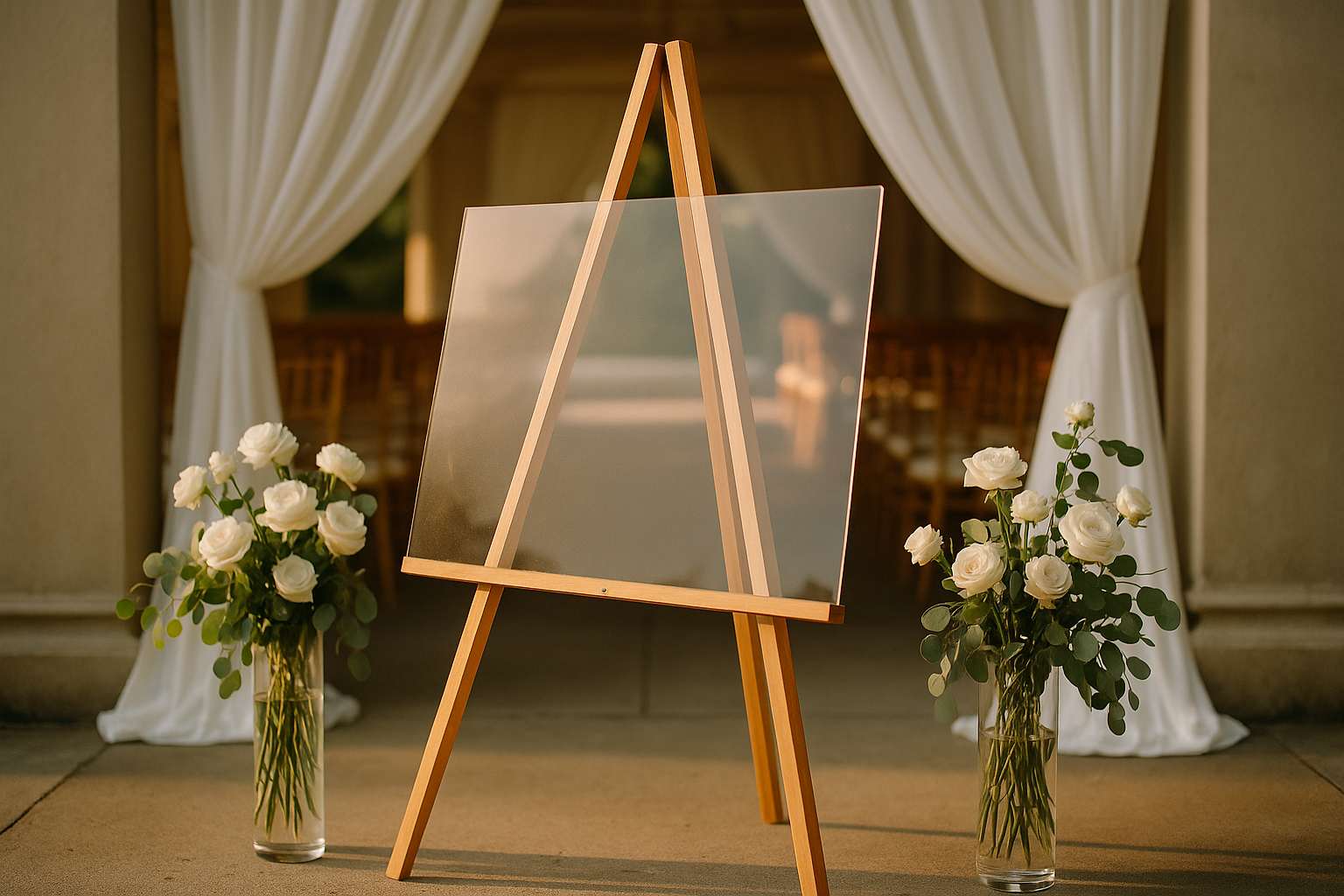
Wedding signage is the silent hosting layer of your entire celebration — directing guests, orienting them through unfamiliar spaces, and creating the first photograph many will take upon arrival. A welcome sign, seating chart, and directional signs are logistical necessities; every other piece is an investment in guest experience and visual cohesion. Budget $300–$800 for a well-considered signage suite.
Of all the elements in wedding design, signage receives the least deliberate attention and produces some of the most consequential guest experiences. The seating chart is the single piece most guests interact with directly before entering the reception. The welcome sign is the first visual impression of your wedding aesthetic after the ceremony space itself. And the absence of directional signs at a multi-building venue is the single fastest way to create guest frustration before the first dance begins.
This guide covers every sign you need, what each one should accomplish, which materials work best for your venue and style, and how to build a cohesive visual system that makes your wedding feel intentionally designed rather than assembled from separate vendor decisions.
What wedding signs do you actually need?
Signage falls naturally into two categories: logistically necessary and aesthetically meaningful. Understanding which is which prevents both over-ordering and the critical under-ordering that creates day-of confusion.
| Sign | Function | Necessity | Typical Cost Range |
|---|---|---|---|
| Welcome sign | Greets guests; sets aesthetic tone; identifies the event | Must-have | $15–$500+ depending on material and source |
| Seating chart | Directs guests to their assigned tables; the most-used piece | Must-have (for assigned seating) | $30–$700 depending on format and size |
| Directional signs | Guides guests between ceremony, cocktail hour, and reception spaces | Must-have (multi-space venues) | $15–$60 per sign; DIY often adequate |
| Table numbers | Identifies each reception table | Must-have (with seating chart) | $2–$8 per table; sets from $30–$150 |
| Menus (per seat or displayed) | Informs guests of the meal; adds elegance to table setting | Nice-to-have | $1–$5 per menu card; displayed boards $60–$200 |
| Unplugged ceremony sign | Requests guests put away devices; protects photography | Strongly recommended | $15–$80; often provided by photographer |
| Bar menu / signature cocktail sign | Describes cocktail offerings; creates conversation | Nice-to-have | $20–$100 |
| Guest book sign | Directs guests to guest book station; explains any instruction | Nice-to-have | $15–$60 |
| In Loving Memory sign | Honors absent loved ones; deeply meaningful | Optional; highly personal | $30–$150 |
| Escort cards (individual) | One card per guest indicating their table; alternative to a seating chart board | Choose one format: seating chart board OR escort cards | $50–$120 per 100 cards (printed); $200–$700 (calligraphy) |
The single most important sizing note: a seating chart must be large enough for guests to find their name quickly under dim reception lighting. Use no smaller than 12–14 point font, ensure names are listed alphabetically (not by table), and for guest lists over 100, consider two panels — A through M on one, N through Z on the second — placed side by side. According to iCustomLabel's complete wedding signage checklist, a seating chart should be minimum 24" x 36" for up to 100 guests.
Which materials work best for each type of wedding sign?
The material you choose carries its own aesthetic weight and should align with your venue, formality level, and overall wedding style. Vistaprint's 2026 wedding sign guide identifies the four dominant materials as acrylic, wood, mirror, and foam board — each suited to a different aesthetic register.
Acrylic panels: Sleek, modern, and highly photographable. Clear or frosted acrylic with gold, silver, or white vinyl lettering is the defining aesthetic of the 2025–2026 modern bridal market. Welcome signs and seating charts on acrylic read as elevated and intentional without requiring calligraphy. Starting cost through Etsy vendors: $27–$150 for standard sizes; custom large-format pieces: $150–$400.
Wood boards and slices: Warm, organic, and suited to rustic, farmhouse, boho, and outdoor venue aesthetics. Laser-engraved wood produces very clean, durable results; hand-painted wood allows for organic variation. Pricing: $40–$250 depending on size and complexity.
Mirror panels: Romantic and formal. A large mirror seating chart or welcome sign with calligraphy is one of the most photographed elements at any wedding that uses one — guests photograph it, and it photographs beautifully in professional images. Pricing: $200–$600 for large custom pieces with calligraphy.
Foam board (printed): Budget-friendly, lightweight, and entirely adequate for directional signs, bar menus, and any functional signage that does not need to be a statement piece. Starting cost from local printers or online services: $13–$40 per sign. Not recommended for premium statement pieces or for outdoor events where moisture can compromise the material.
How do you build a cohesive signage design system?
The most common signage mistake couples make is ordering pieces from multiple vendors with no shared design language — a calligraphed mirror welcome sign, a different-font printed seating chart, and foam board directional signs in a third typeface. Guests experience your wedding as a unified world; when the signage system is inconsistent, the assembled quality undermines the overall impression even if each individual piece is beautiful in isolation.
Building a cohesive system requires committing to three to four design tokens before engaging any vendor: a primary typeface, a secondary typeface, a color palette of two to three colors plus a neutral, and a motif or texture element. According to GotPrint's wedding sign guide, every print product should use the same visual style to keep the wedding aesthetic cohesive — and this principle applies across calligraphy, digital printing, and DIY pieces alike.
Anchor your day-of design system to your invitation suite: your save-the-dates and invitations already established your typography and color palette, so the simplest approach is to request that your stationer or sign designer extend the same system to all day-of pieces. If you are sourcing from different vendors, share your exact color specifications (hex codes for print, Pantone references for professional printing) and typeface names with each vendor before production begins.
The practical tier system: invest your design energy and budget in the pieces that will be photographed and lingered over — the welcome sign and seating chart. Use templated or print-based solutions for the medium-tier pieces (table numbers, menus). Use simple, legible, consistent-font DIY or print solutions for low-tier directional and functional signs. This hierarchy keeps the signage budget rational while ensuring the pieces that create lasting impressions do justice to the rest of your celebration.
Frequently asked
What wedding signs are absolutely essential versus optional?
The three signs that function as must-haves for any reception with assigned seating are: the welcome sign (greets guests on arrival and sets the visual tone), the seating chart (directs guests to their tables — the most logistically critical piece), and directional signs (wayfinding from ceremony to cocktail hour to reception, especially in multi-building or large-campus venues). Every other sign — menus, bar signs, guest book instructions, order-of-events boards, unplugged ceremony notices, and in-loving-memory tributes — is optional but meaningful. An unplugged ceremony sign is increasingly recommended by photographers as one of the highest-return additions to the ceremony experience: it protects the aisle from device obstructions and allows guests to be genuinely present. The practical test for any sign: if you did not have it, would guests experience confusion or miss something important? If yes, it is essential. If no, it is an enhancement — still worth considering, but not a logistical priority.
What are the most popular wedding sign materials in 2026?
The four dominant materials in the 2026 wedding sign market are acrylic, wood, mirror, and foam board, each with a distinct aesthetic and price range. Acrylic panels with gold or white vinyl lettering are the leading choice for modern and minimalist weddings: they are lightweight, durable, and photograph beautifully. Starting cost from Etsy vendors runs $27–$150 for standard sizes, with larger custom pieces reaching $200–$400. Wood signs — laser-engraved or hand-painted — suit rustic, boho, farmhouse, and outdoor ceremonies, with pricing $40–$250 depending on size and complexity. Mirror signs are highly romantic and formal, functioning as both signage and décor; a large mirror seating chart with calligraphy typically costs $250–$600. Foam board remains the most budget-friendly option at $13–$40 for printed signs, making it the practical choice for directional signs, bar menus, and any low-tier signage that will not be prominently photographed. Fabric wedding signs in linen or cotton are an emerging choice for garden and vintage-style weddings.
How large should a wedding welcome sign and seating chart be?
Standard sizing guidance is well-established in the sign industry. A welcome sign should be at minimum 18 inches by 24 inches (18" x 24") for a typical venue entrance; 24" x 36" is the most versatile size and reads legibly at a distance of ten to twenty feet. For grand ballroom entrances or venues with wide foyers, 30" x 40" or larger creates appropriate visual presence. A seating chart needs to be at minimum 24" x 36" for up to 100 guests; for 150+ guests, a 30" x 40" or a two-panel layout (A–M and N–Z side by side) is recommended. The most common user error with seating charts is undersizing: guests scan quickly under dim lighting and often at an angle, so font size and overall panel size matter significantly. Use no smaller than 12–14 point font for names on any seating chart. Confirm your specific venue's entrance dimensions before ordering, as wall widths, easel footprints, and doorway widths vary considerably.
Should I hire a calligrapher for wedding signage or use a printing service?
Both paths produce beautiful results; the decision comes down to budget, aesthetic, and timeline. A professional calligrapher creates genuinely one-of-a-kind pieces — particularly for welcome signs on mirror or wood, large seating charts in hand-lettered script, and place cards — with pricing typically running $150–$600 for large feature signs and $2–$6 per envelope for hand-addressed invitations. For couples who value the organic, irreplaceable quality of hand-lettering and whose aesthetic leans romantic or vintage, calligraphy is worth the investment. Print-based options through services like Shutterfly, Etsy design shops, Vistaprint, or a local print shop deliver consistent, clean results at significantly lower cost: a beautifully designed acrylic welcome sign with digital printing runs $60–$150, while a printed foam board seating chart runs $30–$80. The practical approach for most couples: invest in calligraphy for the one or two highest-visibility, most-photographed pieces (typically the welcome sign and seating chart), and use print production for the lower-tier directional and functional signs.
How far in advance do I need to order wedding signage?
Timeline requirements vary significantly by production method. Print-on-demand services (Vistaprint, Shutterfly, GotPrint) typically require five to ten business days for production plus shipping. Etsy vendors producing custom acrylic or wood signs usually quote two to four weeks, with many offering rush production at a surcharge. Professional calligraphers — particularly those whose work is in high demand — should be booked six to eight weeks before your wedding date for large custom pieces and twelve or more weeks if your wedding falls in peak season (June, September, October). For any sign requiring final guest names (seating charts, escort cards, place cards), you must finalize your guest list and seating assignments before the piece can be produced. Most seating-related pieces need to be finalized no earlier than two weeks before the wedding with the vendor receiving final names no later than five to seven days before the event. Build in buffer time at every stage — rush orders raise costs, and a late seating chart is one of the most stressful day-of problems a coordinator can face.
What is an unplugged ceremony sign and should I use one?
An unplugged ceremony sign requests that guests put away their phones and cameras during the ceremony and experience it fully present rather than through a screen. These signs — placed at the ceremony entrance or held on a placard by the officiant — have become nearly universal in 2025–2026, and wedding photographers unanimously endorse them. The reasons are both emotional and practical: the most moving wedding photographs are taken with clear aisle sight lines, not blocked by guests leaning into the aisle with iPads or phones. An unplugged ceremony also creates a more focused, connected experience for everyone in the room — including the couple. Standard wording: "Please turn off your phones and cameras and be fully present with us today. Our photographer will share photos you can keep forever." Most officiants are happy to announce the request verbally at the start of the ceremony as well, reinforcing the sign. Place the sign where arriving guests cannot miss it — propped on the welcome easel, attached to a shepherd's hook at the aisle entrance, or framed on a table beside the ceremony programs.
How do I create a cohesive design system for all my wedding signage?
Cohesion in wedding signage comes from disciplined repetition of three to four design tokens across every piece: a primary typeface (usually a script or serif for headings), a secondary typeface (a clean sans-serif for body copy and names), a color palette of two to three colors plus neutrals, and a motif or texture element (florals, geometric borders, watercolor washes, or a linen texture). Anchor your day-of stationery design system to your invitation suite — your save-the-dates and invitations already established the typography and color palette, so day-of pieces should be a natural extension. Map every sign you need to one of three tiers: high-impact (welcome sign, seating chart, ceremony program — invest most design energy here), medium-impact (table numbers, menus, escort cards), and low-impact (directional signs, bar signs, card box signs — functional, templated or DIY is fine). When in doubt, a simpler design executed consistently across all pieces will always read as more intentional and elevated than an elaborate design inconsistently applied.