Flowers & Décor
Wedding Flower Meanings 2026: 12 Blooms and What They Symbolize
Choosing flowers by their meaning adds a layer of intention to your bouquet that photographs carry for a lifetime. Here are the twelve most beloved wedding flowers and the centuries of symbolism behind them.
wedding flower meanings 2026language of flowersfloriographybridal bouquet symbolismflower meanings by type
The quick verdict
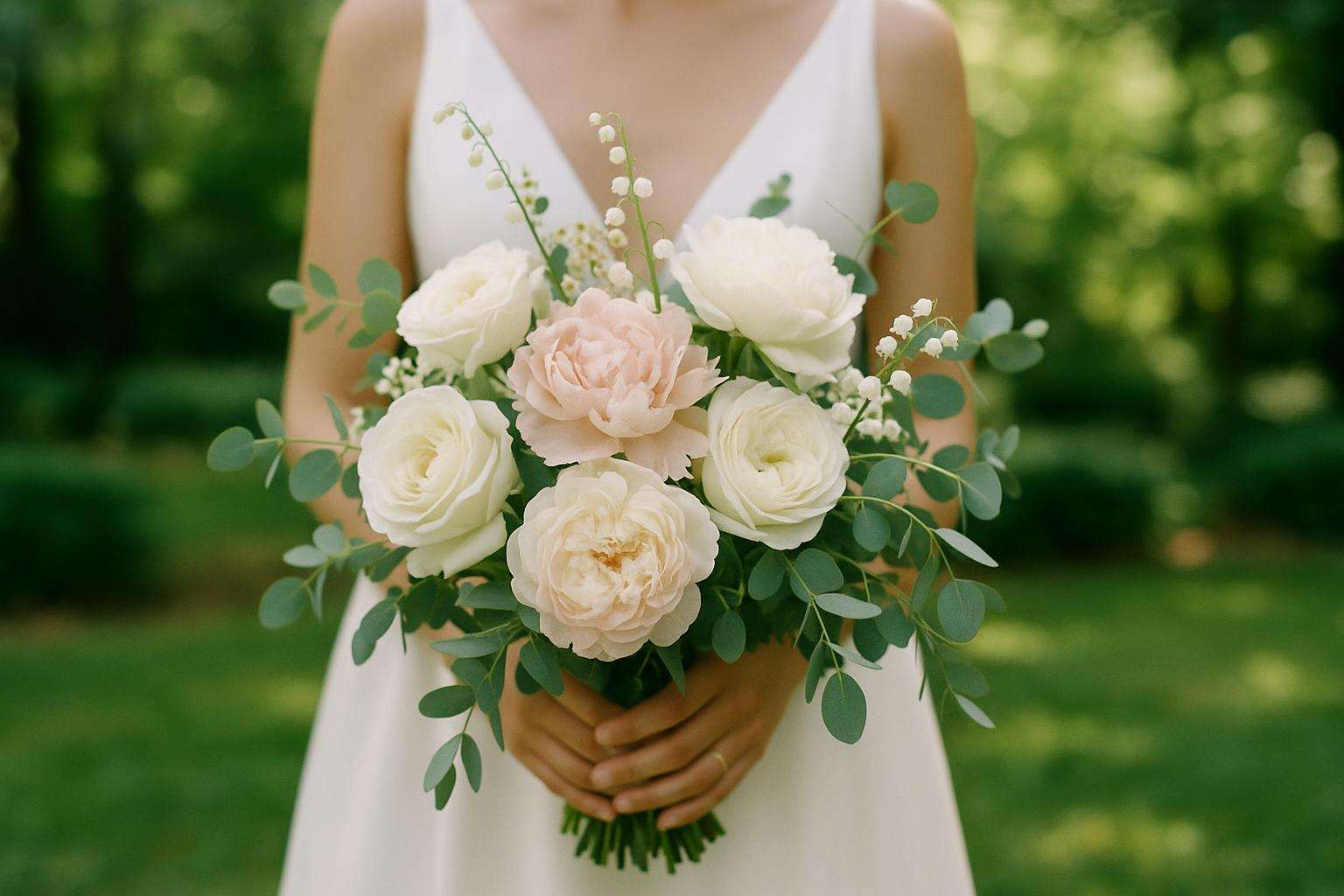
The white rose means purity and new beginnings. The peony means a happy, prosperous marriage. Lily of the valley — carried by royal brides across two centuries — means the return of happiness. Below are twelve of the most beloved wedding flowers and the meanings they have carried for generations.
- Best overall
- White Rose — The defining bridal bloom for more than two centuries — purity, new beginnings, and timeless elegance — available year-round, versatile in every bouquet style, and carrying the deepest symbolic weight in Western wedding tradition.
- Best value
- Ranunculus — One of the most beautiful spring blooms at one of the most accessible price points — layered, rose-like petals, a meaning of radiant charm, and at $2 to $5 per stem, it provides significant volume and visual impact without straining the floral budget.
- Best for Honoring a loved one who has passed
- Rosemary (as an addition) — A sprig of rosemary tucked into the bridal bouquet is a centuries-old tradition of remembrance — its meaning is exact and its presence creates a quietly powerful tribute to someone you wish were present.
How we evaluated
We evaluated each flower on symbolism depth and historical precedent (how long has this meaning been associated with this bloom), seasonal availability in North America, typical per-stem cost at 2026 florist and wholesale pricing, visual versatility in bouquet arrangements, and practical durability on a wedding day. Cultural meaning variations are noted where they are significant enough to affect purchasing decisions for multicultural or interfaith couples.
- Symbolic richness. The depth, longevity, and universal resonance of the flower's meaning in Western and international wedding contexts.
- Seasonal availability. How readily available the bloom is in North America and whether it can be sourced at peak quality without premium pricing.
- Per-stem cost. Typical cost per stem at a professional florist in 2026, representing mid-market U.S. pricing.
- Visual versatility. How well the flower integrates into different bouquet styles, from tight round posies to loose garden-style arrangements.
- Durability. How reliably the bloom holds its shape and freshness through a full wedding day of handling, heat, and photography.
Rating scale: Ratings are on a 1-5 scale.
Last verified .
At a glance
| # | Name | Rating | Best for | Pricing |
|---|---|---|---|---|
| 1 | White Rose | 5.0 | Any bride seeking a timeless, symbolically meaningful anchor bloom that works in every bouquet style and every venue setting | $2–$5/stem (standard); $3–$8/stem (garden rose) |
| 2 | Peony | 4.9 | Spring brides (April through June) who want a deeply symbolic, visually spectacular anchor bloom with a meaning that directly echoes a good marriage | $4–$12/stem in season; $10–$20/stem off-season |
| 3 | Lily of the Valley | 4.8 | Spring brides (April through June) for whom the meaning of returned happiness — or a connection to royal bridal tradition — is personally resonant | $5–$10/stem in season; $15+/stem out of season |
| 4 | Stephanotis | 4.5 | Traditional or religious ceremony brides who want a white, fragrant, symbolically specific flower available in any season | $3–$6/stem |
| 5 | Ranunculus | 4.6 | Budget-conscious spring brides who want a full, lush bouquet with genuine visual impact at a fraction of the peony's cost | $2–$5/stem in season; $3–$7/stem off-season |
| 6 | Lavender | 4.3 | Summer brides who want to add meaning, fragrance, and texture to their bouquet without significantly increasing floral cost | $1–$3/stem (dried, year-round); $2–$4/stem (fresh, June–July) |
| 7 | Calla Lily | 4.4 | Modern, minimalist brides; arm-bouquet styles; Mexican heritage ceremonies; brides seeking sculptural elegance over florally lush arrangements | $3–$8/stem |
| 8 | Garden Rose (David Austin) | 4.7 | Brides who want the symbolism of the rose in its most romantic, visually beautiful form — particularly suited to loose, English-garden bouquet styles | $3–$8/stem |
| 9 | Sweet Pea | 4.1 | Spring brides who prioritize fragrance and delicate visual texture over durability, and who have experienced florists comfortable with perishable blooms | $2–$4/stem in season |
| 10 | Sunflower | 4.2 | Summer and early fall brides with outdoor ceremonies in rustic, garden, or farm settings who want a warm, sunny color palette | $2–$5/stem |
| 11 | Anemone | 4.0 | Spring brides who want a visually striking, graphically distinctive accent bloom that makes bouquet photographs immediately memorable | $2–$4/stem |
| 12 | Orange Blossom | 4.3 | Brides for whom historical symbolism and fragrance are priorities, particularly those with Mediterranean, Middle Eastern, or Victorian heritage connections | $4–$8/stem (specialty sourcing required) |
White Rose
The quintessential bridal bloom — purity, new beginnings, reverence
Editor's pick
The white rose is the most symbolically loaded flower in Western bridal tradition, and its association with wedding ceremonies predates the Victorian era. In ancient Rome, the white rose was sacred to Venus; in Christian iconography, it represents the purity of the Virgin Mary. In the Victorian language of flowers, the white rose carries the layered meaning of purity, innocence, reverence, and new beginnings — exactly the qualities a marriage ceremony is meant to consecrate. Queen Victoria's 1840 wedding established the white floral bridal bouquet as a cultural institution, and white roses have been a cornerstone of bridal arrangements ever since. What makes the white rose especially valuable beyond its symbolism is its extraordinary practical versatility: it is available year-round from domestic and international flower farms, it holds its shape reliably through a full wedding day, and it pairs beautifully with every other bloom on this list. A bouquet of all white roses is a timeless, architectural statement; white roses as the anchor bloom in a mixed seasonal arrangement are the most common choice of professional wedding florists in 2025 and 2026. Per-stem cost is accessible relative to the visual impact: $2 to $5 per stem at most florists, with garden roses (the fuller, more romantic version) running $3 to $8. A bridal bouquet built primarily on white roses requires 20 to 35 stems depending on size, placing the floral cost within reach of most budgets. Per Blooming Haus's floral symbolism guide, the white rose remains the single most requested flower in bridal bouquets in North America, a position it has held for decades.
Strengths
- The most symbolically resonant bridal flower in Western tradition — purity, new beginnings, and timeless elegance with two centuries of bridal heritage
- Available year-round at accessible per-stem pricing ($2–$5 for standard; $3–$8 for garden roses)
- Pairs beautifully with every other bloom, greenery, and color palette — the most versatile foundation flower in bouquet design
Weaknesses
- So ubiquitous that couples seeking something unexpected may feel the white rose is too conventional; garden roses address this with their fuller, more distinctive form
- Best for
- Any bride seeking a timeless, symbolically meaningful anchor bloom that works in every bouquet style and every venue setting
- Pricing
- $2–$5/stem (standard); $3–$8/stem (garden rose)
Source: Traditional Wedding Flower Meanings to Know — The Knot · Visit White Rose
Peony
Prosperity, a happy marriage, and the most lushly beautiful bloom in the bouquet
The peony carries one of the most unambiguously positive meanings in all of floriography: prosperity, good fortune, honor, and — most directly relevant to a wedding day — a happy, flourishing marriage. It is also the official flower of twelfth wedding anniversaries, representing honor and a bond that deepens over time. In Japan, where the peony is known as "the king of flowers," it symbolizes bravery, courage, and good fortune. In Western wedding traditions, it is associated with romance and abundance, and its full, ruffled bloom — which can reach five to six inches in diameter at peak — is among the most visually lush of all cut flowers. The practical truth about peonies is that their peak season is narrow and their off-season cost is significant: May and June are their prime window in North American markets. A peony in season costs $4 to $8 per stem; a peony in October or November, imported from New Zealand or South America, can cost $10 to $20. Brides who want peonies for non-spring weddings should discuss this honestly with their florist early and build the premium into their budget. Peonies have soft petals that bruise with handling and wilt faster than roses in heat — professional florists store them in water until the last possible moment before assembly and recommend keeping the bouquet cool until the ceremony. Despite their fragility, peonies produce the most spectacular bridal photographs of almost any bloom, and their meaning makes them one of the most intentional flowers a bride can carry.
Strengths
- The most symbolically auspicious flower for a wedding day — prosperity, honor, and a happy marriage with deep roots in both Western and Eastern tradition
- Produces lush, full, photographically spectacular arrangements that justify the higher per-stem cost
- Available in a beautiful range of colors from white to blush, coral, burgundy, and hot pink — one of the most versatile blooms on a color spectrum basis
Weaknesses
- Peak season limited to May and June in North America; off-season peonies cost $10–$20 per stem and have shorter vase life
- Best for
- Spring brides (April through June) who want a deeply symbolic, visually spectacular anchor bloom with a meaning that directly echoes a good marriage
- Pricing
- $4–$12/stem in season; $10–$20/stem off-season
Source: Top 10 Wedding Flowers: Symbolism for a Meaningful Day — Whole Blossoms · Visit Peony
Lily of the Valley
Return of happiness, purity, royalty — the bouquet bloom of queens
Of all the flowers associated with weddings, lily of the valley carries the most explicitly hopeful meaning: the return of happiness. Its tiny white bell-shaped flowers, carried on arching stems that nod gracefully downward, have been a bridal flower of royal significance for more than a century. Queen Victoria included it in her 1840 wedding bouquet. Princess Grace of Monaco carried a cascade of lily of the valley in 1956. Kate Middleton chose it as a primary element of her 2011 bouquet alongside hyacinth, sweet william, and myrtle. Princess Eugenie, Princess Beatrice — the tradition holds. Beyond its royal associations, the flower's delicate bell shape is associated with purity, motherhood, and in some traditions with Ostara, the goddess of spring. The connection to spring is inherent: lily of the valley blooms only in April and May in temperate climates, making it among the most strictly seasonal of wedding flowers. Out of season, it must be imported from specialized greenhouse growers at significant cost — $5 to $10 per stem in season versus $15 or more out of season. It is also one of the most fragile cut flowers in use: the delicate petals bruise and brown quickly with handling, and it requires immediate refrigeration and careful assembly by an experienced florist. For spring brides, however, its combination of ethereal beauty, royal heritage, and the most optimistic meaning in all of floriography makes it a deeply worthwhile choice.
Strengths
- The most auspicious meaning of any wedding flower — the return of happiness — with a royal heritage stretching from Queen Victoria to Kate Middleton
- Delicate, distinctive bell-shaped blooms with a trailing habit that suits shower and cascade bouquet styles
- Fragrant in a subtle, clean way that adds a sensory dimension most cut flowers cannot offer
Weaknesses
- Extremely short natural season (April–May); highly perishable, requiring refrigeration until last minute and experienced florist handling
- Best for
- Spring brides (April through June) for whom the meaning of returned happiness — or a connection to royal bridal tradition — is personally resonant
- Pricing
- $5–$10/stem in season; $15+/stem out of season
Source: Flower Symbolism: What Does Your Wedding Bouquet Mean? — Blooming Haus · Visit Lily of the Valley
Stephanotis
Good luck in marriage — the traditional bridal flower with an exquisite waxy beauty
Stephanotis (also called Madagascar jasmine or bridal veil) has been a signature bridal bloom for over a century, beloved for one reason above all others: its meaning is the most directly bridal of any flower in common use. It symbolizes marital bliss and good luck in marriage — not love generally, not beauty, but specifically the happiness of a marriage. This focused symbolism has made it a mainstay of traditional bridal bouquets and buttonholes (the groom's bouquet-mirror boutonniere) since at least the late Victorian era. Its clusters of waxy white star-shaped florets have a gardenia-like fragrance that makes it one of the most sensory flowers in the bridal lineup. Stephanotis is available year-round, which distinguishes it from the strictly seasonal peonies and lily of the valley on this list — a significant practical advantage for fall and winter brides who want white, fragrant, symbolically appropriate blooms. The florets are delicate and prefer to be handled gently and kept cool; they are typically wired individually or used in small clusters rather than as a structural stem in large arrangements. Cost is moderate: $3 to $6 per stem depending on market and season. Stephanotis is particularly beautiful mixed with lily of the valley, white roses, and small ferns in a tight round posy — the traditional English bridal bouquet style that remains a timeless choice in 2026.
Strengths
- The most directly bridal symbolic meaning of any common wedding flower — marital bliss and good luck in marriage
- Year-round availability at moderate cost makes it accessible to brides in every season
- Gardenia-like fragrance adds a sensory dimension to any bouquet that most white flowers cannot offer
Weaknesses
- Delicate florets must be handled carefully and kept cool; not suitable for very warm outdoor ceremonies without refrigeration logistics
- Best for
- Traditional or religious ceremony brides who want a white, fragrant, symbolically specific flower available in any season
- Pricing
- $3–$6/stem
Source: Traditional Wedding Flower Meanings to Know — The Knot · Visit Stephanotis
Ranunculus
Radiant charm and attractiveness — at one of the most accessible price points in wedding florals
The ranunculus is the bargain darling of the modern bridal bouquet: a flower whose layered, rose-like petals and glowing, jewel-toned colors produce an effect of considerable visual richness at a per-stem cost that undercuts roses by a meaningful margin. Its meaning in floriography is radiant charm and attractiveness — a fitting tribute to carry on a day when every bride is, by right, the most beautiful person in the room. Ranunculus comes in a spectacular range of colors: pure white, champagne, pale blush, coral, deep pink, burgundy, lavender, and nearly black — making it one of the most color-versatile flowers on this list. The blooms hold their shape reliably through a full day's handling, unlike peonies or lily of the valley, and they layer into bouquets beautifully at varying sizes. Spring is their prime season in North America — March through May produces the best quality and the lowest per-stem pricing of $2 to $5. For summer and fall weddings, ranunculus can still be sourced from South American farms at moderate premium. The flower's one practical limitation is that it is a spring specialist: truly exceptional ranunculus outside of spring months requires sourcing from specialty importers, and the quality difference is detectable. For spring brides, however, ranunculus is the ideal bloom for achieving a lush, full bouquet on a moderate budget without sacrificing visual impact or symbolic meaning.
Strengths
- One of the most visually lush blooms at one of the lowest per-stem costs ($2–$5) — exceptional volume and beauty per dollar of floral budget
- Available in a spectacular color range from white and champagne through coral, burgundy, and near-black
- More durable than peonies and lily of the valley — holds shape reliably through a full wedding day
Weaknesses
- Peak quality concentrated in spring (March–May); off-season ranunculus from importers shows noticeably shorter vase life
- Best for
- Budget-conscious spring brides who want a full, lush bouquet with genuine visual impact at a fraction of the peony's cost
- Pricing
- $2–$5/stem in season; $3–$7/stem off-season
Source: Flower Meanings: The Language of Flowers — The Old Farmer's Almanac · Visit Ranunculus
Lavender
Devotion, loyalty, and serenity — the most aromatic symbol of faithful love
Lavender carries a meaning in the language of flowers that speaks directly to the promises exchanged in a wedding ceremony: devotion, loyalty, and serenity. It is the flower of faithful love — not the urgent passion of a red rose, but the steady, calm commitment of a marriage that weathers seasons and years with grace. In Provençal tradition, lavender was tucked into new brides' hope chests to scent linens and bring domestic peace; in English folk tradition, it was placed under pillows to encourage faithful dreams. In 2026 wedding design, lavender is experiencing a significant revival as a dried flower element: dried lavender bundles added to a fresh bouquet create texture, fragrance, and the symbolic meaning of devotion in an element that will last long after the fresh blooms have faded. Fresh lavender is available June and July from domestic farms, with dried lavender available year-round at $1 to $3 per stem. Its purple color pairs beautifully with soft blush, ivory, and sage green palettes — the dominant aesthetic for spring 2026 weddings. A small lavender bundle worked into a bridal bouquet or scattered through centerpieces adds a genuinely distinctive fragrance to the ceremony and reception space: the scent of lavender is one of the most universally calming in the botanical world, which is a lovely ambient contribution to a high-emotion day.
Strengths
- Deeply symbolic of devotion and loyal love — a meaning that speaks directly to marriage vows
- Uniquely fragrant: lavender's scent is among the most calming and distinctive in the botanical world, adding an olfactory dimension to the ceremony
- Available year-round as dried stems at very low cost; fresh stems available in summer
Weaknesses
- Fresh lavender available only in June and July domestically; does not function as a primary focal flower — best as an accent or texture element
- Best for
- Summer brides who want to add meaning, fragrance, and texture to their bouquet without significantly increasing floral cost
- Pricing
- $1–$3/stem (dried, year-round); $2–$4/stem (fresh, June–July)
Source: Flower Symbolism: What Does Your Wedding Bouquet Mean? — Blooming Haus · Visit Lavender
Calla Lily
Magnificent beauty and regal elegance — the architectural statement bloom
The calla lily is one of the most structurally distinctive cut flowers in use, and its meaning matches its form: magnificent beauty and regal elegance. Its trumpet-shaped bloom, with a single large petal curling gracefully around a central spadix, is immediately recognizable and produces a sculptural, architectural quality in arrangements that no other flower replicates. In Mexican wedding tradition, calla lilies (alcatraces) hold a specific cultural significance associated with beauty and elegance — Diego Rivera painted them repeatedly as a symbol of Mexican feminine grace, and they remain a meaningful choice for brides with Mexican cultural heritage. In broader Western wedding traditions, they are associated with purity (their white form) and sophisticated beauty. The calla lily's single-flower stem makes it particularly suited to arm bouquets (cradled in the arm rather than held as a round posy) and modern, sculptural arrangements. A bouquet of all white calla lilies is one of the most elegant and recognizable bridal choices possible — severe, beautiful, and deeply intentional. Available year-round from Dutch and South American farms, with pricing at $3 to $6 per stem for standard calla lilies and up to $8 per stem for the larger, mini-calla or giant varieties. Calla lilies hold their form reliably through a full day of handling and are among the most durable cut flowers on this list.
Strengths
- Architecturally distinctive trumpet shape produces a sculptural elegance no other flower replicates
- Year-round availability at moderate cost — one of the most consistently accessible premium-looking flowers
- Culturally significant for Mexican heritage couples — a direct connection to a meaningful tradition
Weaknesses
- Limited color range compared to roses and ranunculus; the white calla's severity may feel too stark for brides who prefer soft, layered arrangements
- Best for
- Modern, minimalist brides; arm-bouquet styles; Mexican heritage ceremonies; brides seeking sculptural elegance over florally lush arrangements
- Pricing
- $3–$8/stem
Source: Top 10 Wedding Flowers: Symbolism for a Meaningful Day — Whole Blossoms · Visit Calla Lily
Garden Rose (David Austin)
Grace, admiration, and deep affection — the bride's rose, elevated
The garden rose — particularly the David Austin varieties bred in England over the past four decades — is the rose that wedding florists speak about with genuine reverence. Where a standard florist's rose has a tight, conical center and relatively flat petals, the garden rose has a fully open, quartered bloom with a spiral center of petals that resembles the interior of a peony — richer, more layered, and more romantic. In the language of flowers, the rose means love and admiration; the garden rose, by virtue of its extraordinary visual richness, suggests a deeper register of that meaning: deep affection, grace, beauty that takes time to reveal itself. David Austin Roses, based in Shropshire, England, has developed hundreds of named garden rose varieties specifically popular at weddings — Juliet (peachy apricot), Patience (ivory), Miranda (blush), and Constance (creamy white) are among the most frequently requested at 2025 and 2026 weddings. Per-stem cost is higher than standard roses ($3 to $8 per stem versus $2 to $5) but reflects the larger bloom size, which means fewer stems are needed for equivalent visual impact. Garden roses are available year-round through specialty wholesalers, though their peak quality comes from domestic summer production. They are slightly more fragile than standard roses but significantly more beautiful in close-up photography — a consideration that matters in bouquet shots that will be displayed for decades.
Strengths
- The most romantically beautiful rose variety — fully open, peony-like blooms with a layered spiral center that photographs magnificently
- Available in named varieties (David Austin) with specific color characteristics that allow precise palette matching
- Larger bloom size means fewer stems needed for visual impact — partially offsetting the higher per-stem cost
Weaknesses
- Somewhat more fragile than standard florist's roses; slightly more expensive at $3–$8/stem; require an experienced florist familiar with the varieties
- Best for
- Brides who want the symbolism of the rose in its most romantic, visually beautiful form — particularly suited to loose, English-garden bouquet styles
- Pricing
- $3–$8/stem
Source: Traditional Wedding Flower Meanings to Know — The Knot · Visit Garden Rose (David Austin)
Sweet Pea
Blissful pleasure and farewell to single life — the most delicate spring bridal bloom
Sweet peas carry one of the most poetic meanings in floriography: blissful pleasure and a gentle, joyful farewell. This makes them particularly meaningful in a bridal context — the farewell to one chapter and the stepping forward into another. Their feathery, ruffled petals and trailing tendrils add movement and an organic lightness to any arrangement, and they come in soft colors that align beautifully with current bridal palette trends: blush, lilac, pale lavender, salmon, and ivory. Sweet peas have an extraordinary natural fragrance — light, sweet, and distinctly floral without being heavy — that carries across a ceremony space in a genuinely lovely way. Their practical limitations are significant, however: sweet peas are among the most strictly seasonal of all wedding flowers, available only in spring (March through May) from domestic producers, and they wilt quickly once cut. Professional florists who work with sweet peas keep them in water until the last moment before arrangement and advise clients to keep their bouquets cool and refrigerated when not being photographed. Despite their fragility, they produce some of the most beautiful and distinctive bouquet photographs of any spring flower, and their meaning is one of the most fitting for a wedding day.
Strengths
- Extraordinary natural fragrance — light and distinctly sweet — that adds an olfactory dimension to the ceremony
- Trailing tendrils add organic movement and lightness to any bouquet style
- Beautiful color range in soft spring tones: blush, lilac, salmon, ivory
Weaknesses
- Extremely perishable — wilts quickly once cut; strictly limited to spring season (March–May) in North American markets
- Best for
- Spring brides who prioritize fragrance and delicate visual texture over durability, and who have experienced florists comfortable with perishable blooms
- Pricing
- $2–$4/stem in season
Source: Flower Meanings: The Language of Flowers — The Old Farmer's Almanac · Visit Sweet Pea
Sunflower
Adoration, loyalty, and warmth — the boldest symbol of enduring love
The sunflower's meaning is among the most straightforwardly positive in the language of flowers: adoration, loyalty, and the warmth of an enduring love. The sunflower follows the sun — a quality botanists call heliotropism — and this physical behavior has been interpreted across cultures as the expression of devoted, unwavering attention. In folk traditions, the sunflower represents a love that remains oriented toward its object regardless of circumstances: loyal, warm, and fundamentally cheerful. In wedding design, sunflowers are a natural choice for late summer and fall ceremonies, where their gold and amber tones harmonize with the season's natural palette. They are among the most heat-hardy of all wedding flowers, which makes them a practical choice for outdoor summer ceremonies where more delicate blooms may wilt. At $2 to $5 per stem, they are one of the most budget-accessible statement blooms available, and their bold visual presence means a relatively small number of stems goes a long way. Sunflowers work best in wildflower-style, garden-casual, or rustic bouquet arrangements; their scale and boldness can overwhelm more formal, tight round-posy designs. Mixed with wheat, dahlia, zinnias, and eucalyptus, they produce late-summer arrangements of genuine beauty.
Strengths
- One of the most heat-hardy flowers for outdoor summer and early fall ceremonies — holds up reliably in warm conditions where other blooms fail
- Bold symbolic meaning — adoration, loyalty, warmth — expressed in a visually unmistakable form
- Among the most budget-accessible statement blooms at $2–$5/stem
Weaknesses
- Large-scale bold visual presence does not suit all bouquet styles — best in casual, rustic, or wildflower arrangements rather than formal round posies
- Best for
- Summer and early fall brides with outdoor ceremonies in rustic, garden, or farm settings who want a warm, sunny color palette
- Pricing
- $2–$5/stem
Source: Top 10 Wedding Flowers: Symbolism for a Meaningful Day — Whole Blossoms · Visit Sunflower
Anemone
Anticipation and protection against hardship — the most striking spring accent bloom
The anemone carries a dual meaning in floriography that is particularly apt for a wedding: anticipation of what is ahead, and protection against the hardships that any marriage will encounter. In Greek mythology, the anemone sprang from the tears of Aphrodite mourning Adonis — a story that gives it a layered emotional register, both joyful and aware of sorrow. In practical terms, the anemone's most remarkable visual feature is its bold dark center: white, blush, or deep purple petals surrounding a dramatic black or near-black center create a graphic, striking bloom that photographs with genuine drama and distinction. It is immediately recognizable in a bouquet and pairs beautifully with other spring blooms. Available from late winter through early summer, anemones are at their best and most available in spring. At $2 to $4 per stem they are one of the most affordable accent blooms on this list. They wilt relatively quickly once cut but hold up for the duration of a wedding day when conditioned properly and kept cool before the ceremony.
Strengths
- Visually striking dark-centered bloom produces instant graphic drama — immediately recognizable in bouquet photographs
- Available late winter through early summer; among the most affordable spring accent blooms at $2–$4/stem
- Meaningful symbolism of anticipation and protection — two relevant sentiments for a wedding day
Weaknesses
- Relatively short vase life once cut — requires conditioning and cool storage; not ideal for very warm outdoor ceremonies
- Best for
- Spring brides who want a visually striking, graphically distinctive accent bloom that makes bouquet photographs immediately memorable
- Pricing
- $2–$4/stem
Source: Flower Symbolism: What Does Your Wedding Bouquet Mean? — Blooming Haus · Visit Anemone
Orange Blossom
Eternal love, purity, and fertility — the most historically storied bridal flower
Orange blossoms hold the most specifically and historically bridal meaning of any flower in Western tradition. Queen Victoria wore a wreath of orange blossoms in her 1840 wedding and carried them in her bouquet, establishing a fashion that dominated bridal floristry for the rest of the 19th century. The meaning is layered and exact: eternal love (orange trees are evergreen, symbolizing a love that does not fade with the seasons), purity, and fertility (the simultaneous presence of fruit and flowers on an orange tree in bloom represents the hope for children). In Mediterranean and Middle Eastern traditions, orange blossom water has long been used in wedding celebrations as a fragrance and culinary element, adding a cultural depth to the flower's significance. Practically speaking, fresh orange blossoms are a specialty item — they are fragile, highly fragrant, and available only from growers in warm growing regions. Sourcing them requires a florist with specialty floral wholesale connections, and pricing reflects the rarity: $4 to $8 per stem. For brides who want the historical symbolism of orange blossoms without the sourcing complexity, faux orange blossom sprigs crafted from quality silk or resin are a beautiful alternative for hair pieces and bouquet accents — and they carry the same visual and symbolic weight as the real thing.
Strengths
- The most historically storied bridal flower — directly connected to Queen Victoria's 1840 wedding and two centuries of bridal tradition
- Three-layered meaning: eternal love, purity, and fertility — the most comprehensively optimistic floral symbol for a wedding day
- Extraordinary fragrance — orange blossom scent is one of the most distinctively beautiful in the botanical world
Weaknesses
- Specialty sourcing required — not available at all florists and must be ordered well in advance from wholesale suppliers with warm-region connections
- Best for
- Brides for whom historical symbolism and fragrance are priorities, particularly those with Mediterranean, Middle Eastern, or Victorian heritage connections
- Pricing
- $4–$8/stem (specialty sourcing required)
Source: Traditional Wedding Flower Meanings to Know — The Knot · Visit Orange Blossom
Which should you choose?
Spring bride building a symbolically intentional bouquet · Bride marrying in May or June who wants every flower in her bouquet to carry meaning
Goal:Build a bouquet where every bloom has been chosen for its symbolism as well as its beauty
White Rose + Peony + Lily of the Valley — New beginnings, a happy marriage, and the return of happiness — three meanings that together express exactly what a wedding promises, in three of the most beautiful spring blooms available.
Fall bride who wants warm, meaningful color · Bride marrying in September or October with a warm autumn palette
Goal:Choose fall-appropriate blooms with meaningful symbolism at an accessible price point
Sunflower + Garden Rose + Lavender (dried) — Adoration, deep affection, and loyal devotion in warm gold, blush, and purple — a meaningful fall palette at a combined cost well within most floral budgets.
Bride honoring a loved one who has passed · Any bride who wants to carry a quiet tribute in her bouquet
Goal:Include a subtle, meaningful flower that honors someone absent without altering the bouquet's overall aesthetic
Rosemary sprigs (as accent) — A centuries-old symbol of remembrance, rosemary sprigs tuck into any bouquet invisibly and carry a quiet, exact tribute for someone you wish were present.
Frequently asked
Can I mix flowers with different symbolic meanings in one bouquet?
Yes, absolutely — and most bridal bouquets do exactly this. The language of flowers is a personal choice, not a rigid system: you choose the meanings that resonate with what you want to carry into your marriage, not what the Victorian encyclopedias decree. A bouquet that combines white roses (new beginnings), peonies (a happy marriage), and lavender (devotion) tells a coherent, cumulative story without any contradiction. The only guidance worth following is to research the full symbolic range of a flower before including it, because some blooms carry meanings that vary significantly across cultures. White flowers that mean purity in Western traditions can mean mourning in Chinese tradition; chrysanthemums beloved in European design carry funeral associations in Chinese and Japanese contexts. If you are planning a multicultural ceremony, discuss floral symbolism with both families before finalizing.
What flowers should I avoid at a wedding?
A small number of flowers carry meanings that genuinely do not belong at a wedding, or that carry cultural associations significant enough to warrant caution at multicultural events. In the Victorian language of flowers, yellow roses traditionally indicated jealousy or infidelity — most contemporary couples are unaware of this, but florists who work with symbolically intentional clients know it. Yellow blooms more broadly are joyful in most traditions, so this one is largely a historical curiosity. More significant: white chrysanthemums are strongly associated with funerals and death in Chinese, Japanese, and Korean traditions — use cautiously or not at all at Chinese and East Asian weddings. Deep red blooms associated with mourning in some traditions should be discussed with your florist if cultural heritage is relevant. Flowers with thorns require protection for handlers and careful inspection for scratches on the dress. Fragile blooms like gardenia and lily of the valley that bruise badly need experienced florist handling and careful temperature management.
Which wedding flowers have the strongest fragrance?
For natural bouquet fragrance, the leaders are lily of the valley (delicate, clean, and distinctly sweet), stephanotis (gardenia-like, rich, and intensely bridal), sweet peas (light, airy, and distinctly floral without being heavy), orange blossom (extraordinary — one of the most celebrated fragrances in nature), lavender (calming, herbal, and instantly recognizable), and gardenias (very rich, waxy, and tropical). Roses have fragrance in older and garden varieties but standard florist's roses have been bred for longevity and form over scent. If fragrance is a priority for your ceremony or bouquet, discuss it explicitly with your florist — they know which specific varieties of each bloom retain natural scent and which have had it bred out of them in commercial cultivation.
How do I choose wedding flowers that look good in photographs?
Flowers that photograph most beautifully share certain visual characteristics: dimensional layered petals that create depth in close-up images (garden roses, peonies, ranunculus), strong graphic contrast (anemones with their dark centers, white flowers against dark greenery), and clean natural colors that read true to life on camera rather than shifting to an unexpected hue under flash or bright natural light. Avoid neon or highly saturated colors that can overwhelm other elements in a photograph. White, blush, soft coral, champagne, and sage green are consistently the most photographically flattering palette for bridal florals. Your photographer can also advise — wedding photographers develop strong opinions about which flowers produce the most beautiful results in their specific shooting style and lighting conditions, and their input is worth asking for at your floral consultation.
When should I book my wedding florist to get the flowers I want?
Begin consulting florists 12 to 18 months before your wedding date. Popular florists in major metropolitan markets — New York, Los Angeles, Chicago, San Francisco, Austin, Nashville, Atlanta — book out 9 to 12 months in advance for peak spring and fall weekends. The further in advance you book, the more flexibility you have in flower selection: a florist you approach six weeks before your wedding can work with whatever is available; a florist you approach 12 months out can plan seasonal sourcing, place advance orders with specialty growers, and design around your specific choices. For strictly seasonal flowers like peonies (May–June), lily of the valley (April–May), or sweet peas (spring only), early booking is the only way to guarantee availability. Secure your florist with a deposit as soon as you have made your decision — most florists will not hold a date without one.