Flowers & Décor
Wedding Flowers: The Complete Guide
From bridal bouquet to reception centerpieces, wedding florals average $2,800 in the United States — but the decisions you make about season, repurposing, and florist timing shape both what you spend and what you achieve. Here is everything to know.
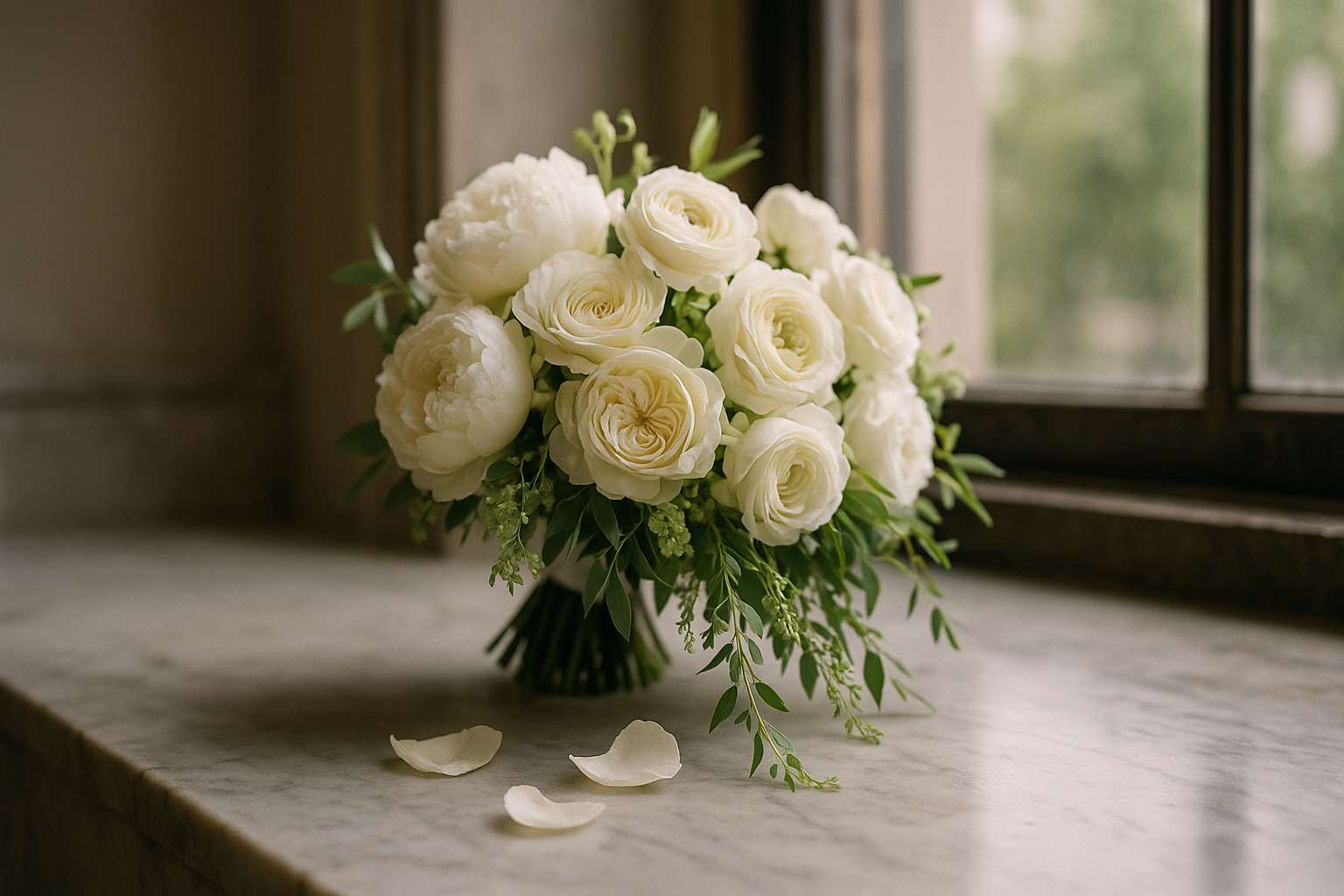
Wedding flowers represent one of the most visible investments of your entire celebration. The average U.S. couple spends approximately $2,800 on wedding florals — but smart seasonal choices, strategic repurposing, and an honest conversation with your florist can achieve a stunning result at almost any budget.
Of all the elements in a wedding, flowers are the oldest and most universal. Ancient Roman brides carried herbs and spices as symbols of new beginnings; Victorian brides chose each bloom for its coded meaning in the language of flowers. Queen Victoria herself cemented the modern bridal bouquet when she carried orange blossoms and snowdrops in 1840. In 2026, the tradition continues — transformed by contemporary floral design, sustainability consciousness, and a renewed appreciation for the botanical world's natural beauty.
This guide covers every practical dimension of wedding flower planning: how to build a realistic budget, which bouquet styles work with which gowns, what each season offers and why it matters, and how to hire and work with a florist who brings your vision to life. Data is drawn from The Knot's 2026 Real Weddings Study and pricing from WeddingWire, Zola, and florist industry reporting.
What does a complete wedding flower budget actually include?
Before setting any number, take inventory of every floral element your wedding involves. Most couples underestimate the total scope of florals because they think primarily of the bridal bouquet and centerpieces — the two most visible categories — while forgetting the many smaller items that accumulate meaningfully.
| Floral Item | Typical Cost Range | Notes |
|---|---|---|
| Bridal bouquet | $250–$500+ | Cascading or heavily embellished styles can exceed $600 |
| Bridesmaid bouquets (each) | $80–$150 | Should harmonize with bridal bouquet; smaller scale |
| Toss bouquet | $35–$75 | Frequently forgotten; order with the main florals |
| Groom's boutonniere | $18–$40 | Traditionally pulled from a bloom in the bridal bouquet |
| Groomsmen boutonnieres (each) | $15–$35 | Simpler than groom's; coordinate without matching exactly |
| Mothers / VIP corsages (each) | $35–$65 | Ask recipients about wrist vs. pin-on preference |
| Ceremony arch or floral backdrop | $500–$3,500+ | The single highest-cost ceremony item; scale varies widely |
| Aisle markers (per marker) | $15–$60 | Can be repurposed at reception cocktail hour |
| Low reception centerpieces (each) | $75–$175 | Compact; allows guest eye contact across the table |
| High reception centerpieces (each) | $150–$400+ | Dramatic; pair with low centerpieces for visual variety |
| Sweetheart table garland/runner | $200–$600 | The most photographed table; worth investing here |
| Cake flowers | $50–$175 | Coordinate with bouquet palette; confirm food-safe treatment |
The national average of approximately $2,800 (The Knot, 2026) encompasses couples who hire a full-service florist for a mid-range scope. Couples doing modest personal flowers and simple centerpieces can achieve $1,500–$2,500; couples prioritizing elaborate installations, large guest counts, and multiple floral focal points routinely spend $5,000–$12,000 or more.
What bouquet styles are trending in 2026?
Asymmetrical, free-form designs are the dominant aesthetic of 2025–2026 bridal florals. Florists describe these as intentionally imperfect: varied stem lengths, organic negative space, a gathered quality that reads as effortless rather than constructed. This aesthetic has largely replaced the tight, perfectly symmetrical round posy that dominated the previous decade.
Other notable 2026 bouquet directions include: the bouquet bag — a structured clutch or basket interwoven with cascading florals, blurring the line between accessory and arrangement; loose-stem and fresh-cut bouquets with long exposed stems, minimal binding, and a just-gathered quality; and a return of the cascading cascade — but lighter and more delicate than its 1980s predecessor, using thin trailing vines and airy tendrils rather than a heavy waterfall. Sculptural bouquets built from calla lilies, anthurium, and lotus pods speak to urban brides with a contemporary, architectural aesthetic.
Flower meanings still matter to many brides. White roses signify purity and new beginnings; peonies represent prosperity and a happy marriage; lily of the valley carries associations with royalty (Kate Middleton's bouquet); ranunculus signals radiant charm; rosemary honors loved ones who have passed. Building even a few intentional blooms into your bouquet adds a layer of meaning that photographs carry for a lifetime.
How does flower seasonality affect your choices and your budget?
Choosing in-season flowers consistently reduces cost and improves quality — both in freshness and in bloom size. Domestic peonies at peak season in May cost $5–$8 per stem wholesale; the same peonies imported from South America in October run $15–$25 per stem — a 200–300% premium for a flower that arrived after a long journey and will last fewer days. This pattern repeats across many beloved wedding flowers.
The practical seasonal guide: spring (April–June) is the season of peonies, ranunculus, sweet peas, and lilacs — the most romantic and fragrant bouquet flowers at their best and most affordable. Summer (June–August) brings dahlias (though they peak in fall), sunflowers, lisianthus, zinnias, and hydrangeas. Fall (September–November) is dahlia season at its absolute peak — a dahlia in October rivals a peony in May for lush fullness at a comparable price. Winter (December–February) offers amaryllis, hellebore, winter anemones, and eucalyptus, with longer vase life due to cooler temperatures and a dramatic, architectural palette that photographs beautifully.
For brides with an off-season flower preference, the substitute strategy is often invisible to guests: David Austin garden roses in the Juliet or Patience varieties are the closest visual substitute for peonies and are available year-round at $4–$8 per stem. Ranunculus substitutes beautifully for peonies in winter and early spring when peonies are unavailable domestically.
How do you find and book the right wedding florist?
Top florists in spring and fall markets book out 9–12 months in advance. As soon as your venue and date are confirmed, florist research should begin. The best referral source is your venue coordinator — they have observed many florists work in the actual space and know who understands the light, the architectural constraints, and the logistics. Your wedding photographer can also be an invaluable referral source, as photographers work alongside florists and know whose arrangements photograph beautifully in real conditions.
At your consultation, share your full budget from the first conversation — not a lowball figure. A skilled florist will tell you honestly what your number achieves and what it cannot; concealing your budget results in a proposal that misses the mark in both directions. Ask for a fully itemized proposal (per centerpiece, per bouquet, per ceremony element, delivery, and labor separately) to protect against scope creep. Ask specifically about their substitution policy when a flower is unavailable at the time of purchase — some florists handle this gracefully and creatively; others substitute in ways you would not have approved.
On sustainability: donations of reception arrangements to hospitals or senior centers through organizations like Random Acts of Flowers are a beautiful post-wedding option that extends the joy of your florals. Ask your florist about this in advance so logistics can be arranged.
Frequently asked
How much do wedding flowers cost on average in the United States in 2026?
Wedding flower costs vary significantly depending on the source methodology and type of weddings surveyed. The Knot's Real Weddings data places the average at approximately $2,800 for couples who hired a florist. WeddingWire reports most couples spending between $700 and $2,500 for modest arrangements, while Zola's 2026 index places the national average closer to $6,300 for full-service events with installations. The honest answer: the range is wide. A bride focused on personal flowers and modest centerpieces can achieve a beautiful result for $1,500–$3,000, while a bride who wants a floral arch, mixed centerpieces, and cocktail hour arrangements will comfortably spend $5,000–$10,000 or more. Industry professionals recommend using 8–10% of total wedding budget as a starting benchmark. Geographic location also matters: New York, Los Angeles, and San Francisco markets run 20–30% above national averages.
What bouquet style is right for my gown and venue?
Bouquet style should harmonize with your gown's silhouette, your venue's architecture, and your personal aesthetic — and the bridal bouquet should always be the most prominent arrangement to visually distinguish the bride. Ball gowns and formal ceremony venues are beautifully paired with cascading or round posy bouquets; their fullness complements the gown's volume. Sheath and column gowns often favor the arm or presentation bouquet — cradled rather than held, with long exposed stems — which feels modern and minimal. Garden and outdoor venues suit asymmetrical or wildflower-style bouquets, with their just-picked organic quality. Sculptural bouquets using structural flowers like calla lilies or anthurium read best against contemporary urban venues. In 2026, asymmetrical free-form designs are the dominant aesthetic — intentionally imperfect, with organic negative space that feels editorial rather than arranged.
What are the best flowers for each season, and why does season affect cost?
Choosing in-season flowers reduces cost by 30–50% compared to sourcing the same blooms out of season, and it produces higher-quality, longer-lasting arrangements because the flowers arrive from domestic growers rather than air-freighted from the Southern Hemisphere. Spring (April–June) offers peonies at peak season ($5–$8/stem wholesale), ranunculus, sweet peas, tulips, and lilacs. Summer (June–August) brings dahlias, sunflowers, lisianthus, zinnias, and hydrangea. Fall (September–November) features dahlias at their absolute peak, chrysanthemums, celosia, and late-season roses. Winter (December–February) offers amaryllis, hellebore, dusty miller, and winter branches. Garden roses from David Austin (Juliet, Patience, Keira varieties) are available year-round and are the closest visual and structural substitute for peonies at any season — at $4–$8/stem and similar ruffled fullness.
What should I ask a florist before booking?
A florist consultation should answer several practical questions before you fall in love with a portfolio: Do they have work from weddings at your specific venue and understand its light and layout? What does your stated budget realistically cover, itemized by category? Can they provide a fully itemized proposal separating personal flowers, ceremony, reception, delivery, and labor? What is their substitution policy if a specific flower is unavailable near your wedding date — and who makes that call? How many weddings do they take per weekend, and who will specifically be on-site at your event? Do they offer color studies or digital design decks so you can visualize arrangements before installation day? What are their policies on florals that do not meet expectations upon delivery? These questions reveal whether a florist is a true design collaborator.
How can I reduce wedding flower costs without sacrificing beauty?
Several strategies produce genuine savings without visible compromise. Repurposing ceremony florals at the reception is the highest-impact option: a ceremony arch relocated behind the sweetheart table, aisle markers converted to cocktail hour accents, and altar arrangements flanking the dance floor can eliminate 20–30% of the total floral budget. Greenery-heavy designs using eucalyptus, Italian ruscus, ferns, and ivy create lush volume at a fraction of premium bloom costs. Monofloral designs — all white tulips, an armful of garden roses — are often more striking and more affordable than complex mixed arrangements. Choosing local, in-season flowers consistently produces the best cost-to-quality ratio. Finally, focus spending on the high-visibility areas (bridal bouquet, ceremony focal point, sweetheart table) and simplify in lower-visibility areas like powder rooms and lounge corners.
Are there flower traditions I should know about for a multicultural or faith-based wedding?
Floral traditions vary significantly by culture and faith, and some choices standard in Western ceremonies carry entirely different meanings elsewhere. In Chinese tradition, white flowers signal mourning and should be avoided unless the couple has chosen a fully Western ceremony; red and pink peonies, red roses, and orchids are auspicious. In Hindu weddings, marigold garlands (varmala) are exchanged by bride and groom, jasmine appears in the bride's hair, and the mandap is adorned with fragrant roses, orchids, and lotus. In Jewish ceremonies, the chuppah is decorated with flowers representing the new home being built. In Catholic ceremonies, the bride may lay her bouquet at a Marian altar — plan for this with a bouquet that travels gracefully. In Mexican tradition, calla lilies hold strong cultural significance. For multicultural weddings, a florist experienced in both traditions is invaluable guidance.