Flowers & Décor
Wedding Reception Decor Rentals Guide: Everything to Know Before You Book
Rental decor — arches, draping, specialty lighting, tent structures, lounge furniture — makes up a substantial and frequently underestimated line in the wedding budget. Here is what to expect, what to book first, and how to build a cohesive rental plan that delivers a beautiful reception without surprise invoices.
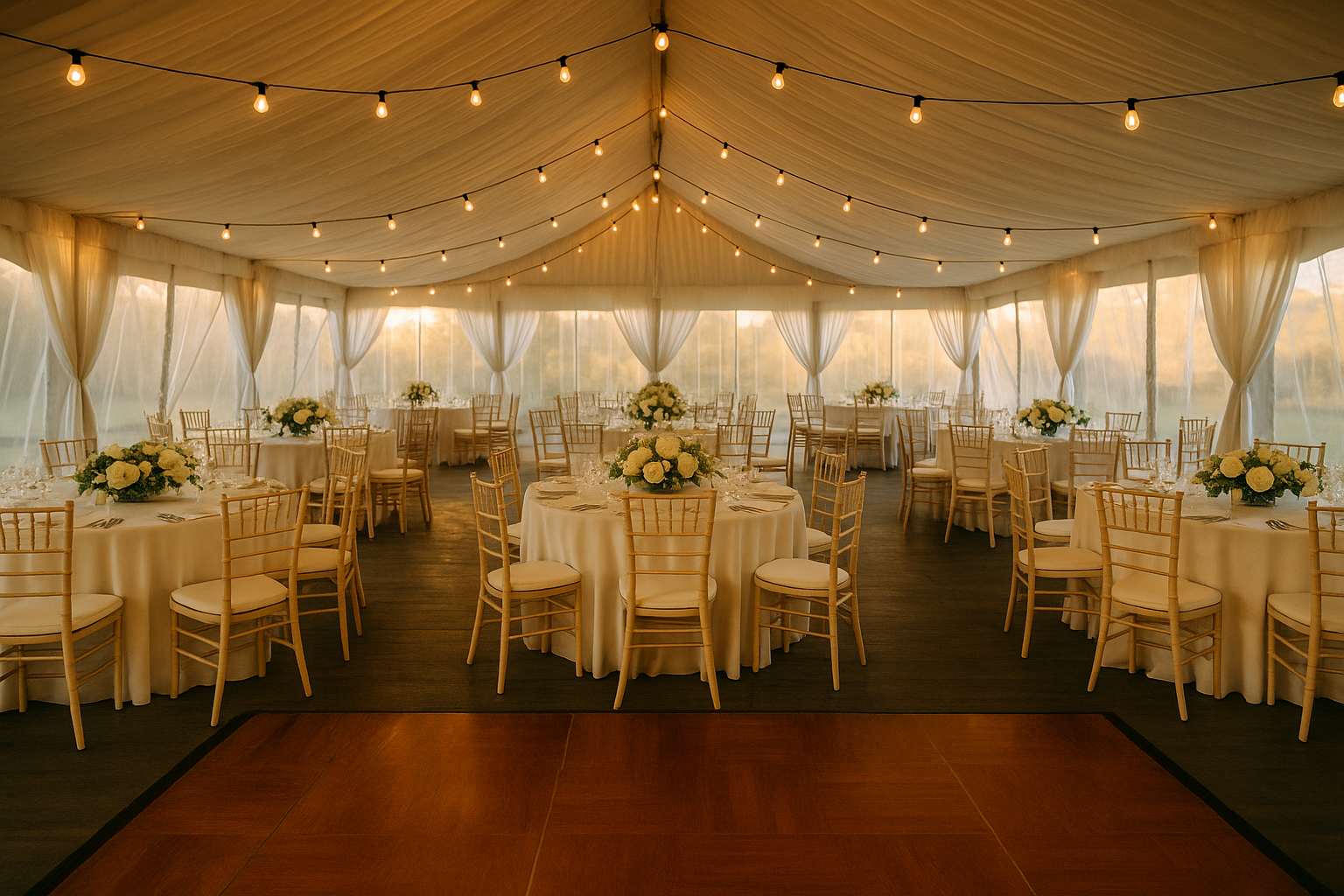
What Does Wedding Reception Decor Rental Actually Cost?
The average American couple spends approximately $650 on standalone rental décor according to The Knot's wedding decor cost data — but this figure is misleading because it represents the median across all wedding types, including many where the venue provides substantial décor infrastructure. Couples planning outdoor, tented, or venue-minimal receptions frequently spend $3,000 to $10,000 or more on rentals before a single flower is purchased. Understanding what each rental category actually costs is the foundation of an honest reception decor budget.
The category breakdown below reflects U.S. market estimates for 2026, covering mid-range to premium quality rentals from established event rental companies. Budget alternatives (DIY arches, IKEA-sourced furniture) can reduce some categories by 30 to 50 percent, but typically with tradeoffs in installation support, aesthetic quality, and liability coverage.
| Rental Category | Typical Cost Range | Key Variable | Book This Early |
|---|---|---|---|
| Ceremony / reception arch (frame only) | $75–$125 | Style: geometric, bamboo, circle, pergola | 3–6 months |
| Arch florals and greenery (added) | $400–$5,000+ | Bloom type, fullness, fresh vs. dried | 4–6 months (florist) |
| Tent (150 guests, full coverage) | $1,800–$2,800 | Pole tent vs. frame tent vs. clear span | 8–12 months |
| Tent flooring | $800–$1,500 | Turf, hardwood panels, carpet | With tent booking |
| Chiavari chairs (each) | $5–$7 | Color: gold, silver, mahogany, ivory | 6 months |
| Farm tables (8 ft, per table) | $45–$85 | Wood type, finish, with or without chairs | 6–8 months |
| Floor-length linens (per table) | $15–$30 | Fabric: poly, satin, velvet overlay | 3–4 months |
| Dance floor (15×15 ft, polished wood) | $700–$1,400 | Size, finish: hardwood, LED, black-and-white | 6–8 months |
| Lounge vignette (sofa, two chairs, table) | $400–$1,000 | Style: boho, modern, traditional; fabric | 6–8 months |
| Draping (per linear ft, sheer) | $8–$20 | Sheer, velvet, ceiling swag, tent liner | 6 months |
| Backdrop (for sweetheart table) | $150–$500 | Macramé, floral wall, sequin panel, acrylic | 4–6 months |
| Charger plates (per plate) | $1.50–$4 | Gold, silver, rose gold, hammered, acrylic | 2–3 months |
What Rental Items Should You Book First — and Why Does Timing Matter?
The rental category most constrained by availability is also the one that determines the architectural frame of your entire reception: the tent. If you are planning an outdoor or venue-minimal reception, your tent booking should come before your florist, your caterer, and your entertainment — because the tent defines the floor plan dimensions, the load-bearing points for lighting and draping, and the square footage available for each service area. Tents for peak wedding season (May through October) book out 8 to 12 months in advance in most major markets. Waiting until 4 to 5 months before your wedding typically means accepting whatever configurations remain available, which may not accommodate your guest count or your design vision.
After the tent, the next priority tier consists of items with limited inventory of specific styles: specialty lounge furniture in a specific aesthetic (Moroccan, mid-century, Victorian garden party), LED dance floors, antique farm tables, and vintage china collections. These items are available in finite quantities from any given vendor — a rental company may own 20 vintage mahogany chairs and 150 gold chiavari chairs. If your design requires the mahogany option, book it at 6 to 8 months. Standard items — gold or silver chiavari chairs, standard round tables, poly-cotton linens — have deep inventory and can typically be confirmed at 3 to 4 months without significant availability risk.
How Do You Coordinate Rentals Across Multiple Vendors Without Gaps?
Most couples work with at least two and often three or four rental sources: a primary event rental company for large structures, furniture, and tableware; a florist who also provides arch frames and floral installation; a DJ or entertainment company who provides their own dance floor lighting; and sometimes a specialty company for unique pieces like neon signs, champagne walls, or vintage furniture. Coordinating these vendors requires one person — ideally your wedding coordinator — holding a master rental inventory document that tracks every item, its source vendor, delivery window, setup crew, and pickup window.
The most common gap that creates day-of problems: misaligned delivery and setup windows. A tent company that delivers at 8 AM on Saturday cannot be followed by a florist who plans to install arch florals starting at 7 AM. A rental company that requires pickup by 10 PM will conflict with a venue whose late-night package runs until midnight. Confirm the complete delivery, setup, and breakdown window for every vendor — in writing — at least 90 days before the wedding, and share the master timeline with your venue coordinator and wedding planner simultaneously. Do not assume each vendor knows what the others are doing.
What Rental Items Are Worth the Upgrade — and Which Can You Save On?
Not every rental category delivers equal visual return on investment. The items that guests notice and that photograph prominently in professional images deserve proportionally higher investment; items that function as operational infrastructure rather than visual focus can use the budget alternative.
Worth the upgrade: The arch or ceremony backdrop is the single most photographed element of most weddings — the ring exchange, first kiss, and family formals all happen in front of it. The investment in arch florals ($800 to $2,500 for a full, lush treatment) returns more visual value per dollar than almost any other decor line. Similarly, the sweetheart table backdrop — present in nearly every portrait sequence — merits the upgrade from a basic drape to a custom floral installation or premium fabric panel. Chiavari chairs versus plastic folding chairs is the highest-visible-contrast rental upgrade available: guests notice them, they photograph in every table shot, and the per-unit cost difference ($5 to $7 versus $1 to $2) on 150 chairs is $450 to $750 — modest in the context of a full reception budget.
Save without sacrifice: Under-table linens (covered by floor-length tablecloths) can be standard poly-cotton without visual consequence. Charger plates in a standard gold or silver finish are visually equivalent to premium hammered alternatives at a third of the cost. Napkins sourced from a linen rental rather than a specialty textile vendor deliver identical function. And the tent flooring — if you are covering it entirely with carpets, dance floor panels, and lounge furniture — does not need to be the premium hardwood option if a significant portion remains unexposed.
What Is the Smartest Way to Plan a Rental Budget From Scratch?
The most reliable budgeting approach starts with a floor plan. Without understanding the physical dimensions of your reception space, any rental budget is speculative — you cannot estimate draping costs without knowing linear footage, tent costs without knowing guest count and layout configuration, or dance floor size without knowing how many guests you want on it at once. Most event rental companies offer complimentary consultations that include a rough floor plan and itemized quote. Request this consultation before setting a final décor budget, not after.
Once you have a floor plan and a preliminary quote, the sequencing looks like this: confirm tent and major structures first (this locks in the footprint); then confirm furniture categories (tables, chairs, lounge); then confirm dance floor and specialty lighting; then work with your florist on arch, backdrop, and installation pieces that layer over the rental infrastructure. Running these conversations in parallel often produces budget conflicts because each vendor optimizes for their own scope — the rental company does not know how much you have allocated to florals, and the florist does not know the rental company's pricing. A coordinator or a master spreadsheet held by one person resolves this by maintaining the integrated view.
Frequently asked
How much does the average couple spend on wedding rental decor?
The median figure across all wedding types is approximately $650 for standalone rental items, according to The Knot's current data. However, this average is pulled down significantly by weddings at all-inclusive venues that provide furniture, linens, and basic décor infrastructure. Couples planning outdoor, tented, or venue-minimal receptions typically spend $3,000 to $10,000 or more in rental costs before florals — particularly if the budget includes a full tent structure, specialty furniture, a dance floor, and draping. The most useful budgeting approach is a line-item estimate based on your actual guest count and floor plan rather than a percentage of the overall wedding budget. Request a preliminary quote from two or three rental vendors at 8 to 10 months before your wedding to establish a realistic baseline.
When should I book my wedding tent rental?
Book your tent rental 8 to 12 months before your wedding date, and earlier if your event falls in peak season (May through October) or in a major metropolitan market with high competition for event rental inventory. The tent determines the architectural frame of your entire outdoor reception — it sets the floor plan dimensions, the load points for lighting and draping, and the square footage available for each service zone. Every other outdoor rental decision — furniture, dance floor, flooring, draping — should follow the tent booking, not precede it. Vendors who quote you a tent at 4 to 5 months before a peak-season wedding are quoting you whatever remains available — which may not be your ideal configuration or size. Confirming early also gives you time to add a tent liner, lighting rigs, or flooring packages as add-ons once your design direction is confirmed.
Can I mix rental vendors, or should I use one company for everything?
Using multiple rental vendors is standard and often produces better results than any single source — tent companies specialize in structures, furniture rental companies have deeper specialty chair and table inventory, and florists provide arch frames as part of their floral installation services. The risk of multiple vendors is coordination: misaligned delivery windows, gaps in setup coverage, and unclear accountability when something goes wrong. The solution is a master rental inventory document that tracks every item, its vendor, delivery time, setup crew, and breakdown window — and a single coordinator (your wedding planner or day-of coordinator) who owns this document and manages the timeline across all vendors. Confirm each vendor's delivery and breakdown window in writing at least 90 days before the wedding and share the master schedule with your venue contact.
What is the most expensive part of wedding decor rentals?
For outdoor weddings requiring a full tent structure, the tent itself is typically the single most expensive rental line item — ranging from $1,800 to $2,800 for a 150-guest configuration, not including flooring ($800 to $1,500), a tent liner ($500 to $1,200), or lighting installation. For indoor weddings, the most expensive rental categories are typically specialty furniture (vintage or designer lounge pieces), large floral installations like full arch treatments ($800 to $5,000+ in florals beyond the $75 to $125 frame rental), and custom draping or ceiling swag installations. Couples who budget only for the rental frame of an arch and discover florals cost $1,500 to $3,000 on top of it frequently find their decor budget significantly exceeded. Confirm the full cost of each rental element — structure plus installation plus florals if applicable — before finalizing the line item.
Do I need a separate delivery fee for wedding rental items?
Yes — delivery, setup, and breakdown fees are standard and separate from the rental cost of each item in most event rental contracts. Delivery fees typically range from $75 to $300 depending on distance and item volume; setup fees for tent installation, draping, and specialty furniture are often billed hourly at $50 to $150 per installation crew member. Some rental companies include basic delivery in a minimum order threshold; others charge delivery as a flat fee; and tent companies typically price installation as a separate labor line. When comparing quotes from multiple vendors, ensure you are comparing total all-in costs — item rental plus delivery plus setup plus breakdown — rather than just the item cost. A rental company with lower item rates but higher delivery fees may not be the more affordable option.
How far in advance should arch florals be booked?
Arch floral installation should be confirmed with your florist 4 to 6 months before your wedding, as part of your overall floral contract. If you are renting the arch frame from a rental company and having your florist install florals on it, confirm which party is responsible for delivering the frame to the venue and when — the florist typically needs the frame in place before they begin installation. Fully fresh, lush arch treatments for peak summer and autumn wedding dates book out early because florists allocate their installation bandwidth across multiple couples per weekend. Couples who approach their florist with arch requests at 2 to 3 months before a peak-season wedding often find that their preferred florist is at capacity for that date, or that rush sourcing for specialty blooms carries a premium. Book the florist conversation at the same time you book the arch frame rental.