Flowers & Décor
Wedding Table Setting Etiquette: The Formal Place Setting Decoded
The formal place setting has rules that exist for real reasons — each silverware position, each glass placement, each napkin fold communicates something to your guests before a word is spoken. Here is everything the rules mean, how to apply them at a wedding, and where modern brides are intentionally breaking them beautifully.
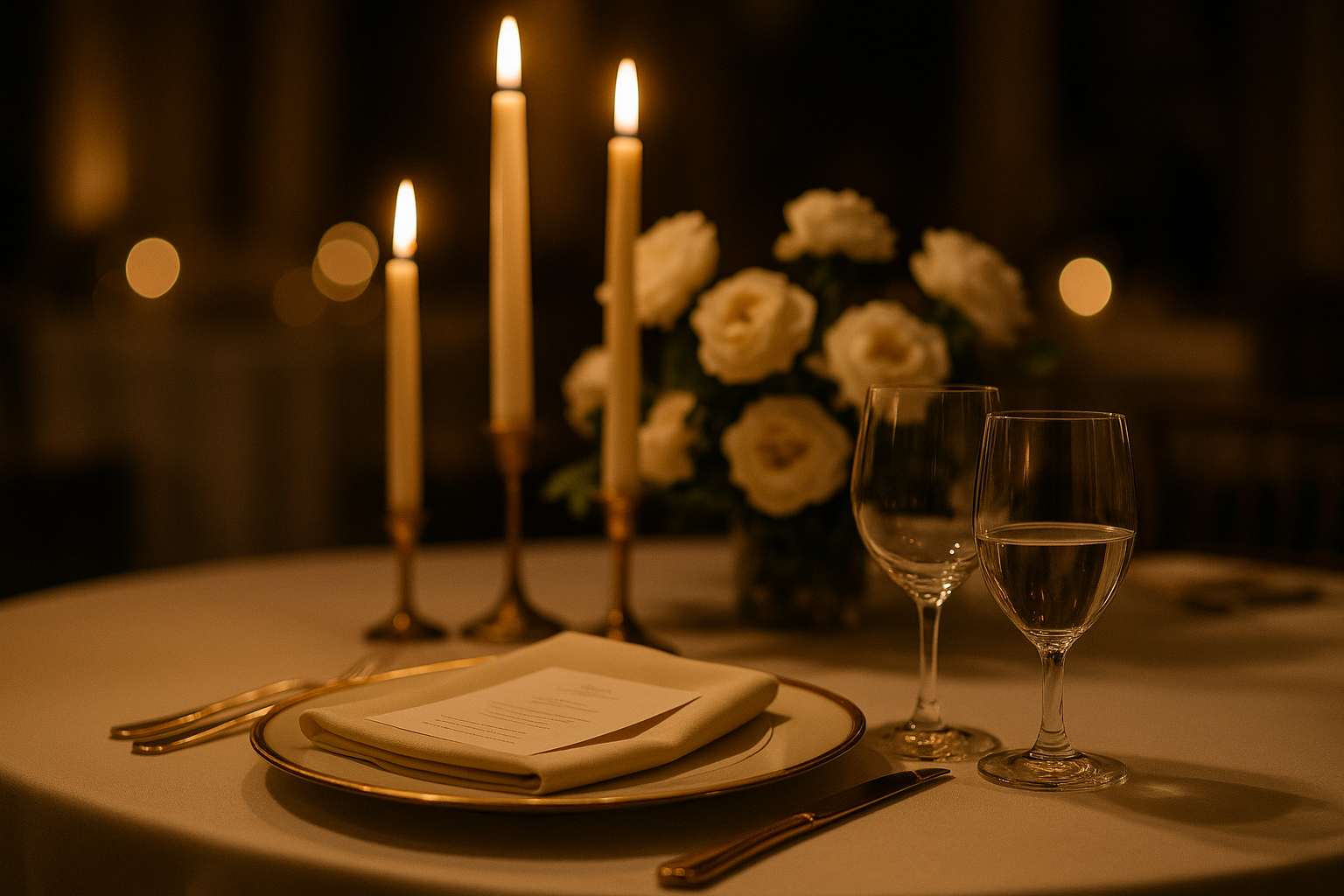
Silverware goes in order of use from outside in; forks left, knives and spoons right with blades always facing the plate. The napkin belongs on the charger or to the left of the forks. Only set the utensils for the courses being served. The sweetheart table should receive a visibly elevated setting because it is the most-photographed surface in your reception. Start with linens — every other tablescape decision follows from there.
The formal place setting has rules that exist because they communicate information to guests before anyone speaks. A diner who understands the convention picks up the outer fork for the salad course without being told. The bread plate on the upper left and the glassware on the upper right create consistent visual territory that prevents the quiet awkwardness of guests reaching for each other's water. These rules are not arbitrary — they are the accumulated logic of centuries of organized hospitality, and knowing them is what separates a beautiful table that works from a beautiful table that creates subtle confusion.
This guide covers the complete rules, how to apply them in a wedding reception context, the 2025–2026 design trends that are intentionally bending or breaking them, and the cultural and religious considerations that override standard Western table etiquette.
What are the rules of a formal wedding place setting?
The anatomy of a formal place setting follows a consistent logic. Read it as a clock face: the dinner plate is the center point; everything radiates outward from it in order of use.
| Position | Item | Placement Rule |
|---|---|---|
| Foundation layer | Charger plate (12–14") | Centered at the seat; 1" from table edge |
| Dinner plate | Dinner plate | On charger or brought by service staff |
| Left of plate (outer) | Salad fork | Outermost fork; used first |
| Left of plate (inner) | Dinner fork | Closest to plate; used for entrée |
| Right of plate (inner) | Dinner knife | Blade always faces the plate (inward) |
| Right of plate (outer) | Soup spoon | Only if soup is being served |
| Above plate (horizontal) | Dessert spoon and/or fork | Spoon handle right; fork handle left |
| Upper left | Bread-and-butter plate + butter knife | Butter knife rests horizontally, blade facing guest |
| Upper right (center) | Water goblet | Directly above the dinner knife |
| Upper right (right of water) | Wine glass(es) | Red or white wine to the right of the water goblet |
| On charger or left of forks | Napkin | Folded on charger, to left of forks, or draped in glass |
| Above setting or on charger | Place card; menu card | Menu can tuck into napkin fold |
Per The Knot's table setting etiquette guide, the simplest mental rule for guests: work from the outside in. The silverware farthest from the plate is used for the first course; the pieces closest to the plate are used for the main course. This rule is consistent across every formal table in Western dining tradition.
What does a typical wedding reception place setting include?
Most wedding receptions do not serve a bread course, a soup course, and a dessert course at table — they serve a salad, an entrée, and bring dessert (or the wedding cake) separately. This means the typical wedding place setting is simpler than a full formal dinner setting:
- Charger plate
- Dinner plate (often brought by servers for the entrée)
- Salad plate (pre-set or brought with salad)
- Salad fork and dinner fork (left)
- Dinner knife (right, blade inward)
- Water goblet and wine glass (upper right)
- Cloth napkin (on charger or left of forks)
- Place card (above the plate or on the charger)
- Menu card (optional — tucked in napkin fold or above setting)
No bread-and-butter plate unless rolls are being served. No soup spoon unless soup is a course. No dessert fork at table unless plated dessert is being served at the seat. As Rebecca Rose Events notes, a cleaner, more curated arrangement photographs better and creates more comfortable guest experience than a crowded setting with pieces that will never be used.
What are the 2025-2026 wedding table setting trends?
The dominant design principle in 2025–2026 is texture as the primary luxury signal. Leading event designers — including Jennifer Matteo of Jennifer Matteo Event Planning, whose observation that "linens are the new florals" has been widely cited in the industry — are directing couples to build the table from the linen up rather than from the centerpiece down. This represents a meaningful shift from the previous decade, when floral centerpieces were the primary investment and the base layer was largely treated as utility.
The specific trends with the most staying power for 2026:
- Silver renaissance: Cool metallics — silver-rimmed china, silver chargers, smoke-grey glassware — are replacing gold dominance as the leading formal table palette.
- Colored glassware: Amber, cobalt blue, smoke grey, and sage stems are among the most accessible, high-impact table upgrades available — typically $1.50 to $3.50 per glass in rental inventory.
- Velvet napkins: Upgrading from polyester to velvet napkins for $1 to $3 extra per guest is consistently cited by event designers as the single highest-return tablescape upgrade per dollar.
- Mixed china: Deliberately varied patterns — vintage china sourced across a collection — create an eclectic, curated aesthetic when cohered by a consistent color story.
- Maximalist layering: Multiple runners, pattern-on-pattern linens, height variation in candles — the table as a sensory canvas rather than a clean surface.
Frequently asked
What is the correct silverware placement at a wedding table?
Silverware is always placed in order of use, working from outside in toward the plate. Forks go on the left side of the plate; the salad fork is outermost, followed by the dinner fork closest to the plate. Knives and spoons go on the right side; the dinner knife is closest to the plate (blade always facing inward toward the plate, never outward toward the guest), followed by the soup spoon outermost if soup is being served. Dessert cutlery is placed horizontally above the plate — the dessert spoon with the handle pointing right, the dessert fork with the handle pointing left. Only set the utensils that will actually be used for the meal being served. At most wedding receptions with a standard dinner service, this means a salad fork, dinner fork, and dinner knife — and the soup spoon and dessert cutlery only if those courses are being served. A simpler, cleaner place setting reads more confidently than a busy one with extraneous pieces.
Where does the napkin go in a formal wedding place setting?
The napkin has three traditional placement positions, each with slightly different implications. On the charger plate: the most formal placement, typically as a neatly folded rectangle, bishop's hat, or a structured fold that allows a menu card to be tucked inside. To the left of the forks: proper etiquette for settings where food is already plated on the charger when guests arrive; the napkin is folded simply and placed just to the left of the outermost fork. In the wine glass or water goblet: a draped or fanned arrangement that is elegant and visually striking from a distance, though it requires guests to unfold carefully to avoid disrupting the glassware. In 2025–2026, the dominant trend is either the classic rectangle fold on the charger with a napkin ring or a simple gathered fold placed in the water goblet. Avoid overly elaborate folds that guests cannot easily retrieve — the napkin is functional first.
Do you need a charger plate at a wedding reception?
Charger plates are not required by etiquette, but they are one of the highest-visual-return items per dollar in wedding tablescaping. A charger — typically 12 to 14 inches in diameter — grounds the place setting, adds a layer of formality, and elevates the perceived value of the table before a single course is served. From a practical standpoint, chargers are decorative only: they are removed before or with the entrée and should never have food placed directly on them. Rental costs run $0.75 to $3.50 per charger depending on material and style. If budget requires prioritization, allocate upgraded chargers (hammered metal, beaded, gold-rimmed) to the sweetheart or head table and use simpler or disposable event-grade chargers at guest tables. The visual difference at the sweetheart table — which is photographed far more intensively than any other — justifies the cost differential.
What glassware does each wedding guest need at their place setting?
For a standard wedding dinner service, each guest needs at minimum a water goblet (12 to 16 oz) and one wine glass appropriate to the meal — either an all-purpose wine glass, a red wine glass, or a white wine glass, depending on the menu. A champagne flute for toasting is typically added if toasts are planned, though many modern receptions pour champagne into the wine glass already at the setting rather than adding a third glass. Bar glasses (rocks glasses, highball, cocktail) are managed at the bar, not at the table setting. From a rental quantity standpoint: always order 10 to 20% more glassware than your guest count to account for breakage and replacement during service. The 2025–2026 colored glassware trend — amber, smoke grey, cobalt blue, sage green — is one of the most accessible and high-impact ways to modernize a table setting without increasing the floral or linen budget.
How do you set a sweetheart table differently from guest tables?
The sweetheart table — the couple's private table at the focal point of the reception room — should receive a demonstrably elevated table setting compared to guest tables. This is standard event design practice, not extravagance: the sweetheart table is the most-photographed continuous surface in the reception and deserves treatment proportional to that exposure. Practical upgrades to apply at the sweetheart table specifically: one tier above the guest table charger (e.g., if guests have gold-rim chargers, the couple has beaded or artisan chargers); crystal glassware rather than standard rental wine glasses; a more elaborate linen or a custom table runner; additional candle height (taper candles in silver candlesticks add vertical drama without requiring a florist); and personalized details such as custom menus, monogrammed napkins, or a small curated floral arrangement from the ceremony that transitions to the table. Allocate 15 to 20% of your total tablescape budget to the sweetheart table to achieve the disproportionately elevated result it deserves.
Are there cultural or religious table setting rules brides need to follow?
Yes — and these must be discussed with your caterer and rental company early. For kosher receptions governed by Jewish dietary law, separate china, glassware, and cutlery sets for meat (fleishig) and dairy (milchig) courses are required by halacha. At a fully kosher dinner, this means your rental order doubles for china and silverware. Work with a caterer experienced in kosher events and confirm with your rabbi whether your venue's kitchen has the required certifications. For Hindu multi-day celebrations, each event (sangeet, mehndi, reception) warrants its own tablescape treatment and potentially its own rental order. For South Asian events where beef or pork are absent from the menu, this affects not just the food but the coordination with the caterer on labeling and service order. In all traditions: menu cards integrated into the place setting that clearly indicate dietary options are an act of hospitality that prevents service interruptions and makes guests feel genuinely welcomed.