Flowers & Décor
Wedding Tent Cost: What You Will Actually Pay in 2026
A 150-guest wedding tent setup — tent, flooring, lighting, and climate control — typically costs $8,000 to $14,000. Here is exactly how that number breaks down, what adds to it, and how to budget for a fully equipped outdoor venue without surprises.
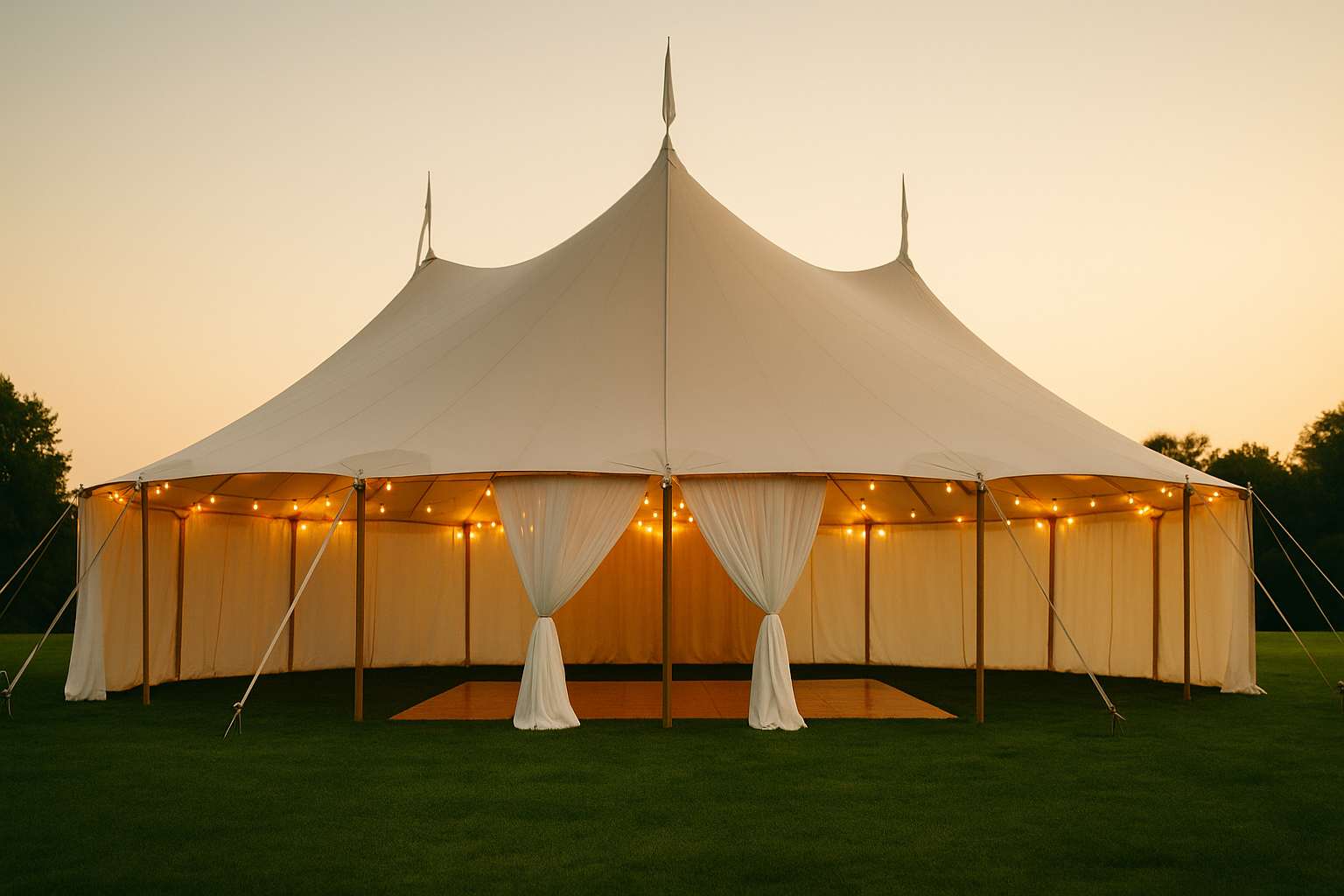
A wedding tent for 150 guests costs $3,000 to $6,000 for the tent itself — but a fully functional tented reception including flooring, lighting, and climate control runs $8,000 to $14,000 in most U.S. markets. Peak-season demand and metropolitan locations push totals higher; private property with existing infrastructure can bring them down. Book six to nine months in advance for any summer or fall date.
The wedding tent is one of the most misunderstood budget items in outdoor wedding planning. Couples see a base rental price of $3,000 to $4,000 and plan around that number, then discover at contract review that flooring, lighting, climate control, delivery, and permit fees are all separate line items that together exceed the tent rental itself. This guide provides the complete picture — what each component costs, how size and style choices affect the total, and what questions to ask your rental company before signing.
How much does a wedding tent actually cost, broken down by component?
| Component | Low End | High End | Notes |
|---|---|---|---|
| Tent rental (40x80 ft frame or pole) | $3,000 | $6,000 | Sailcloth adds 50–100% premium |
| Flooring (subfloor + hardwood or carpet) | $1,000 | $2,500 | Often excluded from base quote |
| Lighting (string lights + uplighting) | $600 | $2,500 | Chandeliers, pin-spots extra |
| Climate control (heat or A/C) | $1,200 | $3,000 | Required May–Oct and Oct–Apr in most regions |
| Delivery, setup, and breakdown | $500 | $1,500 | Site access and distance-dependent |
| Sidewalls (solid or clear vinyl) | $200 | $600 | Critical for weather contingency |
| Subtotal | $6,500 | $16,100 | Before permits and restroom facilities |
What do different tent sizes actually cost, and how do you choose the right size?
Tent sizing in the wedding industry uses square footage per person as the primary metric: allow 8 to 10 square feet per person for reception-only setups with round tables, 12 to 15 square feet per person if the tent must accommodate a dance floor, bar, band or DJ setup, and catering station. For ceremonies under a tent, seated-only arrangements can work at 6 to 8 square feet per person.
A 150-guest reception with dancing requires approximately 2,100 to 2,500 square feet of tent space — a 40x60 (2,400 sq ft) or 40x80 (3,200 sq ft) tent, depending on your setup requirements. The 40x80 is the more common recommendation because the additional 800 square feet costs relatively little in marginal tent rental cost (typically $300 to $600) while providing genuine buffer for a catering pass-through, cocktail hour transition, or vendor setup area. Zola's rental cost guide consistently recommends sizing up by one tier when uncertain, because an under-tented reception is noticeably uncomfortable in a way that guests remember.
A sailcloth tent in the 40x80 range typically starts at $5,000 to $7,000 for the tent rental alone before add-ons — approximately 50 to 100 percent more than a standard pole or frame tent of the same size. The premium reflects both the material cost of the specialized translucent fabric and the higher installation skill required to properly tension a sailcloth structure. For couples for whom the warm, glowing aesthetic of a sailcloth tent is a priority, Bay State Tent's pricing guide recommends allocating at least $9,000 to $12,000 for a complete 150-guest sailcloth setup before optional décor additions.
What is the true cost difference between peak and off-peak tent rental seasons?
Peak outdoor wedding season in most U.S. markets runs from late May through mid-October. During this window — particularly on Saturday afternoons in June, September, and early October — tent rental companies operate at or near capacity. The practical effect is pricing that runs 30 to 40 percent above off-peak rates, reduced inventory choice (sailcloth tents and larger frame tents sell out months before standard pole tents do), and less negotiating leverage on add-ons and total package pricing.
Couples marrying in April, November, or March in temperate climates often find tent rental costs notably lower — and tent company availability notably better — than their summer-wedding counterparts. The tradeoff is climate control cost: a spring or fall tent wedding in the Northeast or Midwest typically requires heating for evening hours even in May and September, adding $1,200 to $2,000 to the equipment budget. In most cases the heating cost is still offset by the off-peak rental discount, and the overall total comes in meaningfully below a comparable peak-season event.
What hidden costs and site requirements do tented weddings add beyond the rental?
A tent does not replace a venue so much as it creates an empty venue you must then equip from scratch — and the line items that fill that empty space are where couples are most often caught off guard. The most consistently underestimated is power. An established banquet hall has wired circuits for catering, lighting, and a band; a tent on an open lawn usually has none, which means a generator. A whisper-quiet inverter generator sized for a full reception (catering equipment, lighting, and amplified music) rents for roughly $800 to $1,500 for the weekend, and it must be placed and fueled far enough from the tent that guests never hear it. Restrooms are the second surprise: most private-property tent sites legally require portable facilities, and a four-stall luxury restroom trailer with running water, climate control, and finished interiors runs $1,500 to $3,500 — a far cry from the basic single units associated with construction sites.
Site preparation can quietly rival the cost of the tent itself. A lawn that looks flat to the eye is rarely level enough for hardwood flooring and dining tables, so many rental companies build a subfloor or leveling system, which is part of why flooring quotes climb on uneven ground. Mature trees, septic fields, and underground irrigation or utility lines all restrict where stakes can be driven, sometimes forcing a more expensive frame tent with weighted bases instead of a staked pole tent. Insurance is the final, frequently forgotten piece: many rental companies require a certificate of event liability insurance, and homeowners hosting a wedding on a family property should add a special-event rider — together usually $150 to $500. Woman Getting Married's rental breakdown stresses walking the actual site with your rental representative before signing, because nearly every one of these add-ons is driven by the specific conditions of your ground rather than the tent on the quote.
Frequently asked
How much does a wedding tent cost for 150 guests?
A tent adequate for 150 guests — typically a 40x80-foot or 40x100-foot frame or pole tent — costs $3,000 to $6,000 for the tent rental alone. However, the tent is rarely the most significant cost in a fully functional outdoor wedding setup. Adding flooring ($1,500 to $2,500 for 3,200 square feet of subfloor and hardwood), lighting ($800 to $2,500 for Edison string lights and perimeter uplighting), and climate control ($1,500 to $3,000 for heating or air conditioning depending on season) brings the total for a complete 150-guest tented setup to approximately $8,000 to $14,000. This figure does not include delivery and setup fees (typically $500 to $1,500 depending on site access and distance), or optional décor additions such as ceiling draping, chandeliers, or café curtains for the tent sides. Plan for $10,000 to $12,000 as a realistic working budget for a 150-guest tent with full infrastructure in most U.S. markets.
What is the difference between a pole tent, a frame tent, and a sailcloth tent?
These are three distinct structures with meaningfully different aesthetics, installation requirements, and price points. A pole tent uses tall center poles and perimeter stakes to create a distinctive peaked roofline with swooping edges — it requires open ground for staking, cannot be installed on paved surfaces, and delivers a classic, airy look at a lower price point than frame or sailcloth alternatives. A frame tent has a rigid internal aluminum or steel frame that supports the roof without center poles, creating unobstructed interior space ideal for a dance floor, band setup, or reception tables — it can be installed on concrete, asphalt, or other hard surfaces and is generally 20 to 40 percent more expensive than a comparable pole tent. A sailcloth tent is made from translucent natural fabric rather than opaque vinyl, creating a warm glow when lit from inside that many couples find the most beautiful of the three options — it is also the most expensive, typically 50 to 100 percent more than a standard pole tent of the same size. Sailcloth tents are the dominant choice for upscale outdoor weddings and estate venues.
What factors make wedding tent costs higher or lower?
Several variables move the final number significantly. Season is the largest factor: peak outdoor wedding season (May through October in most U.S. regions) commands 30 to 40 percent higher rates than off-peak months, particularly on summer weekends when rental companies are booked to capacity. Geography is the second major factor: metropolitan areas including the Northeast corridor, San Francisco Bay Area, and coastal Southern California typically run 25 to 40 percent above national average pricing, while rural and Midwest markets often come in below average. Site accessibility matters more than most couples anticipate: tents set on level open lawns with clear truck access are significantly cheaper to install than those on sloped terrain, near bodies of water with weight restrictions on access paths, or in gardens with mature trees requiring overhead clearance. Permit requirements in some counties and municipalities add $200 to $800 in filing fees. And the booking timeline matters: last-minute rentals less than four months before the event typically come with availability constraints that limit your negotiating position.
How far in advance should you book a wedding tent rental?
Book your tent rental company at the same time you book your venue — ideally six to nine months before the wedding date for a peak-season event, and four to six months for off-peak dates. Tent rental companies have a much smaller inventory than the general wedding vendor market assumes: a large regional rental company may own fifteen to twenty large tents, which means that popular summer weekends can be fully committed eight or more months in advance. The earlier you book, the more leverage you have to negotiate on add-ons (some companies will include basic lighting or flooring delivery as part of a full-service package for clients who commit early), and the more options you have across tent styles and sizes. If you are planning an outdoor wedding at a private property or estate rather than an established event venue, confirm with the rental company that they have installed at your specific location before — site familiarity reduces setup time, delivery surprises, and permit complications significantly.
What is not included in a standard tent rental that will add to your total cost?
The line items most frequently excluded from basic tent rental quotes, and most frequently surprising to couples reviewing their final invoices, include: flooring (hardwood dance floor panels, subfloor, or carpet — rarely included in base rental, typically $1,000 to $2,500 for 150 guests); lighting beyond basic string lights (Edison café lights are sometimes included at the base level, but perimeter uplighting, chandeliers, pin-spot lighting for centerpieces, and exterior path lighting are all separate line items); climate control (heating for spring and fall, cooling for summer — $1,500 to $3,000 depending on capacity); delivery, setup, and breakdown fees (typically $500 to $1,500, occasionally buried in fine print); and damage waivers or deposits (typically 10 to 25 percent of rental value). Sidewalls — the solid or clear vinyl panels that enclose the tent perimeter — are also frequently a separate line item, usually $200 to $600 depending on tent size, and become critically important if rain or wind is possible on the wedding date.
Is a wedding tent cheaper than renting an indoor event venue?
This comparison is complicated by what is included in each option. A traditional indoor event venue rental in the $4,000 to $8,000 range typically includes HVAC, restrooms, a prep kitchen, and basic lighting — infrastructure that a tent requires you to source and pay for separately. When you add tent rental, flooring, climate control, portable restroom facilities (required at most private-property tent locations, typically $600 to $1,500 for four-unit luxury restroom trailers), generator rental if power is not available ($800 to $1,500), and the other line items described above, the total cost of a tented outdoor event can exceed a comparable indoor venue. The decision to go tented should generally be made for aesthetic and experience reasons — the outdoor light, the landscape, the architectural flexibility — rather than purely financial ones. That said, couples using a family property or an estate with existing infrastructure (power, restrooms, level surface) can often achieve a tented event at significantly less than a comparable indoor venue rental.