Flowers & Décor
Wedding Uplighting Cost: How Much to Budget in 2026
Uplighting is the single highest-impact, most cost-effective venue upgrade available to most couples — and also the element most frequently mispriced, misbought from the wrong vendor, or skipped entirely. Here is what it actually costs and how to get it right.
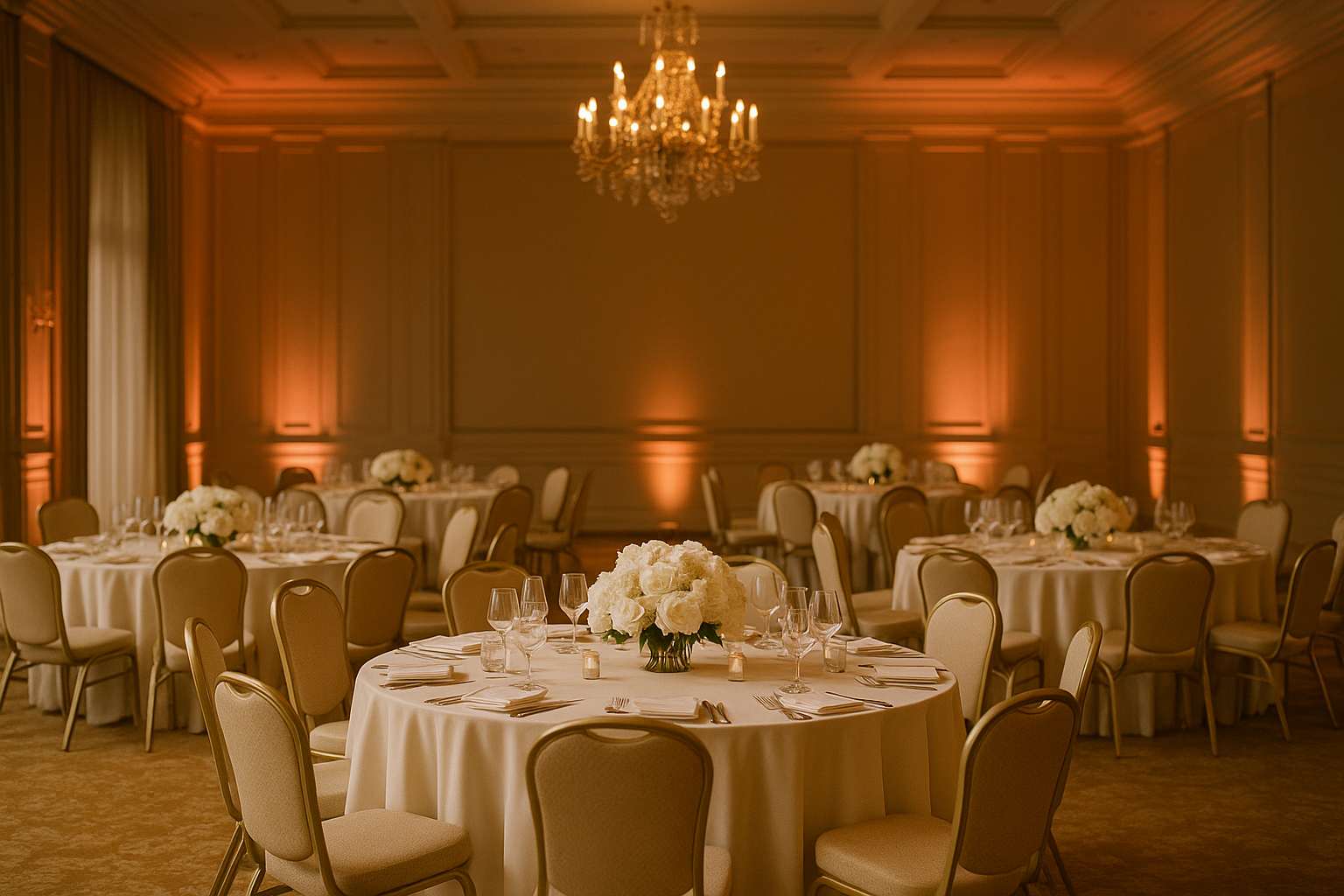
Professional wedding uplighting typically costs $700 to $2,000 for full-room coverage at a mid-size venue in 2026, with per-fixture rental rates of $35 to $75. It is the highest-impact venue upgrade per dollar available to most couples — but only when booked from a professional lighting company, not accepted as a DJ add-on without evaluating equipment quality.
Why Uplighting Deserves Its Own Budget Line
Walk into a ballroom lit by warm amber uplighting washing its walls and architectural features — and the room feels like an entirely different space than it did during your venue tour under fluorescent overheads. Uplighting does not just add color; it adds depth, dimension, and the sense of occasion that transforms a functional event space into a place guests remember.
According to Zola's wedding lighting cost guide, uplighting is consistently ranked by couples as one of the highest-satisfaction upgrades they made — and one of the most regretted omissions when it is skipped. It photographs beautifully at every price point, flatters all skin tones in warm amber tones, and requires no maintenance once set up. Yet it is also one of the most frequently mispriced by couples who accept DJ-provided versions without evaluating equipment quality.
This guide gives you the real numbers, the right questions, and the framework to make a confident decision.
How Uplighting Actually Works
Uplighting uses LED par can fixtures placed on the floor and aimed upward to wash walls, columns, draping, or architectural features in color. Modern LED uplights are programmable: they can be set to any color, dimmed remotely, and programmed to shift color during the reception — warmer during dinner, more saturated as dancing begins. The transition from dinner to dancing mood is one of the most valuable features of a well-designed uplighting system.
LED par cans have almost entirely replaced older tungsten fixtures in the professional market. Benefits: they run cool, consume less power, are precisely programmable, and are reliably consistent in color temperature across multiple units — critical when you need 18 fixtures in your ballroom to all read the same shade of dusty rose.
Uplighting Cost Breakdown: What You Are Actually Paying For
| Scope | Fixture Count | Typical Cost | Best For |
|---|---|---|---|
| Accent / focal areas only | 6–10 fixtures | $250–$700 | Budget-conscious; highlights ceremony arch, cake, sweetheart table |
| Partial room coverage | 10–16 fixtures | $500–$1,200 | Smaller venues; prioritized walls and columns |
| Full-room coverage, one color | 16–24 fixtures | $700–$2,000 | Mid-size ballrooms; consistent perimeter wash |
| Full-room, custom programming | 18–30 fixtures | $1,500–$3,000 | Large venues; dinner-to-dancing color transition |
| Premium dynamic package | 24+ fixtures | $2,000–$4,500+ | Large luxury venues; full arc programming with technician |
Per-fixture rental rates from professional companies run $35 to $75 per unit for standard LED par cans. Labor for delivery, setup, programming, and breakdown adds $300 to $600 in most markets. Always ask for an itemized quote separating equipment from labor — this reveals what you are actually paying for and allows meaningful comparison between vendors.
Per-Fixture vs. Package Pricing: Which Is Better?
Most professional lighting companies offer both per-fixture pricing and bundled packages. For couples who know their venue dimensions, per-fixture pricing with a confirmed floor plan is more transparent. Bundled packages — often $700 to $1,500 for a "complete ballroom package" — are convenient but require you to verify exactly how many fixtures are included and what their wattage and throw distance are. A "20-fixture package" from a professional lighting company and the same from a DJ can produce dramatically different results.
When comparing quotes, ask every vendor: What is the wattage of each fixture? What is the maximum throw distance? Can you show me photos from this specific venue with your equipment? These three questions expose quality differences that pricing alone obscures.
DJ Uplighting vs. Professional Lighting: The Real Difference
DJs routinely offer uplighting as an add-on service. The appeal is price and convenience — one vendor, one contract, bundled pricing. The risk is equipment grade. Consumer-grade LED par cans used by many DJs have lower wattage, less precise color rendering, and shorter throw distance than professional event lighting fixtures. In a venue with 16-foot ceilings, underpowered uplights fail to reach the ceiling, creating a patchy wash that looks nothing like the photos in your inspiration folder.
Before accepting DJ-provided uplighting, ask to see photos specifically from your venue — or from venues of similar size and ceiling height — taken with that equipment on actual wedding nights. A professional lighting company should be able to show you a portfolio from your specific venue if they have worked there before. If they cannot provide this, visit the venue at night before committing.
Color Selection: What Works and What to Avoid
- Warm white or amber (2700–3000K): Universal; photographs beautifully; the safest choice for most palettes
- Blush or dusty rose: Top trending in 2025–2026; pairs beautifully with garden, romantic, and neutral floral palettes
- Deep jewel tones (burgundy, navy, emerald): Dramatic and elegant in high-ceilinged ballrooms; confirm with your photographer first
- Avoid cool white or pure white: Reads as clinical; destroys the warmth of candles and string lights
- Avoid highly saturated red, green, or blue: Creates strong, unflattering skin casts in photographs — always confirm with your photographer before committing
Always finalize your uplight color in conversation with both your florist and your photographer. Your florist knows what tones will read beautifully against your floral palette; your photographer knows what colors will cause problems at ISO in low light.
Questions to Ask Every Uplighting Vendor Before You Sign
- Can you show me photos from this specific venue with your equipment?
- What is the wattage and throw distance of each fixture?
- Who will be on-site managing lighting during the event?
- Is a live technician included, or is it pre-programmed and unattended?
- What is your backup plan if a fixture fails mid-reception?
- Do you carry liability insurance?
- Is delivery, setup, and breakdown included in the quote?
- Can I see a floor plan showing where each fixture will be placed?
How Uplighting Fits Into Your Total Lighting Budget
For couples investing in a complete lighting design, uplighting is typically one layer of a broader plan that also includes string or bistro lights, pin spots on centerpieces and the cake, and dimmer control for existing venue chandeliers. The highest ROI items within that plan are: uplighting the full room perimeter, a pin spot on the wedding cake (which appears in hundreds of photographs for $35 to $60 extra), and confirming that the venue's chandeliers are on a dimmer rather than a binary on/off switch.
Professional full-service lighting design for a mid-size wedding of 150 guests — uplighting, string lights, pin spots, and dimmer programming — typically runs $1,500 to $3,500. Prioritizing uplighting alone within a tighter budget, from $700 to $1,200, still transforms the room experience for guests and photographs at a level that far exceeds the proportional cost of the upgrade.
Frequently asked
How much does wedding uplighting cost on average in 2026?
The range is wide depending on the number of fixtures, venue size, and whether you hire a professional lighting company or accept DJ-provided uplighting. For a basic package covering a smaller venue or accenting key areas only — 8 to 12 fixtures — expect to spend $300 to $900. A full-room installation for a mid-size ballroom of 150 to 200 guests, requiring 16 to 24 fixtures with custom color programming, typically costs $700 to $2,000. For large venues with complex programming or dynamic color-shifting that transitions from dinner to dancing, budgets of $2,000 to $4,000 are common. Per-fixture rental rates from professional companies run $35 to $75 per unit for standard LED par cans. Labor for setup and breakdown adds $300 to $600 in most markets. Major metros — New York, Los Angeles, Chicago — run 25 to 40 percent higher than national averages across all categories.
Is DJ uplighting as good as professional lighting company uplighting?
Almost never, and the difference is visible in photographs. DJs frequently offer uplighting as an add-on service, typically bundled into a package at a price that looks attractive. The problem is equipment grade: most DJ uplighting packages use consumer-grade LED par cans with limited wattage, less precise color rendering, and reduced throw distance compared to professional event fixtures. In a large ballroom, underpowered uplights fail to reach the ceiling and create a muddy, incomplete wash rather than the crisp, saturated color that photographs beautifully. Before accepting DJ-provided uplighting, ask to see photos from actual events in your specific venue taken with that equipment. If the photos look flat, patchy, or washed-out, invest in a dedicated professional lighting company. Bundling uplighting with your AV package can still save money — just evaluate equipment quality independently.
How many uplights do I need for my wedding venue?
The standard guideline used by professional lighting designers is one uplight every 8 to 12 feet around the perimeter of the room. A 3,000-square-foot ballroom typically requires 18 to 24 uplights for full coverage. For a 2,000-square-foot space, 14 to 18 fixtures is appropriate. If full perimeter coverage is beyond your budget, a focused approach can still create significant impact: 6 to 10 uplights concentrated behind the ceremony arch or backdrop, behind the sweetheart table, and flanking the dance floor delivers a meaningful upgrade at lower cost than full coverage. When asking for quotes, request a floor plan showing proposed fixture placement — any professional vendor should provide this.
What is the best uplighting color for a wedding?
Warm white or amber is the safest and most universally flattering choice. It complements almost every floral palette, photographs beautifully in virtually all light conditions, and creates the warm, intimate atmosphere couples typically envision. Blush and dusty rose are the top trending choice in 2025–2026, pairing particularly well with soft floral palettes in ivory, cream, and garden pink. Deep jewel tones — burgundy, navy, and forest green — are dramatic and elegant in high-ceilinged venues. Cool white and pure white uplighting should be avoided: both read as clinical in photographs and undermine the warmth that candles and string lights are creating. Critically, confirm your uplight color with your florist before finalizing — a warm peach floral palette under magenta uplighting produces muddy, unflattering combinations both in person and in photographs.
When should I book my wedding lighting vendor?
Book your lighting vendor 12 to 18 months before your wedding for peak-season weekend dates — May through October in most U.S. markets. For off-peak dates and smaller venues, 9 to 12 months is workable in most cities. Lighting vendors at popular venues often share preferred vendor lists, and the best lighting companies in any market book quickly. Booking under six months out significantly narrows your choices and may increase pricing. One practical coordination note: book your photographer and your lighting designer within the same month if possible, and schedule a joint venue walk-through. Your photographer needs to know your uplight colors, planned dimmer levels at each phase, and when lighting transitions will occur — this communication protects thousands of dollars in photography investment.
Can I save money by renting uplights and installing them myself?
DIY uplight rental is possible and can save $200 to $500 on labor, but it carries real trade-offs. Reputable rental companies such as RentForEvent offer LED uplight packages starting around $19 per fixture with free shipping, plus a refundable security deposit. You handle delivery, setup, programming, and breakdown — which requires arriving at the venue hours early and staying late, competing with every other setup task on your wedding day. Professional installation includes a lighting technician on-site during the event, which matters when a fixture fails or a color needs adjustment at 8 p.m. DIY is best suited for couples with a rehearsal space or engaged family member who can handle setup the day before. If the venue does not permit early access, or if your wedding day timeline is already compressed, the labor cost of professional installation is worth every dollar.