Food & Drink
7 Cultural Wedding Food Traditions That Make the Meal Unforgettable (2026)
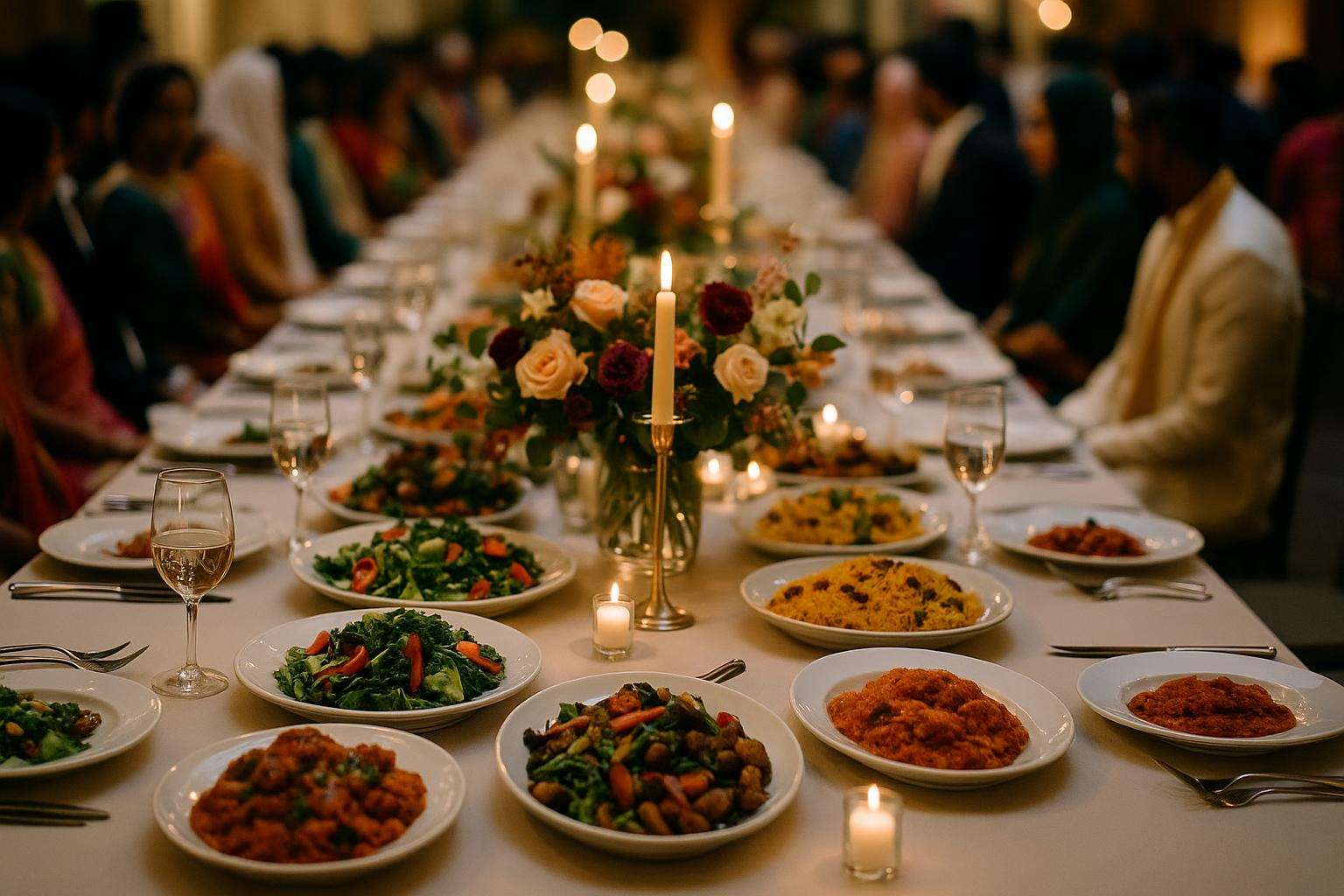
Food is the most visceral memory guests carry home from a wedding. These seven cultural food traditions — each with real meaning behind every dish — can inspire a menu that tells your love story.
Cultural Wedding FoodMulticultural WeddingInternational Wedding TraditionsWedding Menu InspirationWedding Food Traditions 2026
The quick verdict
Seven cultures, seven deeply meaningful food traditions, and dozens of practical ways to weave them into your own reception — whether you are honoring your heritage or celebrating the family you are joining.
- Best overall
- Italian Jordan Almonds (Confetti) — Beautiful, symbolic, and accessible to nearly every guest — the ideal cultural food favor for any wedding, at any budget.
- Best value
- Indian Wedding Feast — Extraordinary variety and abundant vegetarian options mean every guest is fed memorably for a mid-range per-person cost.
- Best for A full-evening, deeply immersive cultural dining experience
- Chinese Ten-Course Banquet — Centuries of symbolic depth across every course, with established banquet halls in major U.S. cities to execute it.
How we evaluated
These seven traditions were selected for their cultural significance, their global prevalence, and how readily they adapt to a contemporary wedding reception. Each is well documented by culinary historians, cultural organizations, and the wedding press, and each remains a living practice rather than a museum piece. The practical guidance — cost ranges, the kind of specialist to hire, and how to serve each dish at scale in the United States — draws on caterers, wedding planners, and cultural consultants who execute these menus regularly. Ratings reflect how meaningful, accessible, and reception-ready each tradition is for a modern couple, not a judgment of one cuisine against another.
- Cultural significance. The depth and clarity of the tradition's symbolism and its standing within its culture's wedding customs.
- Guest accessibility. How approachable the dish is for a mixed-heritage guest list, including flavor familiarity and dietary flexibility.
- Reception readiness. How well the tradition scales to wedding guest counts and fits a contemporary reception timeline and format.
- Availability of specialists. Whether qualified caterers, bakers, or banquet halls who can execute it authentically are reachable in major U.S. markets.
Rating scale: Ratings are on a 1-5 scale, in tenth-point increments.
Last verified .
At a glance
| # | Name | Rating | Best for | Pricing |
|---|---|---|---|---|
| 1 | Italian Jordan Almonds (Confetti / Bomboniere) | 4.8 | $15–$40 per 100 almonds in bulk; $2–$6 per packaged bomboniere | |
| 2 | Nigerian Party Jollof Rice | 4.9 | $18–$35 per person for a full West African buffet from a specialist caterer | |
| 3 | Chinese Wedding Banquet — Ten Courses and the Whole Fish | 4.8 | $100–$180 per person at a quality Chinese banquet hall in a major U.S. city | |
| 4 | Indian Wedding Feast — Gulab Jamun, Biryani, and Madhupak | 4.9 | $65–$120 per person for a full Indian buffet with chaat and dessert stations | |
| 5 | Mexican Wedding Cookies and the Symbolic Reception Table | 4.7 | $55–$100 per person for the menu; $25–$50 per 100 polvorones from a baker | |
| 6 | Brazilian Bem Casados | 4.6 | $3–$6 per packaged pair from an artisan confeitaria; $1.50–$3 in bulk | |
| 7 | German Hochzeitssuppe (Wedding Soup) | 4.5 | $12–$22 per person as a first course from a Central European caterer |
Italian Jordan Almonds (Confetti / Bomboniere)
Five sweet almonds, five wishes for a lifetime together
Editor's pick
Few wedding food traditions carry as concentrated a symbolic vocabulary as the Italian Jordan almond — or confetto in Italian. These sugar-coated almonds, called confetti in their plural form, are distributed to guests in sets of five at the conclusion of an Italian wedding reception as part of the bomboniere — the small gift of thanks. Each of the five almonds represents one wish for the newly married couple: health, happiness, fertility, longevity, and wealth. The hard sugar shell symbolizes the strength of the marriage; the sweet almond inside represents the joys of the life shared within it. The number five is deliberately odd — in Italian tradition, odd numbers are considered indivisible, mirroring the couple's union. The tradition dates back centuries in southern Italy, where almonds were historically a luxury ingredient representing both prosperity and the bitter-sweet nature of life. The bomboniere package — typically a small box or organza bag decorated with the couple's names and wedding date — is part of the presentation, and the attention given to the packaging often reflects the level of care the couple brings to every element of their hospitality. Contemporary Italian weddings present confetti in elaborate hand-tied sachets, custom-printed boxes, or even tiny sculptural ceramic vessels. For modern brides incorporating this tradition, confetti are available through Italian specialty importers and artisan confectionery makers in the United States, including vendors who can match your wedding's color palette with custom pastel or metallic sugar coating. Five almonds per guest for 100 guests requires approximately 500 almonds — roughly two pounds of Jordan almonds in bulk. Pair with a small card explaining the tradition for guests unfamiliar with its significance.
Strengths
- Deeply meaningful symbolism that gives guests a tangible connection to your heritage
- Naturally doubles as both a wedding favor and a dessert accompaniment
- Available in custom colors to match any wedding palette; widely available in the U.S.
Weaknesses
- Nut allergy guests cannot receive them without a substitute — always provide an alternative for allergic guests
- Best for
- Pricing
- $15–$40 per 100 almonds in bulk; $2–$6 per packaged bomboniere
Nigerian Party Jollof Rice
The smoky, beloved centerpiece of every West African celebration
No dish is more instantly recognizable at a West African wedding than Party Jollof — a version of jollof rice cooked specifically for large celebrations, distinguished by its characteristic smoky depth and slightly caramelized bottom layer caused by high-heat cooking over an open or wood fire. The tomato-based rice dish, made with fresh tomatoes, red bell peppers, onions, seasoning, and rich meat stock, is simultaneously a comfort food and a prestige dish: at Nigerian weddings, the quality of the Party Jollof is discussed and debated by guests with genuine enthusiasm. Jollof rice holds a central place in the cuisine of Nigeria, Ghana, Senegal, and much of West Africa, and its presence at weddings is non-negotiable in most Nigerian families regardless of the formality of the event. It is traditionally served alongside fried sweet plantains (dodo), grilled or peppered chicken or beef, and fish — forming the core of a reception menu that is abundant, aromatic, and wholly celebratory. The rivalry between Nigerian and Ghanaian jollof rice is a long-running cultural conversation with genuine passion on both sides — if your family has a firm allegiance, honor it. For couples hosting a Nigerian-influenced reception in the United States, Party Jollof is best prepared by a West African catering specialist who uses traditional cooking methods and can scale for large guest counts. Nigerian caterers in major metropolitan areas — New York, Houston, Atlanta, Washington D.C., Dallas — are well-established; search for caterers with experience at large celebrations who can replicate the smoky flavor profile that distinguishes wedding-quality Party Jollof from everyday preparations. Pair with chin chin (a fried dough snack), puff puff, and a pepper soup station for the full experience.
Strengths
- One of the most beloved celebratory dishes in West African cuisine — universally recognized and deeply meaningful
- Naturally filling and easily scaled to large guest counts with a buffet service format
- Creates an immediate atmosphere of joy and abundance that guests remember long after the event
Weaknesses
- Authentic Party Jollof requires specialist preparation — most general catering companies cannot replicate the smoky flavor profile; requires a specialist caterer
- Best for
- Pricing
- $18–$35 per person for a full West African buffet from a specialist caterer
Source: A Guide to Multicultural Wedding Food — Springfield Country Club
Chinese Wedding Banquet — Ten Courses and the Whole Fish
Every dish a wish, every course a symbol of the life ahead
The Chinese wedding banquet is one of the most elaborate food traditions in the world: a meticulously orchestrated multi-course feast in which every dish carries deliberate symbolic meaning. Traditional banquets feature eight to ten courses — the number eight being considered highly auspicious in Chinese culture for its phonetic similarity to the word for prosperity — with each dish chosen for its symbolism rather than simply its flavor. A whole fish, served head to tail, symbolizes abundance and completion. Noodles — always served uncut — represent longevity and are never broken before serving. Roast suckling pig or Peking duck represents fidelity and abundance. Sweet lotus seed soup or red bean dessert soup closes the meal, with lotus seeds symbolizing fertility (the Chinese word for lotus seed, lián zǐ, is a homophone for 'continuous children'). The presentation of the whole fish in particular carries ceremonial weight: at traditional banquets, the fish's head is oriented toward the most honored guests at the table, and those guests are traditionally the first to eat from it. Shark fin soup, historically a prestige dish, has been largely replaced in contemporary Chinese-American weddings by sea cucumber or abalone alternatives as sustainability concerns have grown — a shift that has been embraced by many families as consistent with modern values while preserving the spirit of the tradition. For couples planning a Chinese banquet in the United States, established Chinese restaurant banquet halls in cities with significant Chinese-American communities — San Francisco, Los Angeles, New York, Houston — are the most reliable venues, with experienced teams who manage the course timing, symbolic sequencing, and large round table service (typically 10 to 12 guests per table, with lazy Susan service) that defines the format. Budget approximately $100 to $180 per person for a full banquet at a quality establishment in a major U.S. city.
Strengths
- A deeply immersive, full-evening dining experience with profound cultural symbolism at every course
- Large round tables with communal service create an inherently warm and inclusive atmosphere
- Established banquet facilities in major U.S. cities handle everything from service to course timing with expertise
Weaknesses
- Full banquet service is time-intensive (3 to 4 hours); may not suit receptions with a tight evening timeline or entertainment-heavy programs
- Best for
- Pricing
- $100–$180 per person at a quality Chinese banquet hall in a major U.S. city
Source: Food Traditions Around the World: Weddings — HealthCastle
Indian Wedding Feast — Gulab Jamun, Biryani, and Madhupak
Abundance, diversity, and the sweetness of new beginnings
Best value
The Indian wedding feast is among the most diverse, abundant, and symbolically layered dining experiences in global wedding culture. A traditional celebration draws from the extraordinary culinary geography of the Indian subcontinent — rich biryanis fragrant with saffron and whole spices, vegetable curries in regional styles (North Indian paneer makhani, South Indian sambar and rasam), lentil dishes that anchor the meal in nutritional and cultural tradition, and breads including naan, paratha, and puri served in continuous, replenishing waves. The service is typically buffet-style to allow guests to navigate the diversity of options, with interactive chaat stations — street food bites of pani puri, bhel puri, and dahi vada — providing a lively, social pre-dinner experience. Gulab Jamun is among the most beloved of all Indian wedding desserts: small fried dough spheres soaked in a fragrant rose water and cardamom syrup, served warm and glistening. The name derives from the Persian gol (rose) and ab (water), a reminder of the Persian culinary influence that shaped Mughal-era Indian sweets. Alongside Gulab Jamun, jalebi — the spiral-shaped, saffron-tinted deep-fried sweet soaked in sugar syrup — and barfi in various flavors complete the traditional dessert table. The madhupak tradition — a ceremonial offering of honey mixed with yogurt to the newlyweds and sometimes to honored guests — symbolizes the sweetness of the couple's relationship and the hope for a long, harmonious life together. For couples hosting a South Asian reception, this brief ritual can be beautifully incorporated into the cocktail hour or the beginning of the formal meal as a ceremonial first bite. Work with a South Asian caterer who can guide the ceremonial food elements alongside the practical menu planning.
Strengths
- Extraordinary culinary diversity ensures every guest finds something they love, including robust vegetarian and vegan options
- Interactive chaat stations create a social, lively cocktail hour experience
- Dessert table traditions — Gulab Jamun, jalebi, barfi — create a memorable, shareable visual display
Weaknesses
- Requires an experienced South Asian catering specialist to execute authentically at scale; spice levels must be calibrated carefully for mixed-culture guest lists
- Best for
- Pricing
- $65–$120 per person for a full Indian buffet with chaat and dessert stations
Mexican Wedding Cookies and the Symbolic Reception Table
Thirteen gold coins, las arras, and the cookies that transcend every culture
Mexican wedding receptions weave together food, symbolism, and faith in a way that makes every element of the meal meaningful. The las arras tradition — in which the groom presents the bride with thirteen gold coins during the ceremony, representing his commitment to provide and her reciprocal trust — is followed at the reception by a meal that honors family and abundance. Traditional reception menus center on mole (often mole negro or mole poblano — complex sauces with dozens of ingredients including dried chiles, chocolate, and spices, representing the labor of love in both cooking and marriage), birria (a slow-braised meat stew with deep roots in Jalisco), and tamales made by the extended family in a communal preparation that begins days before the wedding. Mexican wedding cookies — known as polvorones or wedding cakes — are among the most universally recognizable sweet traditions to have crossed cultural boundaries. These tender, buttery shortbread-style cookies rolled in powdered sugar appear at weddings across Mexico, Latin America, and in widely adopted variations across American, Russian (Russian tea cakes), and European traditions. At a Mexican wedding, they are typically placed in small bags or boxes as favors alongside colorful tissue paper flowers (papel picado) and offered on dessert tables alongside tres leches cake and churros with chocolate dipping sauce. For couples of Mexican heritage, the combination of a mariachi band during cocktail hour and a traditional mole dinner creates one of the most immersive wedding experiences possible. For couples of other heritages incorporating Mexican food elements, a thoughtful taco station with fresh tortillas made to order — a format that works beautifully as a late-night station after the formal dinner — honors the spirit of abundance and communal warmth that defines this tradition.
Strengths
- Mole and birria represent extraordinary culinary depth — wedding menus rarely feature food this complex and memorable
- Mexican wedding cookies are universally beloved and elegant as both a favor and a dessert table element
- The las arras ceremonial tradition integrates beautifully into the broader symbolic arc of the wedding day
Weaknesses
- Traditional mole is exceptionally labor-intensive to prepare authentically at scale; quality varies dramatically between caterers — request a tasting specifically for the mole before committing
- Best for
- Pricing
- $55–$100 per person for the menu; $25–$50 per 100 polvorones from a baker
Source: 11 Unique Wedding Food Traditions From Around the World — Cookist
Brazilian Bem Casados
Two cookies, one union, a sweet take-home blessing
Bem casados — which translates literally from Portuguese as 'well-married' — are among the most charming and symbolically resonant food favors in Brazilian wedding tradition. These delicate sandwich cookies consist of two layers of light, airy sponge cake (often flavored with vanilla or almond) filled with dulce de leche or goiabada (guava paste), bound together and lightly coated with a glaze or dusted with sugar. The key element is that bem casados are always presented in pairs — two cookies, joined together — symbolizing the couple's union and the hope that their marriage will be as sweet and indivisible as the two halves of the cookie. Guests receive bem casados individually packaged in pairs, typically in a small box or organza bag tied with a ribbon in the wedding's colors, with a card bearing the couple's names and the date. The tradition holds that eating a bem casado will bring good luck in love, which means single guests often eat theirs with particular intentionality. In Brazil, it is customary for the bride's family to commission a local confeitaria (confectionery) to produce the bem casados, and the quality of the cookies reflects the family's hospitality and care. For Brazilian or Brazilian-American weddings, bem casados are available from Brazilian bakeries and confectioneries in cities with Brazilian communities including Boston, Miami, Atlanta, and New York. For couples of non-Brazilian heritage who have encountered this tradition and love it, bem casados translate beautifully across cultures — the visual appeal, the symbolism, and the accessible flavor profile make them a universally approachable addition to any wedding's favor tradition. Budget approximately $3 to $6 per packaged pair from a quality artisan bakery.
Strengths
- Beautiful, self-contained symbolism that guests understand immediately and find charming
- Flavor profile (dulce de leche or guava) is universally appealing; accessible to guests unfamiliar with Brazilian cuisine
- Elegant and lightweight as a take-home favor; easy to transport and display at a favor table
Weaknesses
- Shelf life of handmade bem casados is approximately one week — must be ordered close to the wedding date and stored carefully to maintain freshness
- Best for
- Pricing
- $3–$6 per packaged pair from an artisan confeitaria; $1.50–$3 in bulk
Source: Food Traditions Around the World: Weddings — HealthCastle
German Hochzeitssuppe (Wedding Soup)
A centuries-old first course that says: warmth, togetherness, abundance
In Germany, the traditional wedding meal begins not with a cocktail hour or a salad course but with Hochzeitssuppe — wedding soup. This rich, deeply savory broth-based soup has been a cornerstone of German wedding celebrations for centuries, with regional variations across Bavaria, Swabia, Rhineland, and Westphalia. The base is a clear, golden beef or chicken broth simmered for hours with root vegetables and herbs; the garnishes transform it into a festive first course: hand-rolled beef or veal meatballs, savory egg custard dumplings (Eierstich), vegetables, and sometimes thin slices of cooked pancake (Pfannkuchen) cut into strips. The overall effect is hearty, warming, and intensely comforting — a soup that says, in the language of German hospitality, that the family is glad you are here. The symbolism of beginning the wedding meal with a shared soup is deeply intentional. Hochzeitssuppe represents warmth, unity, and prosperity — the broth is a labor of love, and offering it to guests signals the care with which the family approaches hospitality. In some regional traditions, the soup is the only dish prepared by the bride's mother personally, making it an act of blessing as much as catering. For German or German-American weddings, an authentic Hochzeitssuppe is best prepared by a German or Central European caterer or by a skilled family cook who has the traditional recipe. The soup pairs beautifully with a contemporary wedding format — served as a passed first course during the transition from cocktail hour to dinner seating, it creates a warm, convivial moment as guests settle at their tables. For multicultural couples incorporating one German heritage, the soup course is among the most elegantly accessible ways to honor that tradition, as its flavors are broadly appealing and its format — a clear broth with delicate garnishes — works within a multi-course wedding menu without overwhelming other dishes.
Strengths
- A centuries-old tradition with genuine symbolic weight in German wedding culture
- Broth-based format is light and appropriate as a first course without filling guests before the main event
- Universally appealing flavor profile; accessible to guests unfamiliar with German cuisine
Weaknesses
- Requires advance preparation of a rich, long-simmered broth — not suited to catering companies without traditional European kitchen experience; quality of the broth makes or breaks the dish
- Best for
- Pricing
- $12–$22 per person as a first course from a Central European caterer
Source: 11 Unique Wedding Food Traditions From Around the World — Cookist
Frequently asked
How do I incorporate a cultural food tradition into my wedding if I am not from that culture?
The most important step is approaching the tradition with genuine respect and curiosity rather than as a decorative novelty. Research its meaning before incorporating it — understanding why a tradition exists gives you the context to present it authentically to your guests. If the tradition belongs to your partner's heritage, involve their family in the decision and in the preparation where possible; the participation of family members in cooking or serving a traditional dish transforms it from a menu item into an heirloom moment. For traditions from your own mixed heritage, work with a specialist caterer from that community who can execute it at the quality level the tradition deserves. A brief description in your wedding program or on a table card — one or two sentences explaining the tradition and its meaning — creates context for guests and deepens their appreciation of what they are experiencing.
Can we serve multiple cultural food traditions at the same wedding?
Yes, and multicultural weddings increasingly do exactly this in thoughtful ways. The key is sequencing and curation rather than attempting to include everything. One approach: honor one cultural tradition in the ceremony food elements (like the Indian madhupak or the German Hochzeitssuppe as a first course) and a second in the reception favor (Italian confetti or Brazilian bem casados). Another approach: build a reception menu that draws primarily from one heritage and incorporates a signature dish or dessert from the other as a specific, named moment. Attempting to include food from three or more cultures simultaneously risks a menu that reads as a buffet of unrelated ingredients rather than a coherent expression of your story. Choose the two or three elements that carry the most personal meaning and execute them with intention.
How much does cultural wedding catering typically cost compared to standard reception catering?
Specialist cultural catering generally falls within the same broad range as standard wedding catering — $55 to $180 per person depending on the service format, guest count, and menu complexity. The variance within cultural catering is driven by the same factors as mainstream catering: the labor intensity of the preparation (mole and authentic Hochzeitssuppe require significantly more skilled labor than a standard buffet), the specialization of the caterer, the market you are in, and the number of guests. In some cases, specialist cultural caterers offer more favorable pricing for dishes that are central to their culinary tradition than general catering companies charge for the same dishes prepared with less expertise. Always taste before you sign — the quality difference between a specialist caterer and a generalist attempting an unfamiliar cuisine is significant, and it is most apparent on dishes that carry cultural weight.
What should I ask a potential caterer when planning a multicultural wedding menu?
Ask these questions in sequence: What is your experience specifically with this cuisine, and can you provide references from couples who have hired you for this type of event? Can I schedule a formal tasting of the specific dishes I am considering? What traditional techniques do you use, and how do you adapt them for large-scale production? How do you handle dietary restrictions (vegetarian, vegan, halal, kosher, gluten-free) within this menu? What is your policy on making adjustments to spice levels for a mixed-heritage guest list? Can you source traditional ingredients locally, or will there be any supply constraints? And: what is included in your per-person price, and what are the common add-ons or fees that bring the total higher? A caterer who answers these questions confidently and specifically, with concrete examples, is demonstrating the expertise that multicultural wedding catering requires.
Are there food traditions appropriate for a wedding that are also vegan or vegetarian-friendly?
Yes — several of the traditions covered in this guide have naturally vegan or vegetarian variants. Indian wedding cuisine is among the most vegetarian-friendly in the world, with an entire sub-tradition of purely vegetarian wedding feasts in Jain, Brahmin, and Vaishnav communities that are both elaborate and deeply celebrated. Mexican wedding cookies (polvorones) are typically dairy-based but can be made vegan with plant-based butter substitutes without compromising flavor. Brazilian bem casados can be adapted with vegan filling alternatives. Chinese banquets in vegetarian Buddhist communities have a centuries-long tradition of elaborate plant-based dishes prepared to the same complexity and visual standard as meat-based versions. The German Hochzeitssuppe can be prepared with a rich vegetable broth in place of meat stock. Italian confetti are naturally vegan. When planning for a guest list with significant vegetarian or vegan representation, discuss your requirement with your caterer early so the traditional menu elements can be adapted authentically rather than simply omitted.