Food & Drink
Dry Wedding Ideas: How to Host an Alcohol-Free Reception Guests Will Love
A dry wedding is no longer a compromise — it is a hospitality choice that, done thoughtfully, produces some of the most memorable receptions we have seen in 2026.
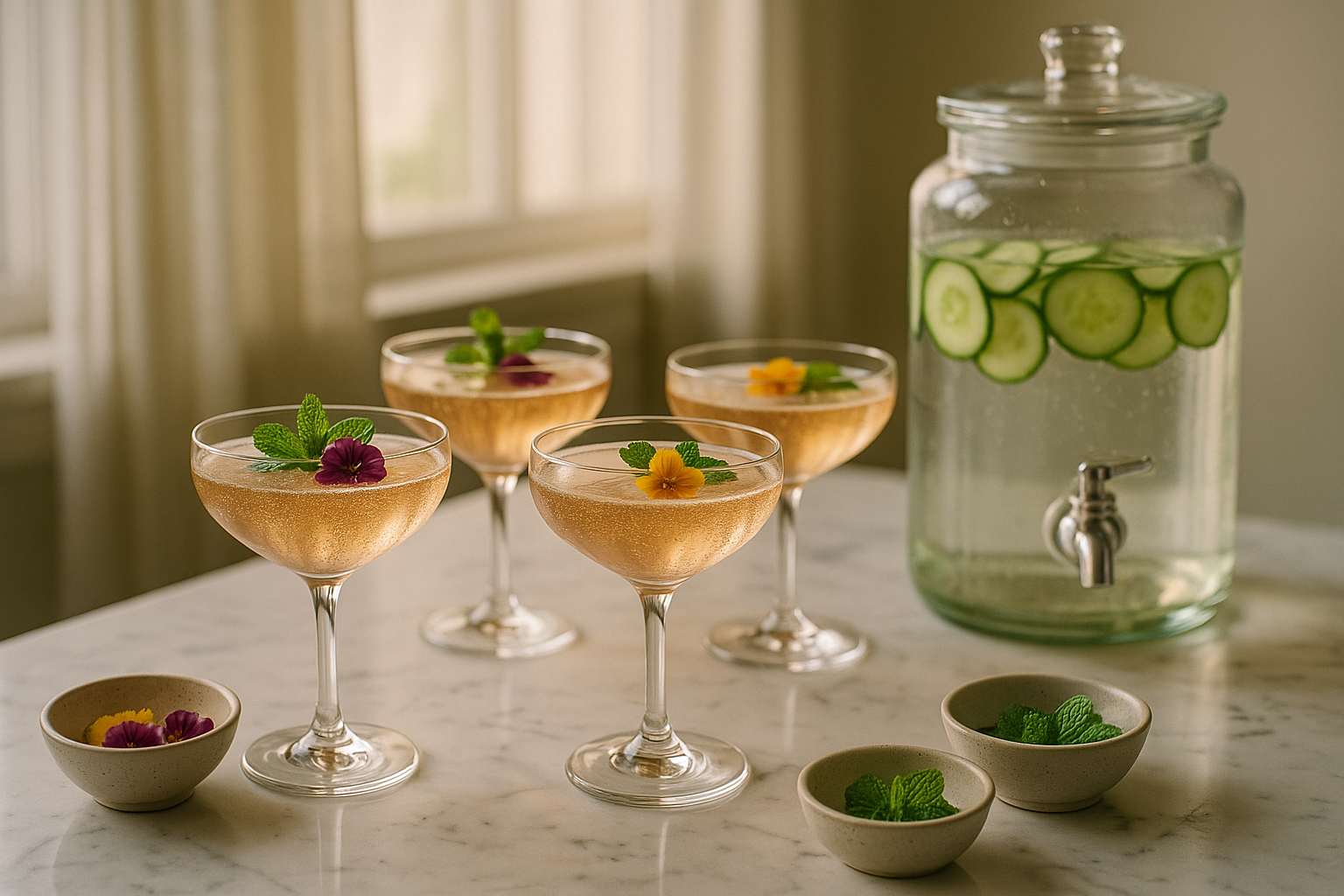
A dry wedding is not a lesser version of a reception — it is a different one. The couples who host dry weddings most successfully treat the non-alcoholic beverage program the same way they would treat a full bar: with intention, craft, and genuine hospitality. The brands and formats to make that happen in 2026 are better than they have ever been.
Why are more couples choosing dry weddings in 2026?
The sober-curious movement has crossed from niche identity to mainstream purchasing behavior. According to Beverage Daily's 2026 market analysis, the non-alcoholic drinks category globally is now worth over $13 billion and growing at 7–10% annually. In the United States, alcohol-free retail sales crossed $1 billion in off-premise sales by the end of 2025. Among adults under 35, only 62% drink alcohol regularly — a significant shift from 72% two decades ago. The cultural infrastructure has arrived to support dry weddings in ways it simply had not before: sophisticated NA spirits, craft non-alcoholic beers, de-alcoholized wines, and ready-to-pour mocktail options that are chosen for their flavor rather than their sobriety.
The reasons couples choose dry weddings vary. Faith tradition is the most common driver: Muslim, Latter-day Saint, and some evangelical and Baptist communities observe alcohol abstinence as a community standard, and a dry reception is the expected norm. Sobriety within the couple or immediate family is another frequent motivation. And an increasing number of couples — particularly those marrying later in their twenties and early thirties — simply prefer a different kind of celebration: more present, more conversational, less oriented around a bar as the social anchor of the evening.
What makes a dry wedding bar genuinely excellent?
The difference between a dry wedding that guests remember warmly and one that feels like a deprivation is almost entirely in the execution of the beverage program. Three principles define the ones that work:
Treat the NA program as a program, not an afterthought
A dry wedding bar that offers bottled water, canned soda, and a generic lemonade pitcher is a hospitality failure dressed in polite neutrality. The same thoughtfulness that goes into a signature cocktail menu — naming the drinks, designing the presentation, pairing flavors to the season and the food — should go into the NA menu. Three or four named mocktails, each with a story, served in proper glassware with fresh garnishes, create a guest experience that stands on its own terms.
Match the glassware and presentation to the occasion
One of the most consistent signals of a dry wedding done poorly is the two-tier dynamic: alcoholic drinks served in beautiful glassware, non-alcoholic drinks served in water glasses or disposable cups. Every guest — regardless of what they are drinking — should have the same visual and tactile experience. A Seedlip Spice highball garnished with an orange twist in a proper rocks glass is an act of hospitality. The same drink in a plastic cup is not.
Name and describe the drinks with the same care as cocktails
A framed bar menu card that lists four named mocktails — "The Garden Hour" (cucumber, elderflower, sparkling water, mint), "The Clementine" (fresh citrus, ginger, honey, soda), "The Twilight Spritz" (Lyre's Amaretti, blood orange, sparkling water, edible flower), "The Still Water Rose" (rose-infused water, lychee, lime, sparkling) — transforms the bar from a limitation into a destination. Guests want to try something interesting; give them a reason to.
The best non-alcoholic brands for a dry wedding in 2026
| Category | Recommended Brands | Best Use at a Wedding |
|---|---|---|
| NA Spirits (botanical/gin-style) | Seedlip Spice 94, Seedlip Garden 108, Lyre's Dry London Spirit, Monday Gin | Complex mocktails, highballs, elderflower spritz stations |
| NA Spirits (whiskey/aperitif) | Lyre's American Malt, Lyre's Amaretti, Ritual Zero Proof Whiskey | Old-fashioned style mocktails, aperitif service during cocktail hour |
| NA Beer | Athletic Brewing Run Wild IPA, Athletic Brewing Cerveza Atletica, Best Day Brewing, Partake | Casual service, cocktail hour, late-night station |
| NA Wine / Sparkling | Surely (dealcoholized), Proxies, Leitz Eins Zwei Zero, Oddbird Blanc de Blancs | Dinner service, champagne toast, welcome drink |
| RTD Mocktails / Canned | Ghia, De Soi, Curious Elixirs, Kin Euphorics | Easy batch service, cocktail hour station, outdoor ceremony |
A note on sourcing: most of these brands are available through specialty retailers like BevMo, Total Wine, and Whole Foods in major markets, and through direct online ordering with nationwide shipping. For large quantities, order six to eight weeks in advance to allow for shipping logistics and to build in buffer for out-of-stock items. Return policies on unopened cases vary by retailer — always confirm before purchasing in bulk.
How do you communicate a dry wedding to guests with grace?
The framing matters as much as the fact. Couples who communicate a dry wedding as a restriction — "we are not serving alcohol" — encounter more guest skepticism than couples who communicate it as a feature: "our reception will feature a curated non-alcoholic beverage program." The substance is identical; the hospitality signal is entirely different.
- Post a brief, positive description on your wedding website under "Reception Details" — describe the mocktail menu highlights and any specialty beverage stations you are planning.
- Include a line on the details card: "Our celebration will feature specialty non-alcoholic cocktails and beverages." No apology, no explanation, no parenthetical about why.
- Brief your wedding party — they will field questions from other guests before the day. Make sure your maid of honor and best man can describe the bar program enthusiastically rather than defensively.
- On the day, have your bartenders introduce the mocktail menu to guests proactively: "We have four specialty drinks tonight — can I describe what we're pouring?" A knowledgeable bartender transforms the NA bar from a surprise into a destination.
Frequently asked
Is it rude to have a dry wedding?
No — a dry wedding is a completely acceptable hospitality choice and has become increasingly mainstream through 2025 and 2026. Approximately 8–10% of U.S. couples host dry receptions, and that share is growing as the sober-curious movement gains cultural momentum across Millennial and Gen Z couples. What matters from an etiquette standpoint is communication: guests should know the reception is alcohol-free before they arrive, either through the wedding website or a note on the details card. A thoughtfully designed non-alcoholic beverage program — one that offers the same quality of experience as a full bar — transforms a dry wedding from a restriction into a genuine hosting choice. Guests who drink will adapt graciously when they feel celebrated and well-cared-for.
How do you tell guests the wedding will be dry?
The most gracious approach is a brief, positive statement on the wedding website: 'Our reception will feature an elevated non-alcoholic beverage program including specialty mocktails, craft NA beers, and sparkling beverages — we have curated a menu we are genuinely excited to share with you.' Frame it as a hospitality feature rather than a prohibition. Do not place the announcement on the formal invitation itself, as this is considered by most etiquette authorities to be the wrong venue for beverage announcements. If a family member asks directly, a warm response along the lines of 'We are serving a curated non-alcoholic program — we think you are going to love what we have put together' shifts the framing from absence to experience.
What is the best non-alcoholic spirit to serve at a dry wedding?
For versatility and guest recognition, Seedlip remains the category standard — their Spice 94 (warm, aromatic, bittersweet) and Garden 108 (herbaceous, fresh, cucumber-forward) work beautifully in both complex mocktails and simple highball-style serves. Lyre's produces the most complete NA spirit portfolio available, with convincing versions of gin, rum, whiskey, and aperitif styles that allow your bartender to build familiar cocktail templates without alcohol. For guests who want something wine-adjacent, Proxies and Surely produce de-alcoholized wines that hold up at dinner. For craft beer drinkers, Athletic Brewing's Run Wild IPA and Cerveza Atletica are the most credible NA beer options on the market in 2026 and pair well with catering.
How much does a dry wedding bar cost compared to an open bar?
A well-executed dry wedding beverage program typically costs $12–$25 per guest for a five-hour reception, compared to $30–$90 per guest for a standard open bar (depending on tier and region). For 100 guests, that translates to a savings of roughly $1,800–$6,500 versus full open bar service. The cost reduction comes primarily from eliminating spirits and bartender labor for alcohol service — though a quality mocktail program still requires skilled bar staff. Key cost components to budget: NA spirits and mixer ingredients ($6–$10/guest), sparkling water and juice stations ($2–$4/guest), glassware and bar equipment ($1–$3/guest), and bartender labor ($200–$400 for the event). A beautifully styled mocktail menu with three to four named drinks and an infused water station delivers high guest satisfaction at meaningful savings.
What do you serve at a dry wedding for the champagne toast?
Several options produce a beautiful visual toast without alcohol. Sparkling water in quality glassware is the simplest and works well — the bubbles and the communal act of raising a glass carry the moment. Specialty sparkling ciders (Martinelli's, Ginger People) served in flutes read visually identical to champagne. De Soi's non-alcoholic sparkling apéritif and Oddbird's Blanc de Blancs are both purpose-built for celebratory pours with sophisticated flavor profiles. Pre-chilling and pouring at table settings before the toast begins eliminates bar service awkwardness and allows everyone to raise their glass simultaneously — a small logistics detail that makes a meaningful difference in how the moment feels.