Food & Drink
Fondant vs. Buttercream Wedding Cake: Which Is Right for You?
Fondant or buttercream? The answer depends on your venue, your weather, your design vision, and — most importantly — whether your guests will actually eat the frosting. Here is a complete, honest comparison so you can order with confidence.
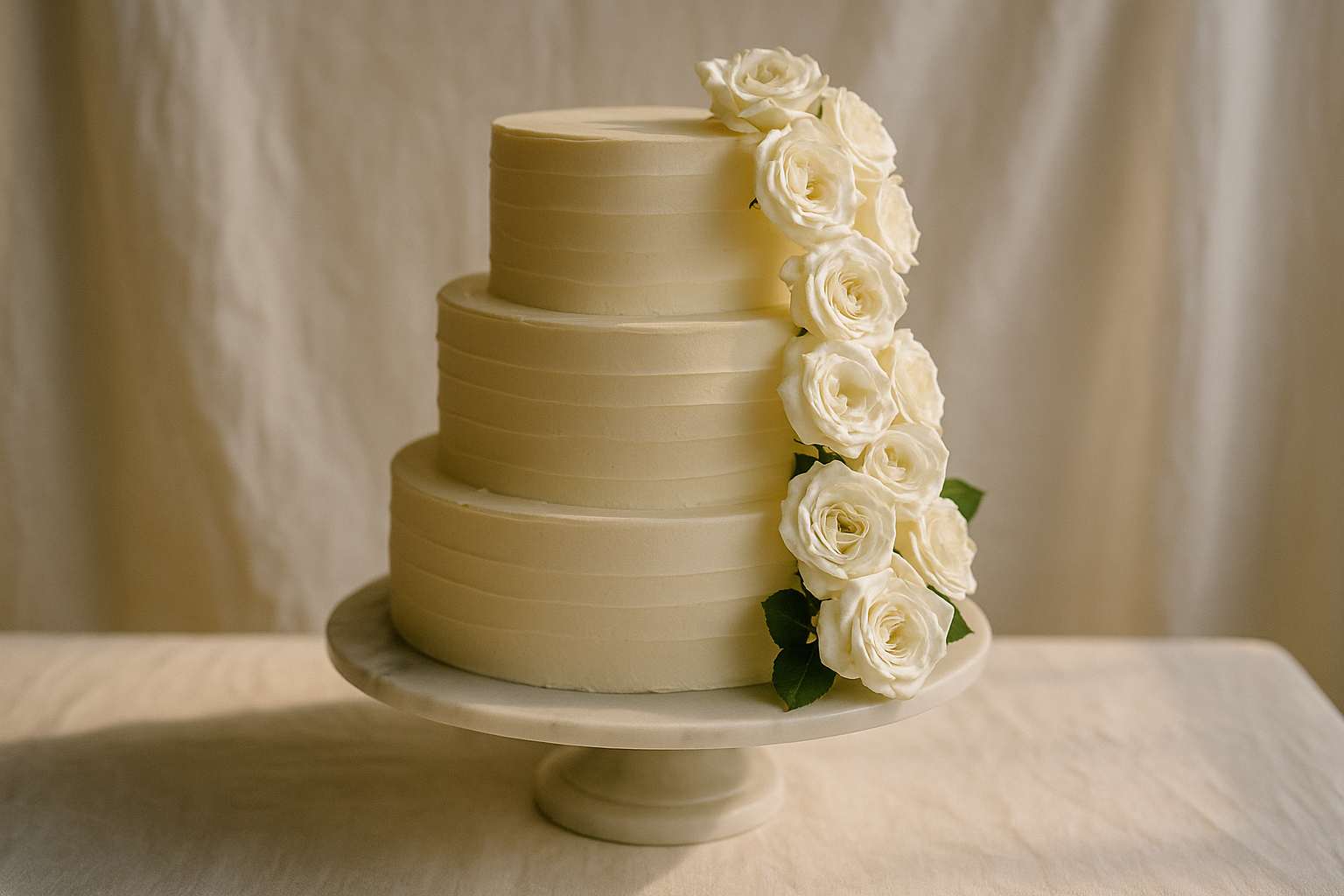
Buttercream tastes better and costs less; fondant holds up in heat and enables intricate sculpted designs. For most couples in 2026, the right answer is a buttercream cake with a fondant exterior only if the design truly requires it — or a Swiss meringue buttercream cake, which delivers both superior taste and genuine stability.
Ask a room full of wedding guests which frosting they prefer and the answer is almost always the same: buttercream. Studies of wedding cake preferences consistently find that roughly two-thirds of guests peel fondant from their slice before eating it. And yet fondant remains a genuine professional choice for specific circumstances — outdoor summer weddings, elaborate sculptural designs, and receptions where the cake will be on display for an extended time before service.
This is not a question with a single right answer. It is a question whose answer depends on your venue, your weather, your design vision, your guest list, and your budget. Here is everything you need to make that decision clearly and confidently.
What Are Fondant and Buttercream, and How Are They Different?
Fondant is a pliable icing made from sugar, water, gelatin, and glycerine, rolled into sheets and draped over a cake to create a smooth, polished exterior. It can be sculpted, painted, embossed, and shaped into three-dimensional decorations that would be impossible to achieve with any other medium. Its finish is matte to semi-matte, with a porcelain-like quality that photographs beautifully in studio conditions.
Buttercream is a frosting made by whipping fat (butter, shortening, or both) with powdered sugar and a small amount of liquid until light and spreadable. It exists in several forms:
- American buttercream: butter, powdered sugar, vanilla, small amount of cream. Sweet, soft, easy to make, most common in supermarket cakes.
- Swiss meringue buttercream: egg whites and sugar heated together, whipped, then butter incorporated. Silky, less sweet, more stable.
- Italian meringue buttercream: hot sugar syrup poured into whipped egg whites, then butter added. Most stable of the three; excellent for warmer climates.
- French buttercream: egg yolks and sugar, richest flavor, yellow-tinted. Less common for wedding cakes due to raw yolk concerns in warm settings.
How Do Fondant and Buttercream Compare on the Factors That Matter Most?
| Factor | Fondant | Buttercream | Winner |
|---|---|---|---|
| Taste | Sweet, waxy; ~65% of guests leave it on the plate | Rich, creamy; widely preferred | Buttercream |
| Heat stability | Excellent; holds shape above 80°F | Moderate; softens above 75°F (American); better with Swiss/Italian | Fondant |
| Design capability | Intricate sculpting, painted panels, lace, 3D flowers | Textured swipes, ruffles, rosettes, naked styles | Depends on design |
| Cost | 20–30% more than equivalent buttercream design | Lower labor cost; broader bakery availability | Buttercream |
| Moisture retention | Excellent; seals the cake beneath | Less protective for extended display | Fondant |
| Photography | Polished, smooth, architectural | Organic, warm, textured | Depends on aesthetic |
| Guest satisfaction | Lower; many decline or remove it | Higher; most guests enjoy it | Buttercream |
According to Morning Glory Bakery's detailed professional analysis, simple to moderately detailed designs work beautifully with buttercream, while elaborate sculpted elements, gravity-defying structures, and intricate lace patterns require fondant's structural capabilities. Understanding where your design sits on that spectrum is the key decision.
The Hybrid Approach: Why Most Skilled Bakers Recommend It
For couples who want fondant's polished appearance but are concerned about taste, the professional answer is the hybrid: a buttercream crumb coat underneath the fondant exterior. The fondant wraps the outside; the buttercream seals and flavors the interior. When a guest peels the fondant — and many will — they encounter a satisfying buttercream layer. This approach also makes the fondant application smoother and more stable, since the buttercream provides an even adhesive surface.
Which Frosting Is Right for Your Wedding Scenario?
Rather than declaring a universal winner, consider your specific situation:
Choose fondant if: your reception is outdoors in summer with limited climate control; your design requires three-dimensional sculpted elements, fine piping work, or architectural shapes; the cake will be displayed for two or more hours before service; or your baker strongly recommends it for the specific design you have chosen.
Choose buttercream if: your reception is indoors with good air conditioning; you want a soft, organic aesthetic (naked, semi-naked, textured swipes, ruffles); your budget is a primary consideration; or guest experience and flavor are your highest priority.
Choose Swiss meringue buttercream if: you want the flavor and texture of buttercream with substantially better stability — this is the right answer for most couples who are unsure. Swiss meringue is approximately fifty percent less sweet than American buttercream, silkier in texture, and holds up considerably better in warm conditions. According to The Vanilla Valley's professional bakery guidance, Swiss meringue has become the preferred professional choice for wedding cakes across the UK and increasingly in North America.
2025–2026 Wedding Cake Design Trends and What They Mean for Your Frosting Choice
The dominant design movements for 2026 wedding cakes pull in opposite directions, which makes the fondant vs. buttercream question particularly relevant this year. On one side: a strong Baroque and Lambeth revival — ornate piped scrollwork, sculpted sugar flowers, layered swags, and architectural grandeur that draws from 18th-century pastry traditions. This direction is achievable in both mediums, though complex three-dimensional elements favor fondant.
On the other side: all-white and off-white minimalism, inspired by Pantone's 2026 Color of the Year (Cloud Dancer, a warm bone-white), which lends itself beautifully to a clean Swiss meringue buttercream finish. The quiet luxury aesthetic that has dominated bridal fashion — clean lines, understated materials, confident simplicity — maps directly onto a smooth ivory buttercream cake with silver leaf accents or a single cascade of white garden roses.
For 2026 brides, the single most important instruction is this: taste before you decide. Bring your fiancé and one trusted companion to your tasting appointment. Request that buttercream samples be brought to room temperature before tasting (cakes are always served at room temperature, not cold). Taste both the American and Swiss meringue versions if your bakery offers them. A beautiful cake that disappoints on the palate is one of the quieter regrets couples carry forward from their wedding day.
Frequently asked
Does fondant or buttercream taste better?
Buttercream wins on taste by a significant margin, and the numbers bear this out. A survey of two hundred wedding cake clients found that approximately sixty-five percent of guests peel fondant off their slice and leave it on the plate — fondant's intensely sweet, slightly waxy texture simply does not appeal to most palates. Buttercream, made from whipped butter and sugar, is richer, creamier, and reads as far more pleasant to eat. For couples who want the visual precision of fondant with the flavor of buttercream, most skilled bakers will apply a buttercream crumb coat beneath the fondant exterior — guests who peel the fondant still enjoy a delicious cake underneath.
Which is better for an outdoor summer wedding — fondant or buttercream?
Fondant is the clear choice for outdoor summer receptions or any venue without reliable climate control. Fondant creates a firm, sealed exterior that significantly outperforms buttercream in heat and humidity. American buttercream — the most common type — can soften and begin sliding at temperatures above 75°F, which creates both aesthetic and structural problems. If your heart is set on buttercream for a warm-weather event, Swiss meringue or Italian meringue buttercream are substantially more stable than American. Either way, the cake should remain refrigerated until thirty to forty-five minutes before service, and a shaded display spot is essential.
Is fondant more expensive than buttercream?
Yes — fondant typically adds twenty to thirty percent to the cost of an otherwise equivalent wedding cake. The premium reflects the additional labor: fondant must be rolled, stretched, applied without tearing, and smoothed to a polished finish, which requires considerably more skill and time than buttercream application. On a mid-range three-tier wedding cake priced at $600 in buttercream, a comparable fondant design might run $720–$800. The cost gap widens with intricate fondant sculpting, painted fondant panels, or hand-crafted fondant sugar flowers. For budget-conscious couples, choosing buttercream with fresh flowers placed by the florist captures visual elegance at a lower total cost.
What is Swiss meringue buttercream and why do bakers recommend it?
Swiss meringue buttercream is made by heating egg whites and sugar together over a double boiler, then whipping the mixture to glossy stiff peaks before incorporating butter. The resulting frosting is silky, less sweet than American buttercream, and noticeably more stable at room temperature. It contains approximately fifty percent less sugar than standard buttercream, which makes it more balanced in flavor. Bakers frequently recommend Swiss meringue for wedding cakes because it pipes cleanly, stacks reliably, holds texture in moderately warm environments, and photographs beautifully with a smooth, light-catching finish. Many couples who dislike the intense sweetness of American buttercream are surprised by how much they prefer Swiss meringue at a tasting.
Can we have buttercream on the inside and fondant on the outside?
Yes — and this is exactly what most skilled bakers do when a couple requests a fondant-finished cake. A thin layer of buttercream, called a crumb coat, is applied directly to the cake layers to seal in crumbs and provide a smooth adhesive surface. The fondant is then rolled and laid over this buttercream base. The result is the best of both worlds: fondant's pristine, sculpted exterior with buttercream flavor in every slice. Couples who choose this approach should confirm at the tasting that the baker applies enough buttercream crumb coat to deliver a satisfying bite — some bakers use a very thin layer that does not contribute meaningfully to the flavor experience.
Which frosting is better for a naked or semi-naked wedding cake?
Buttercream is the correct choice for naked and semi-naked cakes — fondant cannot achieve this look. A naked cake has the buttercream scraped back to expose the cake layers; a semi-naked cake leaves a thin, slightly imperfect coating. Both styles rely on a textured, organic quality that is the aesthetic opposite of fondant's sleek finish. Naked and semi-naked cakes are most at home at rustic barn weddings, garden receptions, and farm-to-table celebrations. Their one significant limitation is stability: with exposed cake layers, they dry more quickly and are sensitive to both heat and humidity. Plan for the cake to be served within two to three hours of display.