Food & Drink
Halal Wedding Catering: Everything You Need to Know
From finding certified vendors to designing a menu your entire guest list will love, here is the complete guide to planning halal catering for your wedding day in 2026.
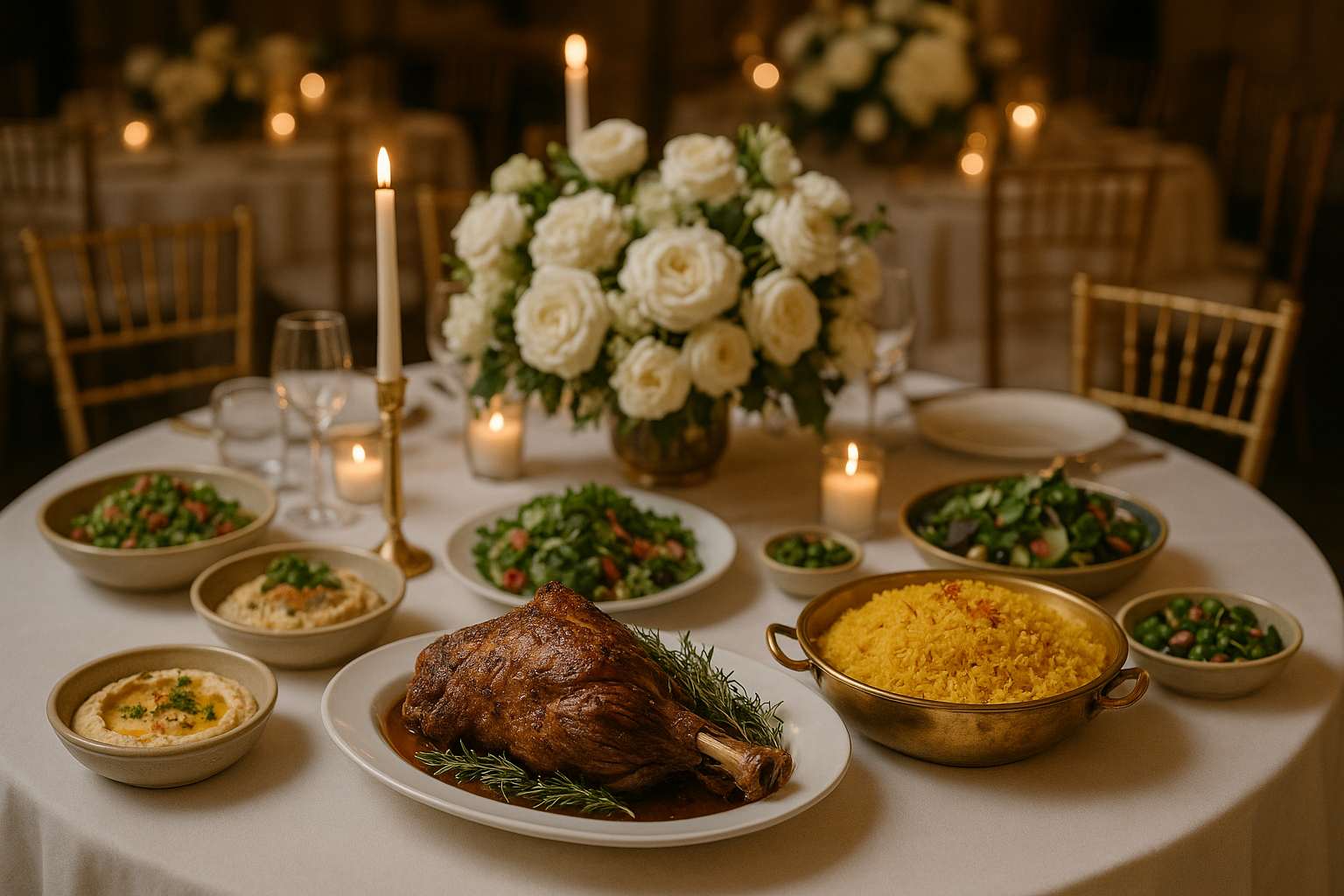
Halal wedding catering means pork-free, alcohol-free food prepared under Islamic dietary law — with meat sourced from certified zabiha suppliers. Plan 9–12 months out, request written certification from vendors, and design a menu that graciously accommodates your entire guest list without compromise.
What does halal wedding catering actually require?
Halal is not simply "no pork" — it is a complete system of food ethics rooted in Islamic law. For a wedding caterer to serve genuinely halal food, four requirements must be met:
- No pork or pork-derived products — including gelatin (often pork-derived) in sauces and desserts, lard in pastry, and pork-based broths hidden in prepared dishes
- No alcohol in cooking — wine reductions, beer-braised proteins, and liqueur-based dessert sauces are all prohibited
- Zabiha-method slaughter — meat must be slaughtered by a Muslim who invokes the name of God; the animal must be healthy and humanely handled
- Separate preparation protocols — utensils, surfaces, and storage must prevent cross-contamination with non-halal items
A written certificate from a recognized certifying body — the Islamic Food and Nutrition Council of America (IFANCA), the Islamic Services of America (ISA), or a regional authority trusted by your family's community — is the non-negotiable proof. Ask every vendor candidate for this documentation before any tasting. As GoHalalFood's 2026 vendor guide confirms, reputable halal caterers provide certification documentation as a matter of course — evasiveness is a red flag.
How do you find and vet halal wedding caterers in your area?
The halal catering market has matured significantly. Several strong regional vendors have built reputations specifically for wedding-scale events:
| Caterer | Region | Specialty | Website |
|---|---|---|---|
| Ferah Catering | Dallas / DFW, TX | Mediterranean & Middle Eastern halal; custom mocktail menus | ferahcatering.com |
| Al Ahmed Food & Catering | Houston, TX | Traditional halal banquets; full event management | alahmedfoodcatering.com |
| Anmol Catering | Chicago, IL | South Asian halal wedding catering | eatanmol.com |
| The Halal Guys | Nationwide (catering) | Accessible halal buffets and event packages | thehalalguys.com/catering |
| Khalil Catering | New York City (Bronx / Jamaica) | Community-focused halal catering; fresh ingredients | khalilsfood.com |
Beyond individual vendors, HalalCaters.com maintains a searchable national directory of verified halal caterers organized by city and cuisine type — a useful starting point for any market. Community mosque networks and Muslim wedding planners in your area will also have referrals that do not appear in general search results.
When you contact a vendor, these are the questions that distinguish a genuine specialist from one who merely avoids pork:
- Which certifying body has issued your halal certification, and may I see the current certificate?
- Do you maintain separate preparation areas and utensils for halal food?
- Who supplies your meat, and what is their certification level?
- Is your kitchen shared with non-halal food production at any point?
- Can you accommodate guests who require the higher standard of glatt-style or more strictly verified zabiha meat?
What does halal wedding catering cost in 2026?
Halal wedding catering is broadly comparable to conventional catering at similar quality tiers. The most significant cost variable is cuisine style:
| Menu Style | Per Person (food + basic service) | Notes |
|---|---|---|
| South Asian specialist (biryani, curries, naan) | $75–$160 | Live tandoor stations add $8–$15/person |
| Middle Eastern / Mediterranean | $70–$150 | Mezze, ouzi, slow-roasted lamb |
| Buffet-style (e.g., The Halal Guys packages) | $15–$45 | Casual to semi-formal events |
| Fusion / chef-driven menus (e.g., Ferah Catering) | $85–$130 | Full service; custom mocktail pairings available |
| Nigerian / West African halal specialist | $65–$130 | Jollof rice, suya, small chops |
All figures are estimates; request itemized quotes from local vendors. Always budget 18–22% on top of food costs for service, tax, and gratuity — this is the single most commonly overlooked line item in wedding catering budgets. Northeast and California markets run 20–35% above national estimates.
How do you design a halal menu that every guest will love?
The most gracious approach is to design the entire reception menu to halal standards — not to create a "halal section" alongside a conventional menu. This communicates genuine hospitality and ensures that observant guests never feel like an afterthought.
The good news: the world's most celebrated cuisines are naturally well-suited to halal preparation. A South Asian biryani table, a Lebanese mezze spread, a Yemeni slow-roasted lamb, or a Nigerian jollof rice feast requires no culinary compromise whatsoever — these dishes are magnificent in their own right.
For couples whose guests span multiple dietary backgrounds, the inclusive design framework works beautifully:
- Cocktail hour: Mezze, chaat, or passed appetizers that are naturally halal, vegetarian-friendly, and visually spectacular
- Main course: A centerpiece protein prepared to halal standards, supported by grain and vegetable sides that are naturally vegan-friendly
- Dessert: Verify that all confections, glazes, and fillings are gelatin-free; baklava, knafeh, mithai platters, and fresh fruit with cream are natural choices
- Beverages: A thoughtful non-alcoholic program — craft mocktails, jallab, tamarind agua fresca, specialty coffees, and traditional teas — can be as elegant and festive as any cocktail bar
Ferah Catering's approach in Dallas is a useful model for the 2026 trend: their custom non-alcoholic mocktail pairings designed to complement each course bring a sophisticated beverage program to fully halal receptions, ensuring that the absence of alcohol is never felt as an absence.
What is the planning timeline for halal wedding catering?
Halal catering requires slightly more lead time than conventional catering, because certified vendors in many markets have limited capacity and because menu customization — especially for less common regional cuisines — requires advance sourcing.
| Timeframe | Action |
|---|---|
| 12–18 months | Identify specialist caterers; confirm certification level; begin tastings if possible |
| 9–12 months | Book caterer; sign contract with certification documentation attached |
| 6 months | Finalize menu; confirm all sourcing; lock in beverage program |
| 8–10 weeks | Collect dietary RSVPs; communicate any additional restrictions to caterer |
| 3 weeks | Deliver final dietary summary (table, name, restriction) to caterer in writing |
| 1 week | Final confirmation of counts; verify labeling plan for buffet or stations |
What are the most common halal catering mistakes, and how do you avoid them?
Mistake 1: Treating halal as a restriction rather than a design principle. The most memorable halal wedding tables are built around the extraordinary possibilities of halal cuisine — not around what is missing. Begin menu planning from abundance, not limitation.
Mistake 2: Relying on verbal certification without documentation. A caterer who describes their food as "halal" but cannot produce a certificate from a recognized body is not a certified halal vendor. Require documentation before signing any contract.
Mistake 3: Forgetting to verify desserts. Gelatin derived from pork is found in many standard dessert preparations — panna cottas, mousses, jelly-glazed pastries, and even some marshmallow-based confections. Specifically review every dessert item with your caterer for pork-derived gelatin. Halal-certified or vegetarian-sourced alternatives (agar-agar, pectin, plant-based gelatin substitutes) are widely available.
Mistake 4: Not addressing the beverage program. A fully halal food program paired with a conventional open bar creates an uncomfortable atmosphere for observant guests. A thoughtfully designed non-alcoholic program — not just pitchers of water — signals genuine hospitality to every guest at the table.
Mistake 5: Booking too late. In Houston, Dallas, Chicago, and New York — the markets with the strongest halal catering infrastructure — specialist vendors with wedding experience fill peak-season weekends 9–12 months in advance. Treating catering as a later-stage decision dramatically limits your options.
Frequently asked
What makes catering officially halal, and how do I verify a vendor's certification?
Halal food adheres to Islamic dietary law: pork and pork-derived products are completely prohibited, alcohol cannot be used in cooking or marinades, and meat must be slaughtered using the zabiha method — a specific process that requires the name of God to be invoked at slaughter. Gelatin (often pork-derived) must also be avoided in sauces and desserts. To verify a vendor's certification, ask for written documentation from a recognized certifying body such as the Islamic Food and Nutrition Council of America (IFANCA), the Islamic Services of America (ISA), or a regional halal authority your family's community trusts. A reputable halal caterer will produce this documentation without hesitation. For the most observant guests, also ask whether the caterer maintains separate preparation areas, utensils, and storage to prevent cross-contamination with non-halal items — a detail that distinguishes truly certified vendors from those who simply avoid pork.
How much does halal wedding catering typically cost in 2026?
Halal wedding catering is broadly comparable in cost to conventional catering for the same menu complexity and service style. For a plated seated dinner with full service, expect $75–$160 per person for South Asian-style halal menus featuring biryani, curries, and mezze spreads — a range consistent with specialist cultural caterers nationally. Middle Eastern halal menus run approximately $70–$150 per person. The Halal Guys, which offers catering nationally, provides packages from approximately $15 per person for buffet-style service scaling to full event packages. Ferah Catering in Dallas offers custom Mediterranean and Middle Eastern halal menus with a full non-alcoholic mocktail program, typically priced for full-service events in the $85–$130 per person range. Regional variation is significant: the Northeast and California run 20–35% higher than Midwest and Southern markets. Always obtain itemized quotes from at least three vendors, and confirm whether gratuity (typically 18–22%) is included in the quoted rate.
Can I serve a fully halal menu at a venue that also serves alcohol to other guests?
Yes — and this is the most common arrangement for halal wedding catering in the United States. Halal certification governs the food preparation and sourcing, not what other guests choose to drink. The key practical requirements are: your halal caterer must maintain separate preparation equipment, serving vessels, and handling protocols for the halal food; alcohol-based marinades or cooking wines cannot be used in any dish served to guests observing halal; and the serving staff must be briefed on which dishes are halal and which (if any) are not. For couples whose entire guest list observes halal, a fully alcohol-free reception is also appropriate and increasingly celebrated — a thoughtfully designed non-alcoholic beverage program featuring craft mocktails, specialty lemonades, and traditional drinks such as jallab or tamarind agua fresca can be as elegant as a full bar program.
How far in advance should I book a halal wedding caterer?
In major metropolitan areas — New York, Houston, Chicago, Los Angeles, Dallas — book your halal caterer 9–12 months before the wedding. Specialist halal caterers with strong reputations for wedding work, such as Al Ahmed Food Catering in Houston or Anmol Catering in Chicago, fill peak-season dates (May through October, plus Ramadan-adjacent periods which require special scheduling consideration) well in advance. In secondary markets, a 6–9 month lead time is typically sufficient, but earlier is always better. One practical reason to book early: halal certification verification and menu customization require time. A caterer who is unfamiliar with your specific cultural cuisine preferences — whether that means a Pakistani biryani table or a Yemeni lamb ouzi — needs time to source ingredients and conduct tastings. Never finalize a halal caterer without a food tasting; this is your most important due-diligence step.
What are the most popular halal wedding menu styles in the U.S. in 2026?
American halal wedding menus in 2026 reflect the country's increasingly diverse Muslim communities. South Asian-inspired menus are the most common, anchored by fragrant biryani, lamb karahi, dal makhani, and naan stations — with chaat and pakora at cocktail hour. Middle Eastern menus featuring mezze spreads, slow-roasted lamb ouzi, and knafeh for dessert have grown dramatically in popularity. Ferah Catering in Dallas exemplifies the trend toward gourmet fusion halal — Mediterranean technique with custom non-alcoholic mocktail pairings. Nigerian and West African halal menus (jollof rice, suya, puff-puff) are increasingly requested in major metro areas. The defining 2025–2026 trend across all styles is elevated presentation: halal food has fully shed any perception of being a secondary offering, with plating and service standards indistinguishable from the finest conventional catering.
How do I handle guests who observe different levels of halal observance at the same reception?
This is one of the most nuanced questions in halal wedding planning, and the honest answer is: ask your guests directly on your RSVP form. Observance varies significantly — some guests require certified zabiha meat from approved slaughterhouses; others avoid pork and alcohol but do not require formal certification; others are comfortable with standard restaurant-level halal. The cleanest approach is to design your entire food program to the highest standard you expect among your guests, which ensures everyone is accommodated without singling anyone out. If full zabiha certification for the entire menu is not feasible given your budget or caterer availability, work with your caterer to ensure all dishes are pork-free and alcohol-free at minimum, and arrange certified halal plated meals — often sealed, sourced from a specialist certified supplier — for guests who require the higher standard. Communicate this approach transparently when guests inquire.