Food & Drink
How Much Alcohol for a Wedding: A 2026 Calculator and Planning Guide
One drink per guest per hour is the rule, but the real calculation is more nuanced — this guide walks you through the math for every guest count, bar type, and reception length so you never run short or over-order.
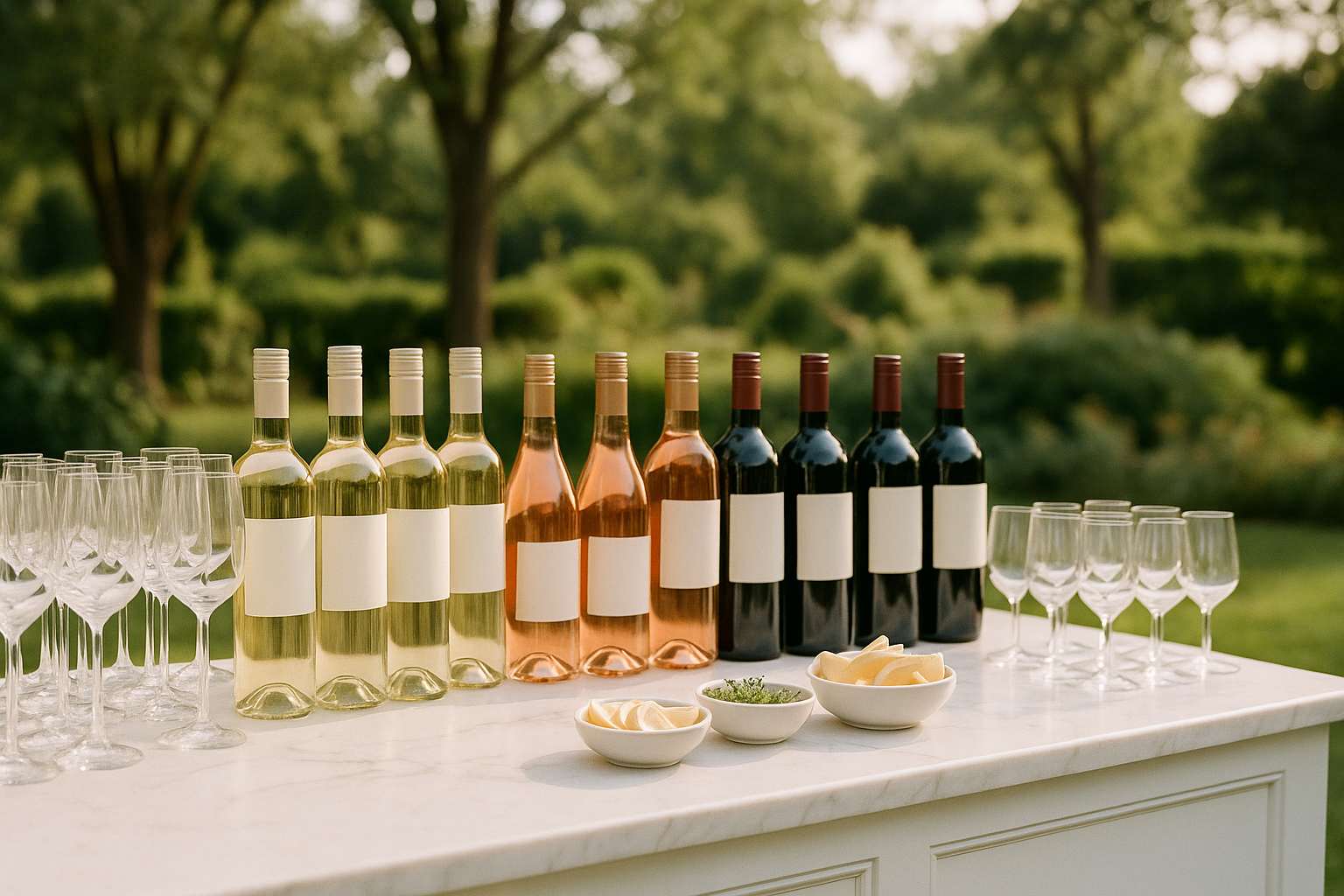
The professional rule is one drink per guest per hour, with a refinement: plan for two drinks in hour one (cocktail hour drinks fastest) and one drink per hour thereafter. For a five-hour reception with 100 guests, that is roughly 500–600 total drinks. Always buy 10–15% more than your estimate and shop at a retailer with an unopened-bottle return policy.
Running out of wine at a wedding reception is the single most memorable hospitality failure guests will discuss for years afterward — and it is entirely preventable with one afternoon of honest math. Yet the reverse — over-ordering by so much that two cases of wine go to waste — is nearly as common, and considerably more expensive. The goal of this guide is to help you order precisely: enough to ensure generosity, not so much that you are donating to your caterer's pantry.
The calculations below are grounded in the industry-standard formula used by professional bartenders and validated by resources including Joy's wedding alcohol calculator and The Knot's bar planning guidance. Adjust up or down based on the specific character of your guest list — an older, largely non-drinking crowd needs less; a younger group of social dancers needs more.
What is the standard formula for calculating wedding alcohol?
The baseline: one drink per guest per hour. But professional bartenders refine this further:
- Hour one (cocktail hour): plan for 2 drinks per drinking guest
- Each subsequent hour: plan for 1 drink per drinking guest
For a 5-hour reception (1-hour cocktail hour + 4-hour dinner and dancing), that equals approximately 6 drinks per guest who drinks. Remember that roughly 15–20% of your guests typically do not drink alcohol — subtract those guests from your alcohol calculation and ensure you have robust non-alcoholic options for them.
The Reventals party drink calculator notes that as of 2026, average national pricing runs approximately $1.33 per beer, $13 per bottle of wine, and $28 per bottle of spirits (well brands). At these prices, a self-catered open bar for 100 guests at a 5-hour reception runs $800–$1,800 for alcohol alone before mixers, ice, and bartender labor.
How do you divide the alcohol between beer, wine, and spirits?
| Drink Type | Typical Share | Bottle Yield | Notes |
|---|---|---|---|
| Wine (red + white + rosé) | 35–40% of consumption | 5 glasses per 750ml bottle | Rosé is no longer seasonal — include year-round; roughly 40% red, 40% white, 20% rosé |
| Beer | 30–35% of consumption | 1 serving per 12 oz bottle or can | Offer both a lager/light beer and a craft option; kegs (½ barrel = 165 servings) for 150+ guests |
| Spirits / mixed drinks | 25–30% of consumption | 17 drinks per 750ml bottle (1.5 oz pour) | Vodka is the highest-volume spirit at most American weddings; follow with bourbon, gin, rum, tequila in that order |
| Champagne / Prosecco (toast) | Toast only (single pour) | 4–5 flutes per 750ml bottle | 1 bottle per 4–5 guests; Prosecco or Cava are excellent substitutes at half the price |
| Non-alcoholic options | 15–20% of guests | Varies | Budget 3 non-alcoholic drinks per non-drinking guest; include at least one interesting mocktail or sparkling option |
What are the specific bottle counts for different guest counts?
The following quantities are calculated for a 5-hour reception (1 cocktail hour + 4 hours dinner and dancing) with approximately 80% of guests drinking. Adjust proportionally for different reception lengths or drinking cultures. All quantities include a 10% buffer above the calculated need.
50-guest wedding (5 hours):
- Wine (red): 7–8 bottles | Wine (white): 6–7 bottles | Wine (rosé): 4–5 bottles
- Champagne for toast: 10–13 bottles
- Beer (assorted): 4–5 cases (96–120 units)
- Vodka: 2 liters | Bourbon/whiskey: 1.5 liters | Gin: 1 liter | Rum: 1 liter | Tequila: 1 liter
- Ice: 50–75 lbs
100-guest wedding (5 hours):
- Wine (red): 12–15 bottles | Wine (white): 10–12 bottles | Wine (rosé): 6–8 bottles
- Champagne for toast: 20–25 bottles
- Beer (assorted): 8–10 cases (192–240 units)
- Vodka: 3–4 liters | Bourbon/whiskey: 2–3 liters | Gin: 1–2 liters | Rum: 1–2 liters | Tequila: 1–2 liters
- Ice: 100–150 lbs
150-guest wedding (5 hours):
- Wine (red): 18–22 bottles | Wine (white): 15–18 bottles | Wine (rosé): 9–12 bottles
- Champagne for toast: 30–38 bottles
- Beer (assorted): 12–15 cases (288–360 units)
- Vodka: 4–5 liters | Bourbon/whiskey: 3–4 liters | Gin: 2 liters | Rum: 2 liters | Tequila: 2 liters
- Ice: 150–200 lbs
200-guest wedding (5 hours):
- Wine (red): 24–28 bottles | Wine (white): 20–24 bottles | Wine (rosé): 12–15 bottles
- Champagne for toast: 40–50 bottles
- Beer (assorted): 16–20 cases (384–480 units); consider a ½-barrel keg for the primary lager
- Vodka: 5–6 liters | Bourbon/whiskey: 4 liters | Gin: 2–3 liters | Rum: 2–3 liters | Tequila: 2–3 liters
- Ice: 200–300 lbs
What else should you budget beyond the alcohol itself?
The alcohol cost is only part of the bar budget. A complete bar budget must include bartender labor ($25–$60 per hour per bartender; industry standard is one bartender per 50–75 guests), mixers and garnishes ($3–$8 per guest), glassware rental ($1–$3 per glass if not provided by the venue), ice, and any corkage fees your venue charges for outside alcohol (typically $5–$25 per bottle or $5–$15 per guest). According to Zola's bar planning guide, total bar and beverage service — including all components — represents approximately 10–15% of total wedding spend, with the national average running $2,800–$5,500 depending on guest count, location, and bar type.
The smart purchasing strategy for self-catered bars: buy from Total Wine, Costco, or another warehouse retailer that accepts returns on unopened bottles. Purchase 10–15% above your calculated need, keep all receipts, and return whatever remains. This eliminates the risk of running short without wasting money on over-purchasing.
Frequently asked
What is the basic rule for how much alcohol to buy for a wedding?
The foundational rule is one drink per guest per hour of the reception. Bartenders refine this to two drinks in the first hour (cocktail hour consumption is highest) and one drink per hour thereafter. For a five-hour reception with 100 guests, plan for approximately 500–600 total drinks across all types — roughly 35–40% wine, 30–35% beer, and 25–30% spirits. Always add a 10–15% buffer above your calculated total, and purchase from a retailer that accepts unopened returns. Running out of alcohol mid-reception is the most memorable hospitality failure at a wedding; over-purchasing by 15% and returning the surplus is a negligible cost by comparison.
Do I need to serve champagne for the toast, and how much should I buy?
You are not obligated to serve champagne for the toast — guests may toast in whatever beverage is already in their hand, including water or a mocktail. If you want the visual of uniform glassware for the toast, Prosecco or Cava achieves an identical effect at approximately half the price of Champagne, and most guests cannot distinguish them in a toast setting. If you do serve a dedicated champagne or sparkling wine toast, plan one bottle per four to five guests: for 100 guests, that is 20–25 bottles. Pre-pour the glasses before the toast to streamline service and prevent a bottleneck at the bar.
How many bartenders do I need for my wedding?
The professional standard is one bartender per 50–75 guests. For 100 guests at a five-hour reception, two bartenders is the minimum; three is recommended if you plan to offer a complex signature cocktail requiring individual preparation. For 150 guests, three bartenders is the minimum and four is recommended for the cocktail hour peak period. Understaffing the bar is one of the most predictable sources of guest frustration at a wedding: lines form, wait times grow, and the energy of the room drops. Budget for the correct number of bartenders from the beginning — the additional labor cost is $200–$400 and the return in guest experience is substantial.
What should I do if a large portion of my guests do not drink alcohol?
This is an opportunity to be a genuinely thoughtful host. Reduce your alcohol quantities proportionally — if 30% of your guests do not drink, reduce all alcohol estimates by 30% — and invest those savings in a beautiful non-alcoholic beverage program. Options that delight non-drinking guests include signature mocktails (served in the same beautiful glassware as cocktails), infused sparkling waters, shrub sodas (fruit-and-vinegar based), and kombucha on tap. Brands including Seedlip and Lyre's produce sophisticated zero-proof spirits that allow for full cocktail experiences without alcohol. The goal is to make every guest feel equally celebrated, regardless of what is in their glass.
Can I save money by buying my own alcohol rather than using the venue's package?
Often yes — particularly for wine, beer, and Champagne. The savings depend entirely on your venue's corkage fee policy. Calculate the corkage fee per bottle against the venue's package per-bottle pricing. For venues charging $15 or more per bottle in corkage, the math often favors the package. For venues charging $5–$8 per bottle, buying retail at Costco or Total Wine typically saves 30–50% on those categories. Always confirm the venue's exact corkage policy in writing before purchasing, and factor in the cost of delivery, chilling, and any additional glassware rental you may need.
Do I need a liquor license or permit to serve alcohol at my wedding?
Whether you need a permit depends on whether alcohol is being sold (rather than provided free) and whether the event is at a licensed venue. A truly private reception at a fully licensed venue typically requires no additional permit from the couple. However, if you are renting a non-licensed venue — a barn, estate, park pavilion, or art gallery — purchasing and serving your own alcohol, or using an unlicensed mobile bar service, your state's Alcoholic Beverage Control board may require a special event permit. Most states process these in two to four weeks at a cost of $25–$200; apply at least 60 days before the wedding to ensure adequate processing time and confirm the permit is in hand before the day.