Food & Drink
Kids and Vendor Meals at Your Wedding: The Complete Planning Guide
Two of the most consistently mismanaged line items in wedding catering are children's meals and vendor meals. Here is exactly what to plan, what to pay, and what to tell your caterer.
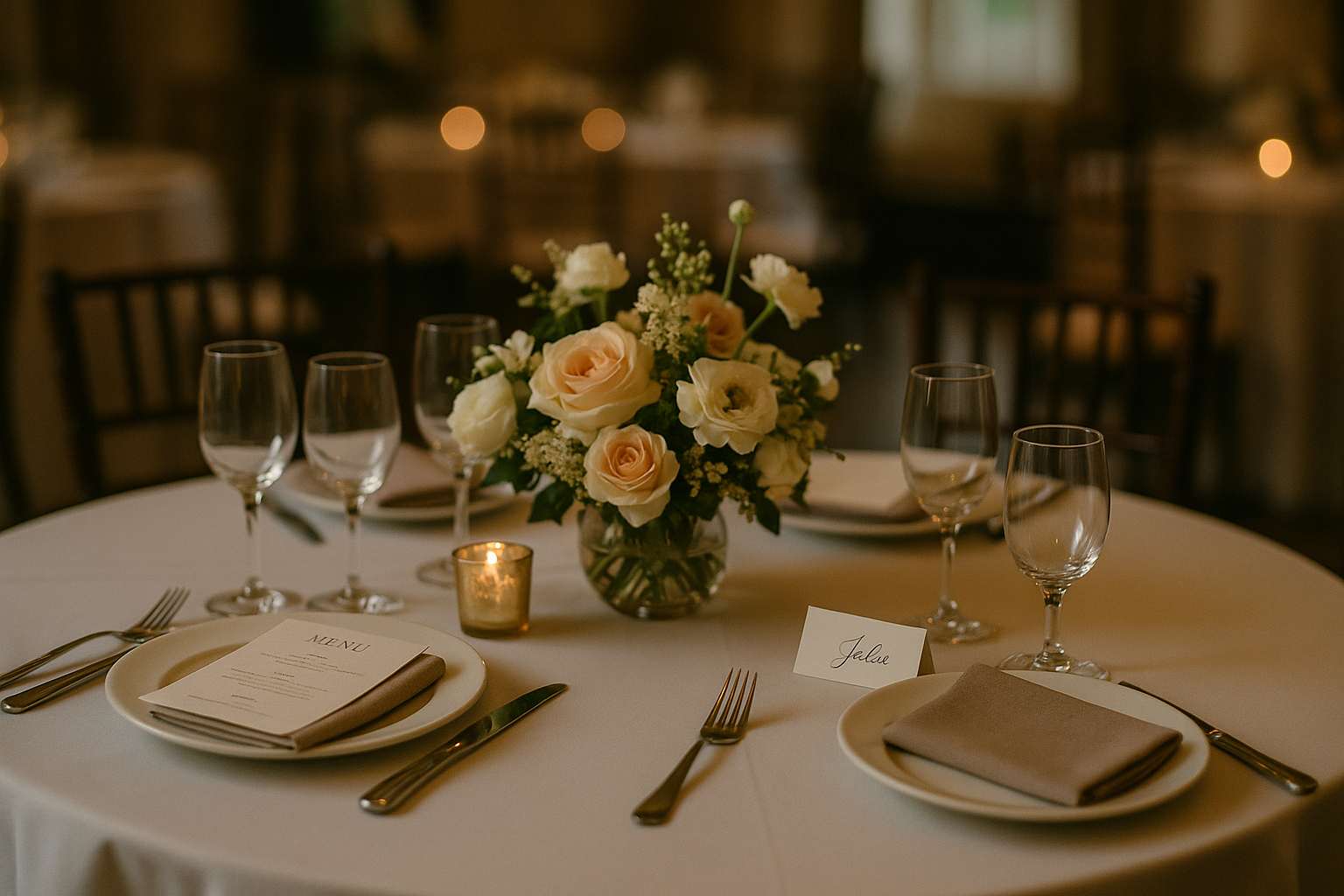
Children at weddings typically cost half the adult per-head rate (for ages 3–12); the average wedding has 5–6 vendors who require a meal at roughly half the guest rate. Tell your caterer which meals are for vendors, and confirm the children's age cutoff in writing at the contract stage — both save meaningful money and prevent invoice surprises.
Of all the details that catch couples off guard in the final catering conversation, two appear with remarkable consistency: children's meals and vendor meals. Neither is complicated once you understand the standard practices — but left unaddressed until the final invoice, both reliably add hundreds of dollars in unplanned charges and a measure of avoidable stress.
This guide gives you the complete picture: who qualifies for a children's meal, what children's food should actually be, which vendors require a meal, how to negotiate the discount, and what to communicate to your caterer and when.
How are children's meals handled at a wedding reception?
Children's meals at wedding receptions are one of the most inconsistently handled elements in the catering industry — not because there is genuine confusion, but because caterers apply their own policies and couples rarely ask the right questions at the contract stage. The standard practice breaks down as follows:
| Age Group | Standard Pricing | What to Ask |
|---|---|---|
| Infants and toddlers (under 3) | No charge (universal) | Confirm at contract stage; not all venues state this explicitly |
| Young children (ages 3–12) | 50% of adult rate or flat $20–$45 per child | Ask for the specific children's rate and age cutoff in writing |
| Older children (ages 10–12, depending on policy) | Some caterers charge adult rate starting at age 10 or 12 | Confirm the exact age cutoff; document it in the contract |
| Teenagers (13+) | Full adult rate (standard) | Count as adults in all headcount calculations |
The widely cited formula from catering professionals is to count attending children (ages 3–12), divide by two, and add that figure to the adult headcount. On a wedding with twenty children in this age range, that is ten additional "equivalent adult" meals — saving you roughly $800–$1,500 compared to counting each child at full adult price. According to Urban Cowboy's 2026 wedding catering cost guide, average catering costs run $80 per person nationally, with ranges of $62–$123 depending on location and service style. The children's discount is meaningful at any price point in that range.
The children's menu itself matters. The single worst outcome for parents at a wedding reception is a hungry, frustrated child sitting in front of an unfamiliar plate while the adults begin their entrée. Keep the children's menu simple and recognizable: pasta with butter or marinara, chicken tenders, a simple quesadilla or grilled cheese. Ask your caterer for their standard children's menu at the tasting and adjust only if something is clearly inappropriate for your guest profile. Dietary restrictions for children must be collected at RSVP and communicated to the caterer with the same seriousness as adult restrictions.
Which vendors require a meal, and how do you negotiate the rate?
Vendor meals are a professional standard, not an optional courtesy. Most vendor contracts include a specific clause requiring the couple to provide a meal; failing to do so may result in a vendor leaving the premises during the reception to find food — at the worst possible moment. The vendors who require a meal are those working on-site for the majority of your wedding day:
- Your photographer and second shooter (if applicable)
- Your videographer
- The DJ or each band member (a five-piece band requires five vendor plates)
- Your coordinator or day-of planner
- The officiant, if joining the reception
- Hair and makeup artists who remain on-site through the ceremony
Catering company servers and bartenders do not require meals from the couple — the catering company feeds its own team. According to The Knot's vendor meal guidance, the average wedding involves five to six vendors who require meals.
| Meal Type | What Is Included | Typical Pricing |
|---|---|---|
| Full adult guest meal (plated) | Cocktail hour, salad/appetizer, entrée, sides, dessert, drinks service | $62–$123 per person (national range) |
| Vendor meal (discounted) | Entrée and sides only; served back-of-house; no full table service | $25–$60 per vendor (roughly 40–60% of guest rate) |
The discount is automatic at most caterers — but only if you explicitly identify which plates are for vendors. Tell your caterer in your final headcount communication: "We have [X] guest meals and [Y] vendor meals." If you simply submit a total headcount without distinguishing, the caterer will bill all plates at the full guest rate. On five vendor meals at a $100 adult rate versus a $50 vendor rate, identifying them correctly saves $250 — a straightforward ask.
When and how should you communicate this information to your caterer?
The most efficient system follows a clear sequence:
At the contract and tasting stage (8–12 months out): Confirm the children's per-head rate and age cutoff in writing. Ask for the vendor meal rate. Get both in the signed contract.
Five months before the wedding: Contact each vendor to collect dietary restrictions. Document each vendor's name, role, and dietary needs in a single list.
Two to three weeks before the wedding: Submit your final headcount, distinguishing children's meals (with ages), adult guest meals, and vendor meals. Submit vendor dietary restrictions simultaneously.
Ten to fourteen days before the wedding: Most catering contracts require the final guaranteed headcount by this deadline. After this point, you may be charged for any last-minute additions at a premium rate.
The caterer is your partner in executing a beautiful, nourishing wedding reception. Clear, organized, early communication about children and vendors — rather than last-minute scrambles — is the single most effective way to protect your budget and your relationship with your catering team. A final headcount communicated in a single, organized email — with all relevant categories clearly labeled — takes ten minutes and saves meaningful money and stress. Do not underestimate how much both parties benefit from that clarity.
Frequently asked
Do children pay the same per-head rate as adults at a wedding reception?
No — in most catering arrangements, children are charged at a reduced rate, typically half the adult per-head cost for ages three through twelve. Some caterers charge based on a formula: count the children attending, divide by two, and add that number to the adult headcount to produce a weighted total. Others charge a flat children's meal price of $20–$45 per child regardless of the adult rate. Infants and toddlers under three are almost universally counted as zero for catering purposes. The specific approach depends on your caterer and your venue's policy. The critical step is to ask explicitly at the tasting and contract stage — do not assume children are automatically discounted. Get the children's rate in writing, including the age cutoff, before signing. This avoids the genuinely unpleasant situation of discovering at the final invoice that you were charged full adult price for eight children under the age of six.
Who qualifies for a vendor meal at my wedding?
The vendors who require a meal are those working on-site for the majority of your wedding day: your photographer and second shooter, your videographer, your DJ or individual band members, your planner or day-of coordinator, and the officiant if joining the reception. Hair and makeup artists who remain on-site through the ceremony and reception also typically receive a meal. Catering company servers and bartenders do not require meals from the couple — the catering company feeds its own staff. The average wedding involves five to six vendors who require meals, per The Knot's industry research. Most vendor contracts include a specific clause requiring a vendor meal; review each contract to confirm this before finalizing your headcount, and add all qualifying vendors to your final count communicated to the caterer at least ten to fourteen days before the wedding.
Can I negotiate a lower price for vendor meals?
Yes — and most caterers will discount vendor meals automatically once they know which plates are for vendors. Vendor meals are typically discounted to roughly 40–60% of the adult per-head rate because they are entrée only: vendors do not receive appetizers, salad, dessert, or drinks, and they are served informally in a separate back-of-house space rather than at a guest table with full service. The key is to identify vendor plates explicitly when communicating your final headcount: tell your caterer that X number of meals are vendor meals, and ask for the discounted vendor meal rate. Caterers who are not proactively told which plates are for vendors may default to charging the full guest rate — a meaningful difference on five to six meals at $80–$150 adult price versus $35–$60 vendor price. The total savings is modest in absolute terms ($200–$400), but it is money the catering team will not volunteer to leave on the table.
What should children's wedding meals actually include?
A children's wedding meal should be simple, recognizable, and kind. The worst thing a child's plate can be is a miniaturized, unrecognizable version of the adult tasting menu. Standard children's catering options that consistently work are pasta with butter or mild marinara, chicken tenders or nuggets with dipping sauce, a simple cheese quesadilla, grilled cheese with a side, or a simple burger. These are not glamorous — they are reliable, and they allow children to eat comfortably, which allows parents to relax and enjoy the evening. Include a simple salad or vegetable side, a dinner roll, and water. Most caterers who work weddings regularly have a standard children's menu; ask to see it at the tasting stage and customize if anything is deeply wrong for your guest profile. Communicate dietary restrictions for children the same way you would for adults: collect them in the RSVP and relay them to your caterer at least three weeks before the event.
How do I tell my caterer about vendor dietary restrictions?
The most efficient system is to communicate vendor dietary restrictions to your caterer in a single, organized communication approximately five months before the wedding. Contact each vendor well in advance — ask about dietary restrictions as part of your initial vendor onboarding process, not at the final planning meeting. Document each vendor's name, role, and dietary needs (vegetarian, vegan, gluten-free, specific allergies) in a single list and submit it to your caterer along with the vendor meal count at the final planning meeting. Emphasize the seriousness of any allergy — a vendor with a severe shellfish allergy needs more than a note on the list; confirm with your caterer that their kitchen preparation will prevent cross-contamination. Caterers managing multiple events appreciate receiving clear, organized communication rather than piece-meal updates; a single well-organized vendor meal list on the day of your final tasting meeting is the most respectful and effective format.
What happens if I forget to budget for vendor meals?
It will appear on your final catering invoice as an additional line item, often at the full adult per-head rate unless you explicitly identified them as vendor plates. On five to six vendor meals at an $85–$120 adult rate, that is $425–$720 added to the final bill — real money, and an entirely preventable surprise. The mitigation is simple: count your qualified vendors (photographer, second shooter, videographer, DJ or band members, coordinator, officiant if staying) when you finalize your initial guest headcount estimate, and include them in every subsequent headcount conversation with your caterer. Build vendor meals into your catering line item from the first budget estimate. If your caterer quotes a per-head price, multiply that price by your expected adult guest count plus your vendor count to get a realistic catering subtotal — then apply the service charge, sales tax, and any minimum-spend adjustments on top of that number.
At what age should children get a full adult meal rather than a kids meal?
Most caterers set the children's meal cutoff between the ages of ten and twelve, with age twelve being the most common threshold. Guests thirteen and older are typically counted and priced as adults. Some venues set the threshold at ten, particularly at formal plated dinners where portion sizes are standardized. Confirm your caterer's specific age policy at the tasting and contract stage, and document it in writing. For children right at the threshold age — a twelve-year-old who eats like an adult, or an eleven-year-old with a small appetite — most caterers will accept your judgment if you communicate clearly. The practical rule: when in doubt about a specific child's appetite, err toward the adult count. Over-ordering catering is always preferable to an older child receiving an insufficient children's plate at a formal dinner where they are seated at an adult table.