Food & Drink
Multicultural Wedding Menu: How to Honor Both Heritages at the Table
When two cultures meet at the reception table, the menu becomes one of the most meaningful acts of the entire day. Here is how to plan a multicultural wedding menu that honors both heritages authentically — without creating a buffet identity crisis.
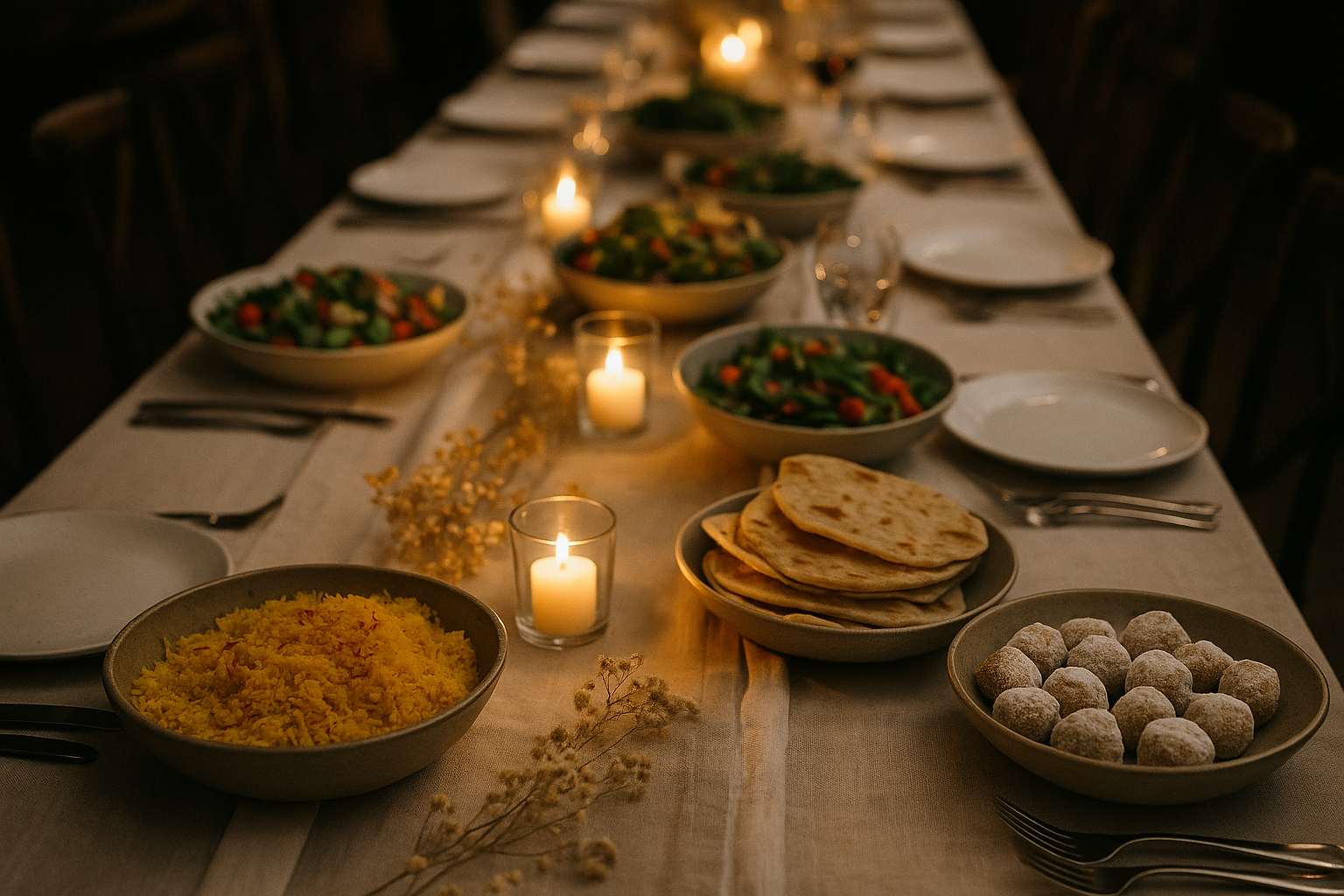
A multicultural wedding menu works when it is specific, not decorative — dishes with direct family meaning, sourced from heritage-community caterers, explained with warm provenance signage. The three proven frameworks are: side-by-side stations, fusion courses, and course-by-culture progression.
Food is rarely just food at a wedding. A tower of Nigerian puff-puff at cocktail hour, a whole roasted lamb over saffron rice, a matzo ball soup served before the main course at a Jewish reception — each carries the weight of generations. For diaspora couples navigating two or more cultural identities, the reception menu is an act of integration: honoring where your family came from while celebrating where you are going together.
Multicultural wedding menus are also among the most technically complex catering challenges — navigating dietary certification systems, finding caterers with authentic expertise in heritage cuisine, structuring two food traditions so neither feels like an afterthought, and storytelling for guests who may be unfamiliar with one or both cuisines. Done well, the table becomes one of the most memorable and moving parts of the entire wedding. Done carelessly, it reads as a buffet identity crisis.
Here is how to plan it well.
What is the essential difference between heritage food and decorative food?
Heritage food works when it is specific, not when it represents a general cultural category. A taco bar reads as an aesthetic trend in 2026. A tortillera pressing masa to order, sourced from your family's home state, using your abuela's chile blend — that is heritage. The difference is the presence or absence of a direct personal connection.
As Springfield Country Club's multicultural wedding food guide notes: "Food has become one of the most powerful storytelling tools at multicultural weddings." The narrative potential is real only when the food has a story to tell — a family recipe, a specific regional tradition, a dish tied to a particular person or memory.
Before you plan a single menu item, sit down with key family members from both sides — ideally elders who are the keepers of food tradition — and ask one simple question: If a dish were missing from this wedding that everyone would notice, what would it be? The answers to that question are your non-negotiables. Everything else is context.
What are the three proven frameworks for a multicultural menu?
| Framework | Structure | Best Guest Count | Ideal When |
|---|---|---|---|
| Side by side | Each cuisine at its own distinct station | 150+ guests | Both heritages are equally strong and deserving of full expression; space supports two stations |
| Fusion course | Single menu weaves both traditions within individual dishes | Any size | Chef-driven fine dining; couple has a personal culinary identity that is itself blended |
| Course by culture | Cocktail hour honors one culture; seated dinner honors the other | 80–200 guests | Formal weddings seeking elegant transitions; avoids visual clutter at the buffet |
The side-by-side station approach is visually abundant and democratic — guests can explore both cuisines at their own pace, and neither tradition is subordinated to the other. It works best when the physical reception space can support the footprint of two complete station setups without crowding the flow of guests. Staffing requirements are higher, and the logistics of keeping both stations hot, fresh, and replenished simultaneously require a caterer with strong event production experience.
The fusion course model is the most sophisticated expression of a blended cultural identity — and also the most technically demanding. Fusion works when it is personal, not merely trendy. Korean-Mexican, Nigerian-Italian, Indian-American hybrid plates that reflect how the couple actually eats and lives are meaningful. Fusion assembled purely for novelty, without a chef who understands both source traditions deeply, risks producing food that is neither authentic nor coherent. Bring a family elder from each side to the tasting and listen for any discomfort — it is more valuable intelligence than the food critic's review.
The course-by-culture progression creates natural narrative chapters in the dining experience. A practical example: cocktail hour features the bride's Mexican heritage through tray-passed ceviche, mini tostadas, and a guacamole station prepared to order; the seated dinner honors the groom's Japanese heritage with a family-style spread of sushi, yakitori, wagyu beef, and miso soup. The transition between chapters feels intentional rather than arbitrary, and each cuisine receives its own full moment of attention rather than competing with the other for guest engagement.
What are the most popular multicultural food pairings in 2026?
According to catering professionals and the Chic Chef Catering trends report for 2026, interactive chef action stations and live-fire cooking are the dominant format preference for multicultural receptions this season. Couples in 2026 are investing in the experience of the food as much as the food itself: the tortillera, the dim sum cart, the live pani puri bar, the carved whole pig presented tableside. The performance of heritage cooking communicates cultural pride in a way that a plated buffet cannot.
The most-requested multicultural pairings in 2025–2026 include:
- South Asian and American: A biryani station alongside a locally sourced roast station; kulfi carts and an artisanal dessert bar
- Mexican and Japanese: Sushi station and taco station with premium wagyu fillings; churros alongside mochi desserts
- Nigerian and Italian: Jollof rice and small chops during cocktail hour; family-style pasta and tiramisu at dinner
- Korean and American Southern: Galbi and kimchi stations paired with biscuits and artisan pulled pork; bibimbap alongside mac and cheese
- Lebanese and Greek: Expansive meze spread incorporating both traditions' shared staples; whole roasted lamb over rice as the centerpiece protein
Heritage dessert tables are replacing the traditional wedding cake at a significant rate in 2026 multicultural receptions. Baklava towers, mithai platters, Nigerian chin chin and puff-puff displays, Italian cookie tables, and tiered brigadeiro stands serve as the primary dessert centerpiece — a decision that generates the most immediate guest engagement and most consistent positive mention in post-wedding feedback.
How do you tell the story of your menu to guests?
The provenance storytelling trend is one of the most distinctive developments in multicultural wedding catering in 2025–2026. Printed menu cards or table signage that explain not just the name of a dish but its origin, family history, and significance transform a buffet visit into a cultural education and an emotional connection.
A beautifully designed menu card at a Nigerian-Italian wedding might read: "Jollof rice — the dish that no Nigerian celebration is complete without. This recipe comes from Adaeze's grandmother, who made it for every family gathering since 1968. We are proud to share it with all of you tonight." Guests who have never tasted jollof rice become curious and engaged rather than uncertain. Guests from the Nigerian community feel profoundly honored. And the story of the dish becomes part of the story of the couple.
Non-alcoholic cultural beverage programs deserve equal attention. Hibiscus agua fresca, mango lassi stations, tamarind drinks, jallab, doogh, artisanal horchata, and Ethiopian tej — presented with the same prominence as the cocktail bar — are a gracious, meaningful nod to guests who do not drink alcohol and to the cultural traditions where these beverages carry social significance.
What should you confirm before signing a multicultural catering contract?
Beyond standard catering contract review, multicultural menus require four additional confirmations in writing:
- Cultural certification: Is halal certification from an accredited authority? Is kosher certification from a recognized rabbinical body? Who is the mashgiach (kosher supervisor) for your event, and will they be on-site?
- Heritage expertise: Request references specifically from couples with your heritage background — not just similar event scale or style.
- Family involvement protocol: If family members are contributing a recipe or participating in preparation, who owns the health permit compliance for that element? The caterer must confirm the legal path — commercial kitchen rental, caterer supervision of family recipes, or designation as symbolic table-only items.
- Signage and storytelling support: Will the caterer provide station labels, or does that responsibility fall to the couple? Coordinate design with your stationer for visual consistency with the invitation suite.
Frequently asked
What is the most important rule for a multicultural wedding menu?
Choose dishes with specific personal or family meaning, not generic cuisine representatives. A taco bar reads as aesthetic trend; a tortillera pressing masa to order using your abuela's chile blend reads as heritage. The distinction between decorative cultural food and authentic heritage food is the difference between a menu that guests consume and a menu that guests experience. Work with both families — ideally with an elder from each side — to identify the dishes that genuinely carry meaning: the ones that appear at every important family gathering, the ones whose absence would be noticed, the recipes tied to specific people and memories. Those dishes belong on your menu.
What are the three main frameworks for structuring a multicultural reception menu?
Three frameworks cover most multicultural wedding scenarios. The side-by-side approach positions each cuisine at its own distinct station — ideal for couples with strong, equal heritage identities and guest counts above 150 who can support the physical footprint of two full stations. The fusion course weaves both traditions within individual dishes — Korean-Mexican, Nigerian-Italian, Indian-American hybrid plates — best suited to couples with a chef who can execute it authentically. The course-by-course structure designates cocktail hour to honor one culture and the seated dinner to honor the other, creating elegant chapters without visual clutter. The right choice depends on your catering capabilities, guest count, and how prominently each heritage should be represented.
How do you handle halal and kosher requirements at the same reception?
Halal and kosher are distinct certification systems and should never be presented as interchangeable. Halal certification governs the slaughter, preparation, and permissibility of meat according to Islamic law. Kosher certification governs not only meat but the separation of meat and dairy, specific supervision requirements, and a completely different certification body. A dish described as 'halal and kosher' must be certified independently under both systems — a claim that requires separate verification from a Muslim authority and a rabbi, respectively. For receptions where both are required, the practical path is either to work with a caterer who has documented experience serving both simultaneously, or to engage two separately certified caterers for the relevant courses. Do not attempt to satisfy both requirements with a single uncertified 'neutral' menu — it satisfies neither.
How do you find a caterer who can authentically execute heritage cuisine?
Generic catering platforms are the wrong starting point for heritage food. The right path begins with community-specific resources: diaspora event venues, cultural community centers, and direct referrals from families within the same heritage who have recently hosted large celebrations. Bring a family elder to every tasting — their approval carries weight that no food critic's review can replicate, and they will identify immediately whether a dish achieves the specific flavor memory of the tradition or merely approximates it. Ask caterers for references specifically from couples with your heritage background, not just similar-scale events. Confirm in writing: cultural certification requirements (halal, kosher), health permits, staffing ratios, and equipment needs — particularly for live-fire stations like tandoors, tawa griddles, or wood-fired grills.
What is the provenance storytelling trend in multicultural wedding menus?
Provenance storytelling is one of the most meaningful developments in multicultural wedding catering in 2025–2026. The concept: printed menu cards or table signage that explain not just what each dish is but where it comes from — the family, the region, the generation. A well-executed example might read: 'This injera recipe has been in our family for four generations; the teff flour was sourced from a small cooperative in the Tigray region of Ethiopia.' Or: 'This mole negro took three days to prepare — the same recipe my great-grandmother made for every significant family gathering in Oaxaca.' The meal becomes narrative. Guests who are unfamiliar with a cuisine become curious rather than uncertain, and guests from the heritage community feel genuinely honored. Menu card design can match the invitation suite for a cohesive aesthetic.
How far in advance should you start planning the catering for a multicultural wedding?
For large or complex multicultural events — particularly those involving certified kosher catering, multi-day celebrations, or custom live-action stations — begin identifying caterer candidates 12–18 months before the wedding. Heritage caterers with strong community reputations are frequently booked 10–12 months out for peak-season weekends in metro markets. The family consultation on must-have dishes should happen 12 months out, before the catering search begins in earnest. Tastings typically happen 9–11 months out, with the final menu locked at 6 months. Certifications — halal, kosher — should be confirmed in writing at the 6-month mark as well. Guest dietary RSVPs should be collected 6–8 weeks before the wedding, with a final head count to the caterer 3–4 weeks out.